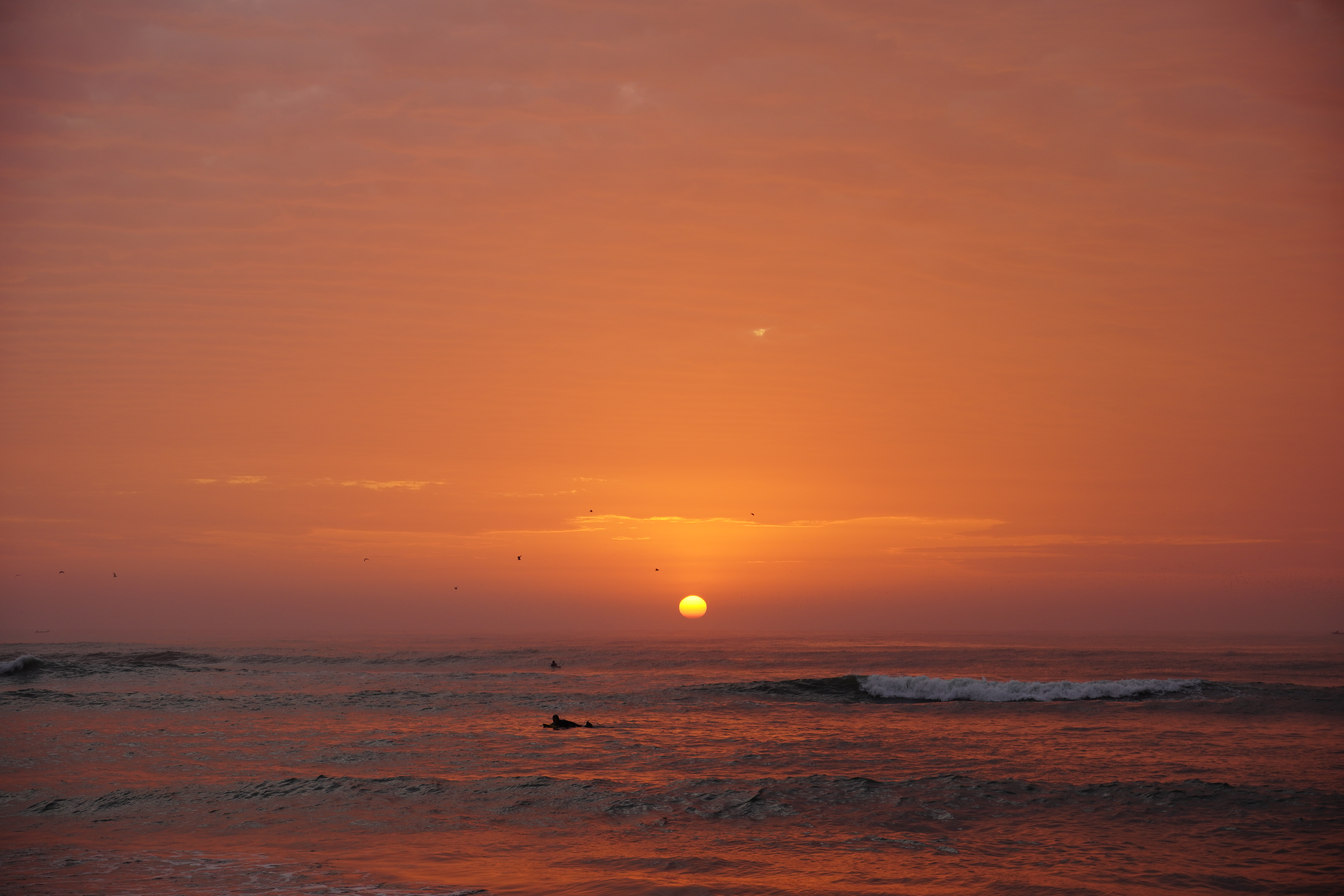
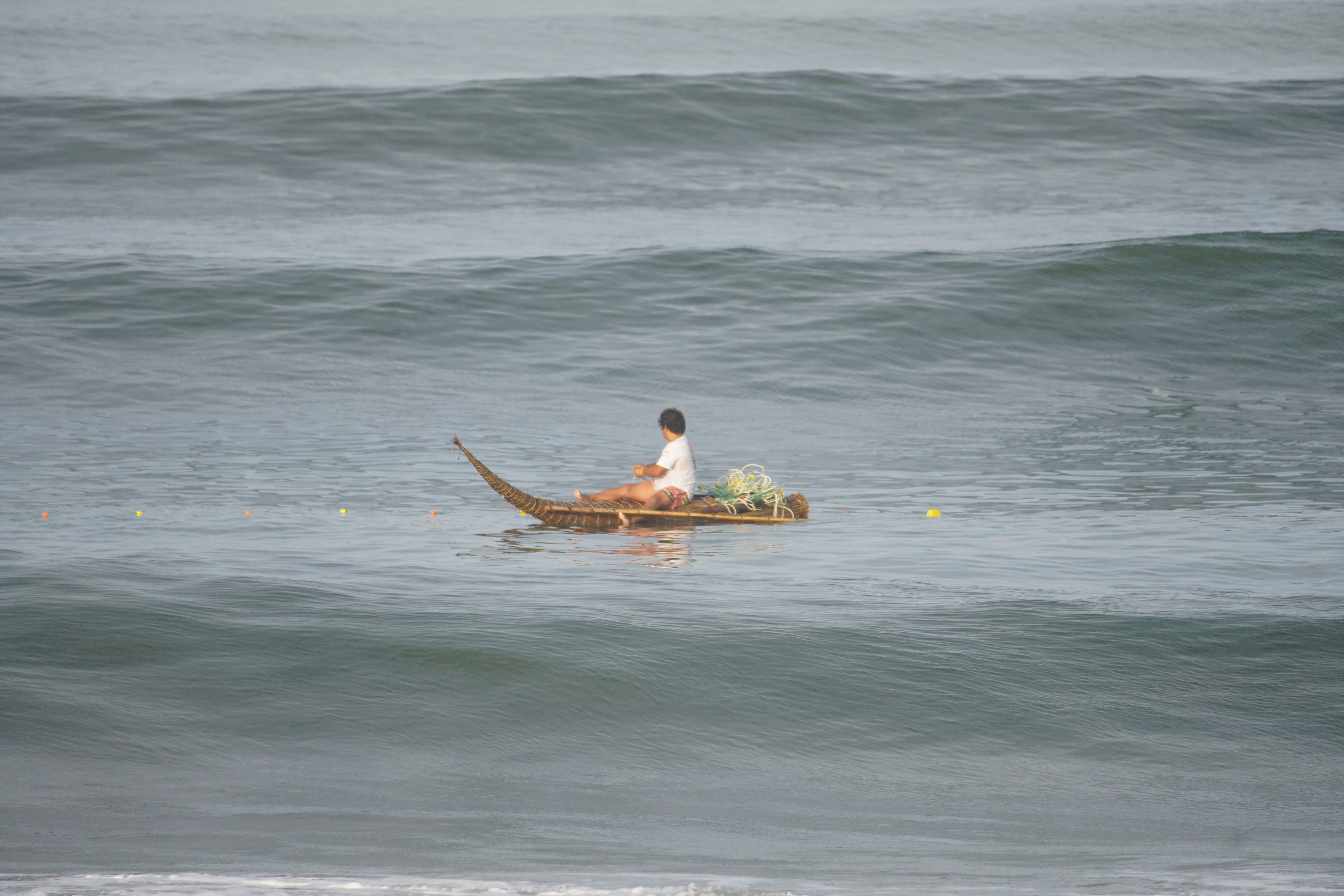
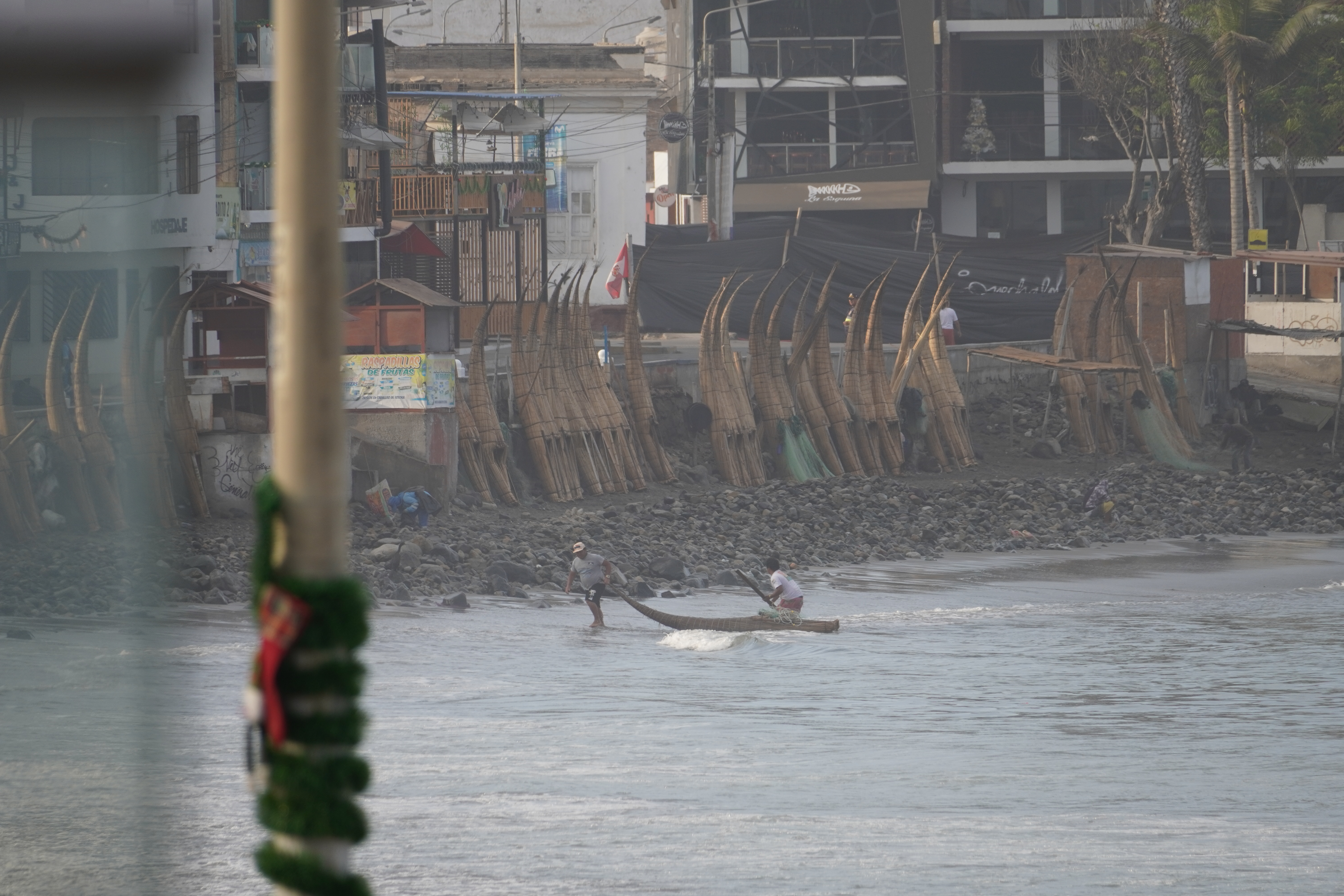
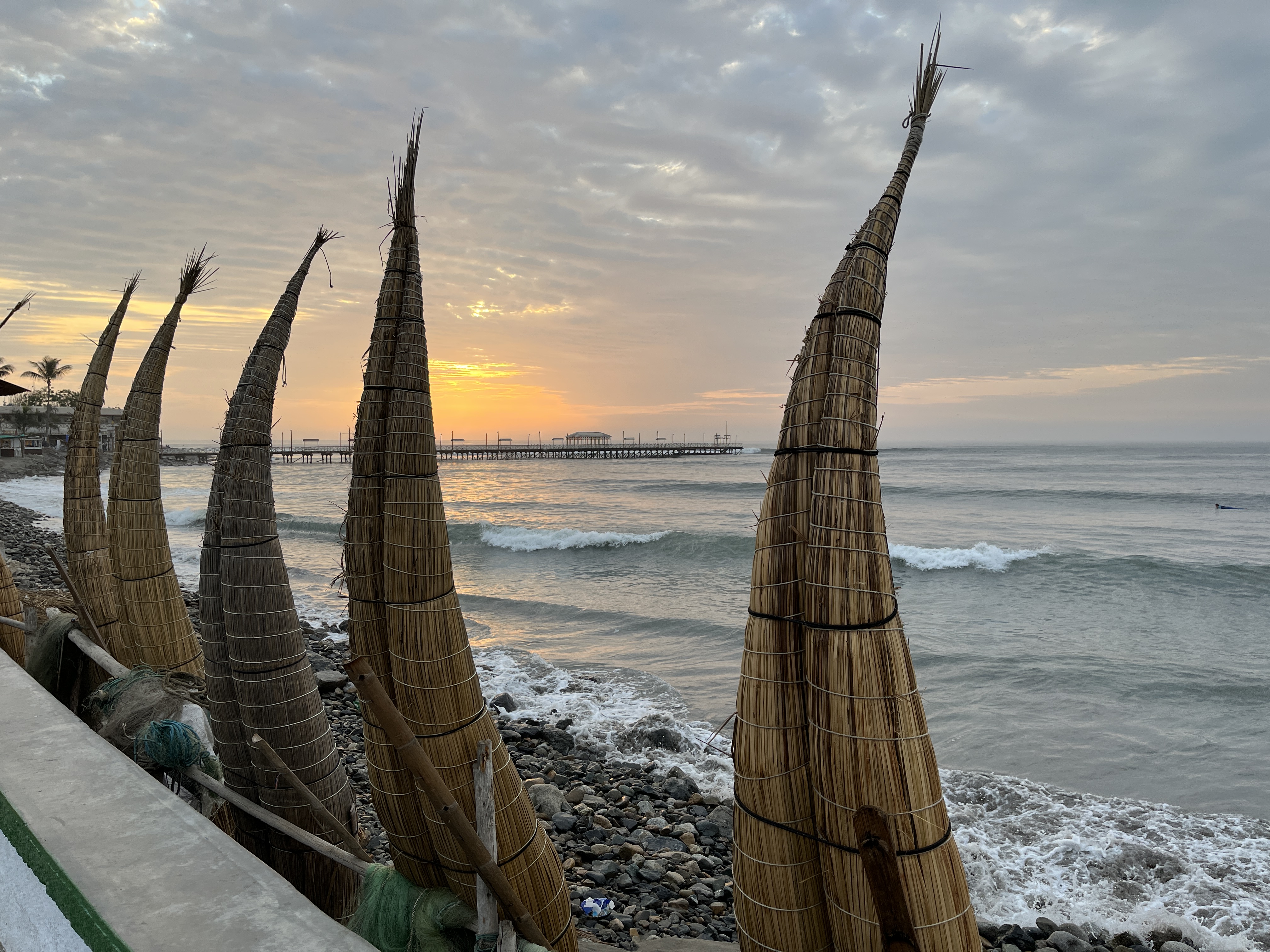
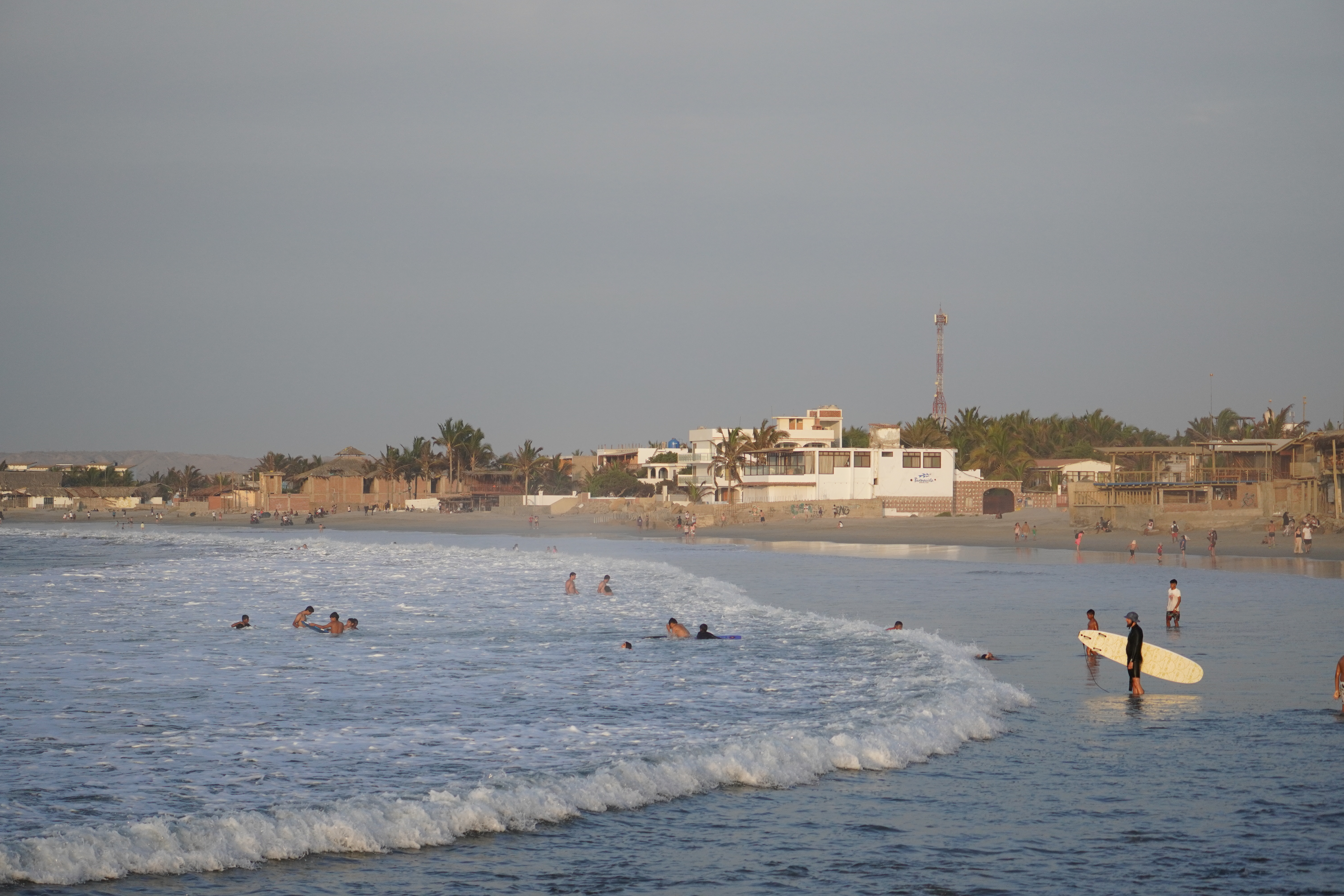
From Huaraz we drove the same way we came back to the ocean, not without stopping for some fresh Mangos of course. We drove directly to the little ocean village of Huanchaco. It is famous for the fishermen, that use small canoes made out of reed to fish On the way back on shore they surf the incoming waves, which brings me to another reason why Huanchaco gained more touristic interest. There are quite a few surf spots and the wave can run pretty long if it is big. We did not have really good waves, but nevertheless we both got in the water and surfed a little bit together which was amazing. We hade a beautiful hostel, where we parked in the driveway which was right at the beach and I could just go on the balcony to watch the waves. After two nights we continued our journey, but I could have easily stayed more nights here.
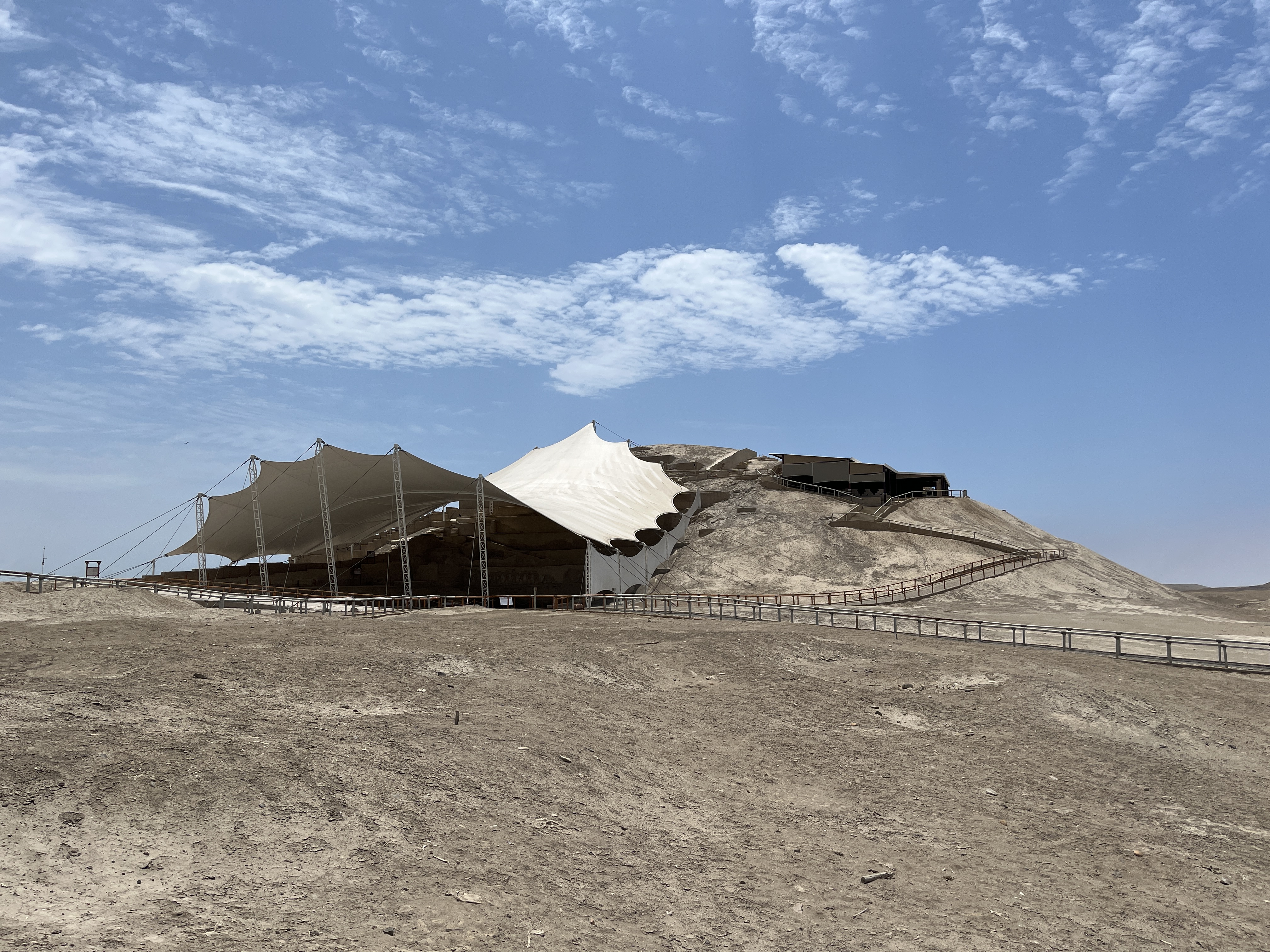
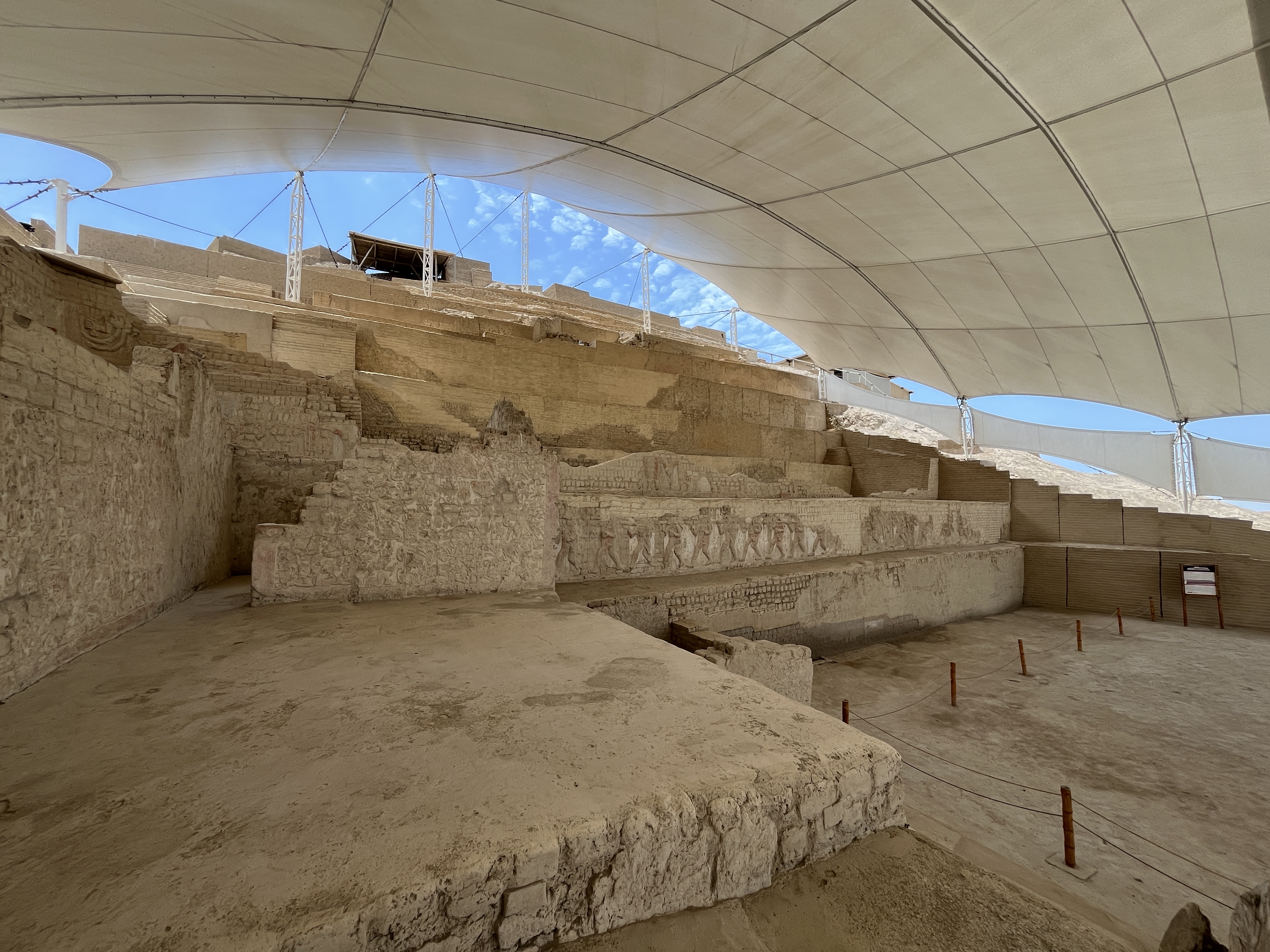
From Huanchaco we took an incredibly bad road along the coast in between huge sugarcane fields to the historical site „El brujo“. El Brujo is a pretty cool historical site located on the northern coast of Peru, near the Chicama Valley. It dates back over 5,000 years and was a key ceremonial center for the Moche culture (100–700 CE). The site is renowned for its intricate adobe pyramids, particularly the Huaca Cao Viejo, which features vivid murals depicting scenes of Moche mythology, rituals, and everyday life.
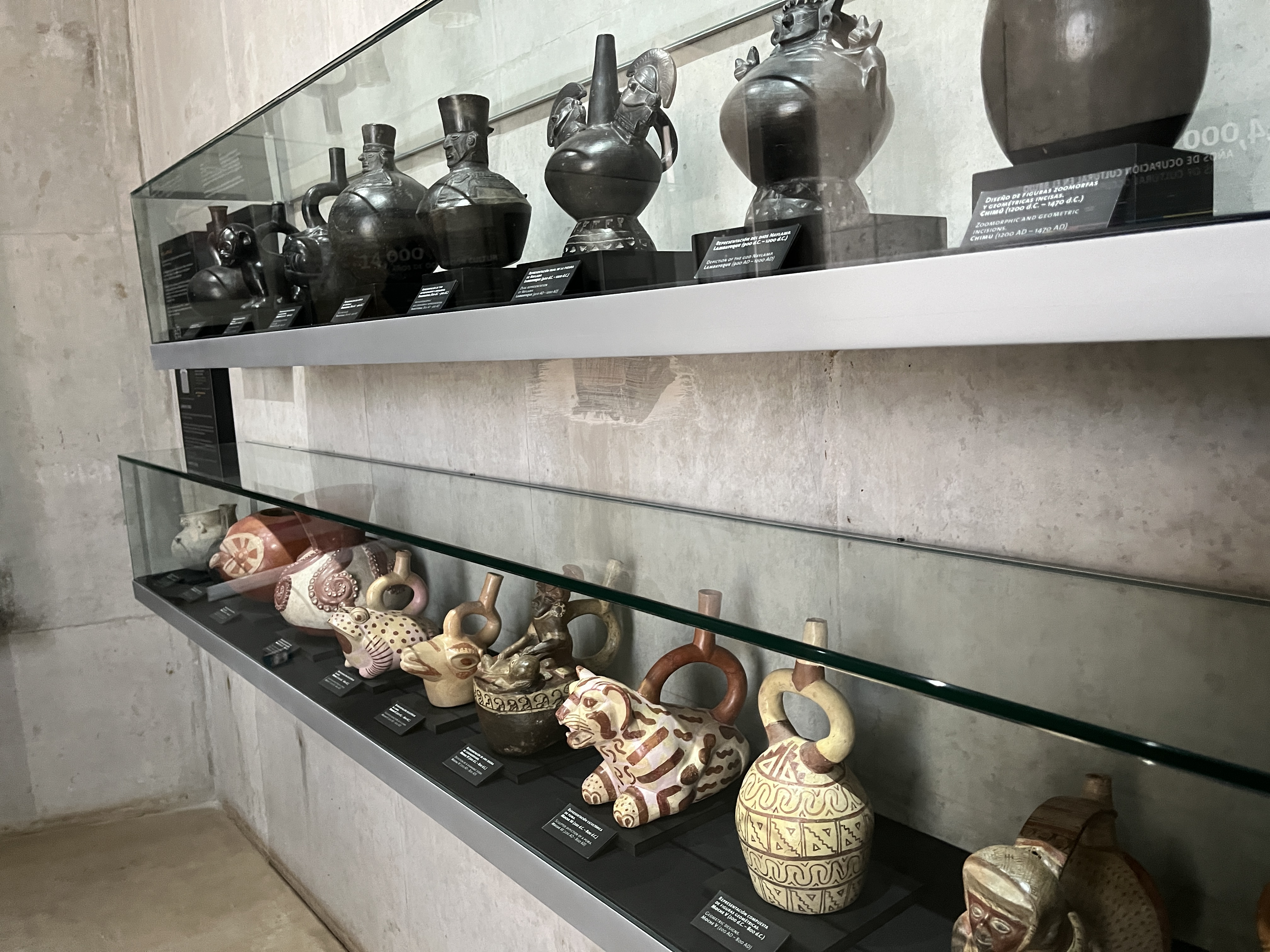
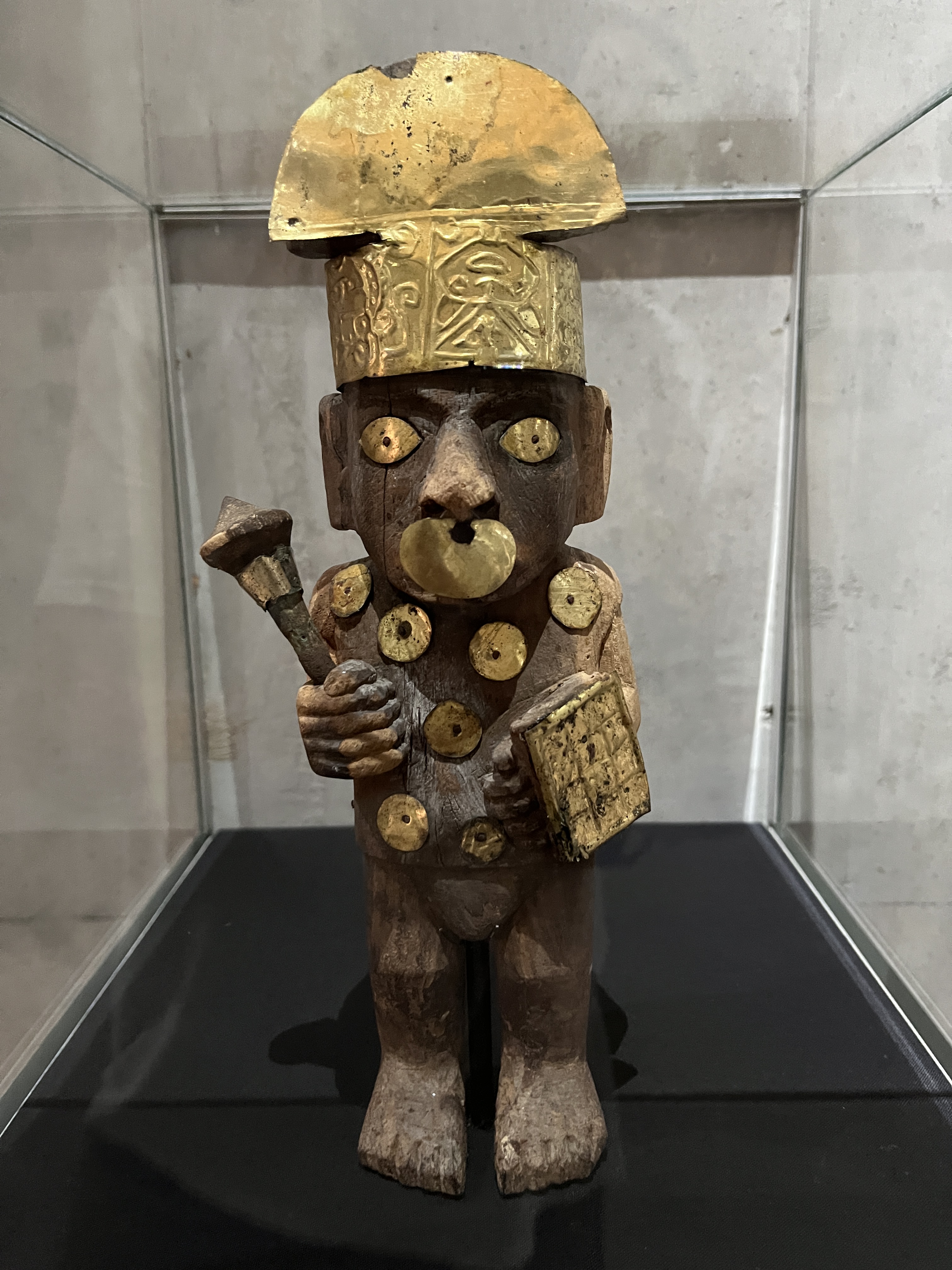
One of El Brujo’s most remarkable discoveries is the tomb of the Señora de Cao, an ancient Moche priestess or ruler. Her burial included elaborate ornaments, jewelry, and ceremonial objects, shedding light on the role of women in Moche society. Her body was also tattooed with sacred symbols. The mummy of her is displayed in the on site museum, that also shows that the site was not only used by the Moche, but also by the Inca and in colonial times.
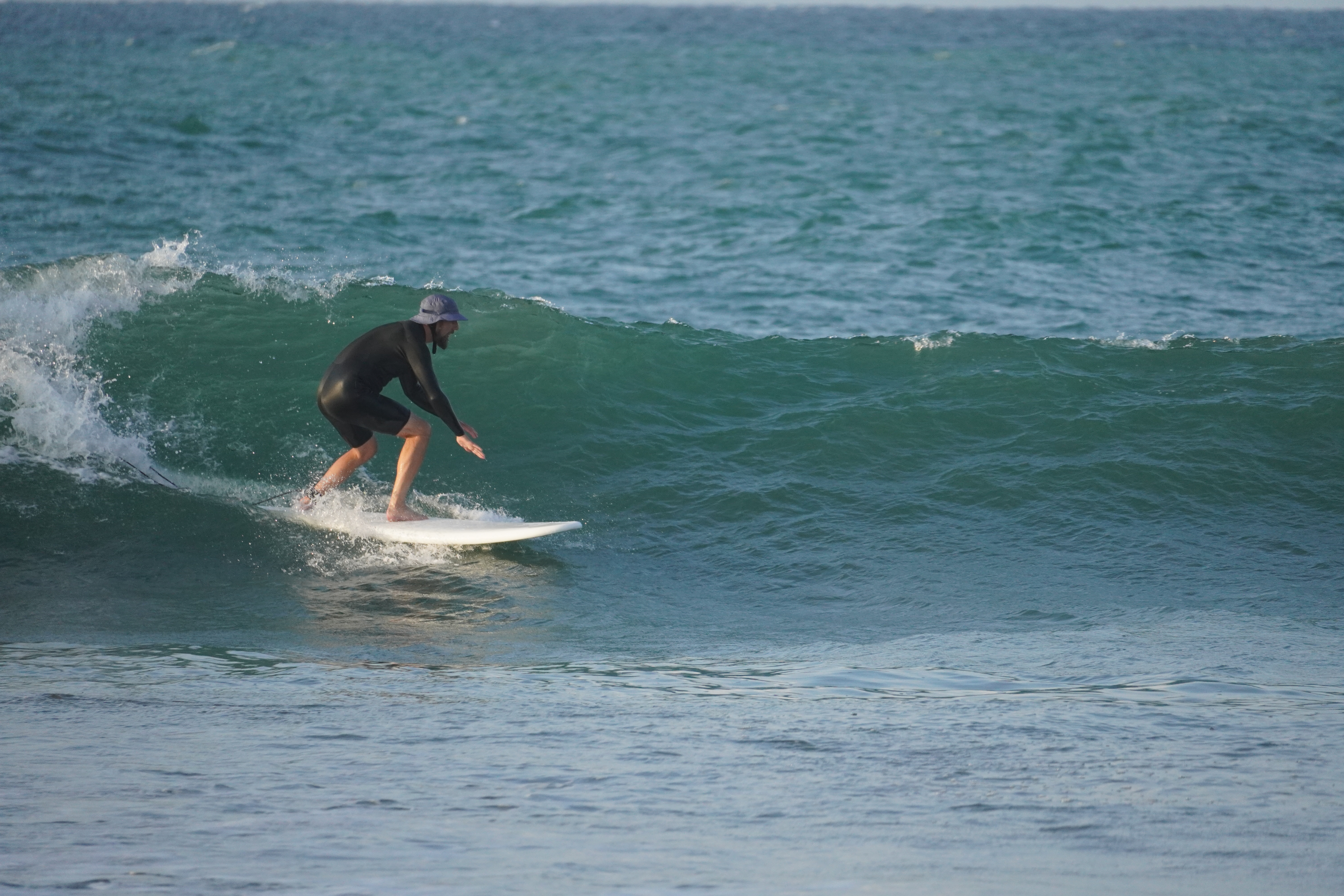
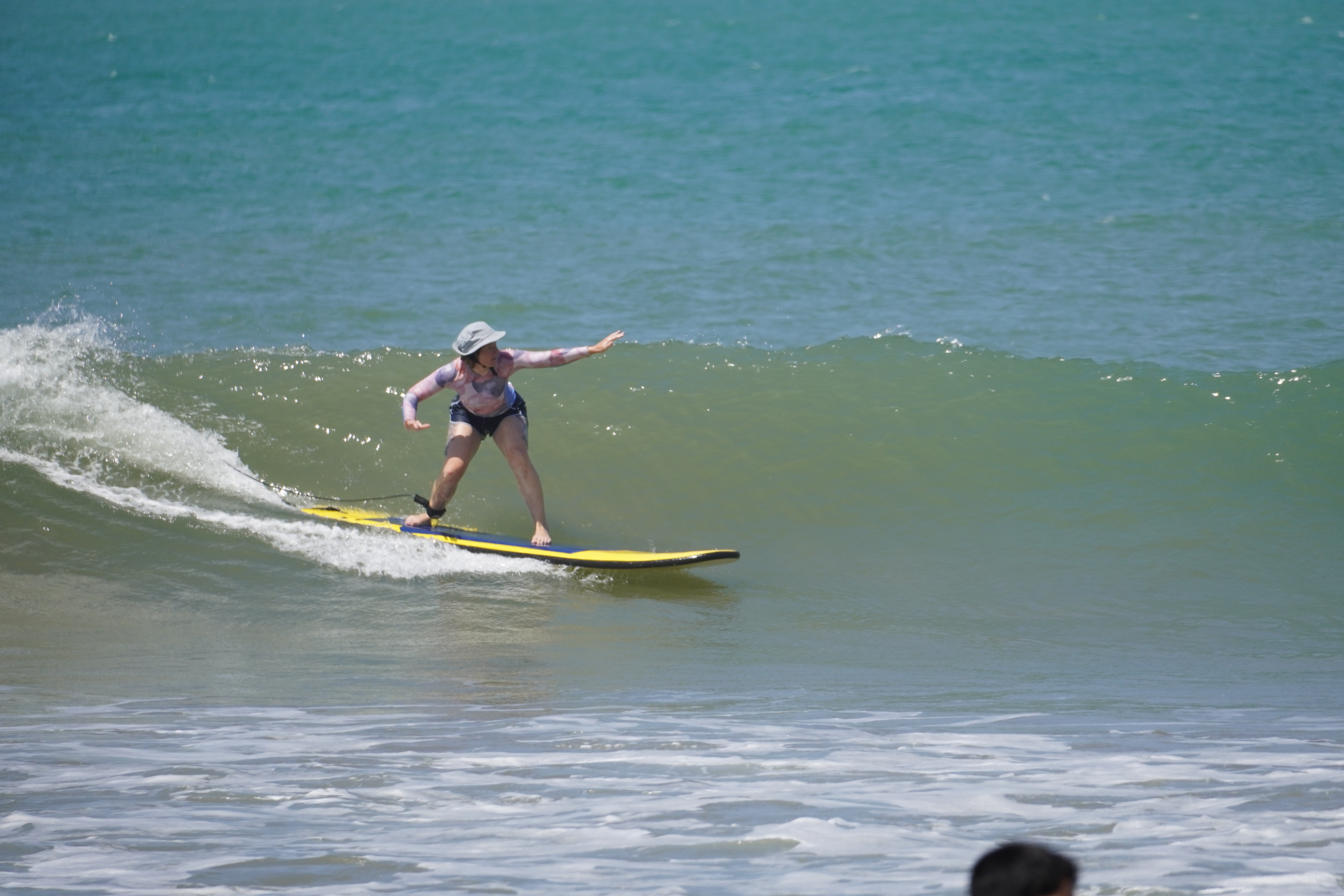
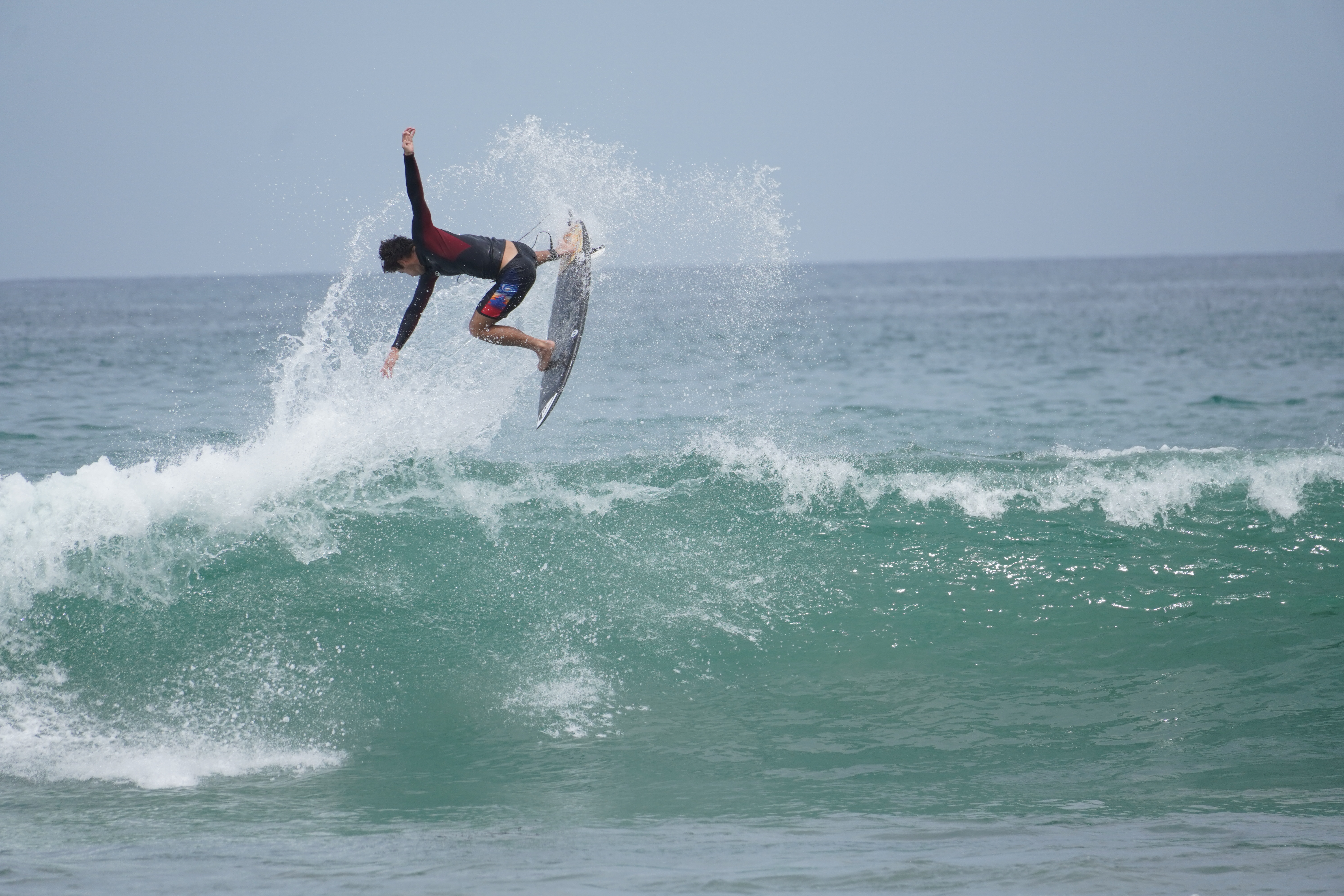
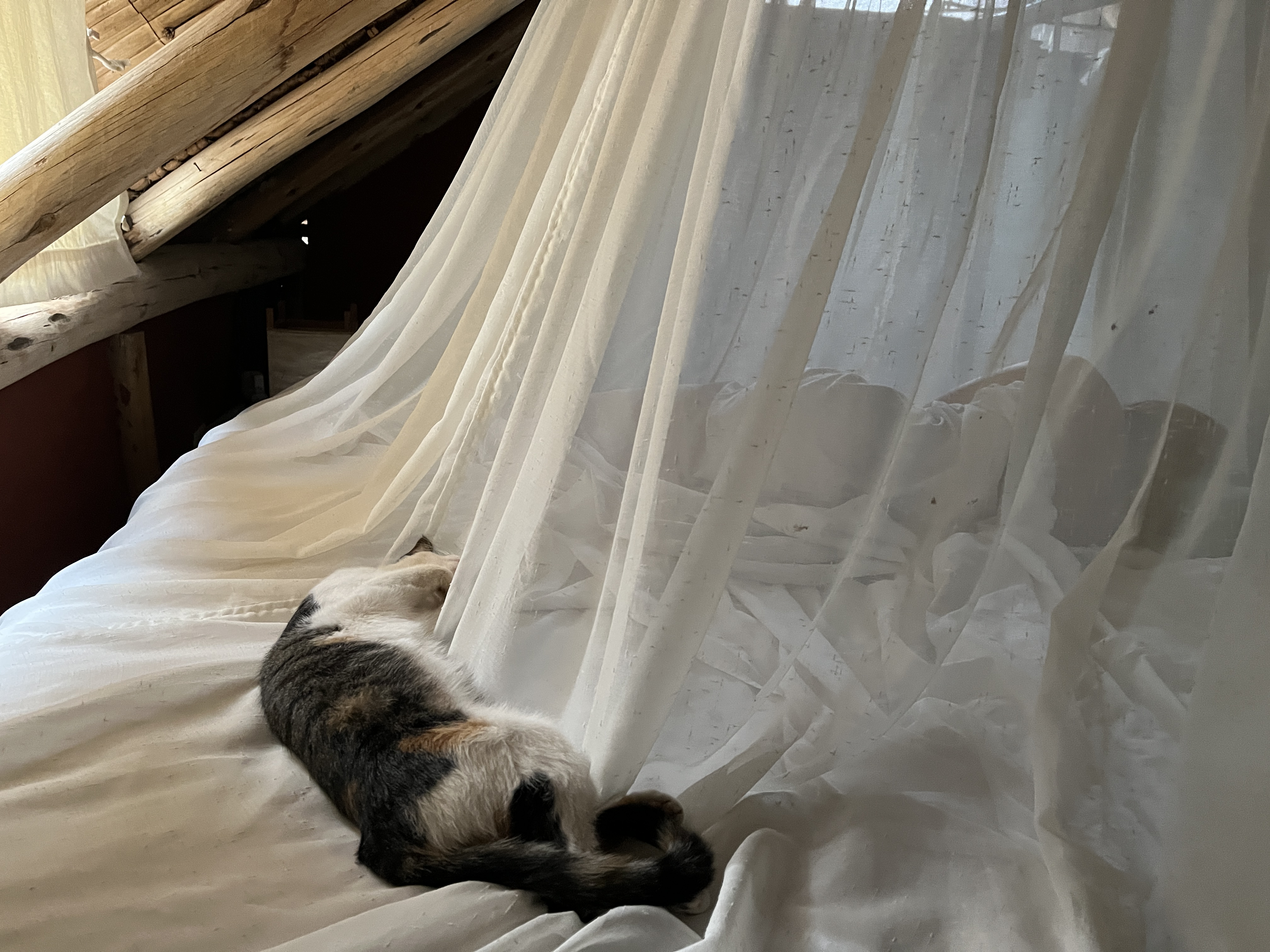
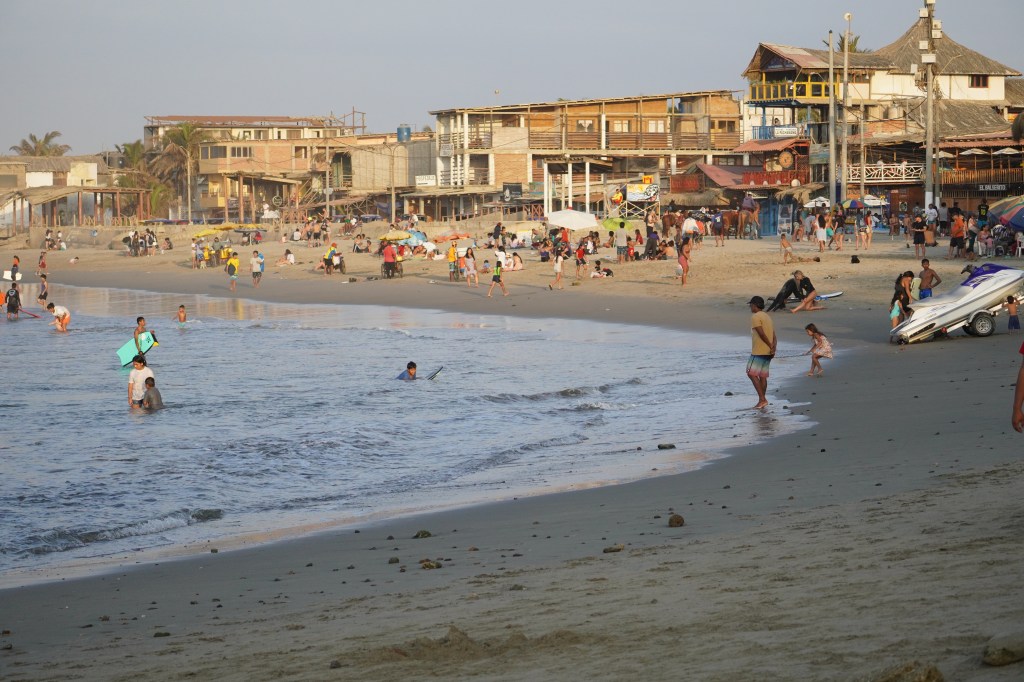
From el Brujo we had two long driving days all the way to the north cost of Peru and entered a nice little camp ground with direct access to the beach. It was initially our plan to stay there over Christmas and maybe even new years, but after we could not sleep at all the first night because of a party next door until 4am in the morning, we changed plans. Also we wanted some community over Christmas and meet other people, but once again we were completely alone on the little campground. Also we found out that the next surf spot was a one hour walk which was a little too far for us. All these reasons let to our decision to move to the next village, Mancora. Here we decided to book the only free room in the Hotel La Maison, which turned out to be the lodge. We wanted to get out of Rosi for a few nights, and here we could park directly in the Hotel and could enter the van just with a few steps from our room. The place was beautiful. It was the mixture of a Hotel and a Hostel, everything was build out of wood around a little common area with a pool. Instantly we got in contact with the other guests and some part of community feeling built up. To the beach it was a 5 minute walk, and right there was the surf spot as well. It was a long point break and pretty much all day people were surfing in the water. It felt so good to go surfing just by walking from the Hotel and I stood up every morning around 6AM to go in water for an early morning surf. The feeling of walking in half darkness and the mist of the sunrise to the beach and see the sun rise while sitting in the lineup between other surfers is just breathtaking. Even though the water filled up pretty fast with people competing for the wave, I enjoyed every morning. After the second day I recognized the other people and we greeted each other. Linda was also surfing a lot and took some classes with the oldest surf school in town, which lead to her catch a lot of waves. After every session she left the water with a huge smile on her face. Here in Mancora the people in the water with a surf coach basically have an automatic right of way. It was totally normal that they paddled into waves, that were already surfed from other people. In any other place I have surfed this would be a no go, but here in Peru people seem to surf like they drive…. recklessly and without any rules. For me it was therefore pretty difficult to catch waves, because I did not want to steal waves from the locals or the surf schools, so I had to be in position if somebody else made a mistake, which still lead to enough waves in every session. At some point I also booked a surf guide and now I got the right of way. In that hour I got way more waves than in all other sessions combined and I also learned a lot. All in all we both enjoyed every surf session we took. The jumping fish, the low flying pelicans and the sea turtles that popped their heads out of the water were just the tip of the iceberg for this great surfing experience.
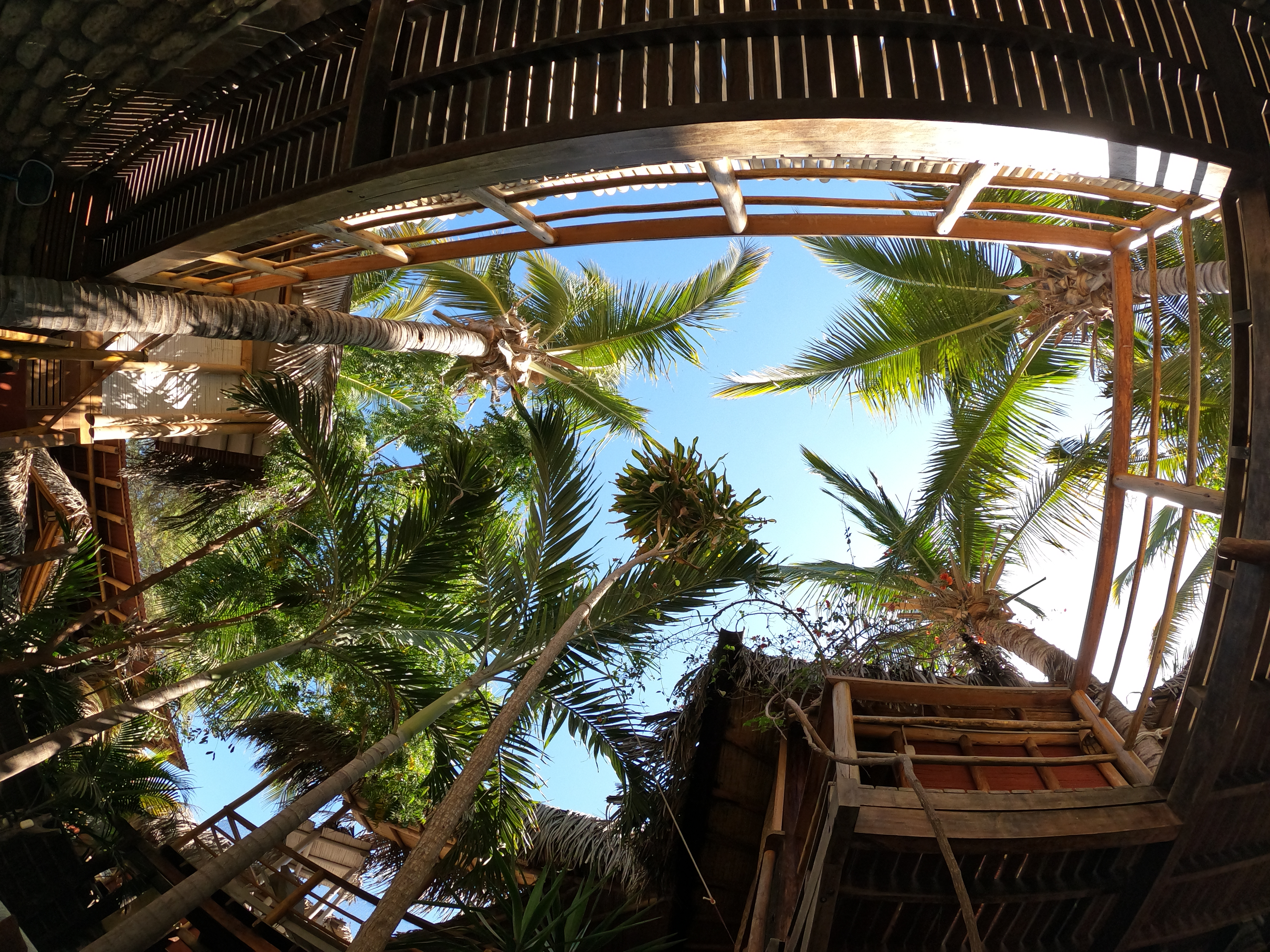
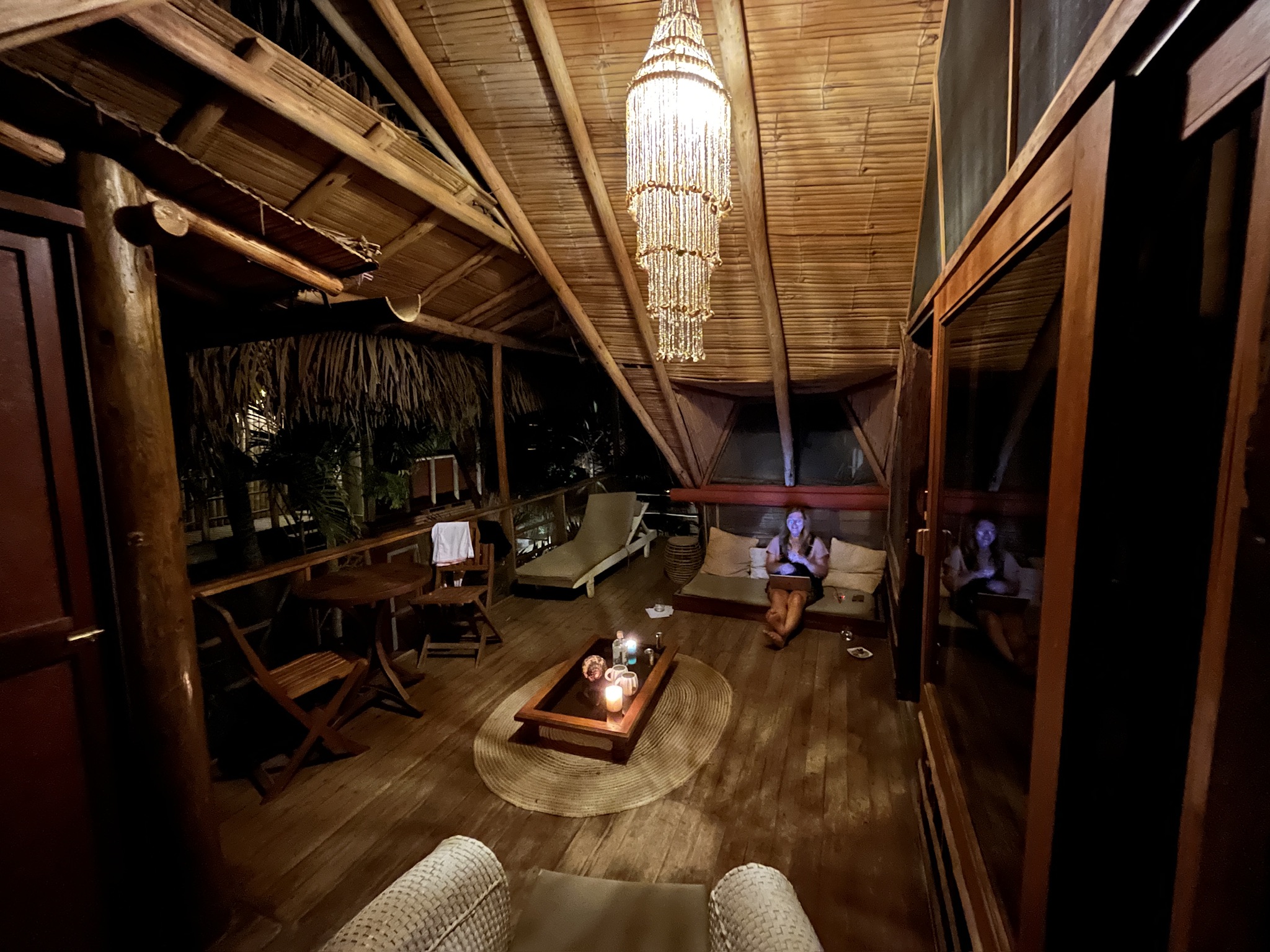

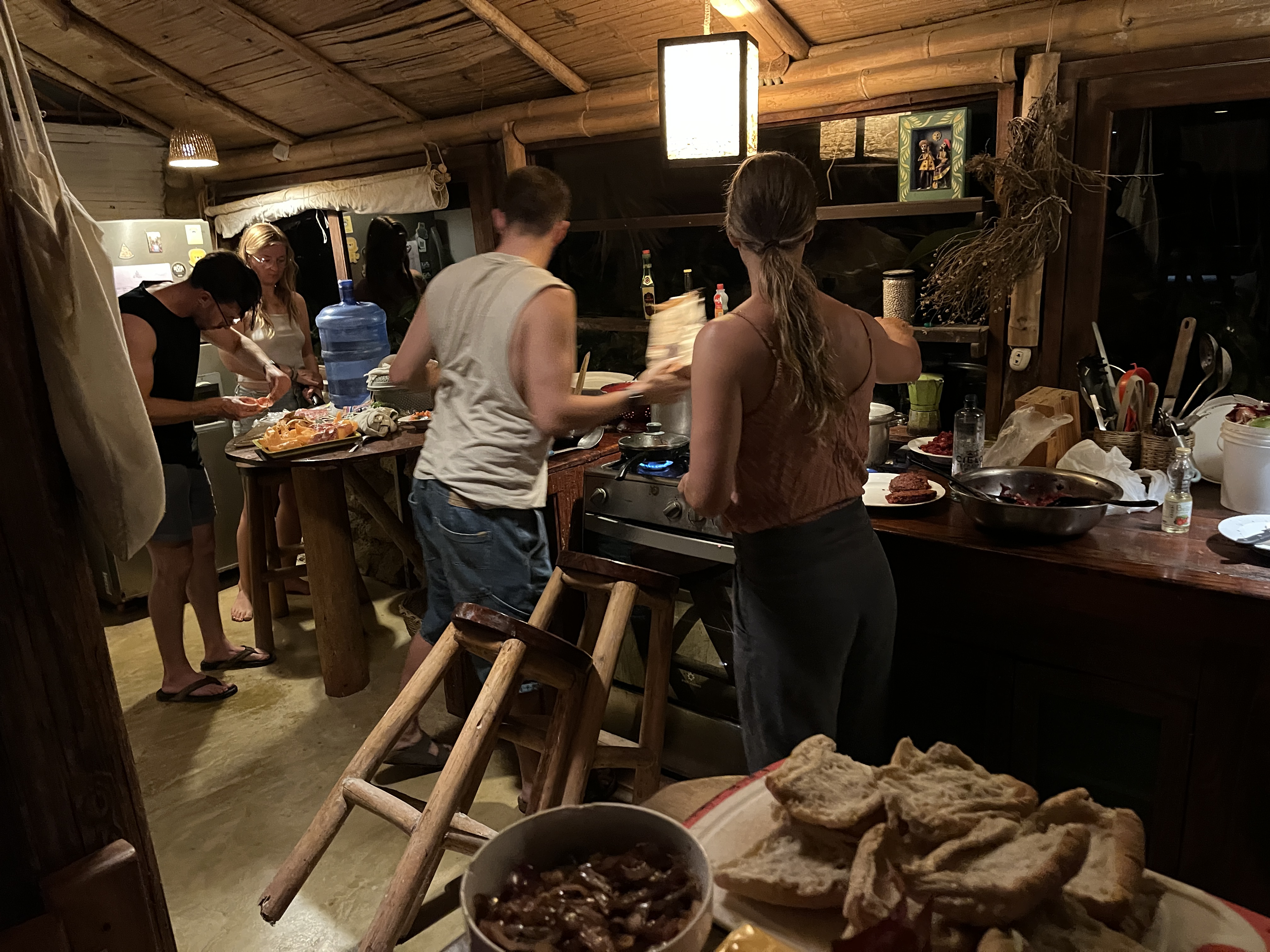
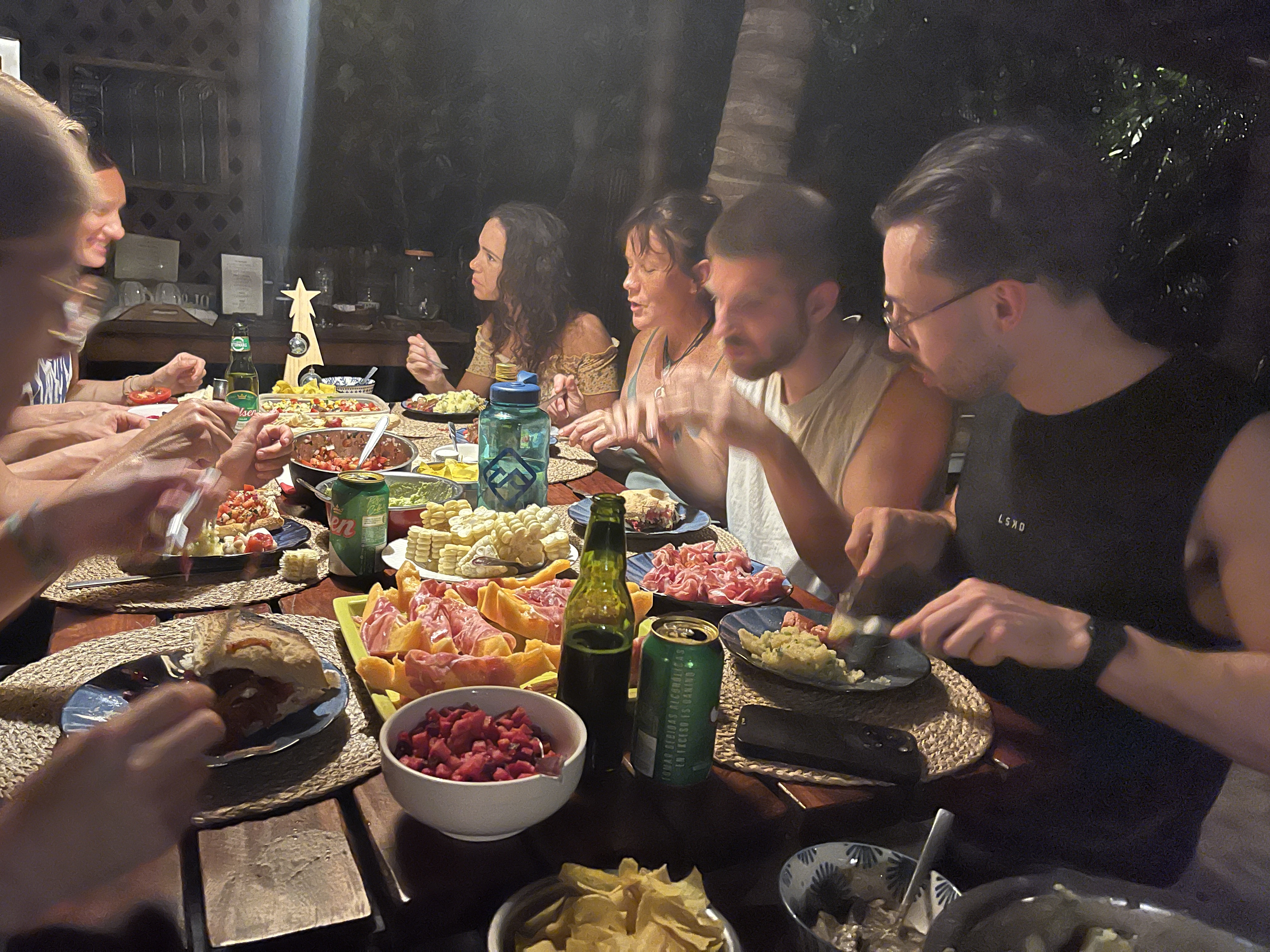
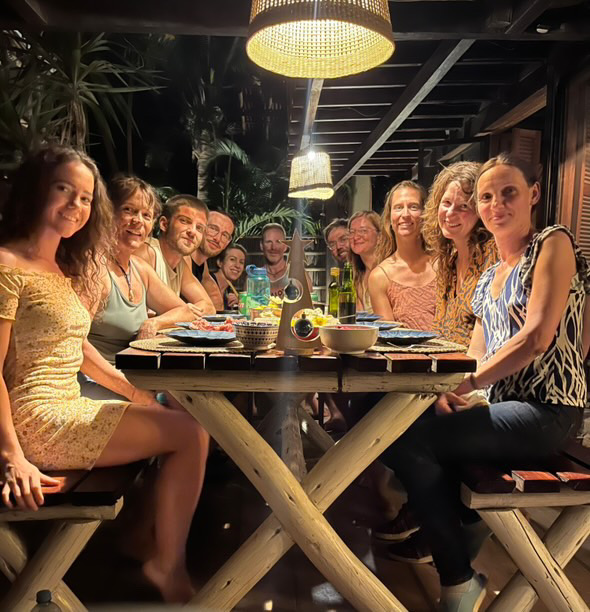
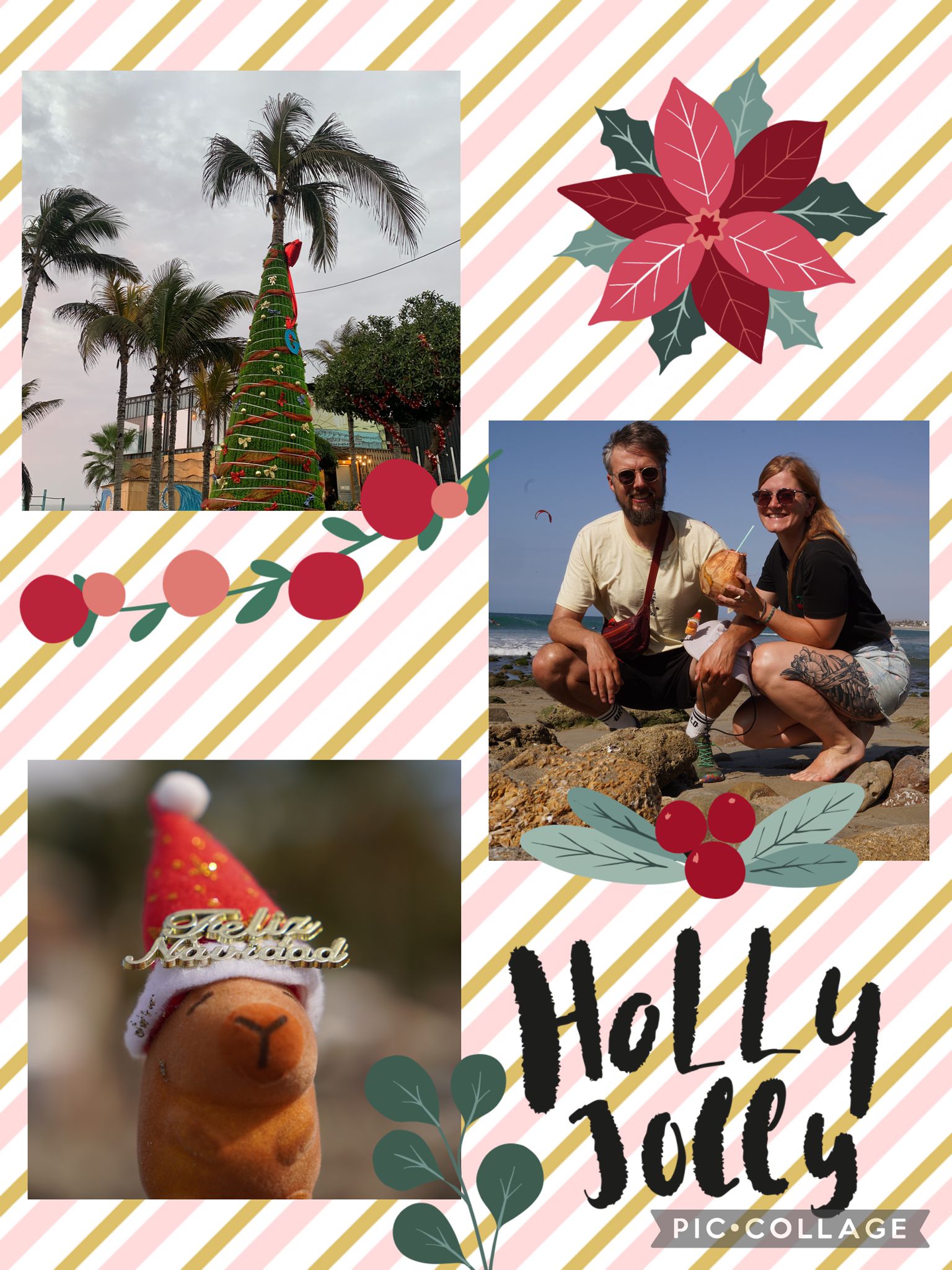
Additionally Mancora has a few really nice Cafes and Restaurants with great coffee and food and for Christmas we were all cooking together in the Hotel kitchen and had a big meal together. Everybody prepared one dish, so it was a crazy cooking party and afterward we all ate together. It was pretty much perfect. Exactly what we wanted.
After Christmas the waves became bigger and not just that… they became massive, way too big to be surfed by us and most of the people. We watched a few crazy people that were still in the water and a few waves were so big that they reached into the hotels on the beach front. Even though we were being careful all the time one wave caught me in-between sandbag and the gate of a Hotel and I got completely soaked and cut my feet open, while Linda jumped into the Hotel garden in time, that was flooded after. Never underestimate the ocean! The north coast of Peru was in news for that big swell, but afterwards I found THIS VIDEO, that shows how the pros were still able to surf in that crazy swell. After the huge waves the beach in Mancora looked completely different. Tons of sand have been moved away and the beforehand pretty white beach was now a field of stones with some sand in-between.
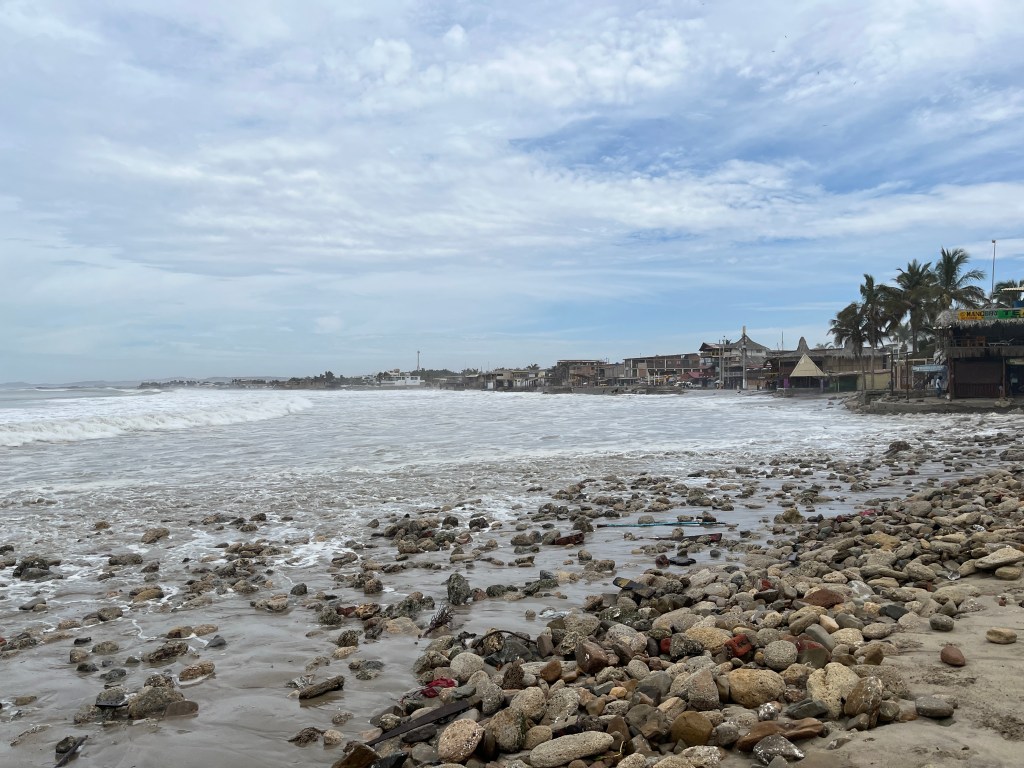
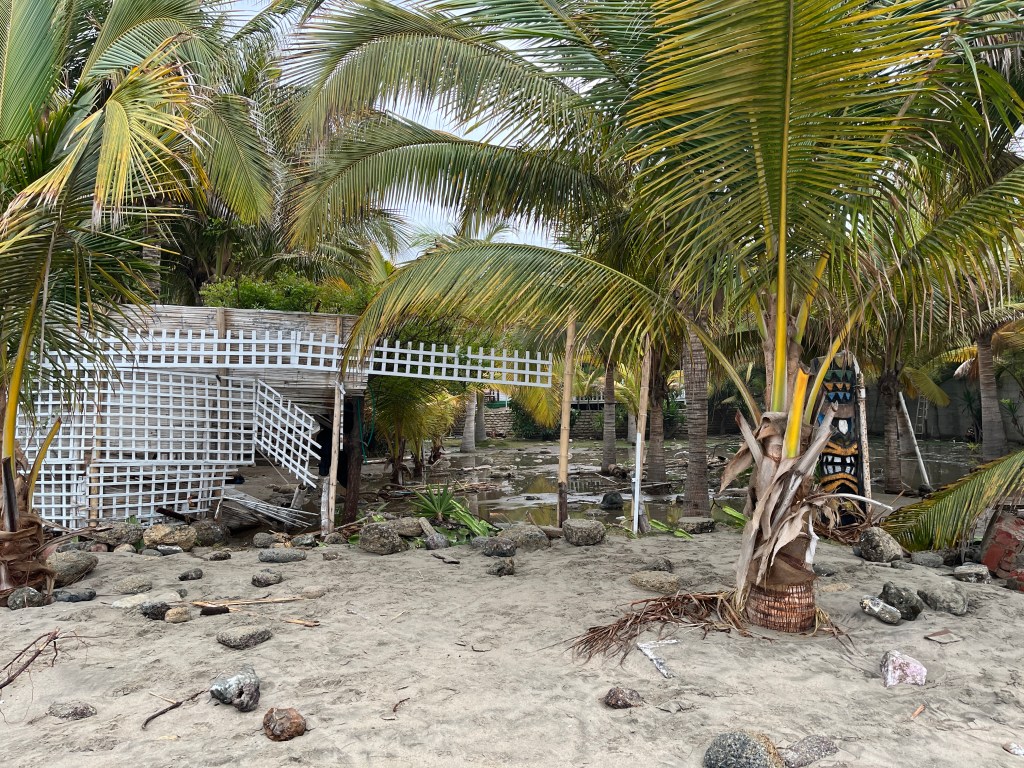
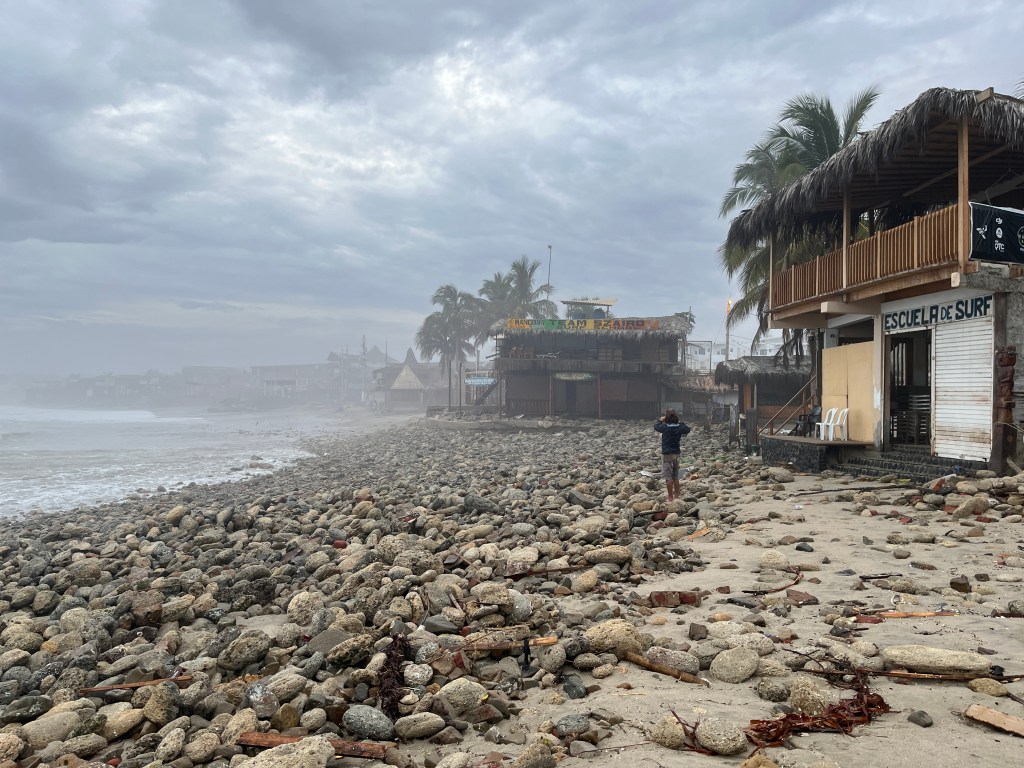
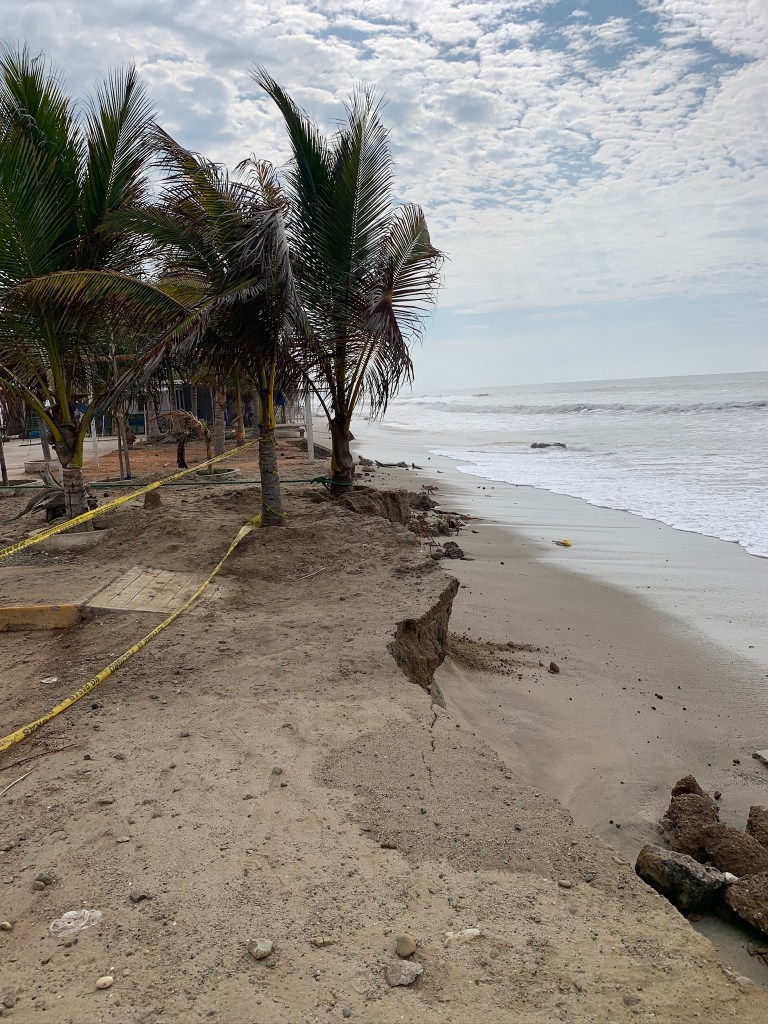
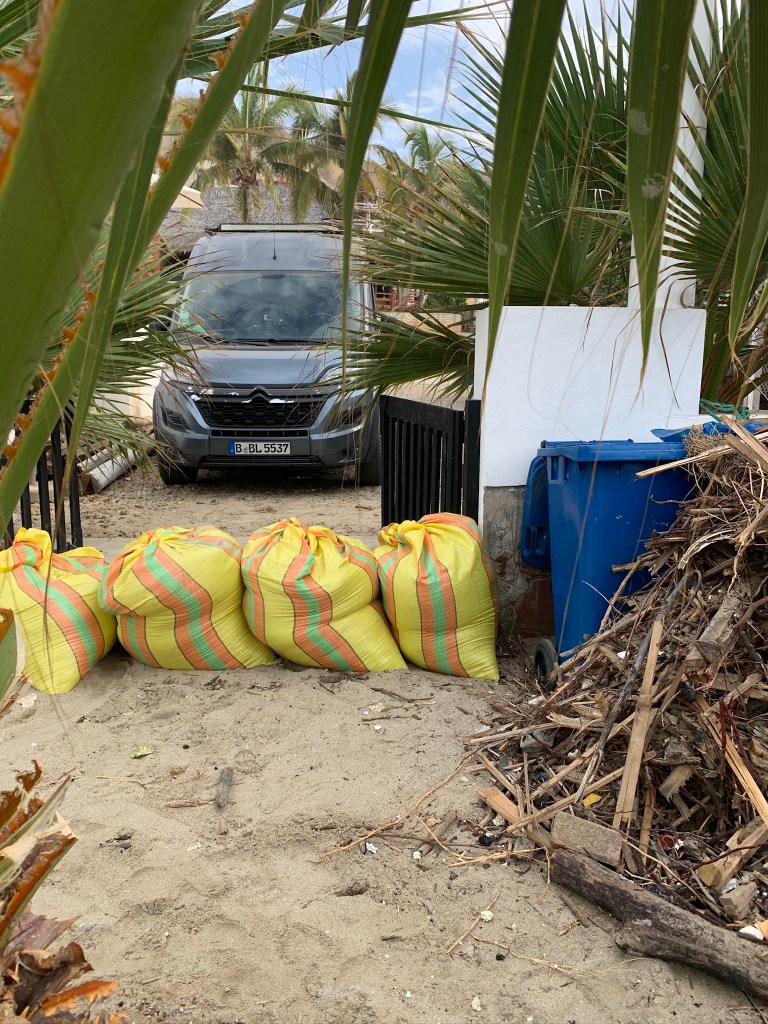
A few days later we made our way along the coast in the direction of Ecuador. Pretty much everywhere the beach was washed away and you could see the impacts that the huge waves had.
The boarder crossing to Ecuador was crazy. It took us almost three hours, and I really had to calm myself down multiple times when the Peruvians cut the queue as if it would be the most normal thing to do. I had to physically push myself to the counter to not get taken over again and again. Finally we were happy to be in Ecuador. Peru is a very big and divers country and the surf and hiking experiences we had were amazing, but the constant plastic pollution everywhere, the unfriendly people and the fact that we were often treated as a “walking wallet”, left a uncomfortable feeling. Even more we were therefore excited to enter Ecuador.
 höme
höme 
Leave a comment