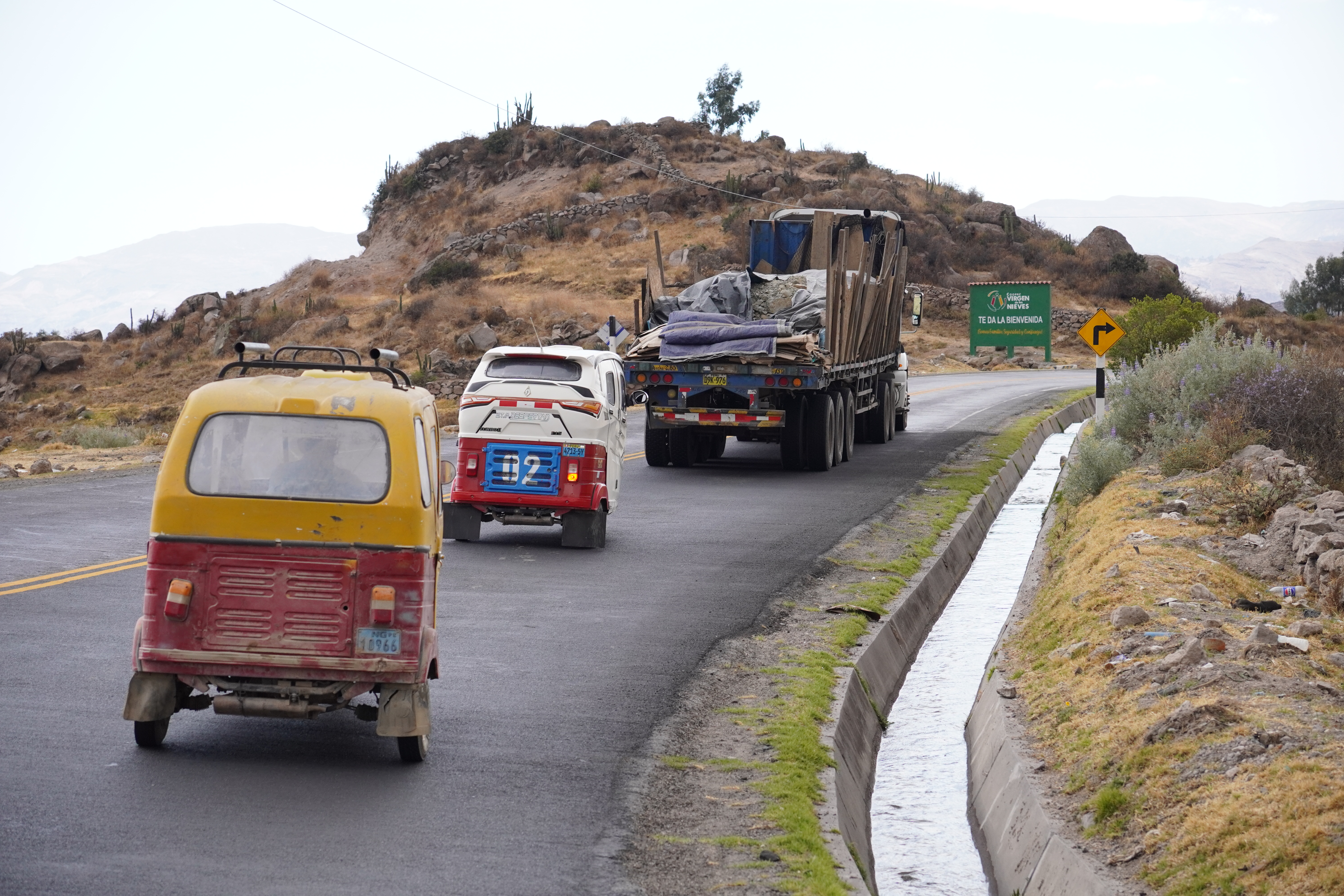
On the way back from Machu Picchu, after a long drive (the road is partially closed for a few hours due to major construction work, and we, of course, drove straight into such a roadblock), we spent a relaxed rainy night in Ollantaytambo – I still have issues with that name. On the way there, we had already explored the beautiful Inca town in sunny weather, with its cobblestone streets and small, massive stone houses. In the rain, the town now seemed deserted and a bit gloomy, but we enjoyed a burger and slept in the next day. On our way to Cusco, we met Ina and Christoph, whom we had only known through Facetime and WhatsApp until then. We had exchanged information back then about the Lagunas Route in Bolivia – better said, they informed us about it. Since we didn’t meet there, despite traveling in opposite directions on the same route, we now made it happen here. It’s always nice to meet other travellers and exchange stories in German. We continued south toward Cusco, and they went north toward Machu Picchu. As usual, we were heading the opposite direction.
Perfectly Shaped Stones and Asian Cuisine
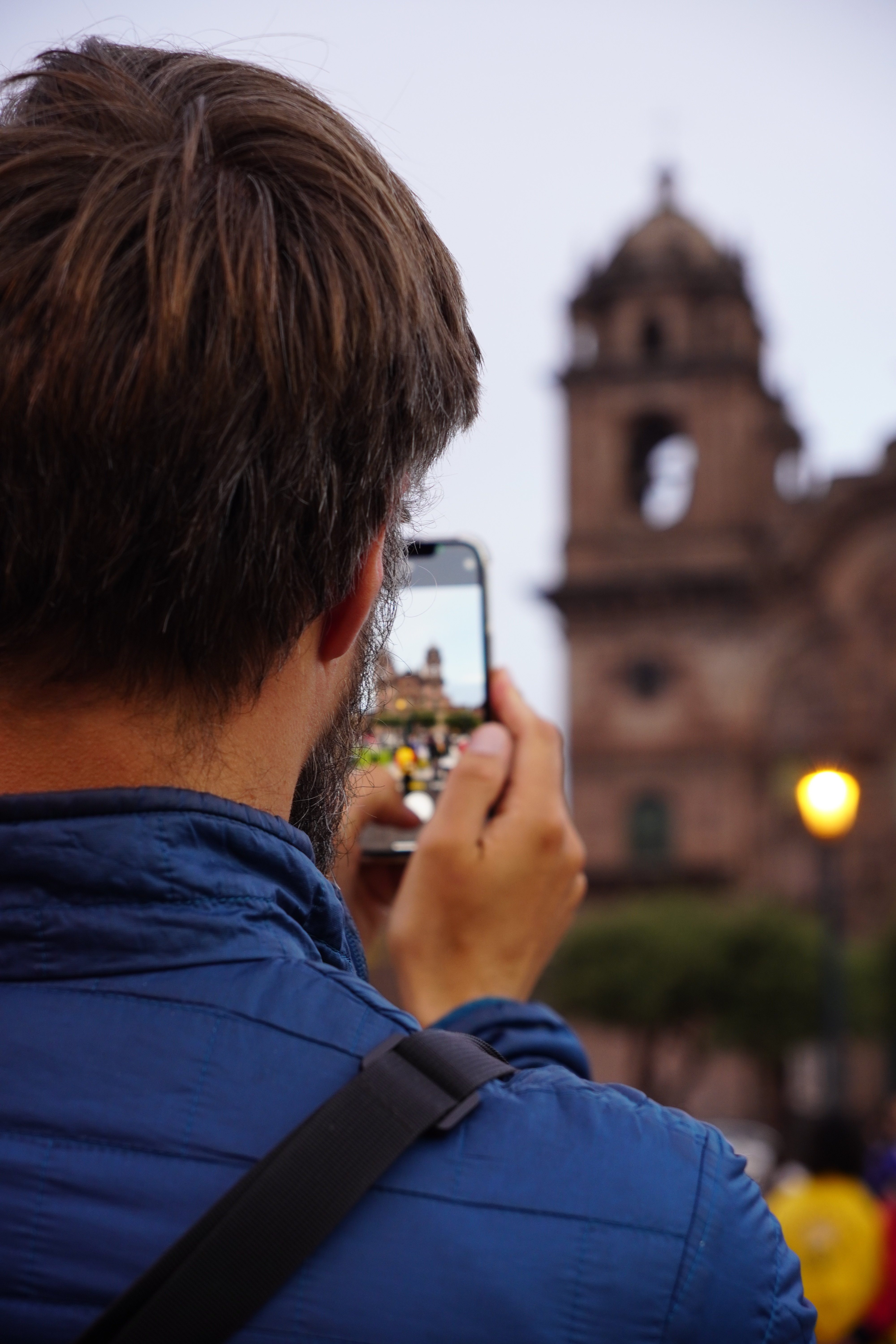
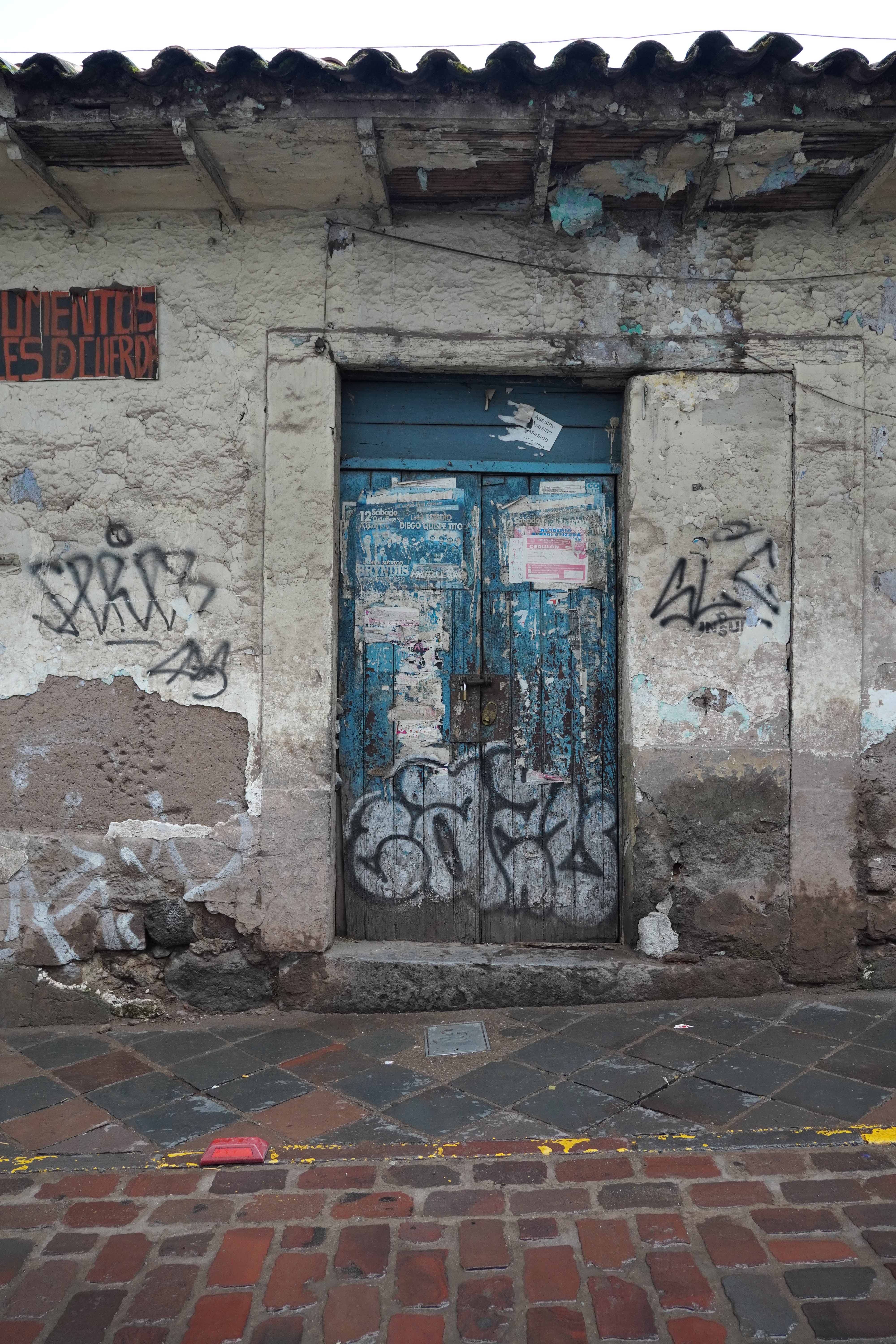
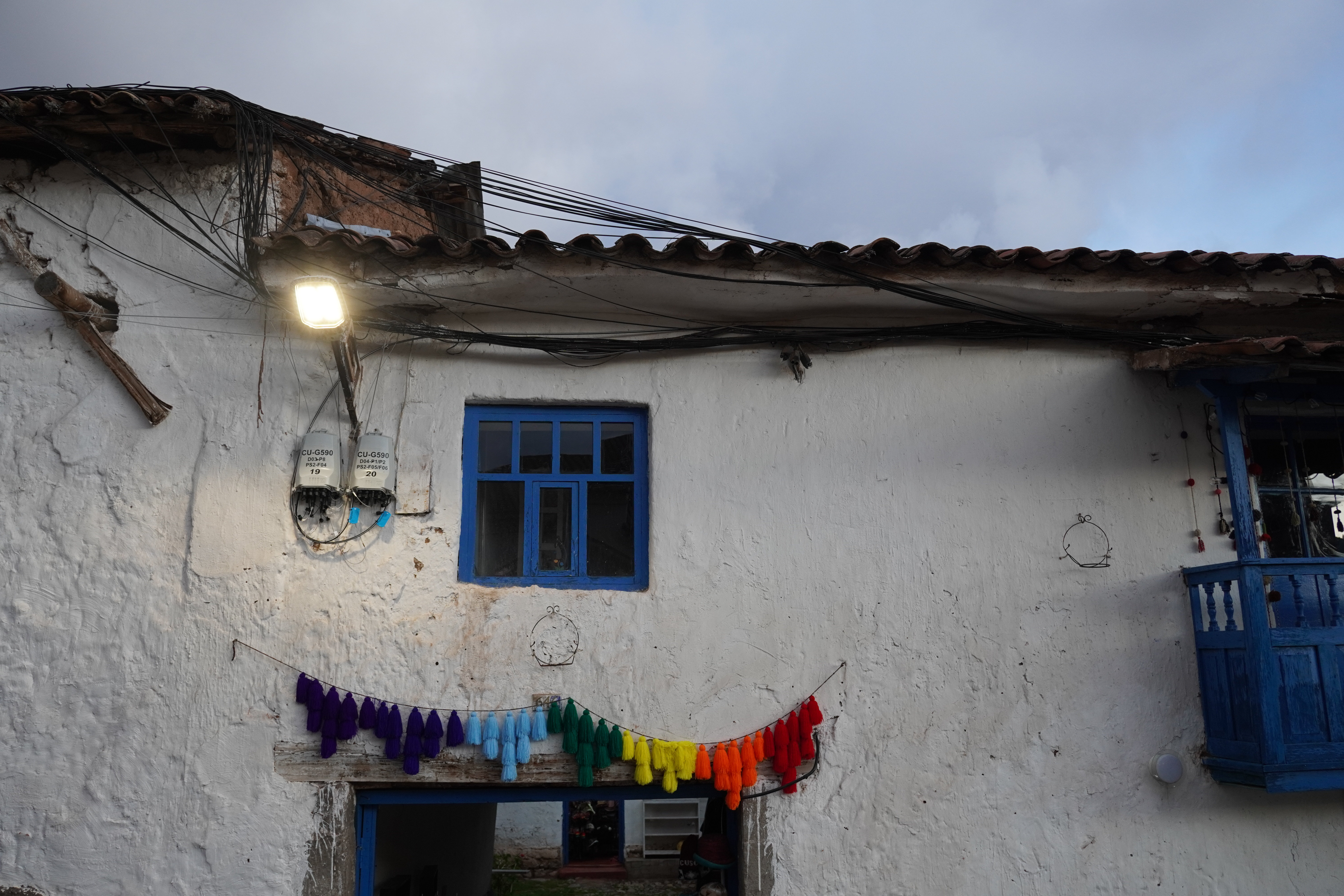
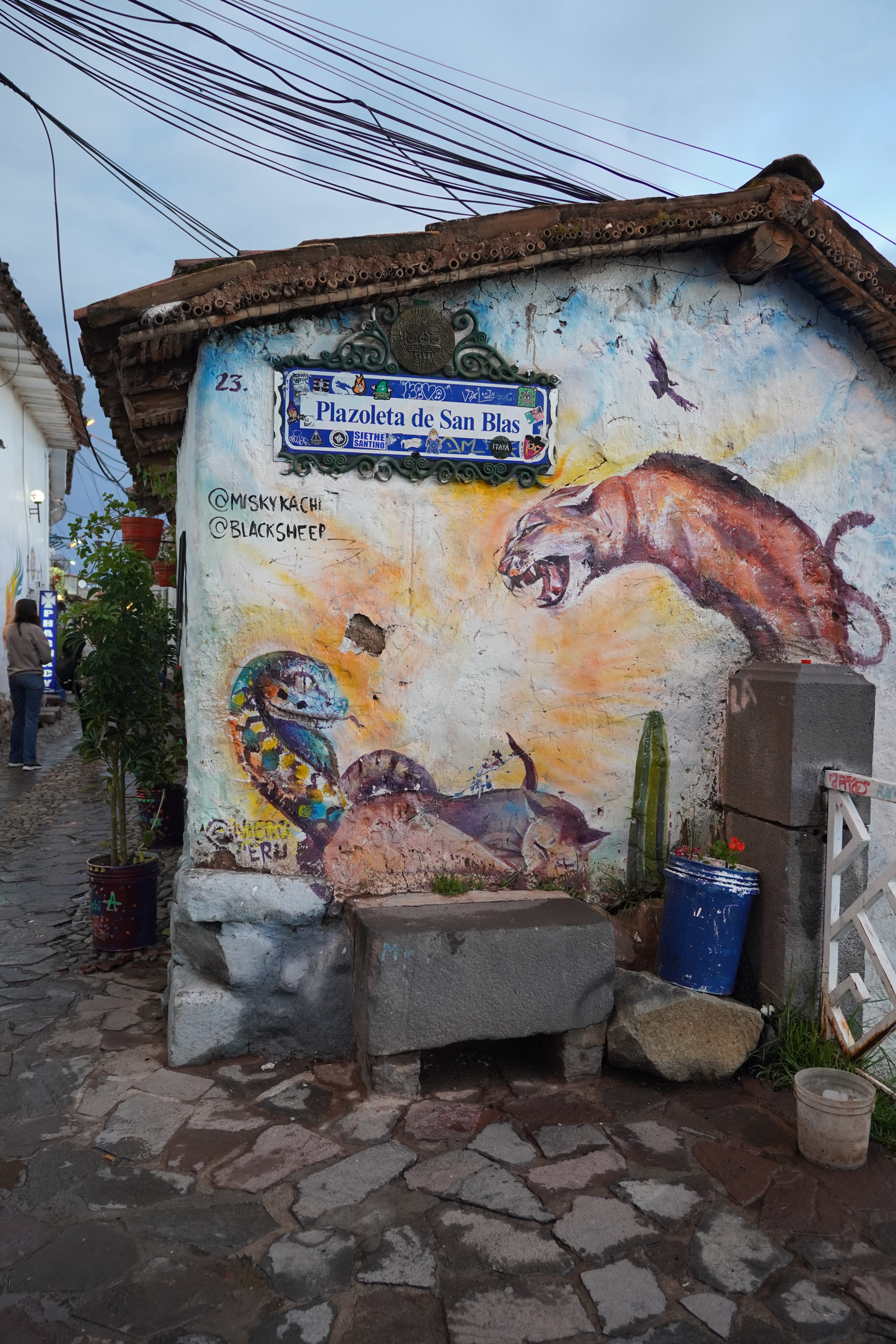
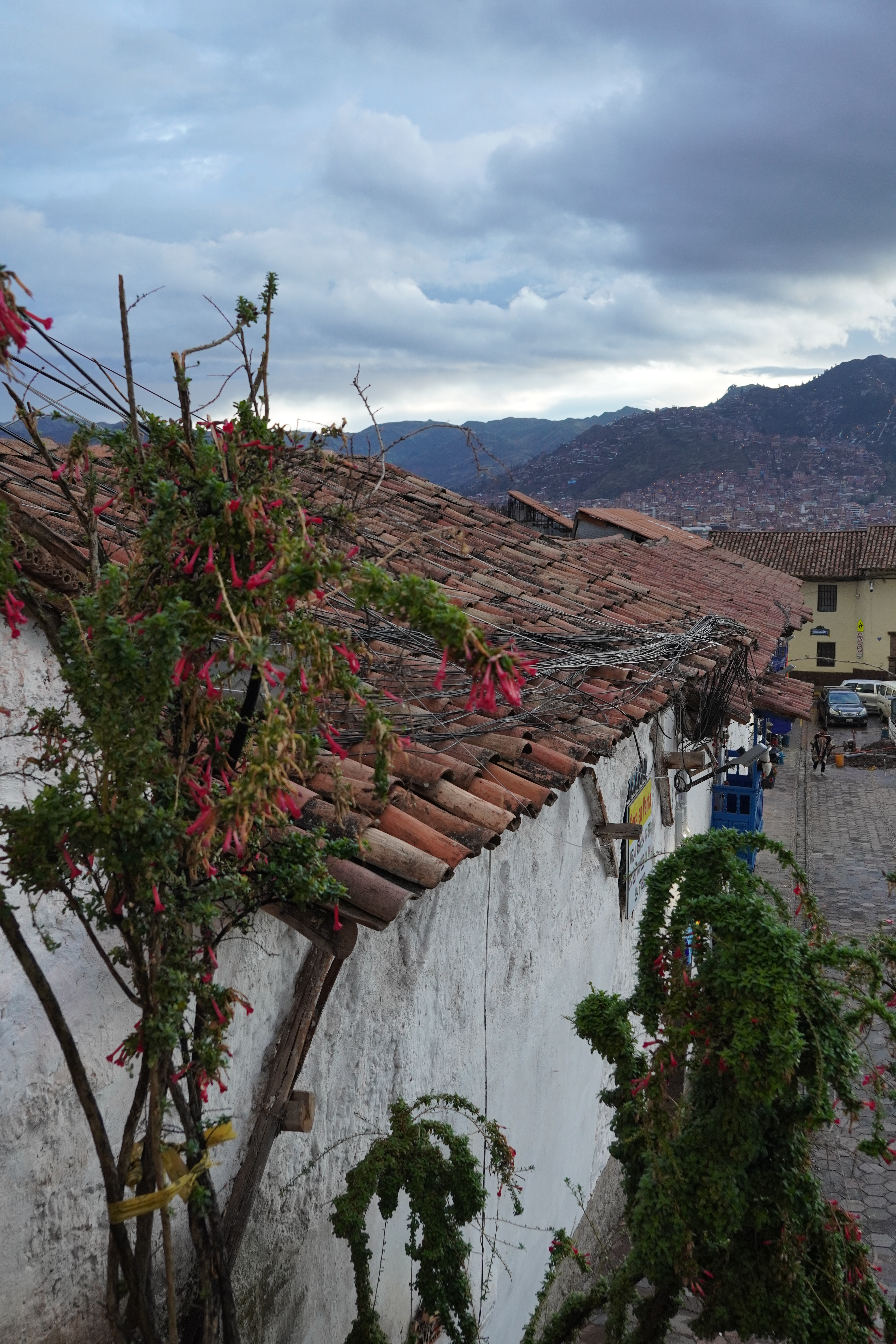
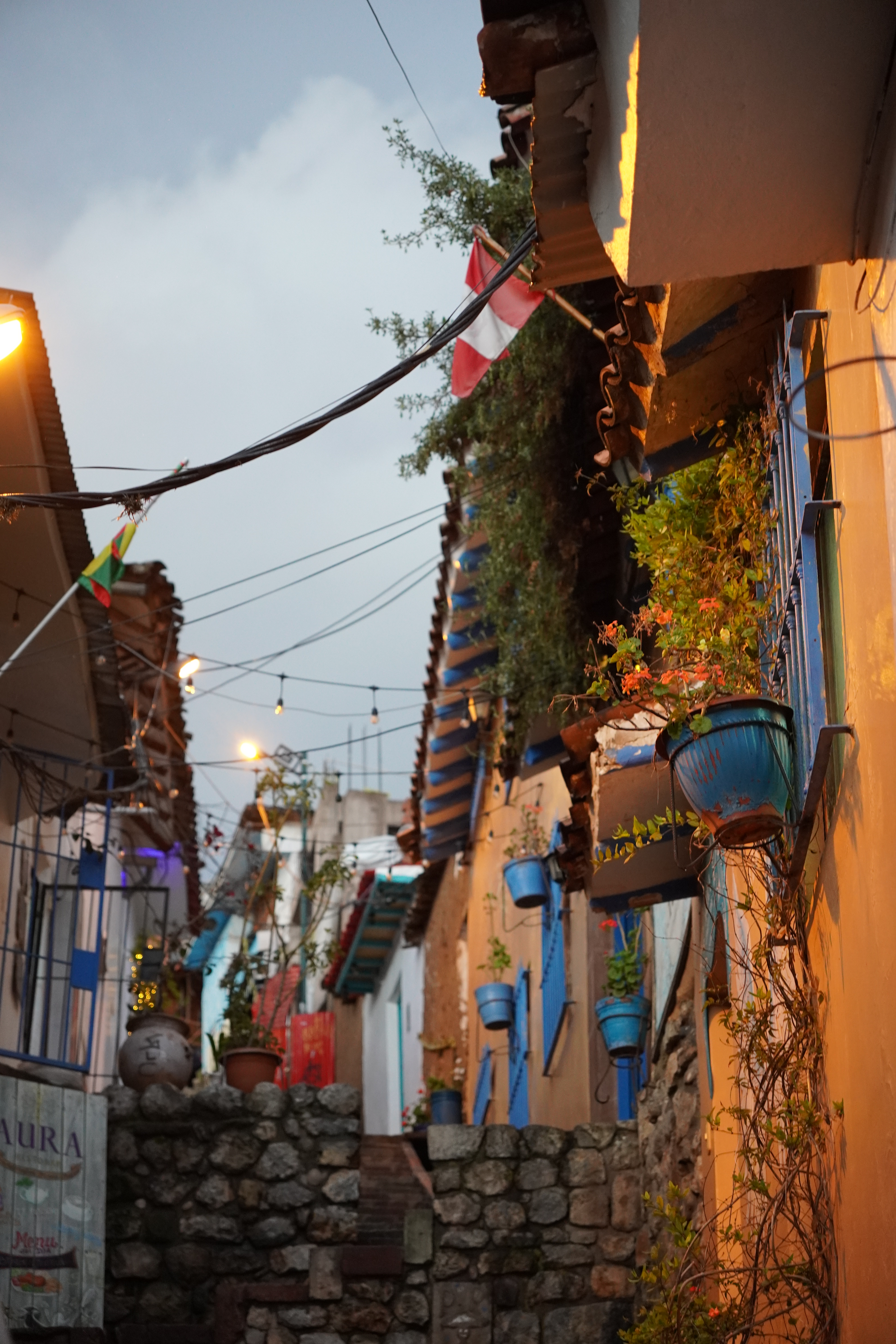
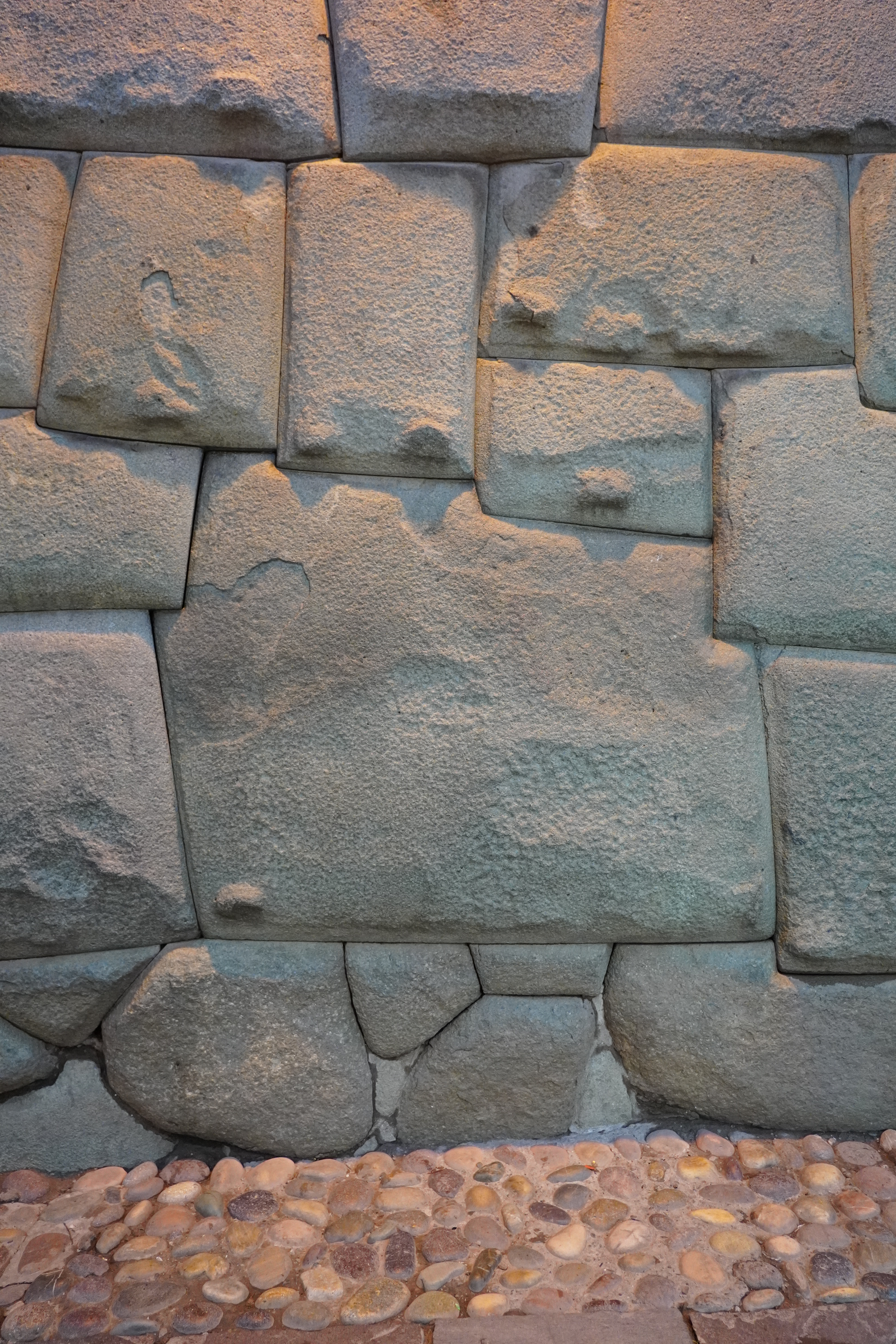
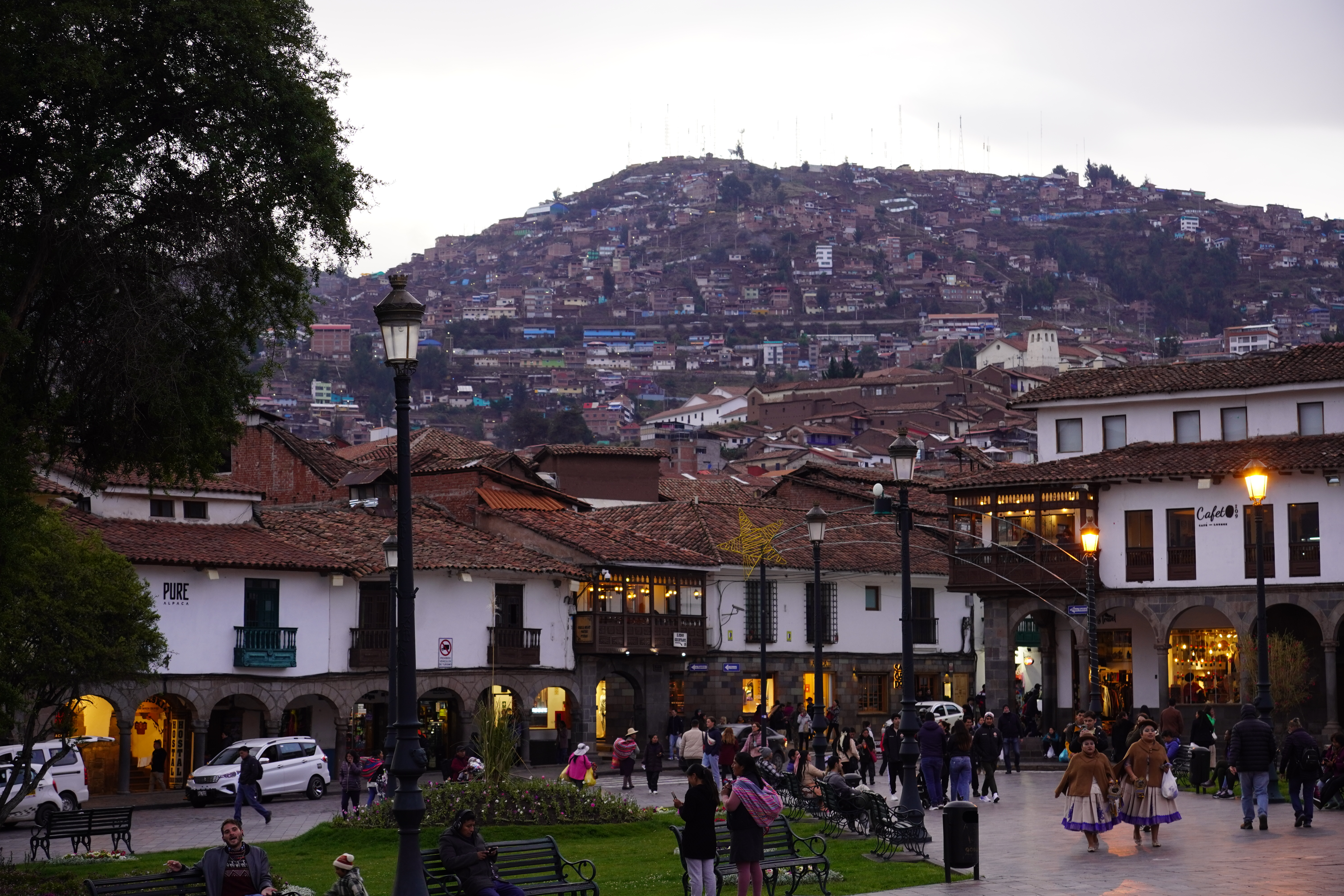
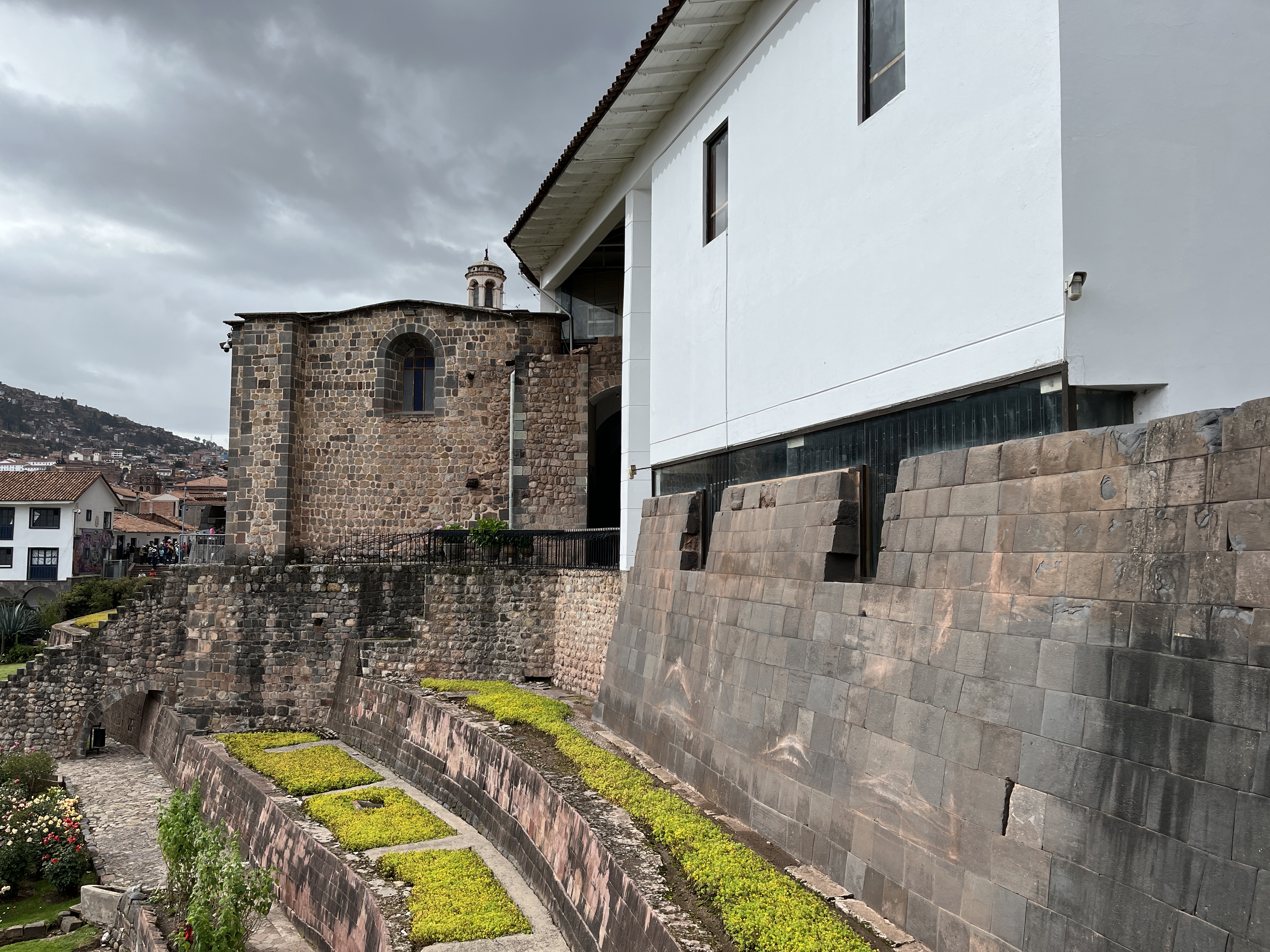
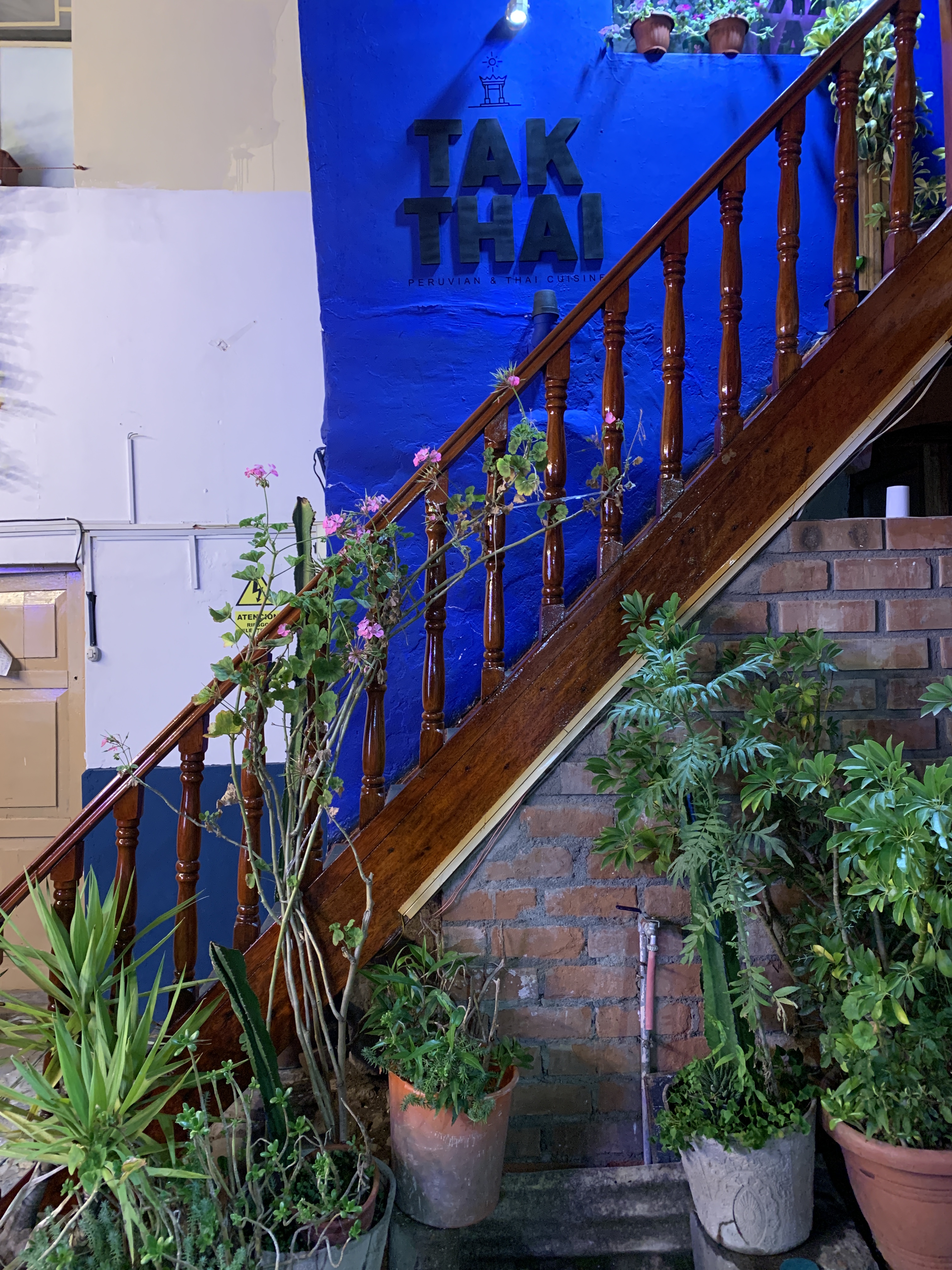
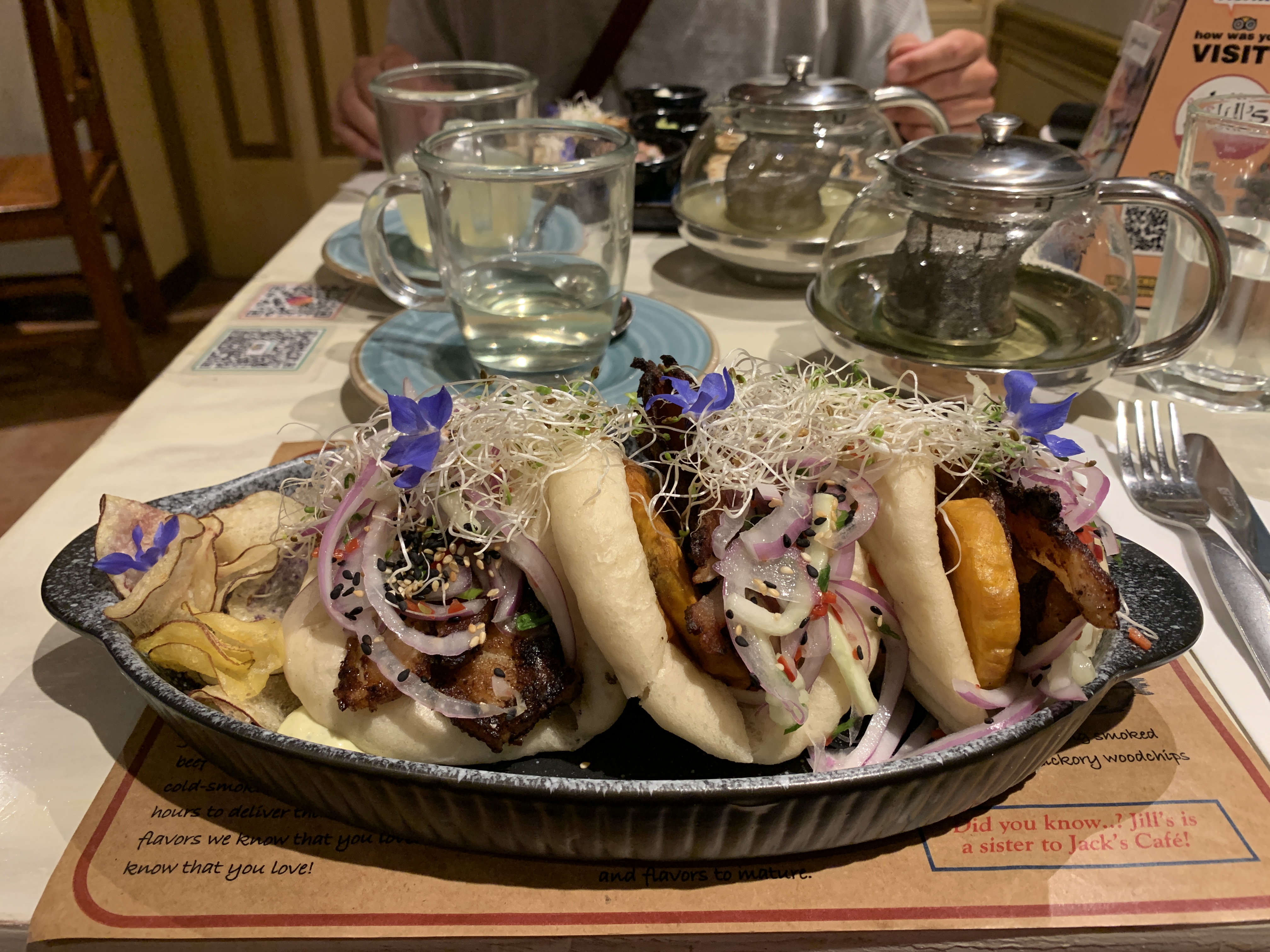
We spent a few days in Cusco sightseeing. Cusco has a population of approximately 430.000 and was once the capital of the Inca Empire. It is renowned for its rich history and stunning architecture. Besides excellent food (Thai, bao buns, burritos, coffee, and, of course, pisco sours), there was also some culture to explore. Cusco feels very European, and the reason for this is the Spanish colonization that began in 1533 after the conquest of the Inca Empire. The Spanish transformed the city, building colonial structures atop Inca foundations, such as Qorikancha, the Inca Temple of the Sun, which became the Church of Santo Domingo. The Spanish simply built their church on top of the Inca temple. Cusco became a center for Spanish administration, religion, and culture, blending European and Andean traditions. The city’s unique architecture reflects this fusion, with colonial churches, mansions, and plazas juxtaposed against the precise stonework of the Inca. Despite the conquest, Cusco remains a symbol of Andean resilience and cultural heritage. We marveled at the breathtaking Inca architecture at the Museo de Sitio Qorikancha and the Stone of Twelve Angles on Hatun Rumiyoc Street. This street features two opposing stone walls: a boring, ordinary wall built by the Spanish people, and in stark contrast, the perfect stone wall of the Inca. It’s hard to believe that these stones fit together so precisely and that the walls are held together entirely without mortar.
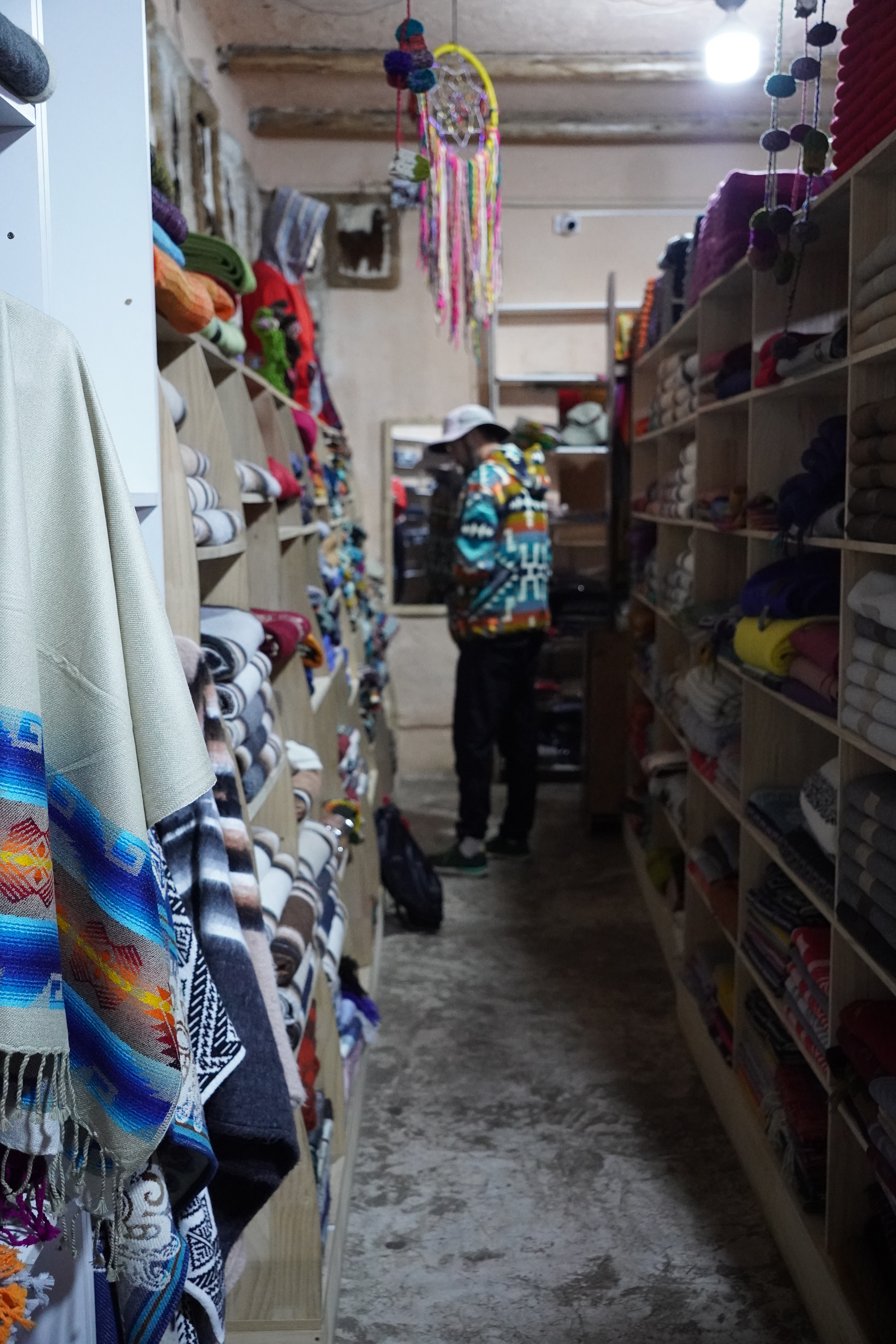
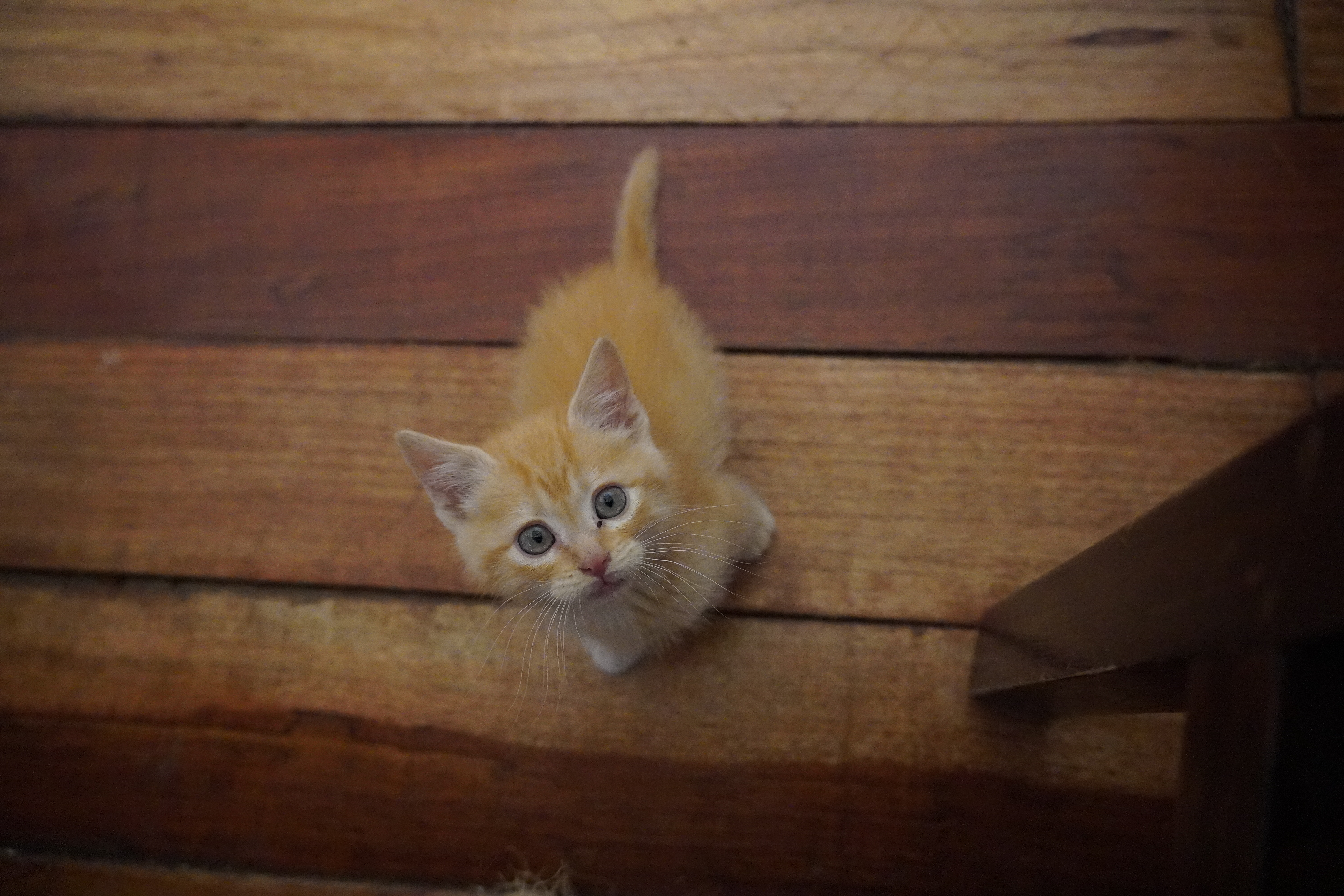
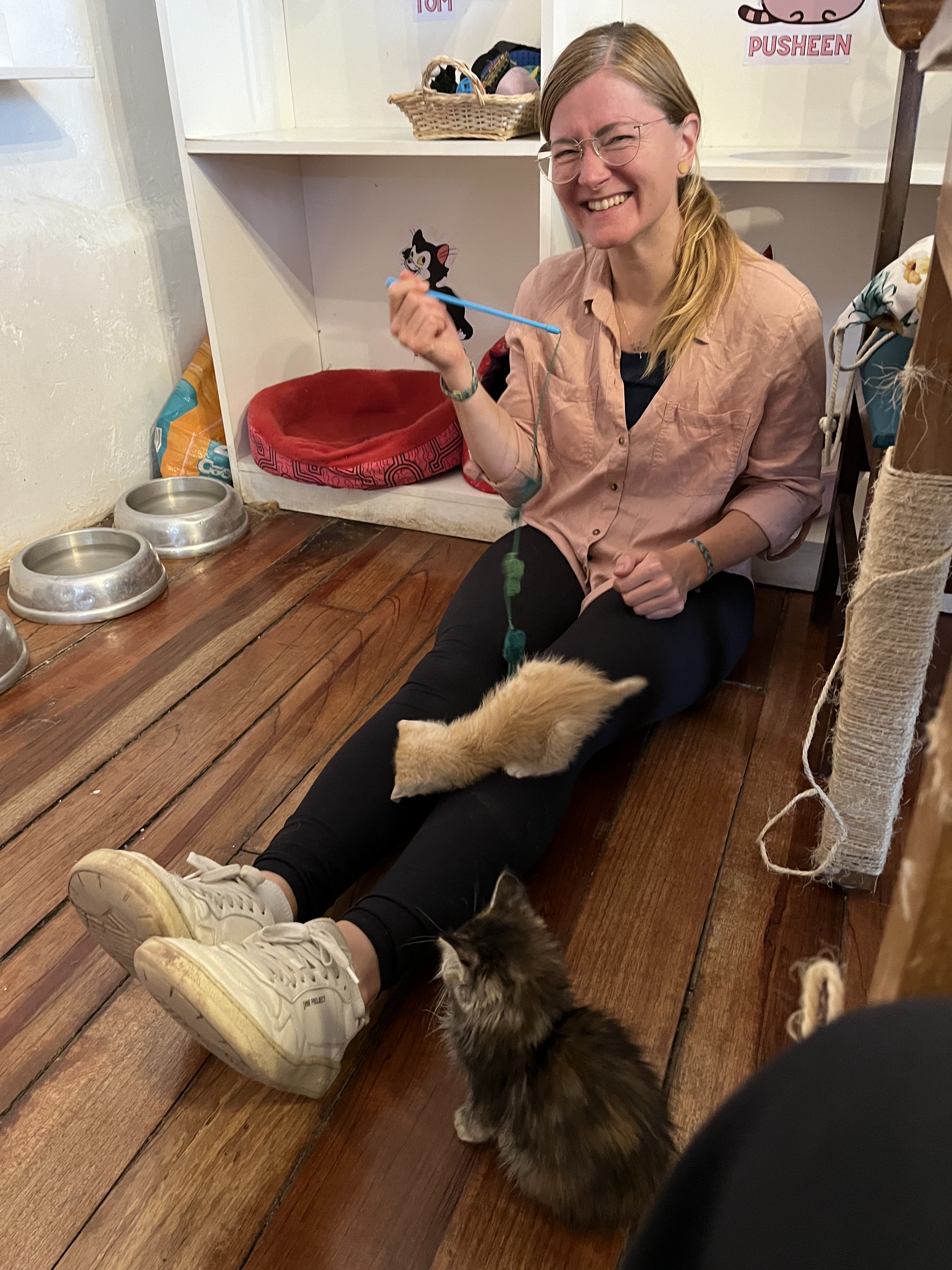
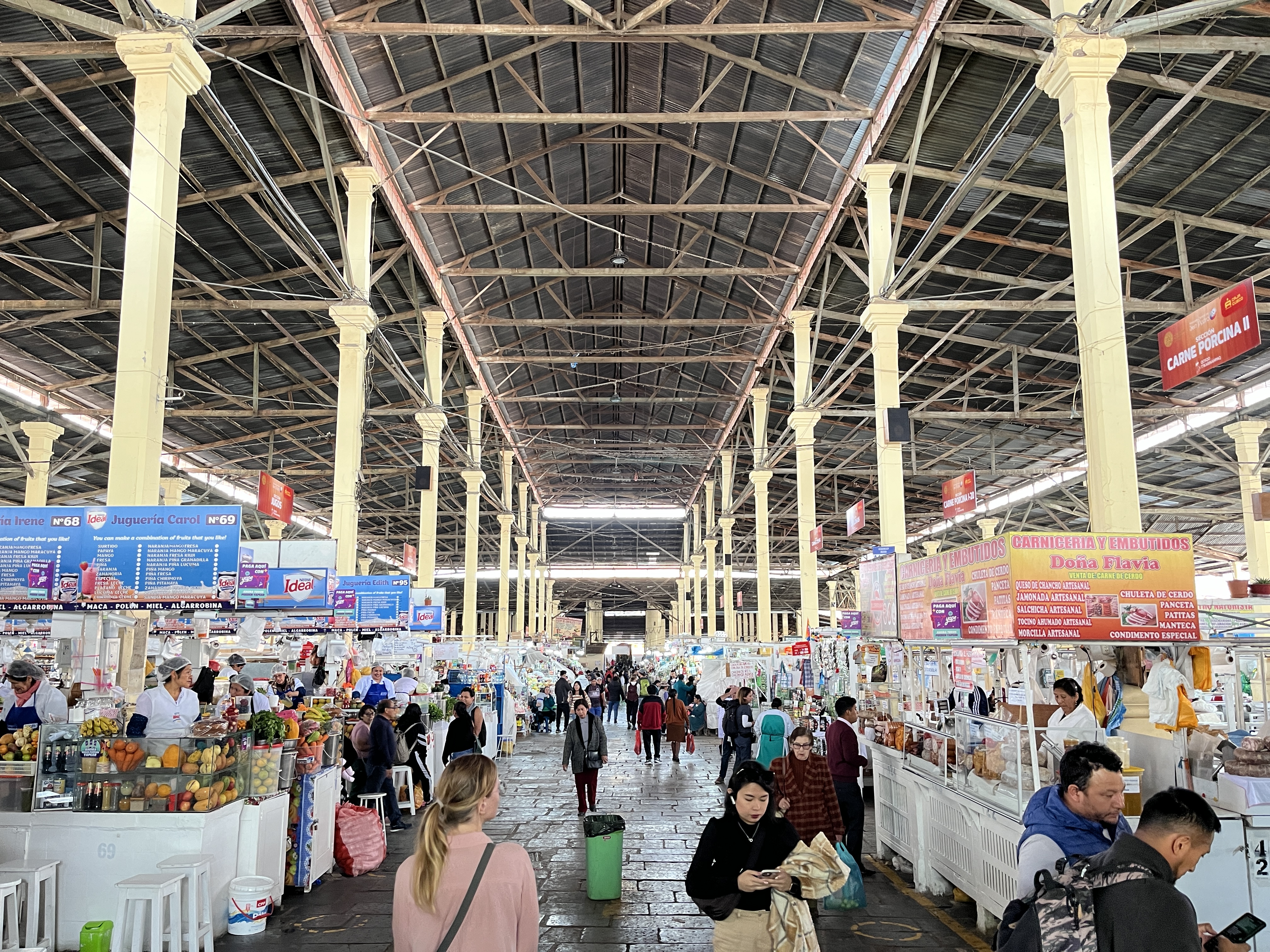
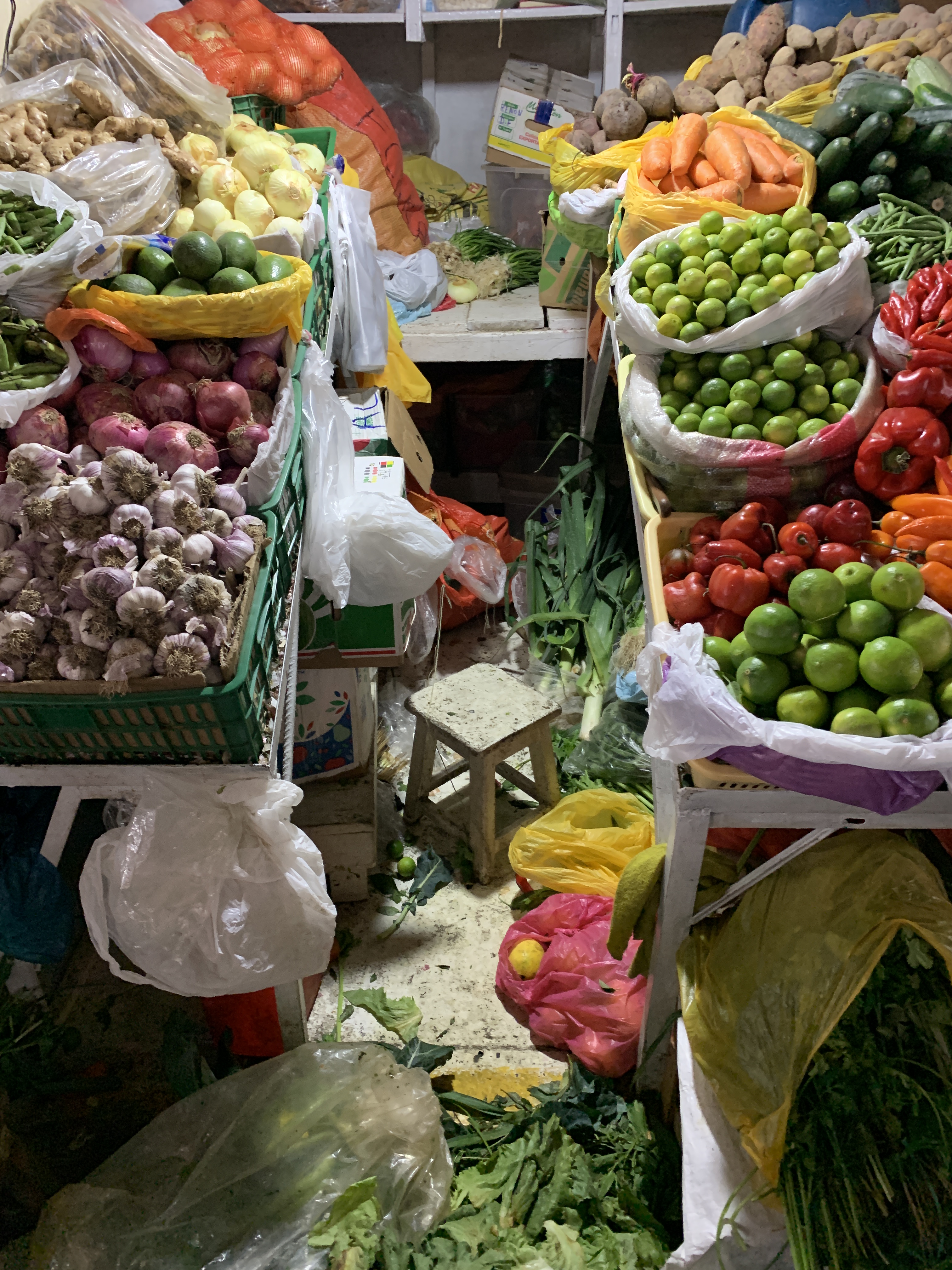
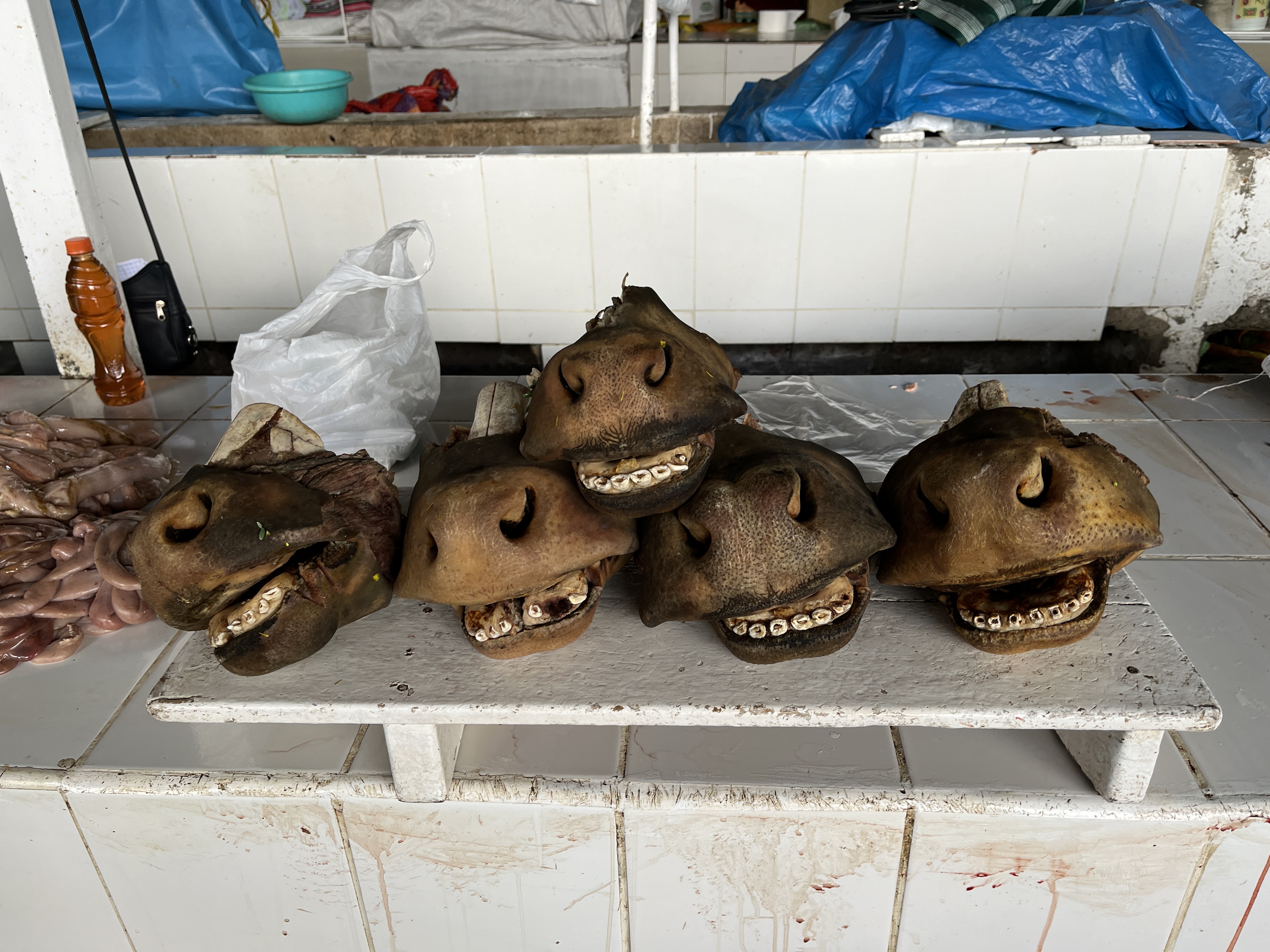
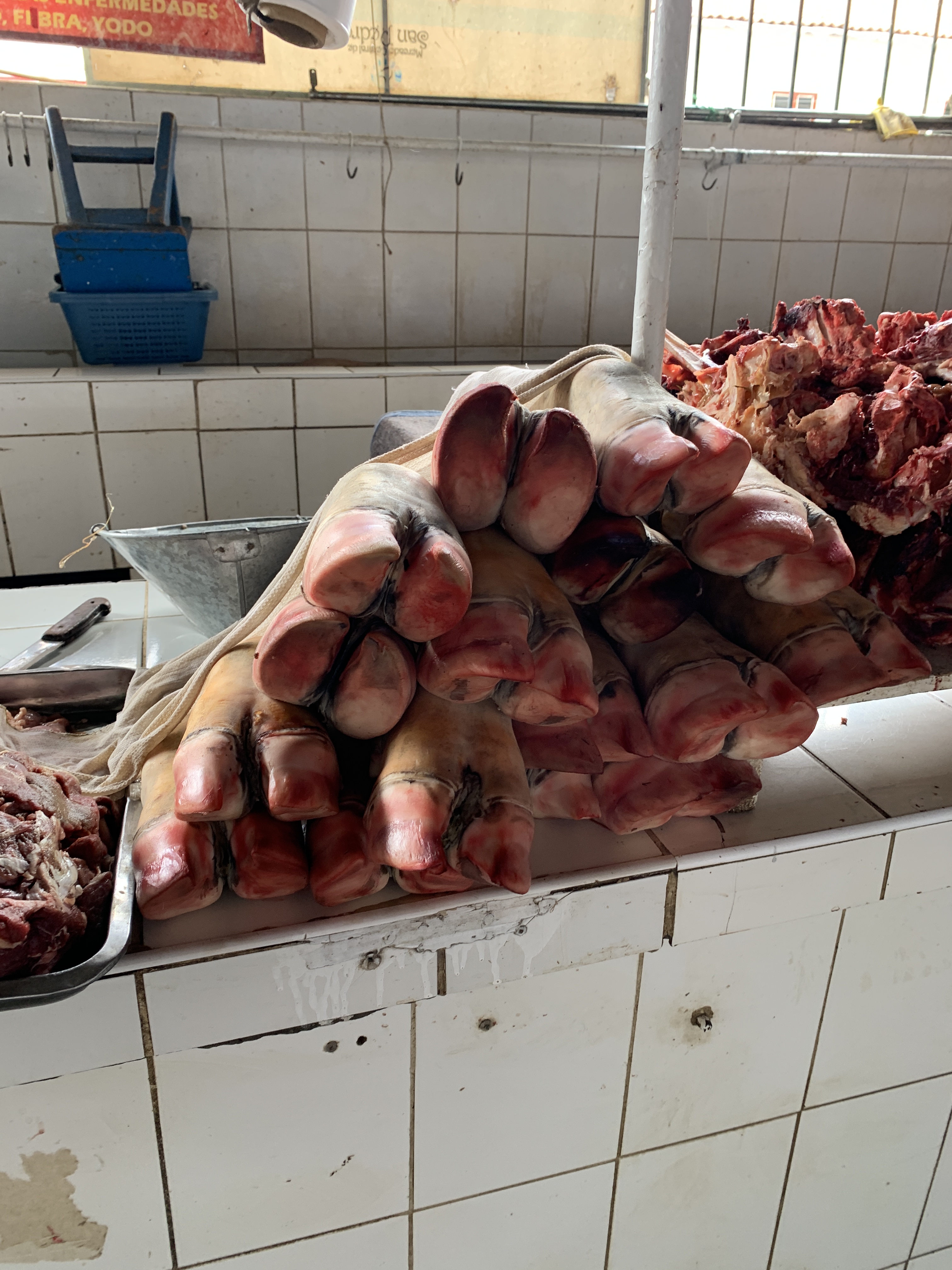
As the weather was highly unpredictable – one moment sunny, the next pouring rain – we visited the cat café Catfetin to stay dry and, of course, to cuddle a bit. There were tiny kittens there, some clingy, wild, playful, and others shy and cautious. I miss my cat, but spending time with these kittens helps a little. Of course, no visit to a big city is complete without a trip to the market. The Mercado Central de San Pedro was an experience in itself. We drank freshly pressed carrot juice with ginger and cinnamon, bought fruits, vegetables, quinoa, and bread, and marveled at all the other goods on sale. We stocked up well for the next few days, although we skipped the cow snouts and feet.
Endless Däys of Driving in the Andes and Roadblocks
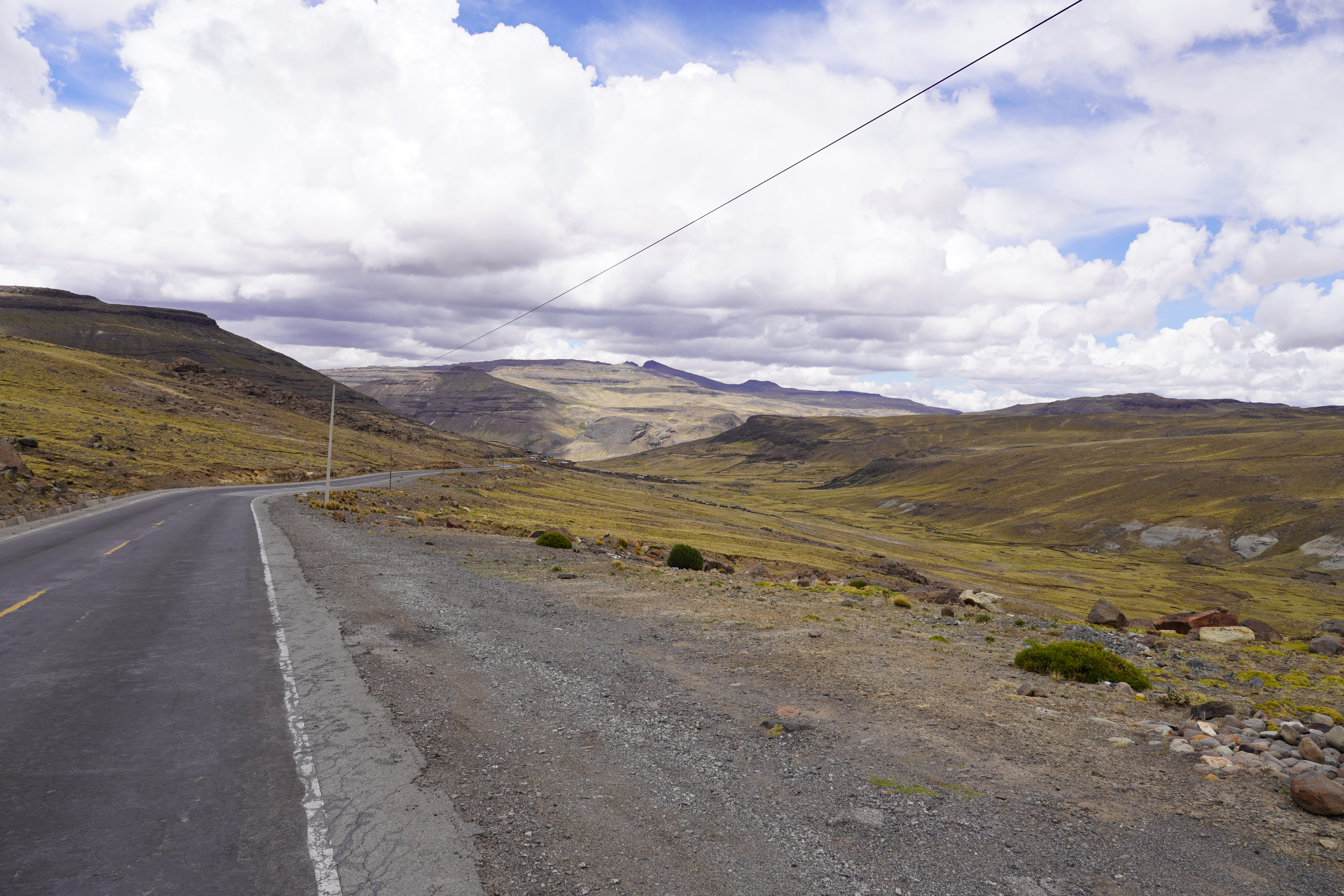
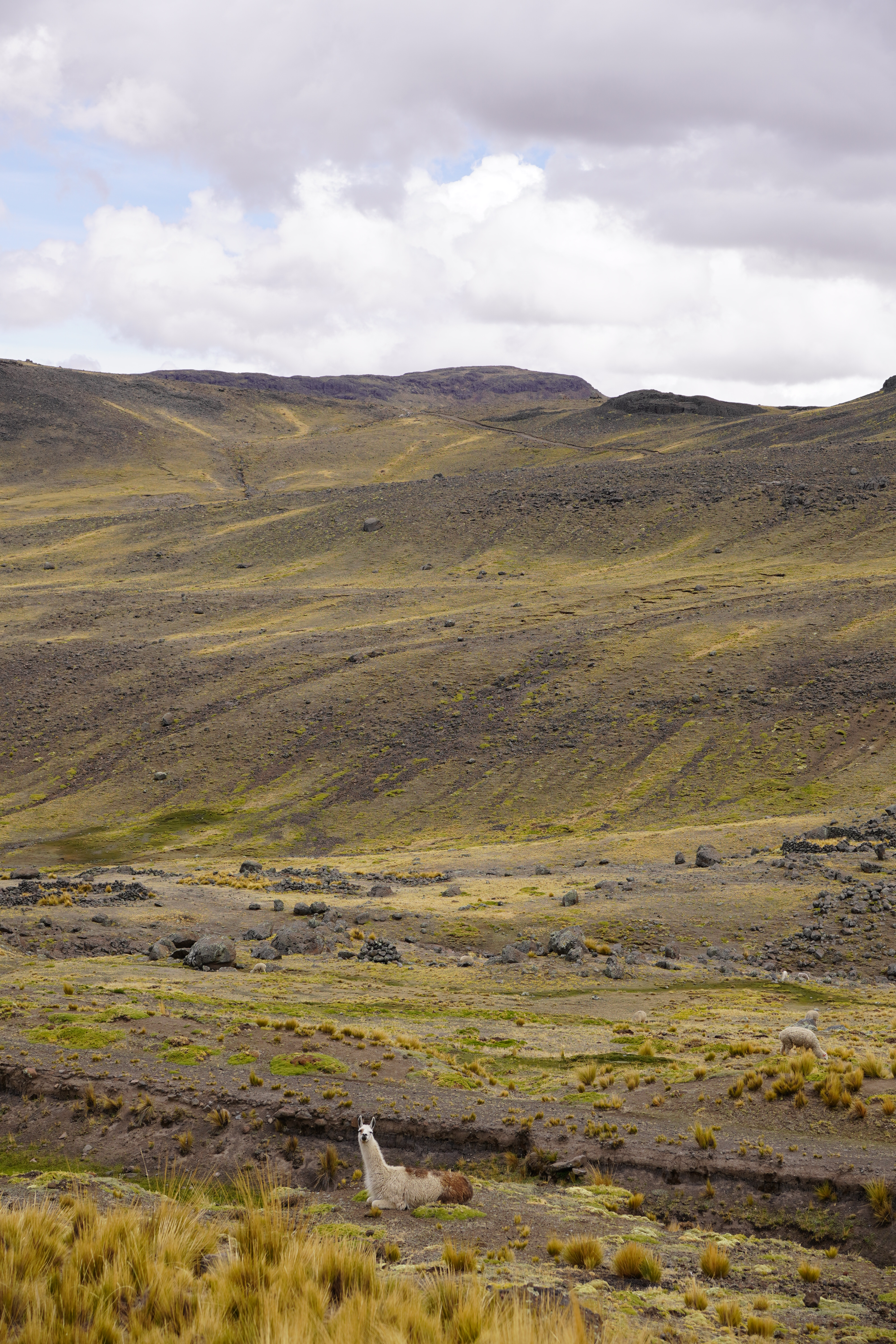
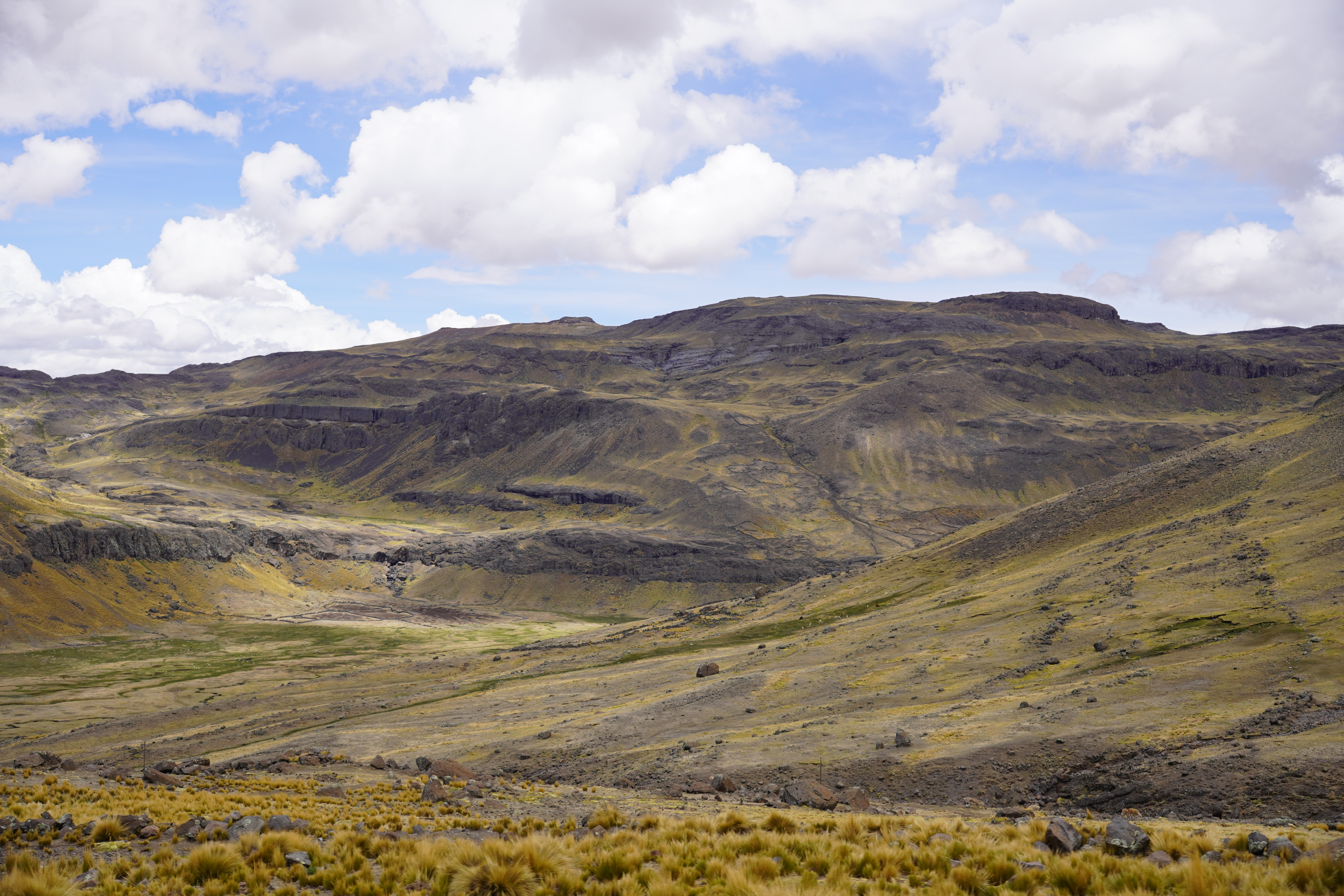
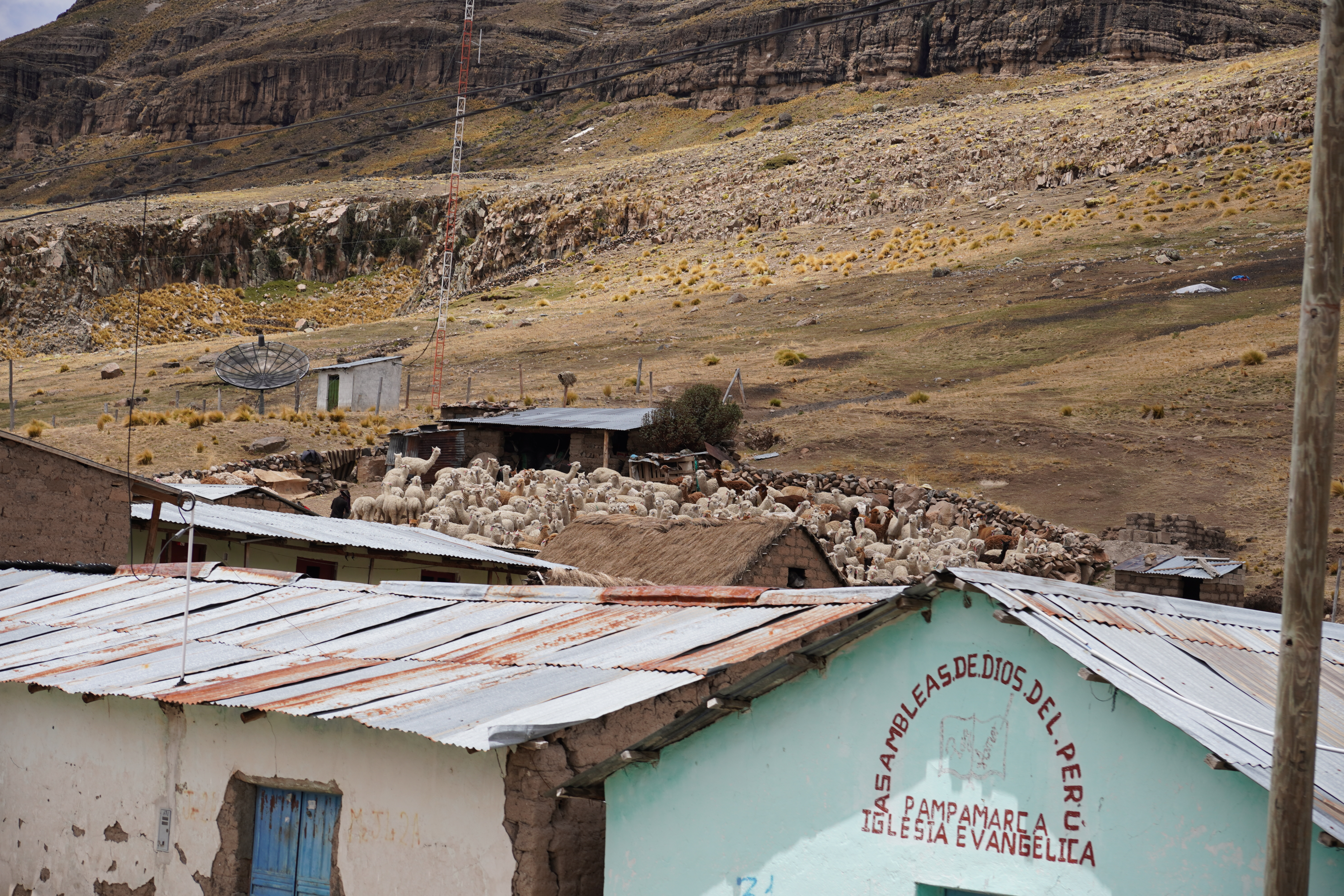
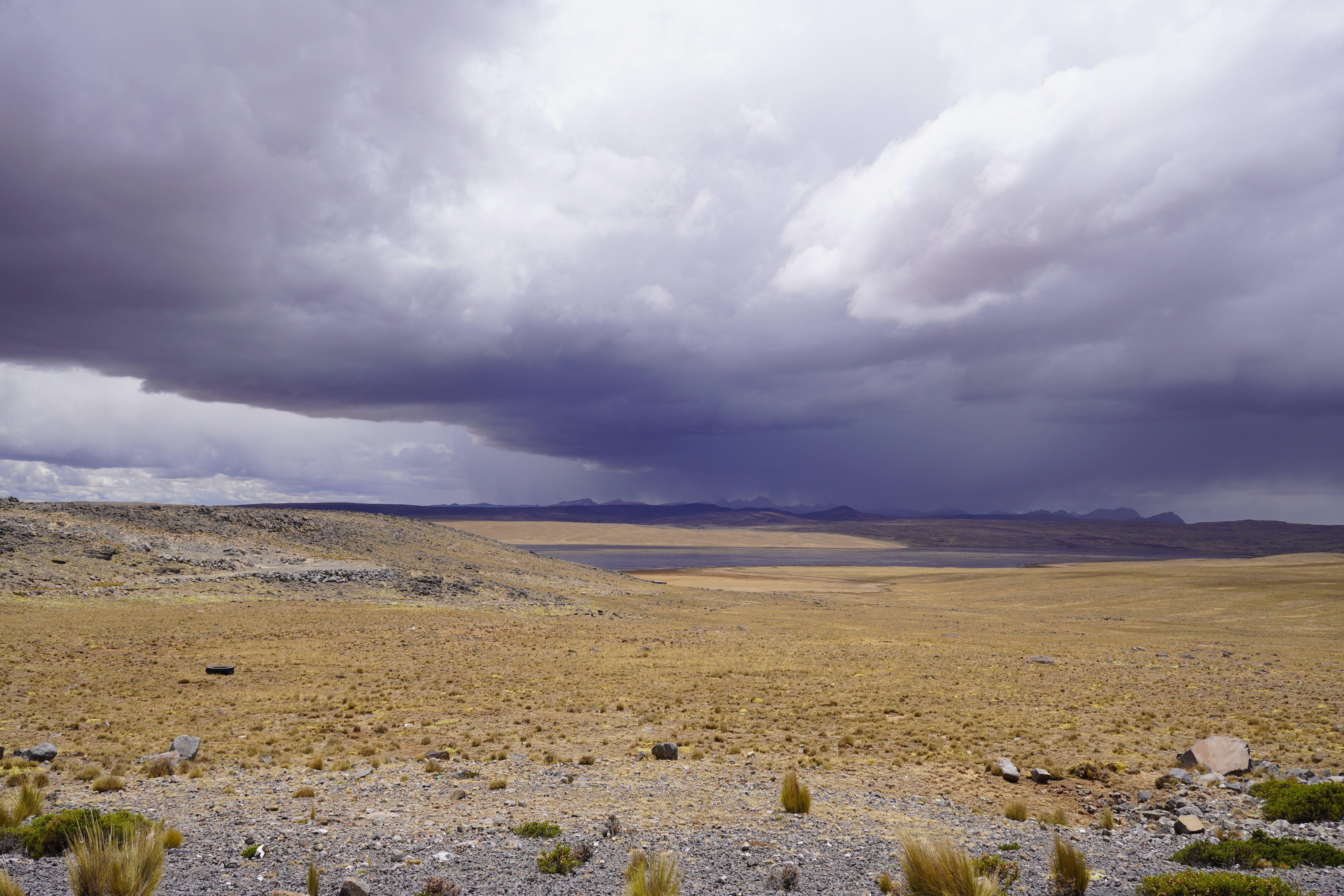
After spending weeks and days in the Andes, we felt drawn back to the sea. However, we knew it wouldn’t be an easy journey. Theoretically, it was about 700 km from Cusco to Nazca – and Nazca wasn’t even by the sea. Along the way, there were three passes over 4000 meters and roadblocks due to striking miners who had shut down the country’s main highways. We planned three days for the trip, which turned out to be accurate. On the way, we saw roasted guinea pigs on spits by the roadside and a tarantula scurrying across the road. Björn had spotted something similar passing the street a few days earlier but couldn’t identify it. This time, it was unmistakably a giant spider, not a guinea pig. We spent the night at hot springs in Cconoc, though they weren’t particularly hot. At least you were allowed to camp there, and in the morning, we swam a few laps and enjoyed a natural warm shower. There were kittens everywhere, too. The next morning was all about driving. We saw many llamas and alpacas, drove countless hairpin curves, crossed Andean passes at 4500 meters, listened to an audiobook, and encountered numerous rockslides and partially buried roads. It was exhausting, and we tried to avoid spending the nights at high altitudes, which we managed to do.
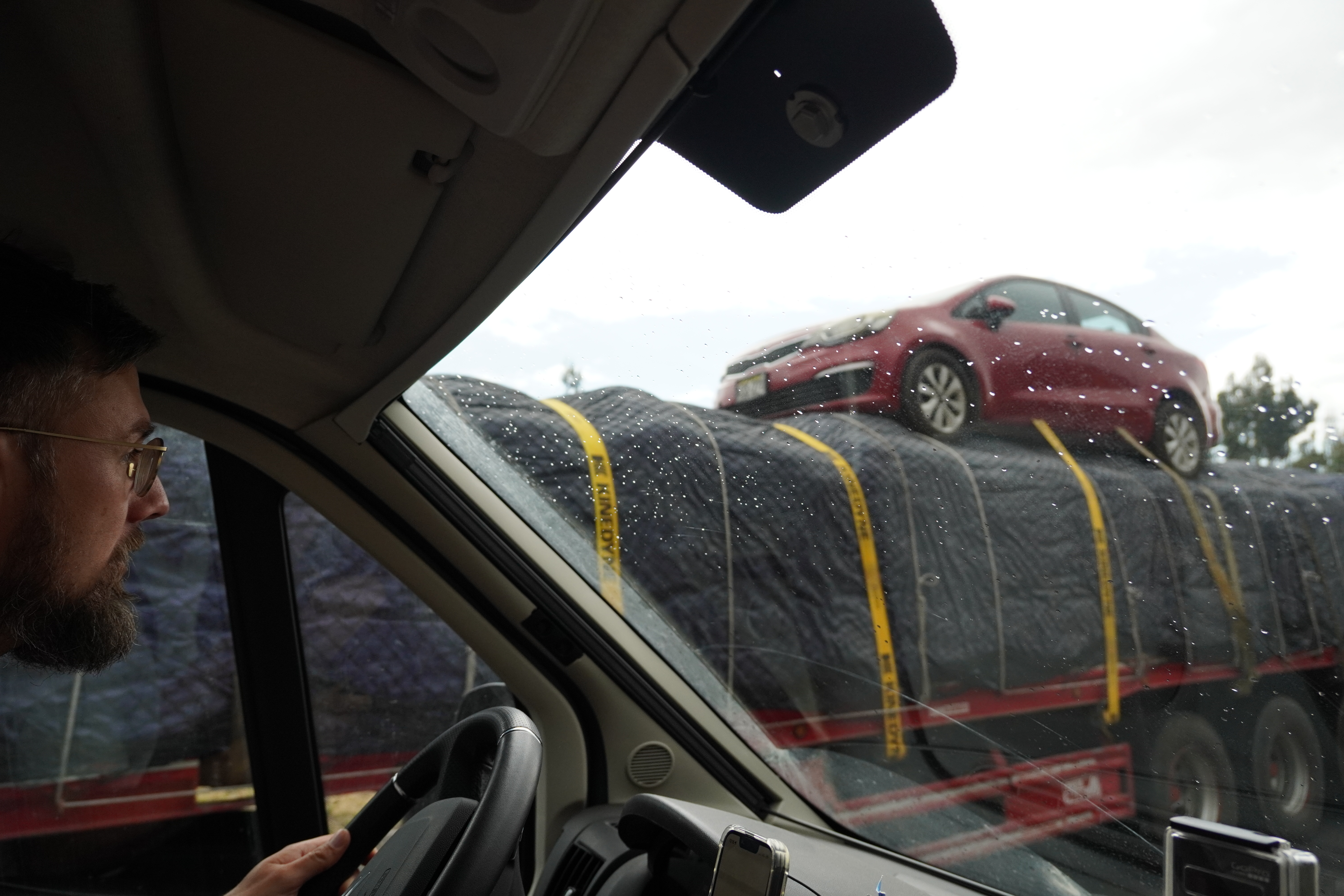
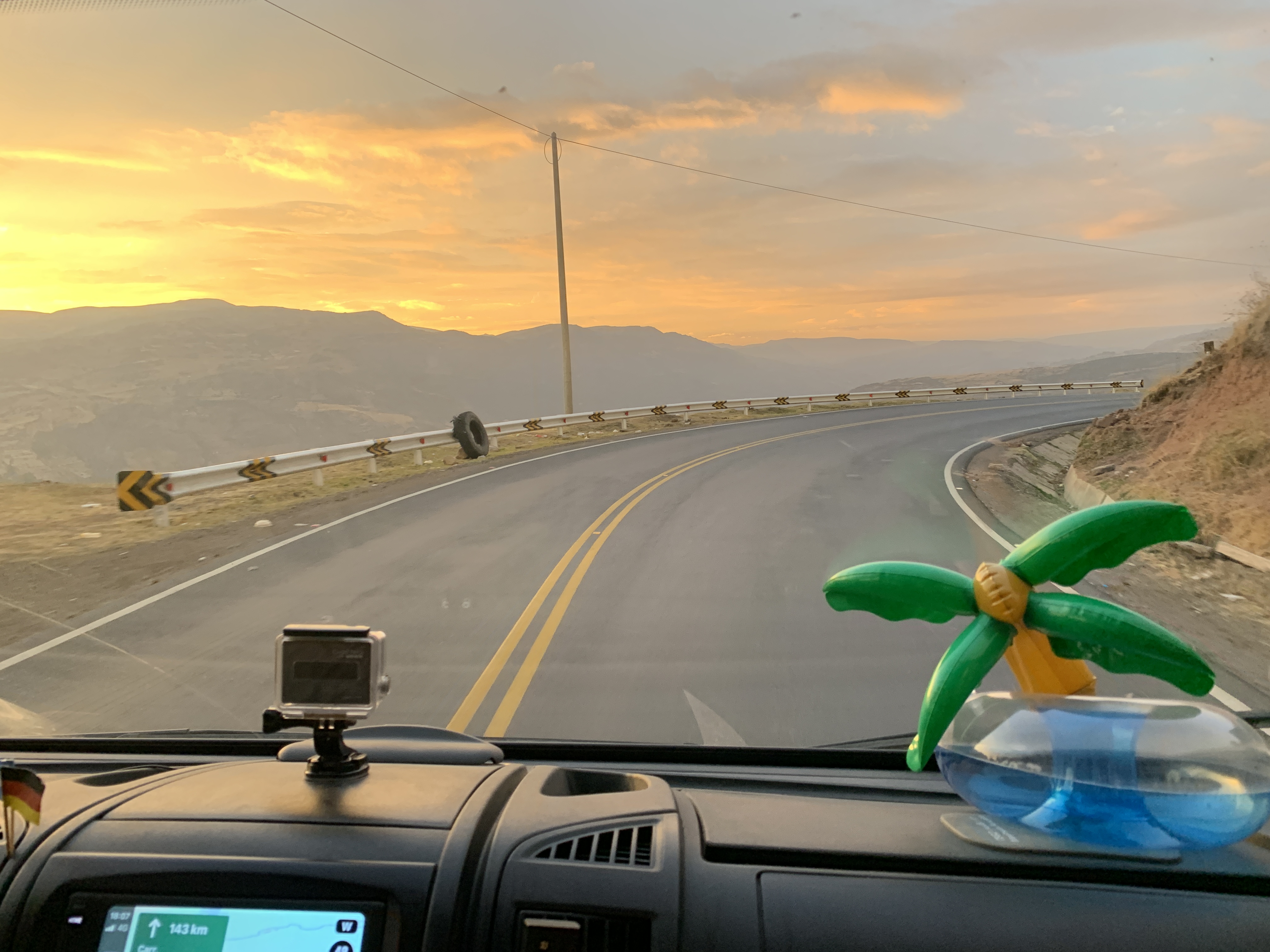
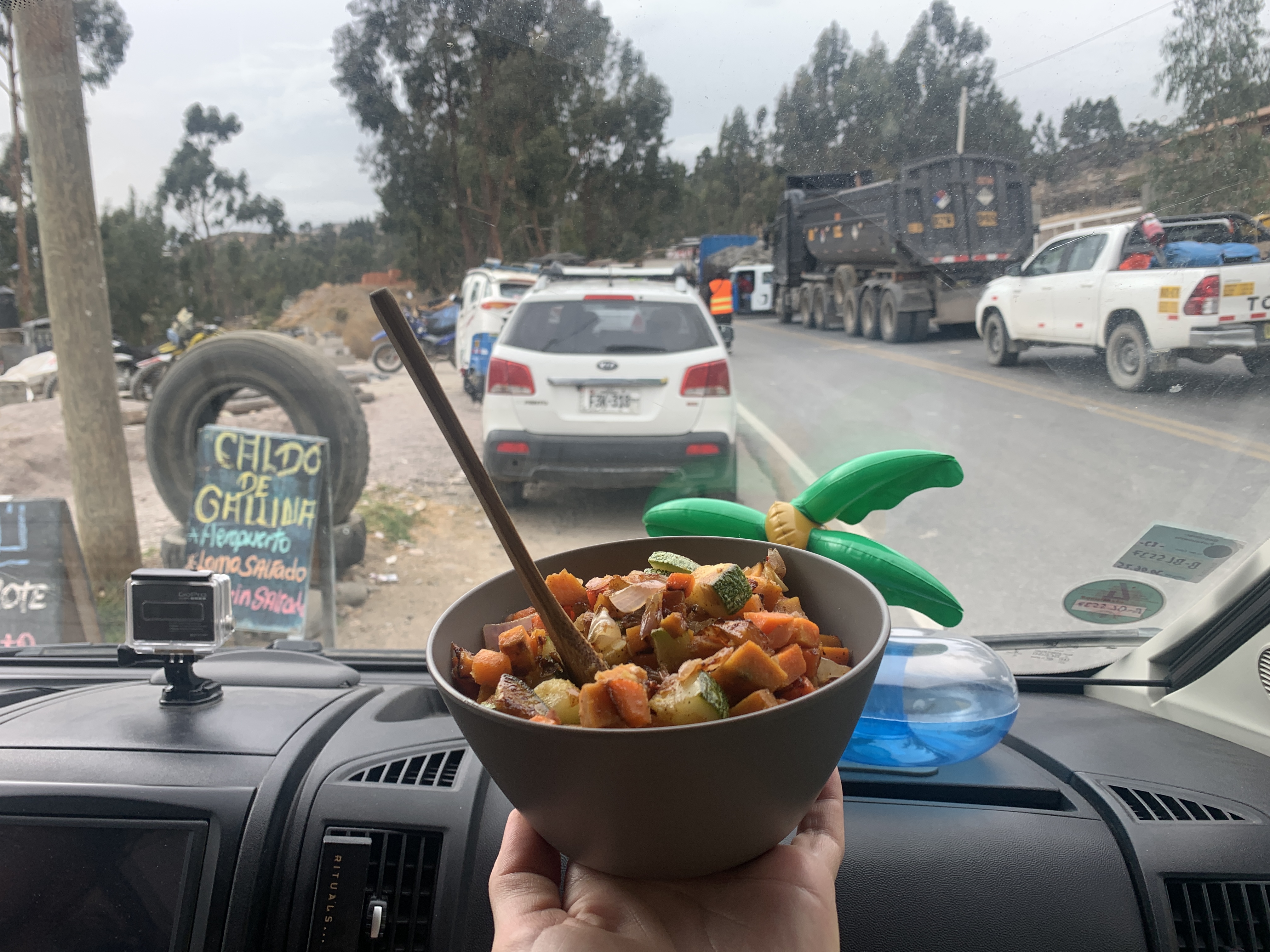
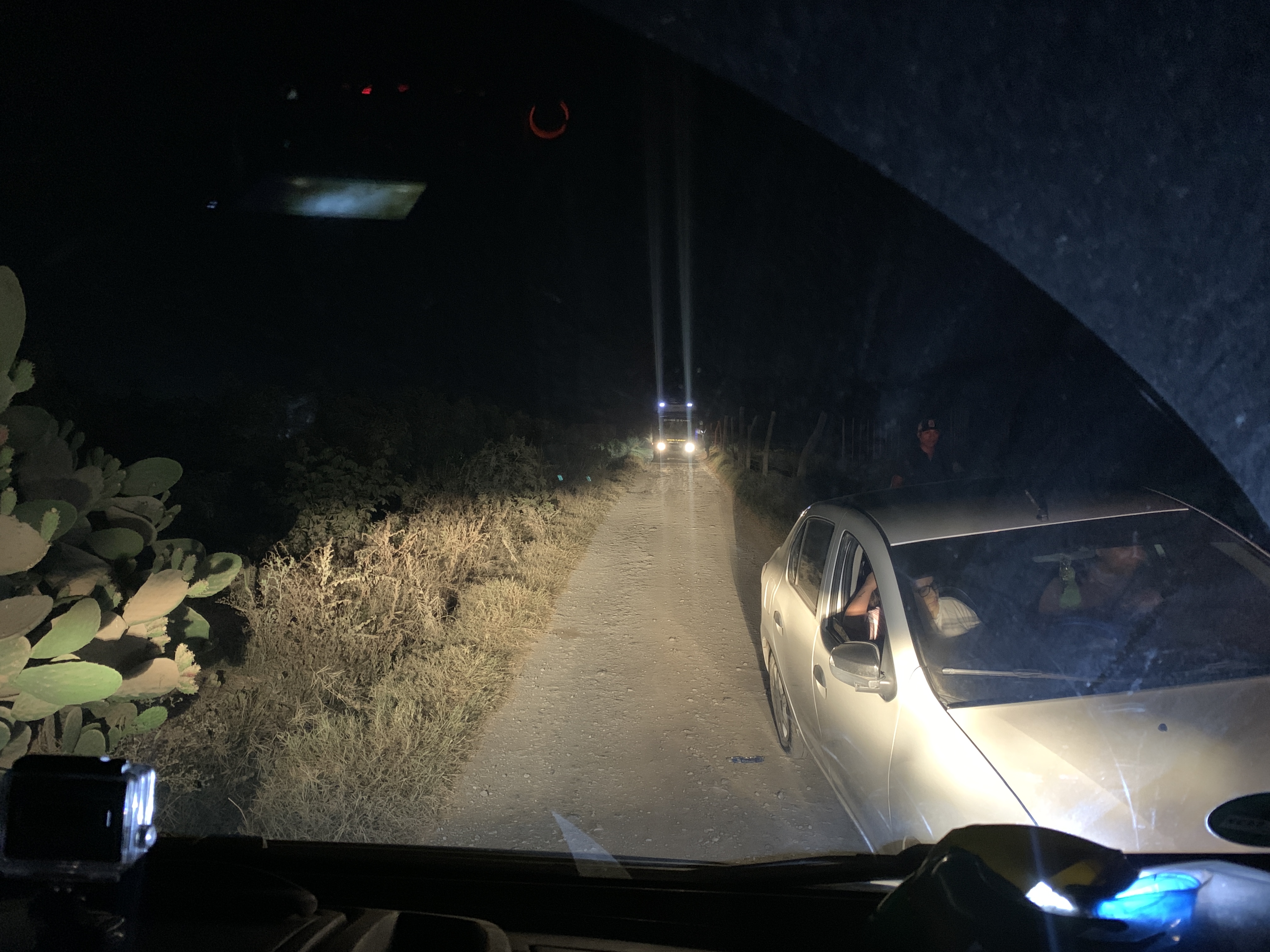
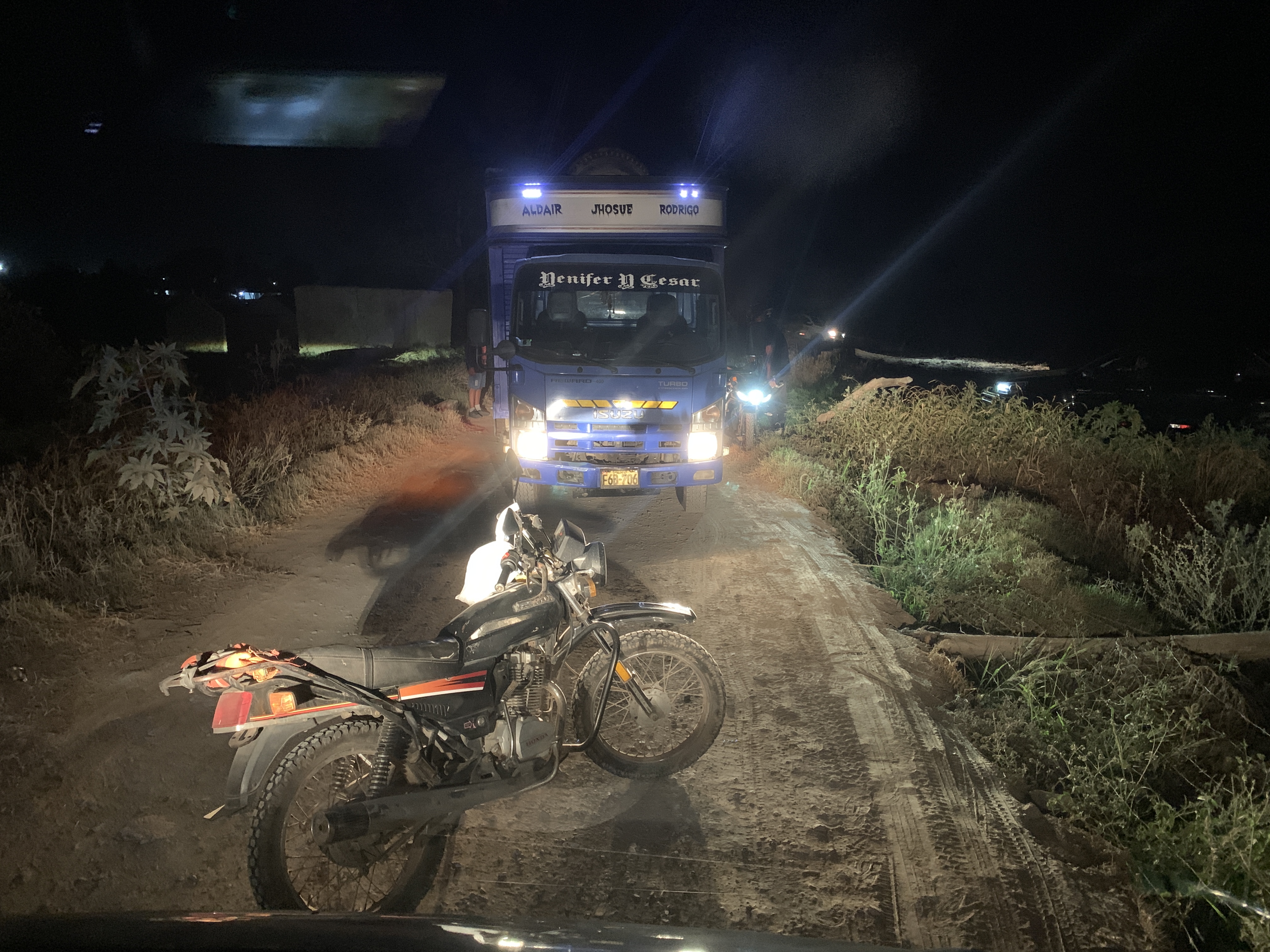
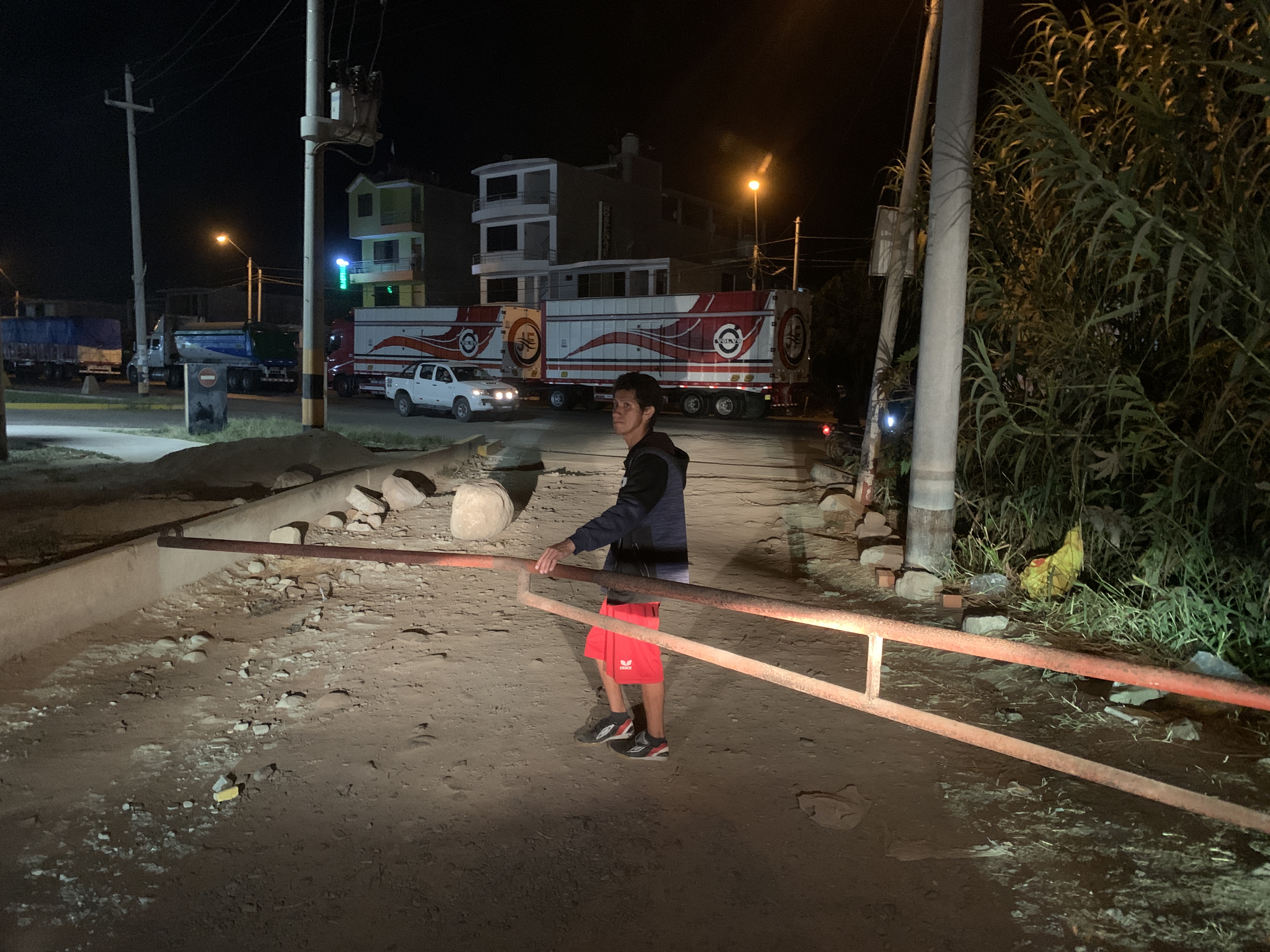
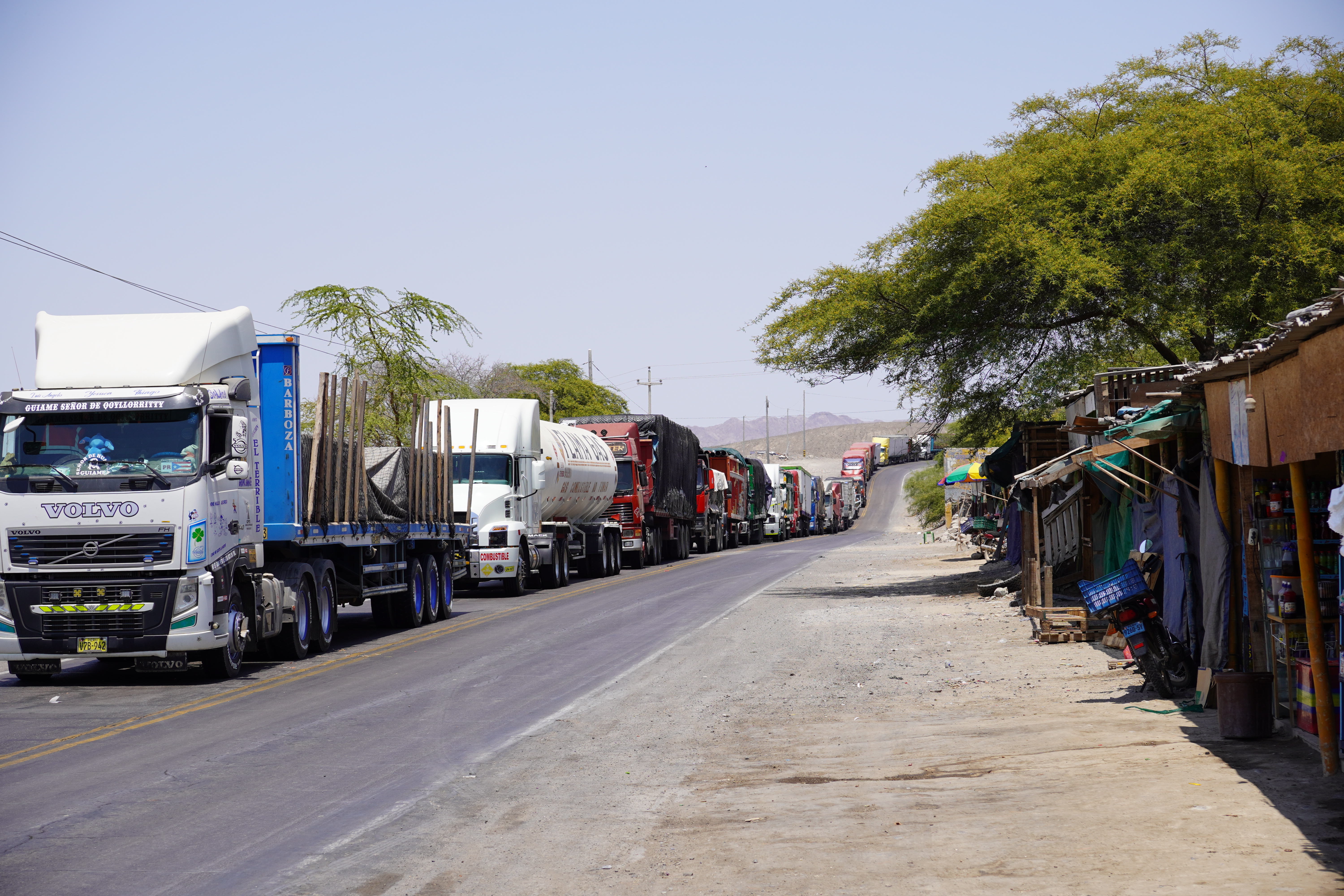
On the third day of driving, it happened. We passed through a town called Puquío (which sounds rather cute), and then everything came to a halt: our first roadblock. The miners had blocked the road with car tires, tarps, and wire ropes, and they themselves stood guard. We nearly made it to the front of the line. They told us they would open the road at 6 p.m., so we waited for four hours. What do you do during such a wait? You wait, read, and cook. I prepared a quinoa vegetable stir-fry. Surprisingly, the time passed faster than expected. When the roadblock was lifted shortly before 6 p.m. for a few hours, chaos erupted. The true nature of Peruvian drivers was revealed: they are terrible drivers and absolute machos. Everyone wanted to be first, as we had already experienced on the road to Machu Picchu. Peruvian drivers are reckless, ignore all traffic rules, overtake on the left and right, honk incessantly, and drive with their high beams on. It’s no fun. The miners were shouting and opened the roadblock, walking past the cars and celebrating themselves. The drivers huddled together, and everyone drove as fast as they could, trying to be the first to continue. A miracle that no one and no car got hurt in the process. We continued through the mountains with a wonderful sunset. We let most of the cars pass so we could drive the winding roads without disturbance. The Peruvians overtake wildly in the curves and put other drivers in dangerous situations. Actually, we have the rule that we don’t drive in the dark, but now we had no choice. We had to continue because the roadblock would soon be active again. In the mountains, we passed another roadblock, but it was for the oncoming traffic that had not yet been opened. We could continue slowly. After 4 hours of driving (badass Björn just kept going) and a really good audiobook (Views by Marc-Uwe Kling), we actually made it to Nazca in the dark. We filled up the tank at a gas station and stood in front of the next roadblock in the city. WTF! The city felt weird, and we didn’t want to stay there. We didn’t feel comfortable. We heard from a WhatsApp group about Peru that it was possible to bypass the roadblock with not-too-large cars. So, we did that. It was a narrow, unlit dirt path made of sand. We had covered 2/3 of the distance when we came to a stop here as well. Since Peruvians don’t drive predictively, several small cars came toward us, and we got stuck. It was incredibly tight. More and more cars came from both sides, blocking every chance of reversing. It took a while until we could pass the parked cars with Rosi at the very narrow spot. Particularly helpful were the opinions of the men who wanted to tell Björn how he should drive. None of them can drive, so how could they give useful tips? Our nerves were raw. But Björn managed to get out of there. The last meters on the dusty, narrow road lay ahead of us. Suddenly, a barrier appeared with an old woman. She wanted money and wouldn’t let us pass. Several men came over and wanted money. We argued and refused to pay money on principle, even though it was little. We didn’t feel like dealing with corruption. The car in front of us didn’t have to pay either. Since there was a long line of cars behind us, they started honking. Everyone became loud. So did we. We told ourselves to just wait. And after a few minutes, tadaa, they opened the barrier and just let us through. We drove into the waiting cars of the roadblock in the opposite direction. There was hardly any of our lane left visible, cars without their lights on were half on our lane, people were walking around, it was very dangerous. We only drove with high beams and had to honk. Suddenly, we had adopted the driving behavior of the Peruvians ourselves. It was terrible. We were ashamed. I had never seen Björn as such an aggressive driver. I understood it, though. It was almost midnight by then. We found a quiet place to park for the night and fell asleep quickly.
Hüge Cat and Very Gracious Miners
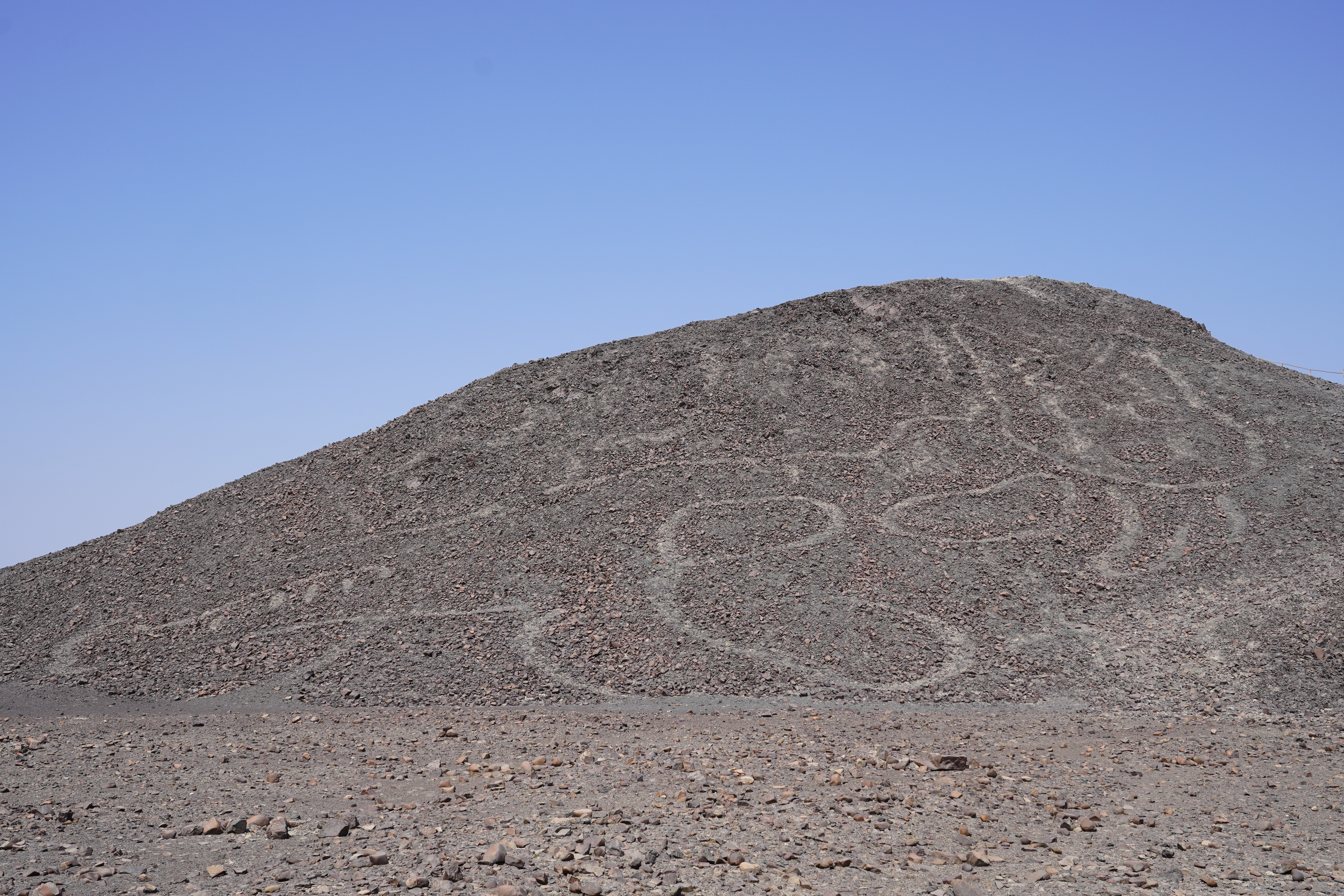
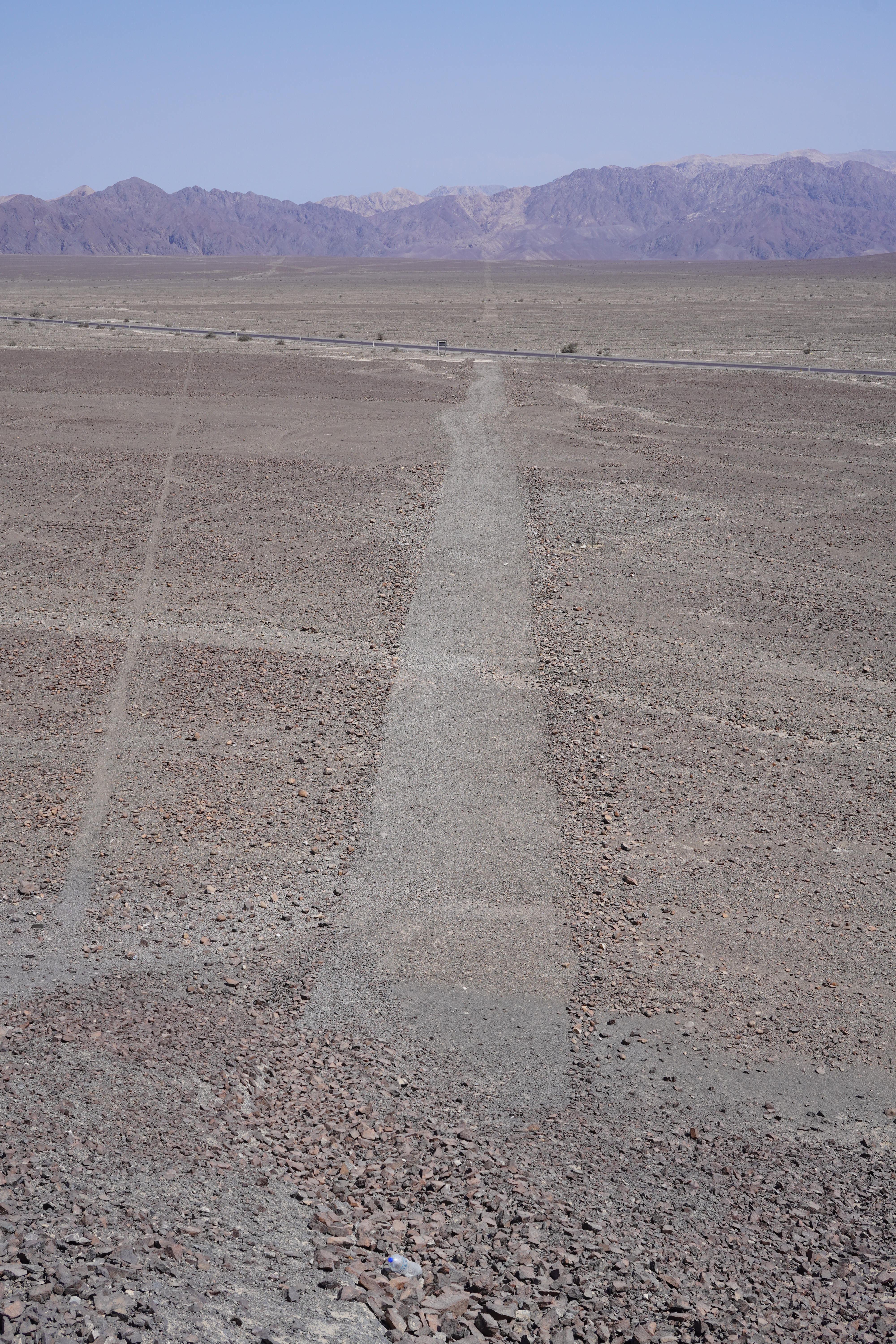
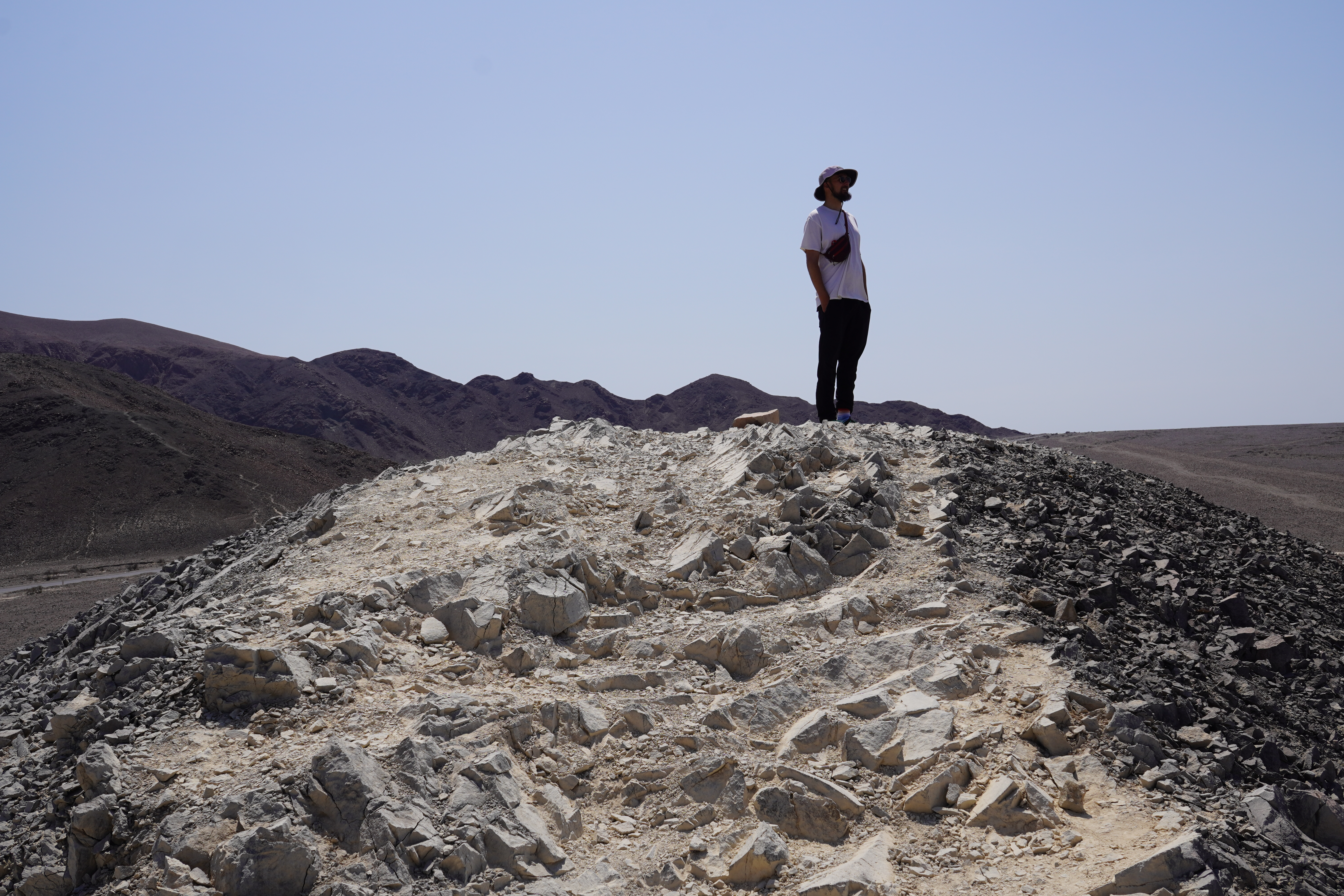
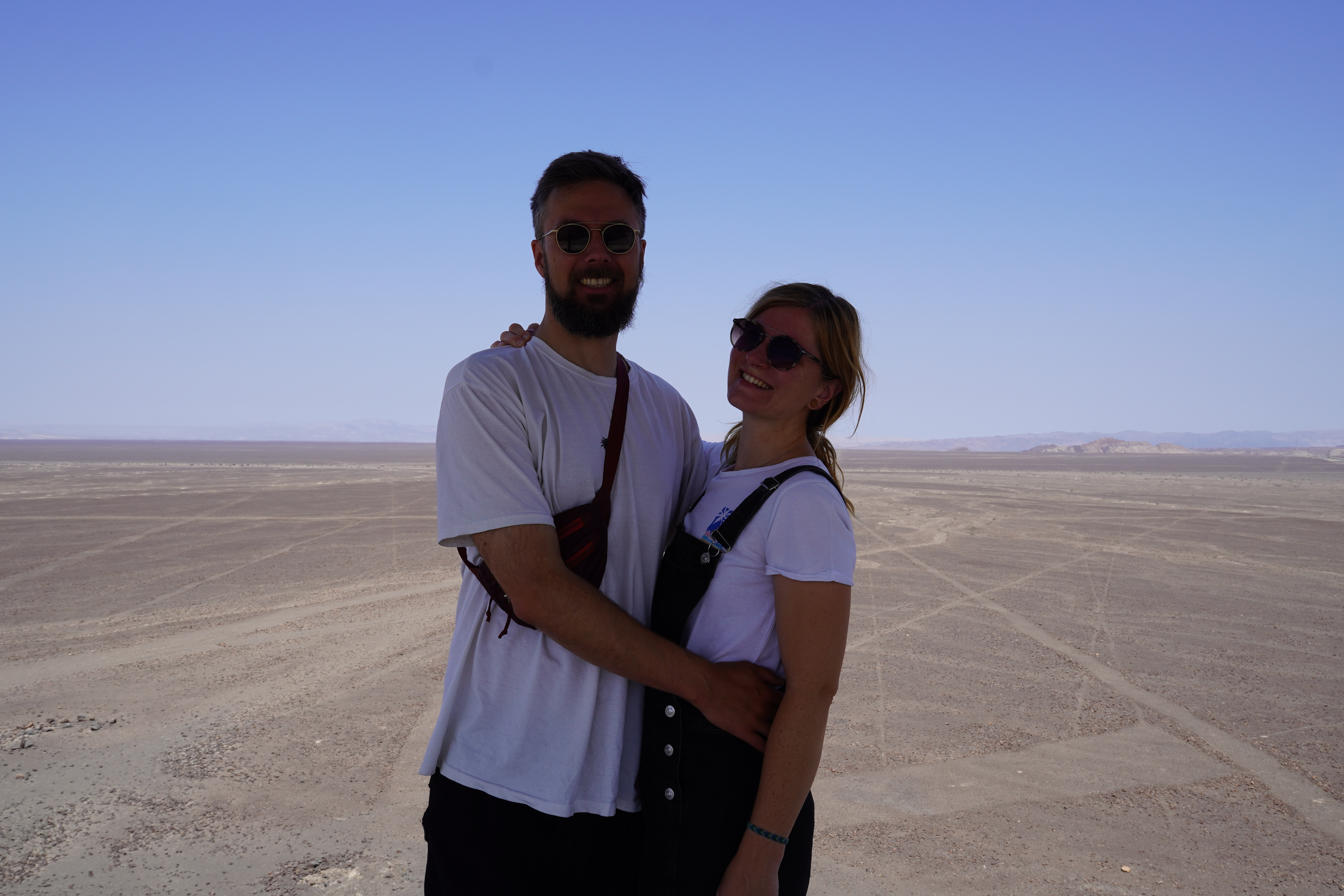
In the morning, we woke up next to a cat. A 37-meter cat made of stones. There, I ordered some cat food for Mine (our cat) in Germany. The Nazca Lines are massive geoglyphs found in the desert. They were most likely created between 200 BC and 600 AD by the Nazca culture. One of these lines represents a stylized cat. This cat figure was rediscovered in 2020 after erosion and natural processes had partially obscured it. The Nazca Lines are a UNESCO World Heritage site and fascinate with their size and the purpose that remains unclear to this day. Whether they served religious, astronomical, or communicative functions, the lines continue to puzzle scientists. We could spot other lines from the observation platform. We drank coffee and learned from a Peruvian, who was collecting the 3 Soles entry fee for the cat, that there was another roadblock by the miners further up the road. The relaxed morning was over. Unfortunately, the Peruvian website that tracks road closures hadn’t listed this one. It had been open just a few hours ago, and we had slept peacefully. Neither of us felt like waiting until 6 p.m., and there was no other way around, nothing else was reachable. We were trapped. On one side, Nazca with the blockade, and on the other side, El Ingenio. We drove to the blockade and waited a bit. We considered asking politely if they would let us through: Why not, what could happen? Björn went to talk to the miners in Spanish, explained that he understood their strike and respected it (we didn’t), but we were tourists traveling through Peru, spending our money here, and wanted a positive travel experience… and so on. Björn came running back, saying they would let us through. We drove through the blockade as quickly as we could. They only let us pass and no one else. How wonderful!!! We didn’t have to wait for 8 hours. What a great feeling! And we didn’t want to stop anymore and didn’t visit any more Nazca Lines sadly. We just wanted to drive… The next stop was a large supermarket in Ica after nearly two hours. There, we stocked up on food for our stay in the oasis.
The Ski Season is Open
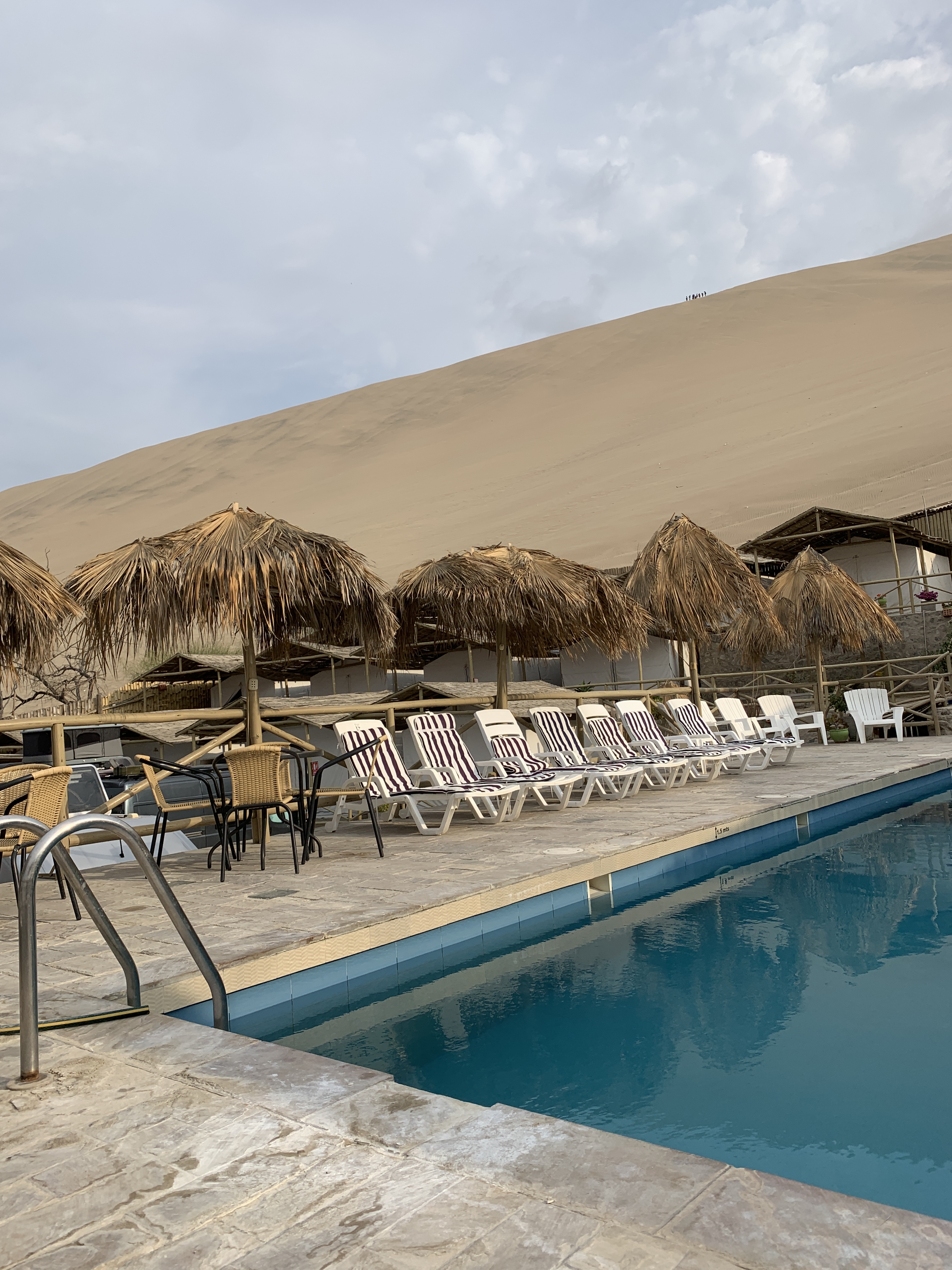
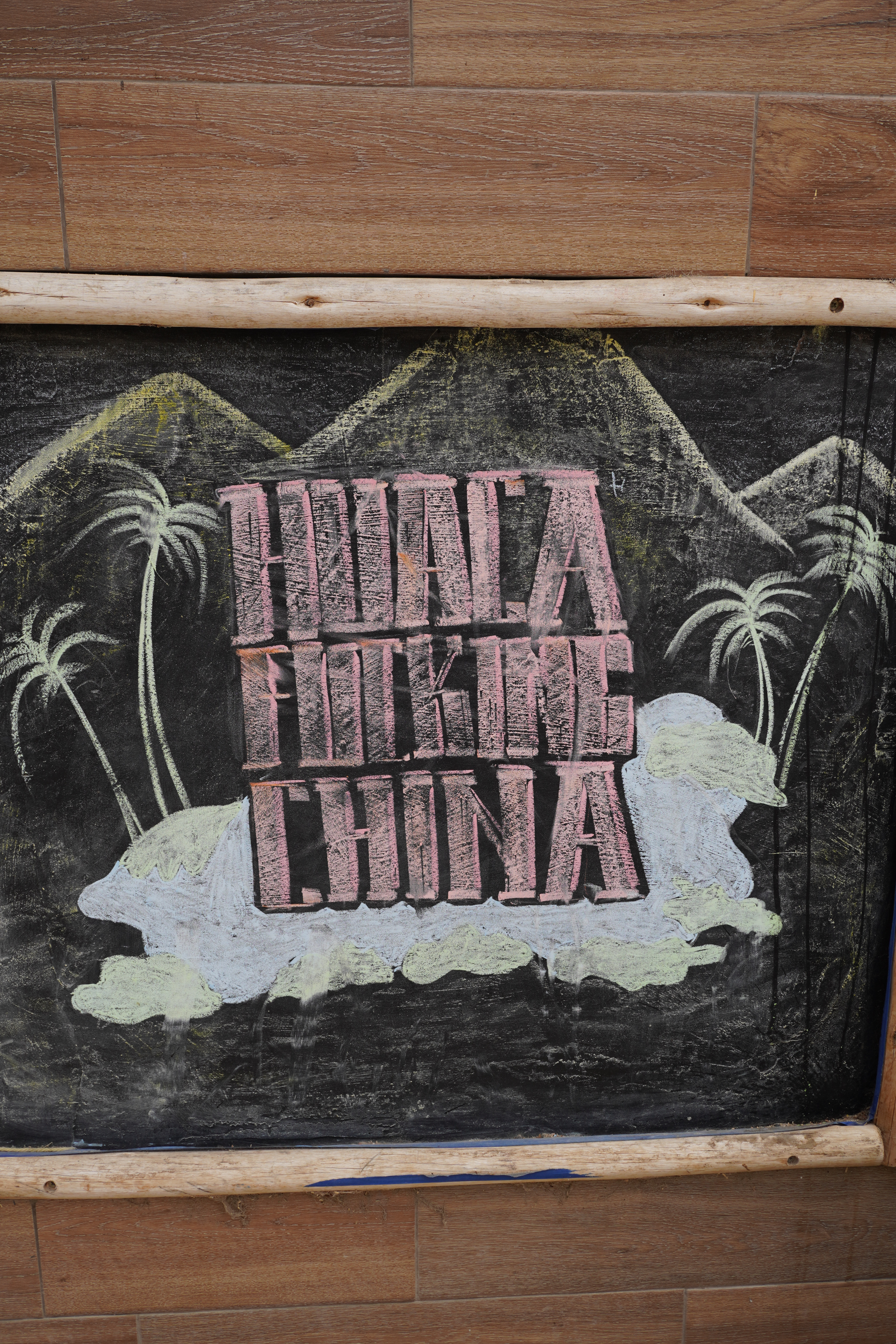
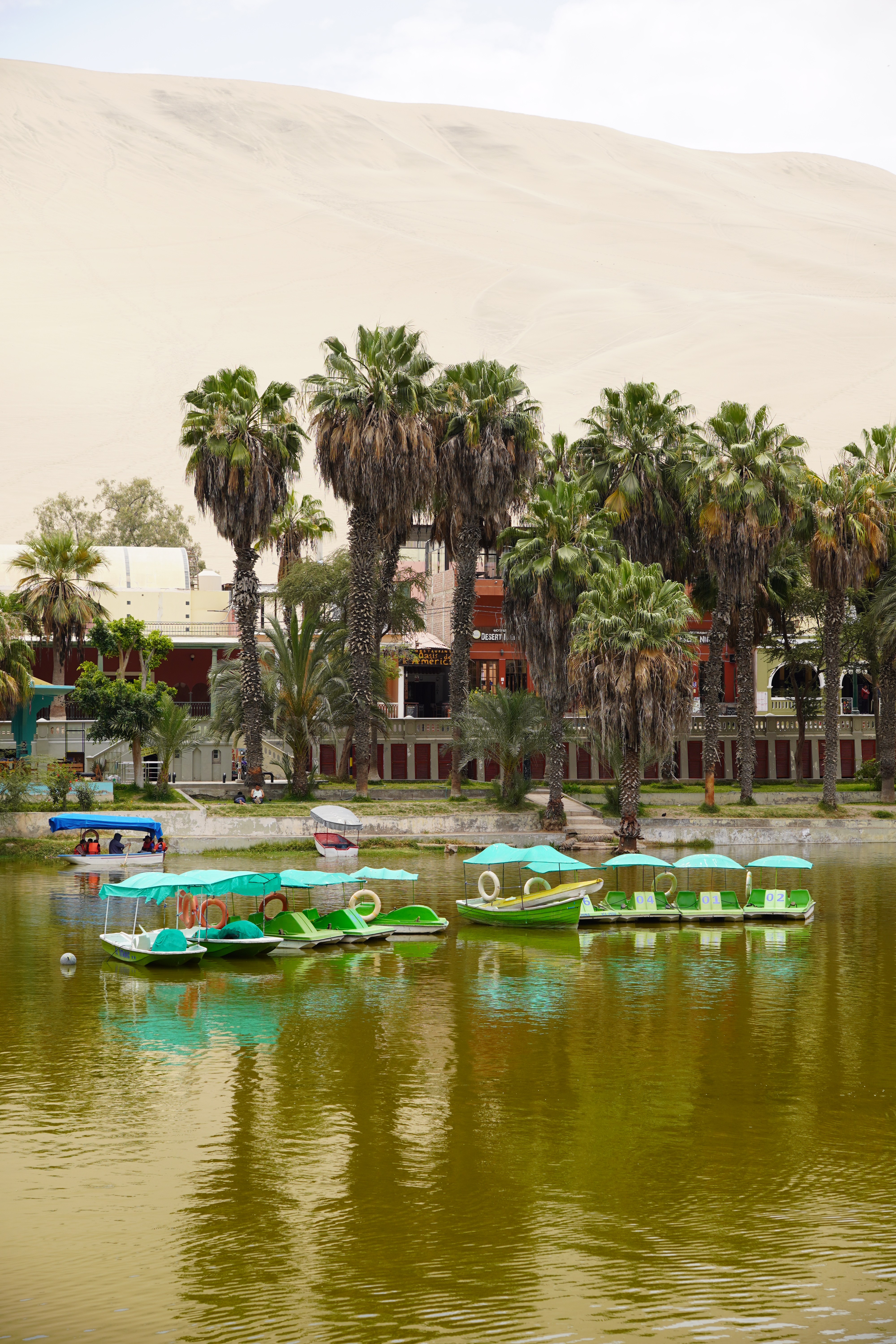
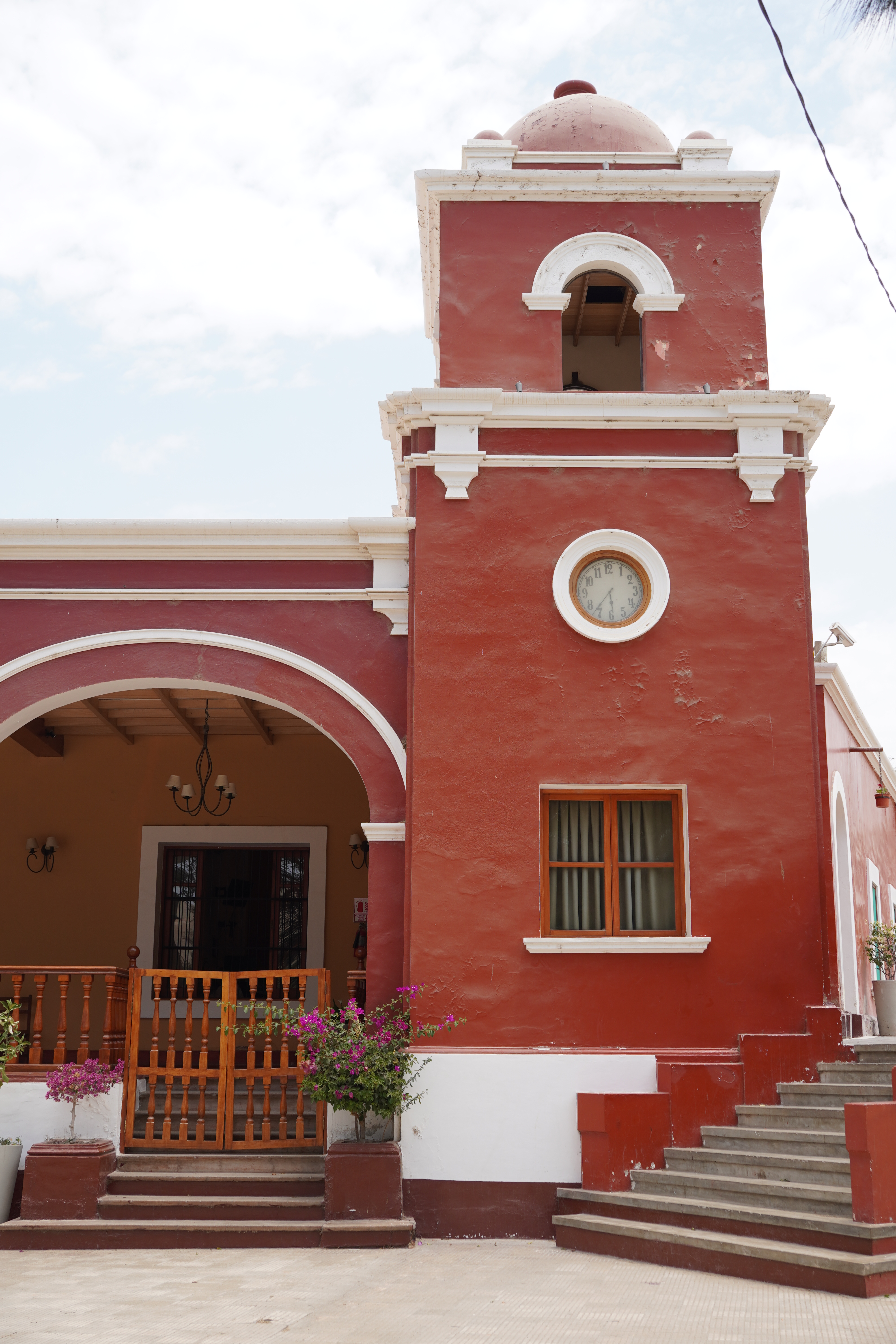
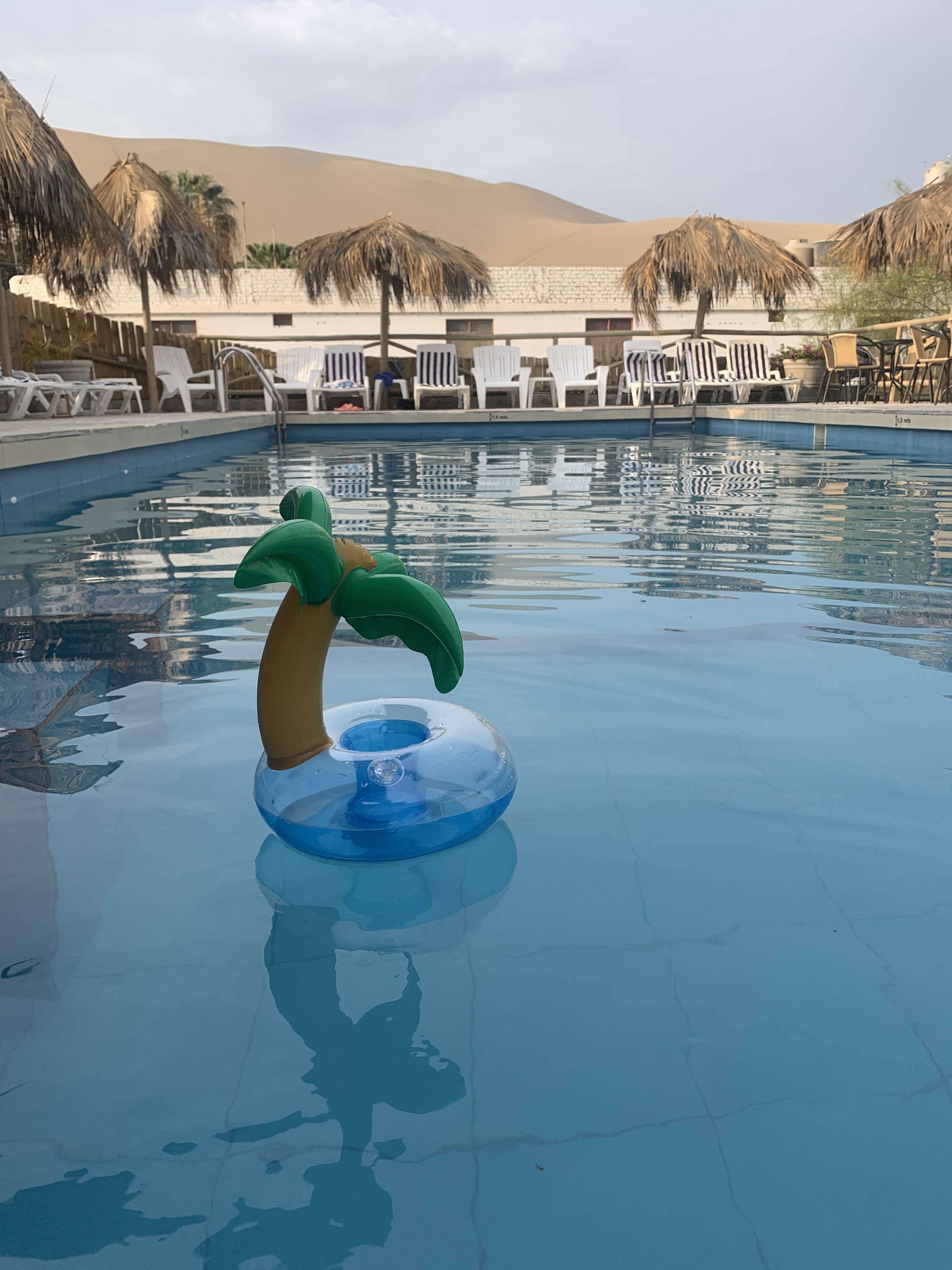
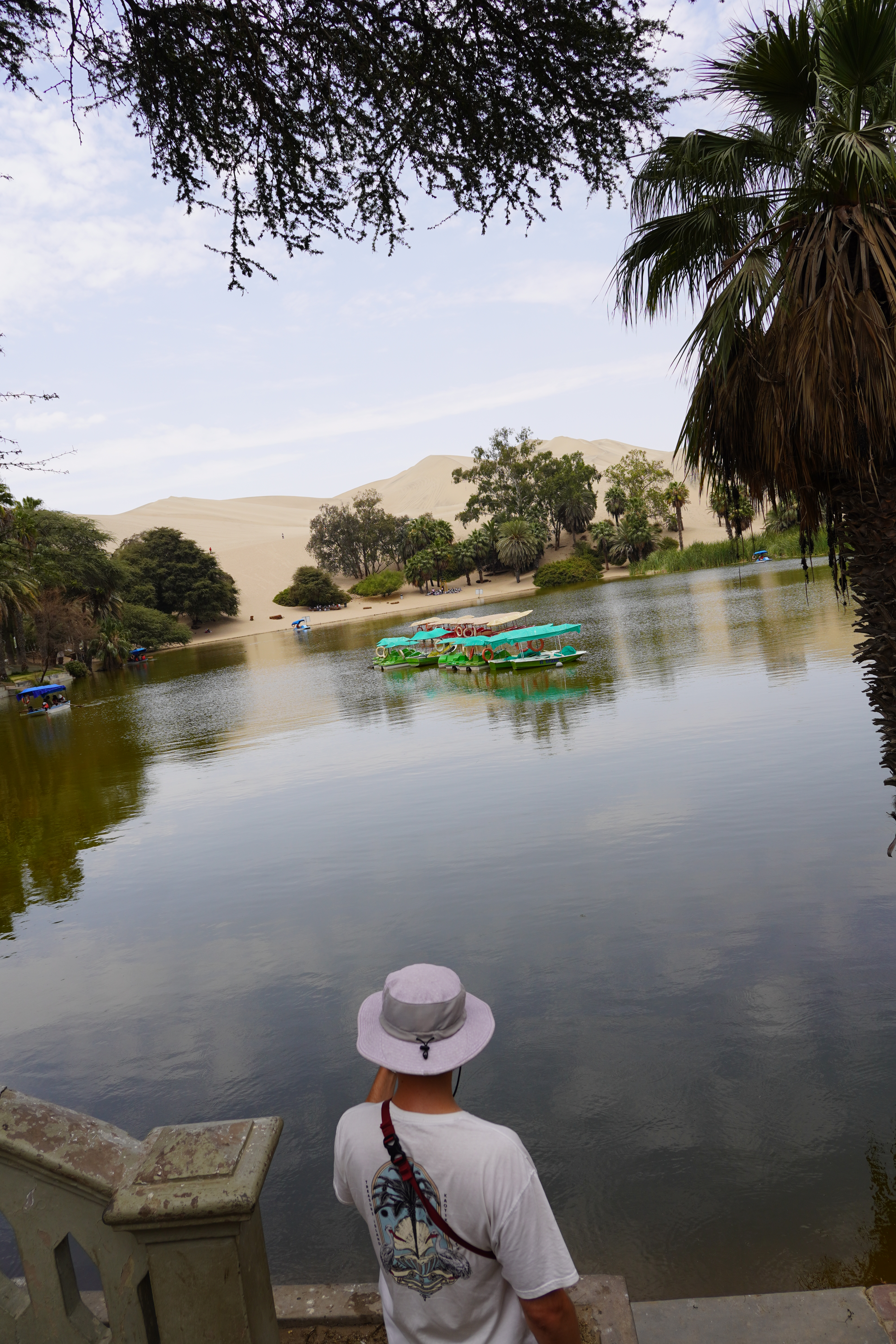
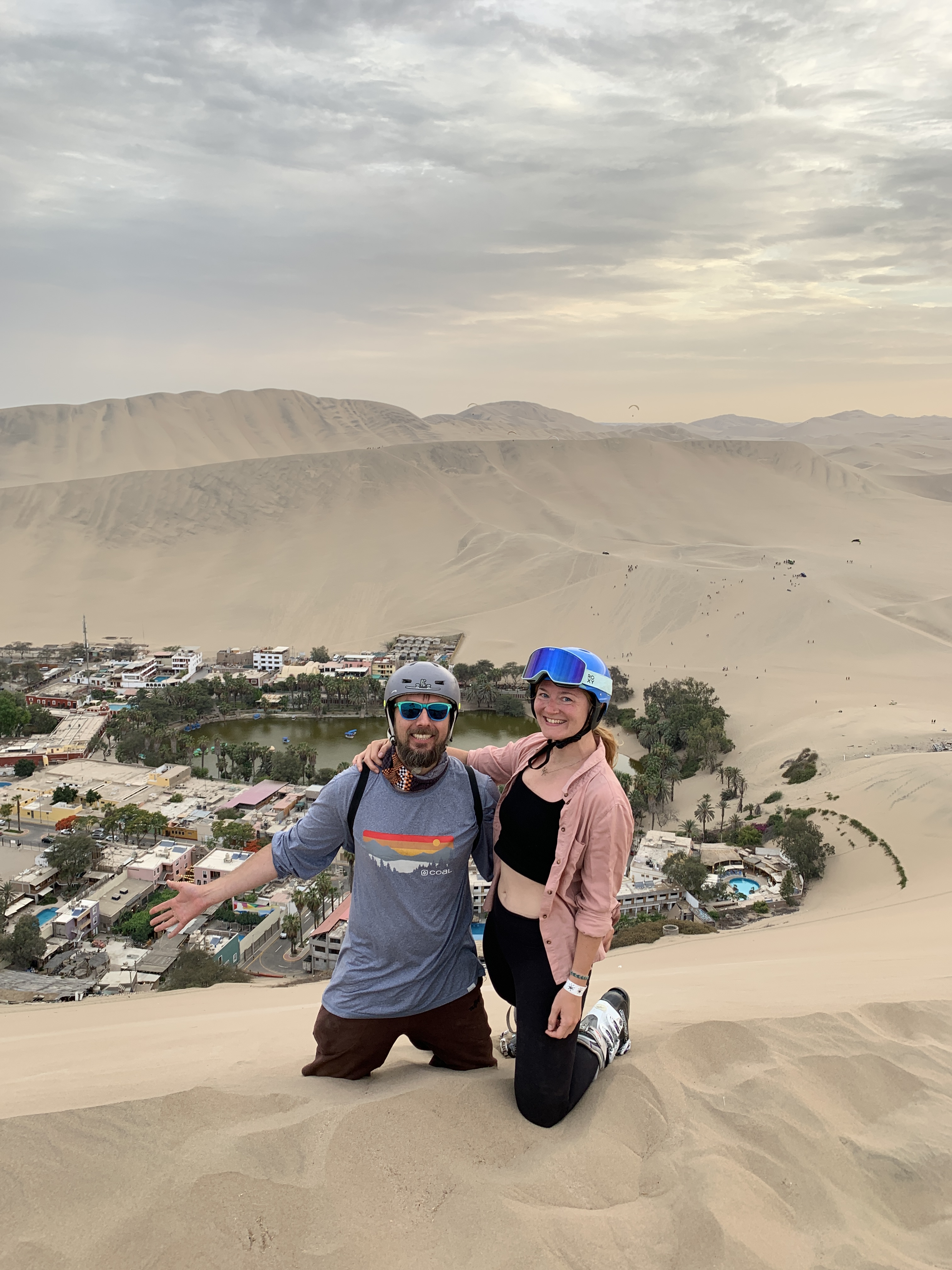
Huacachina is a small oasis town known for its picturesque lagoon surrounded by towering sand dunes. The oasis is often called “Peru’s desert jewel” and offers a unique landscape that seems straight out of a fairy tale. The legend says the lagoon was created from the tears of a princess mourning her lover, and the sand dunes were formed from her veil. In the past, Huacachina was a popular resort for wealthy Peruvians, especially in the 1940s and 50s. The oasis was appreciated for its natural beauty and the therapeutic qualities of its waters. It was believed that the water from the lagoon had healing properties. Today, the water is artificially replenished, and Huacachina has transformed from a health resort into an adventure tourism hotspot, primarily known for sandboarding and dune rides. That’s exactly why we were there. But not today. We parked Rosi at the “Ecocamp Huacachina” and were promptly invited to a Thanksgiving meal by the American “Run Away Family” (Instagram). Mindy and Griff have been traveling the world for several years with their four children, currently from Alaska to Argentina in a camper. Since we hadn’t had breakfast yet and it was already after noon, we naturally didn’t say no. The highlight was the non-alcoholic ginger ale cocktails with maraschino cherries. What a great American Thanksgiving day. Huacachina became our home for the next few days, and we enjoyed being out of the altitude of the Andes, not having to drive, or not being able to drive (due to blockades). We enjoyed the sunshine, warmth, the pool, the view of the surreal dune world, the company by the people and the sand beneath our feet. Most of the time, we spent at the pool, drinking cocktails, eating delicious food, and relaxing. Of course, we also explored the ultra-touristy town with its 1930s charm through the old buildings from the health resort era.
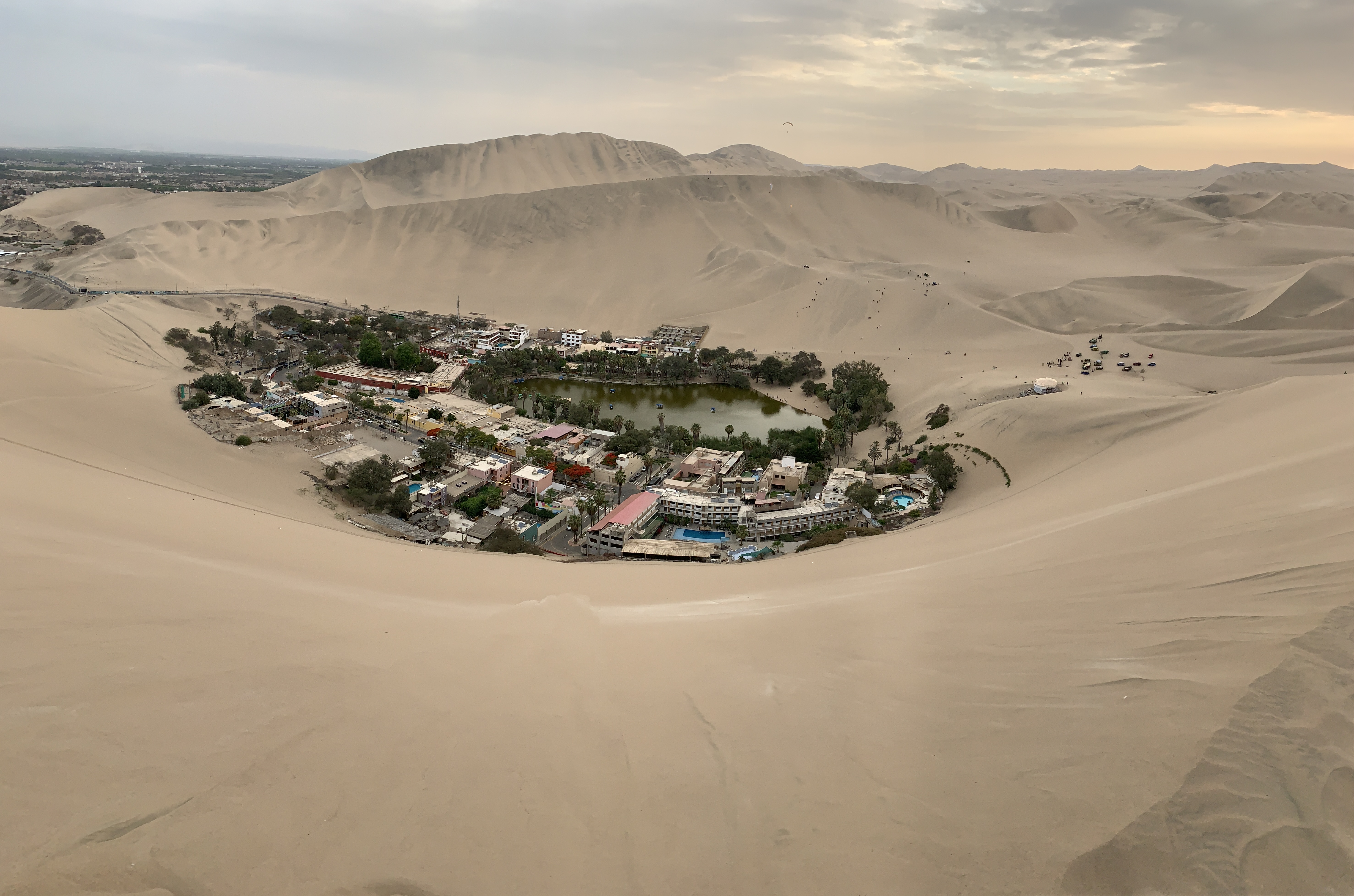
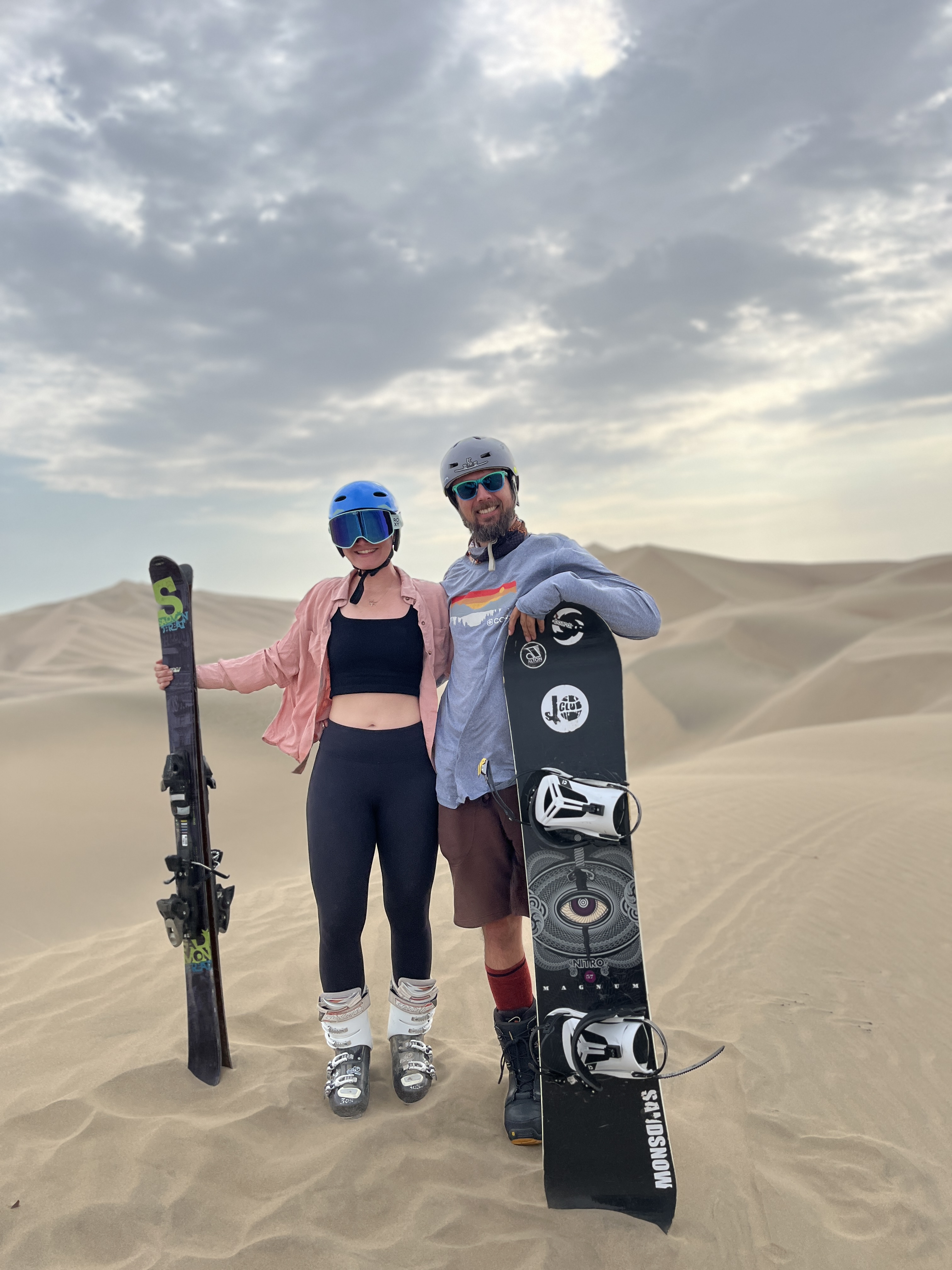
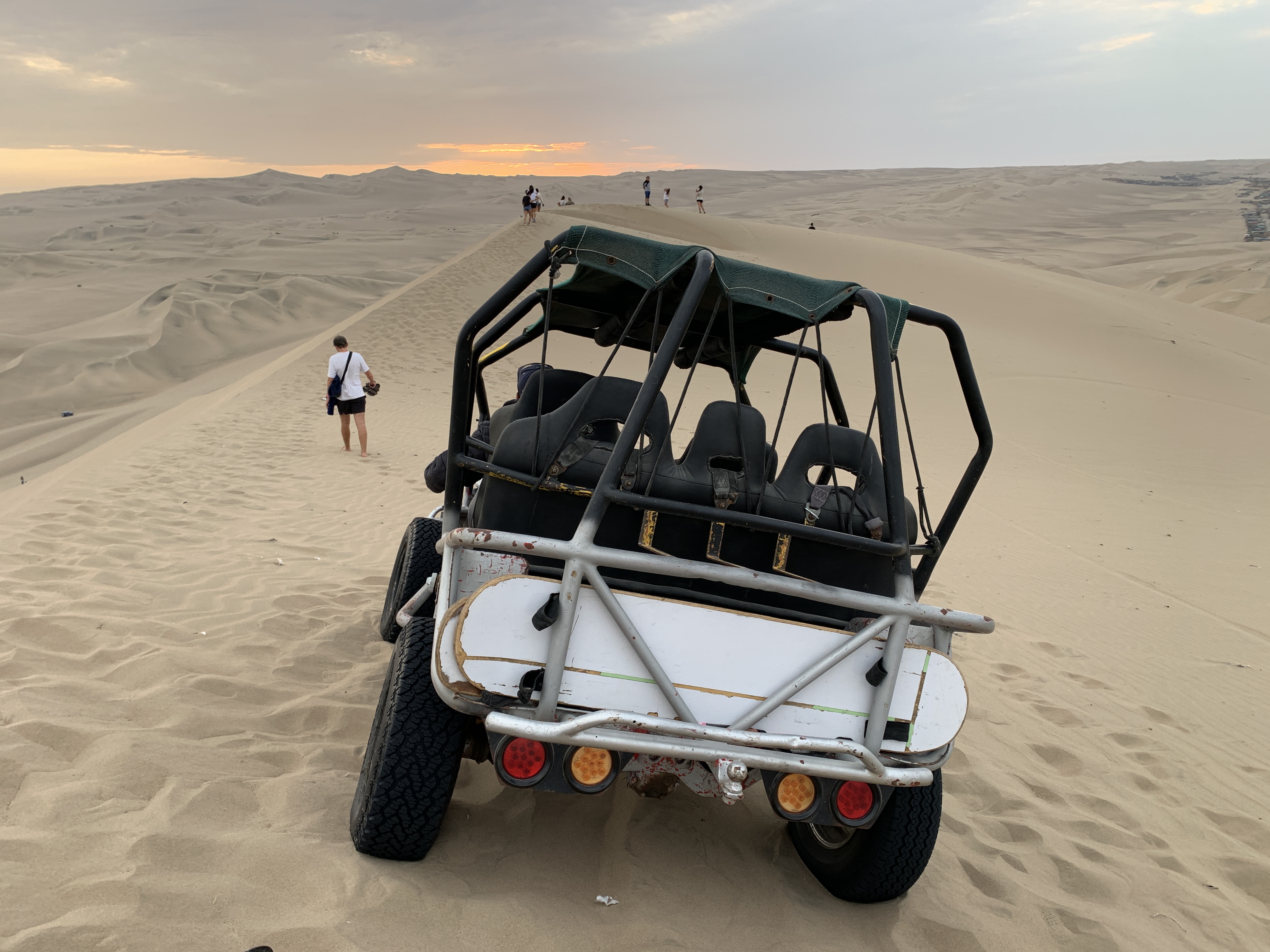
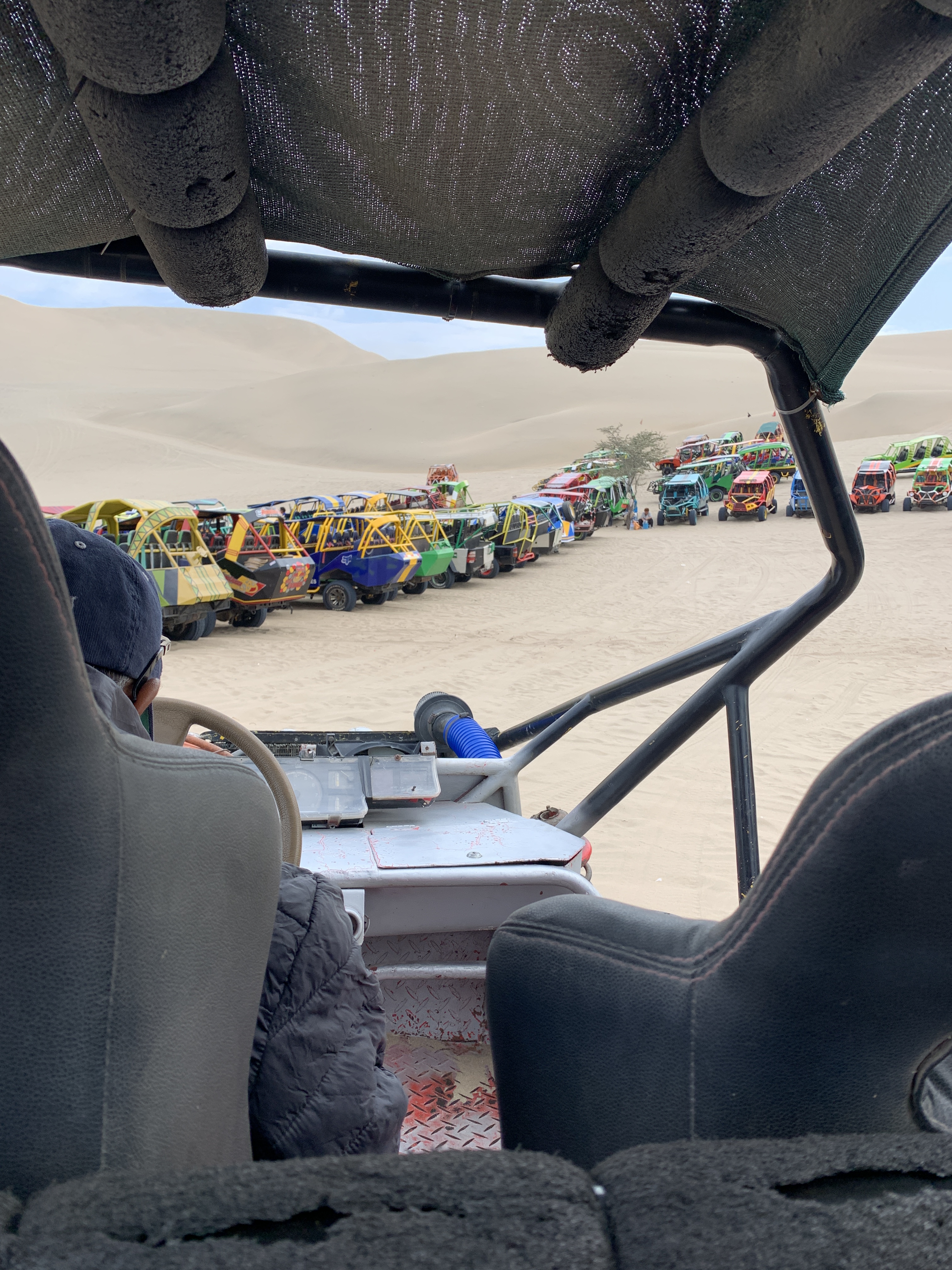
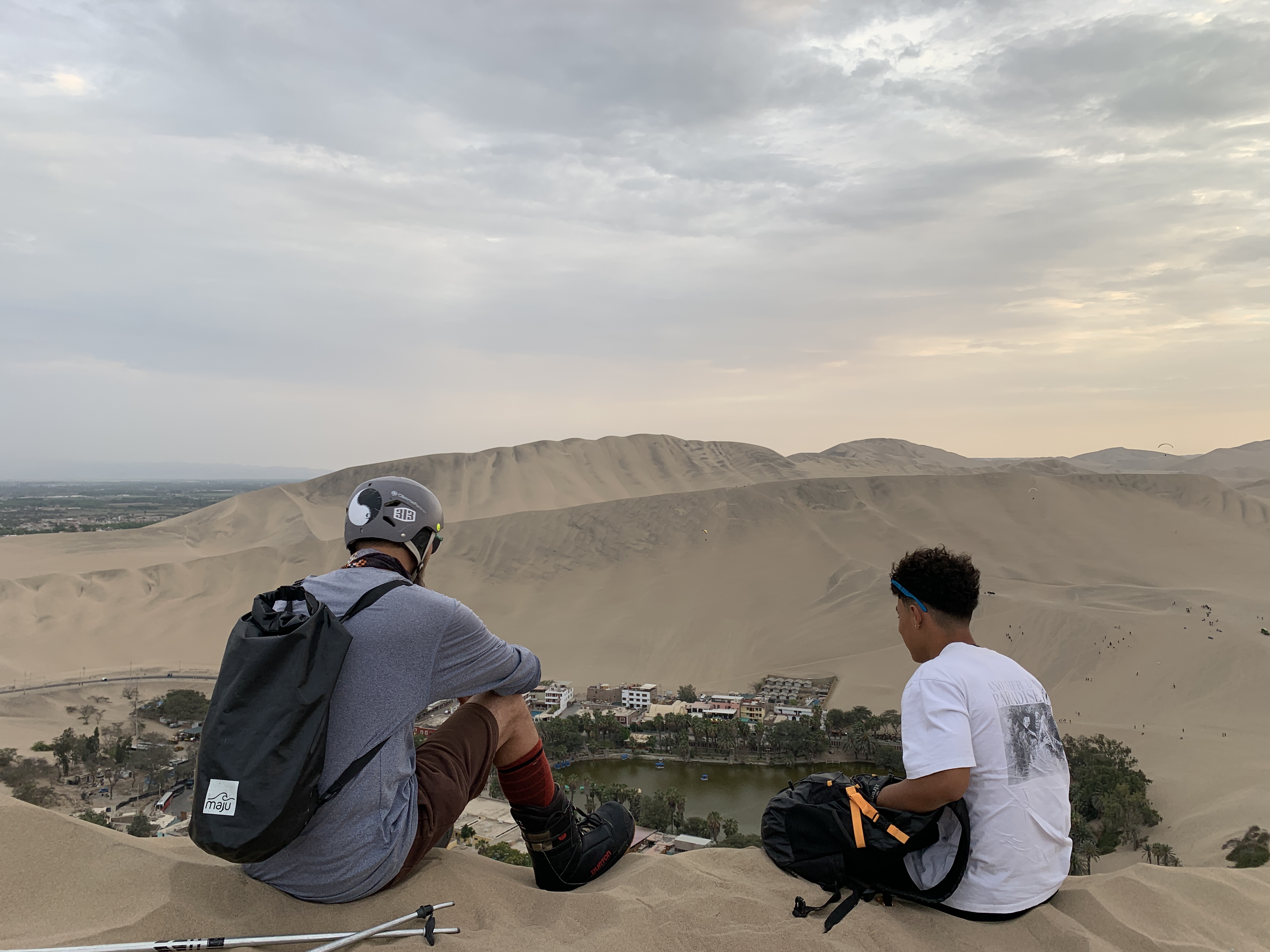
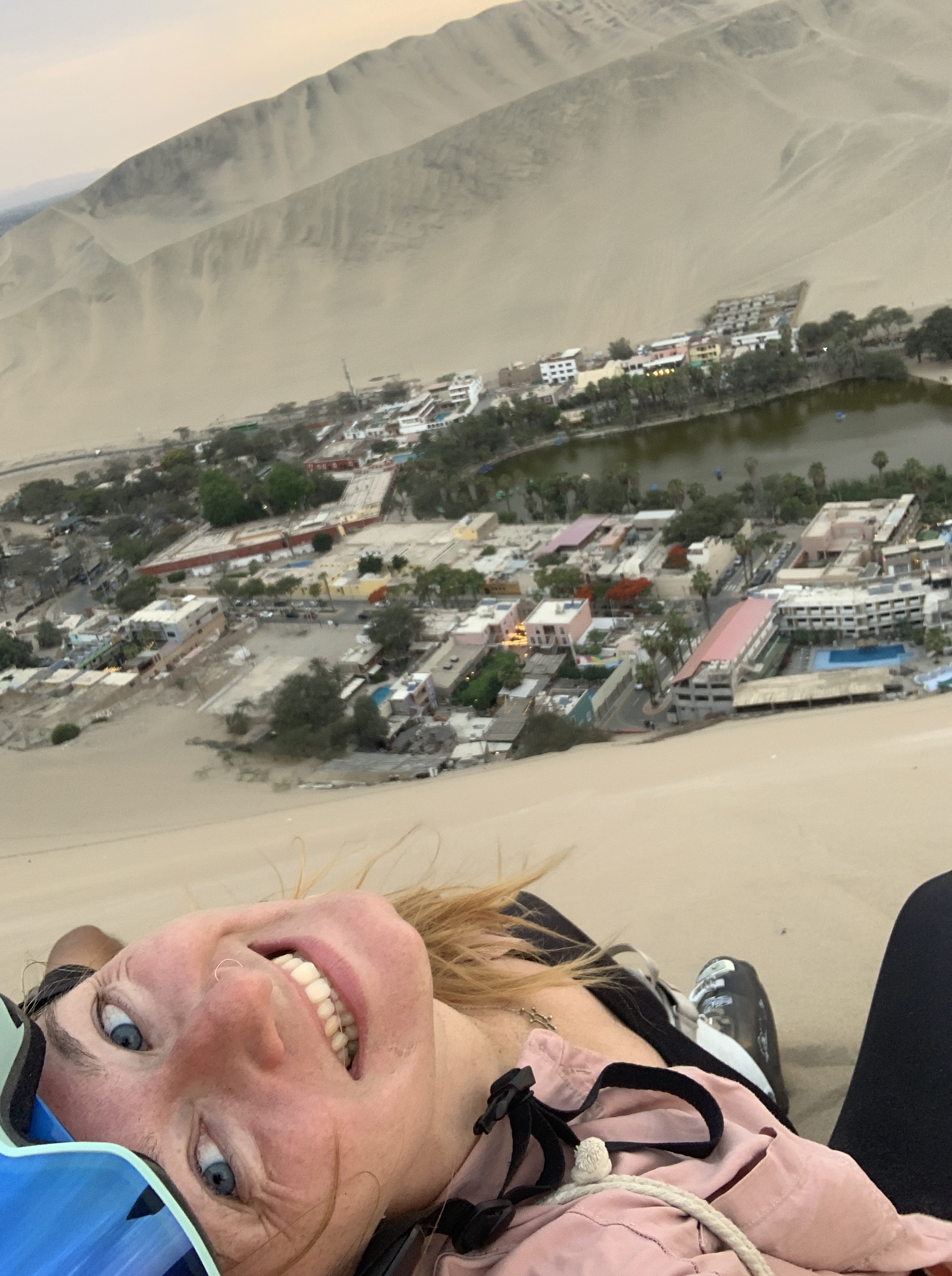
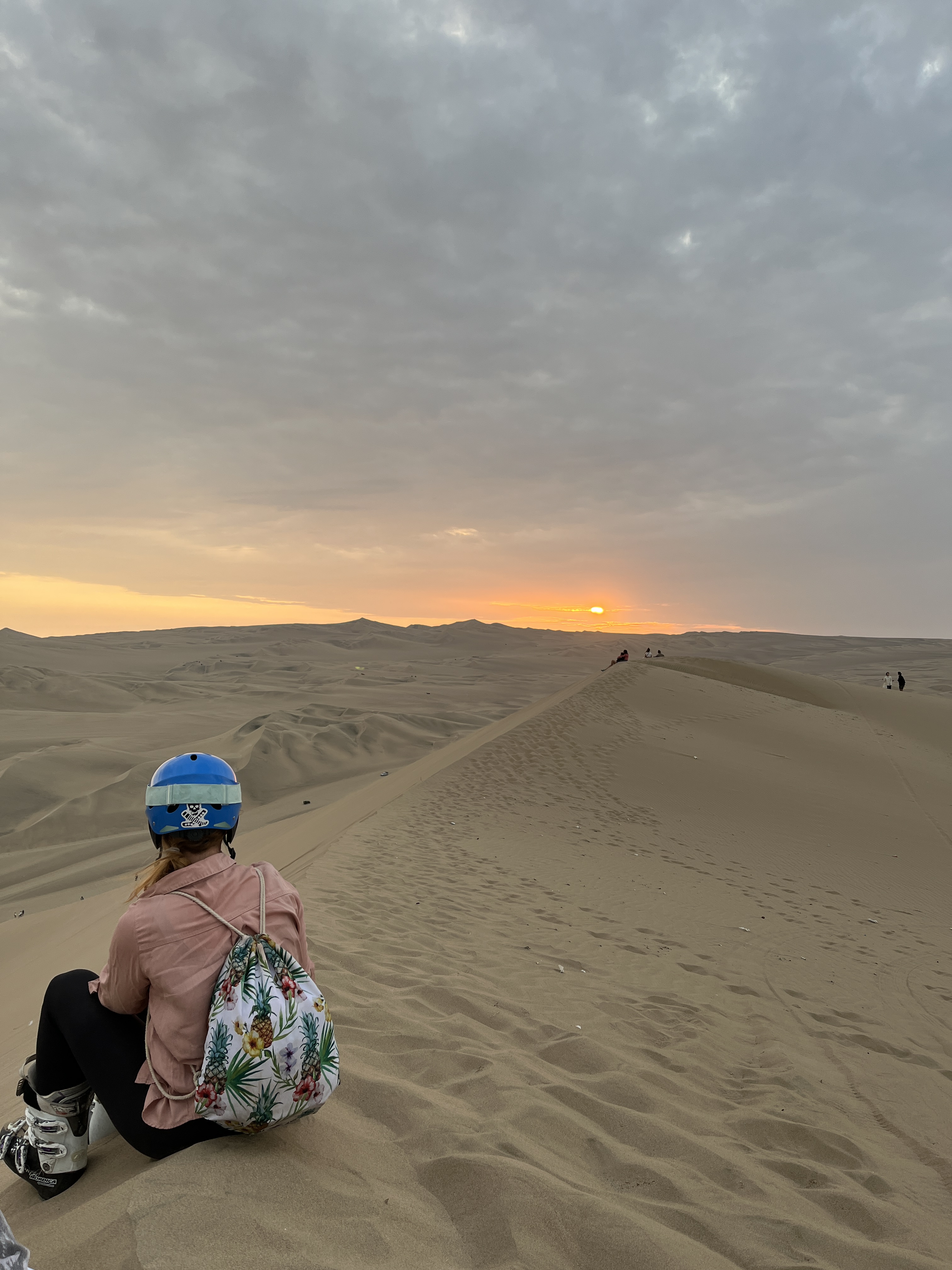
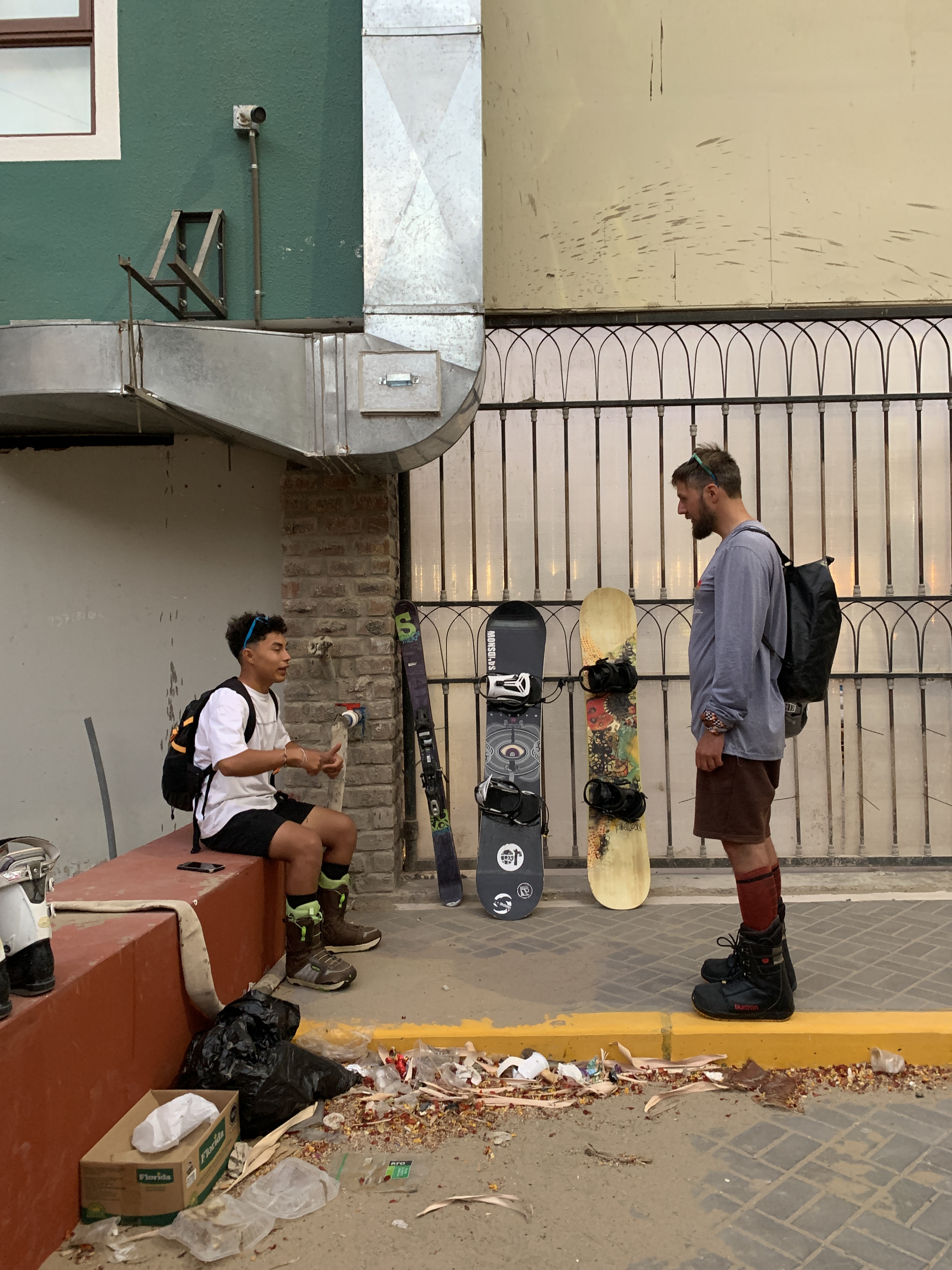
And of course, we went sandboarding and dune buggy riding. We took a private buggy tour through the dunes. But our focus was on sandboarding and skiing. We trudged through the deep sand with ski boots and snowboard boots to the sand buggies. Our driver told us that there are over 300 sand buggies in the dune area. It used to be only 30, and back then, they could park at the entrance. Now, it has grown to a different scale, and there is a parking area for the vehicles in the dunes. Many are also parked outside, in Ica, being repaired, serviced, or otherwise used. We zoomed through the dunes to our first sand track. We giggled, wobbled, laughed, and had a blast. On some bumps, it felt like free fall. And somehow, you put your life in the hands of the driver. It’s not entirely without risk, I’d say. The first descent was about to begin. But first, we had to wax the skis or board. Actually, we used pieces of candles for that. After each descent, we had to do it again. The feeling of skiing through the sand was strange, and it took a while to get used to. But with each run, it felt better and more secure. It was a really beautiful feeling, skiing in the middle of nowhere, far from snow, in the desert. Each dune we approached got a little bigger and steeper until, at sunset, we reached the largest dune. The buggy driver said goodbye (he had once gotten stuck in the sand himself). We watched the sun disappear on the horizon and got ready for the longest and steepest descent. This descent took us straight back to the town of Huacachina, and we could walk back to the camp. Here, I realized again how happy adrenaline and sports make me. And also skiing. It was one of the highlights of our journey so far.
 höme
höme 
Leave a comment