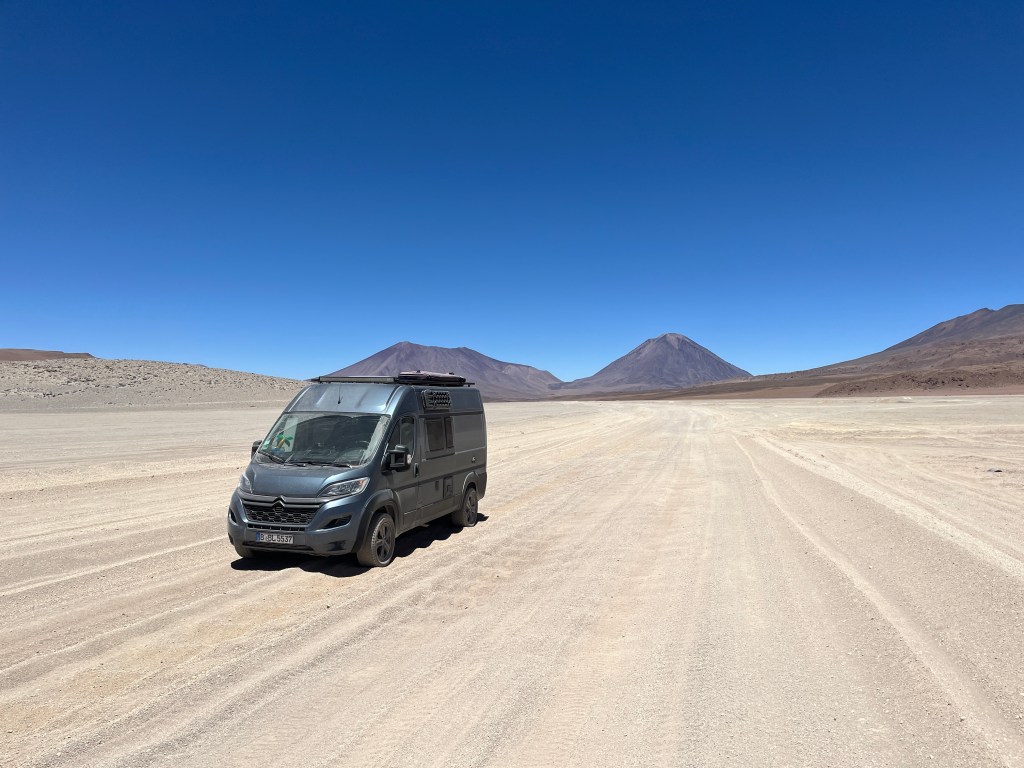
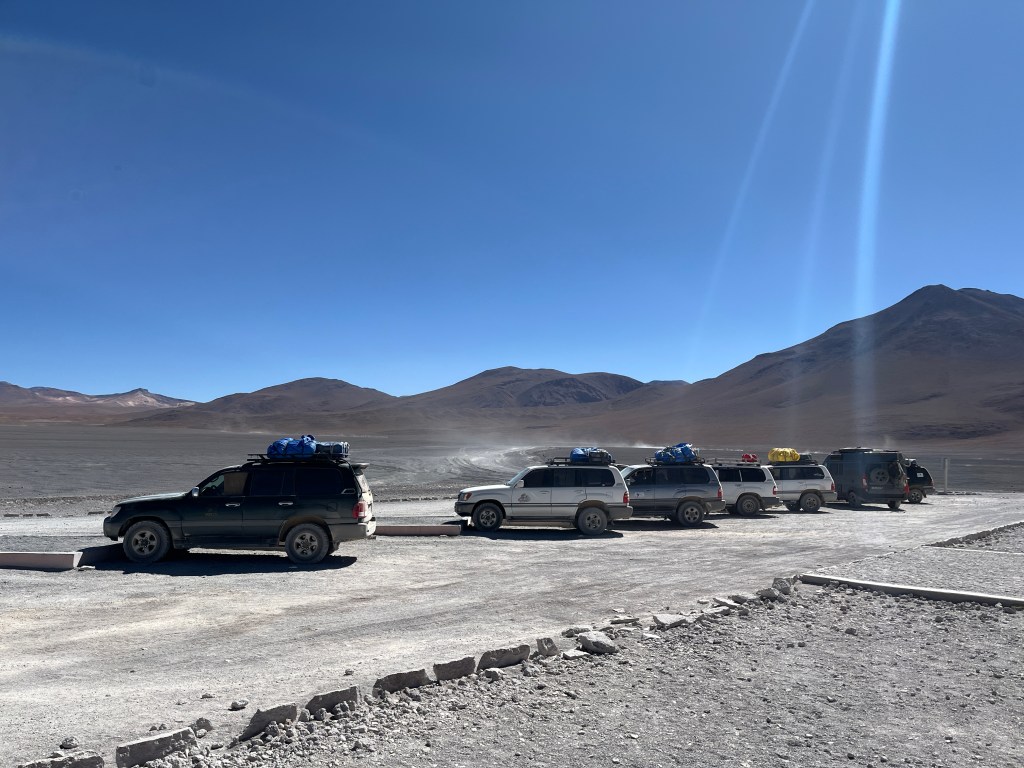
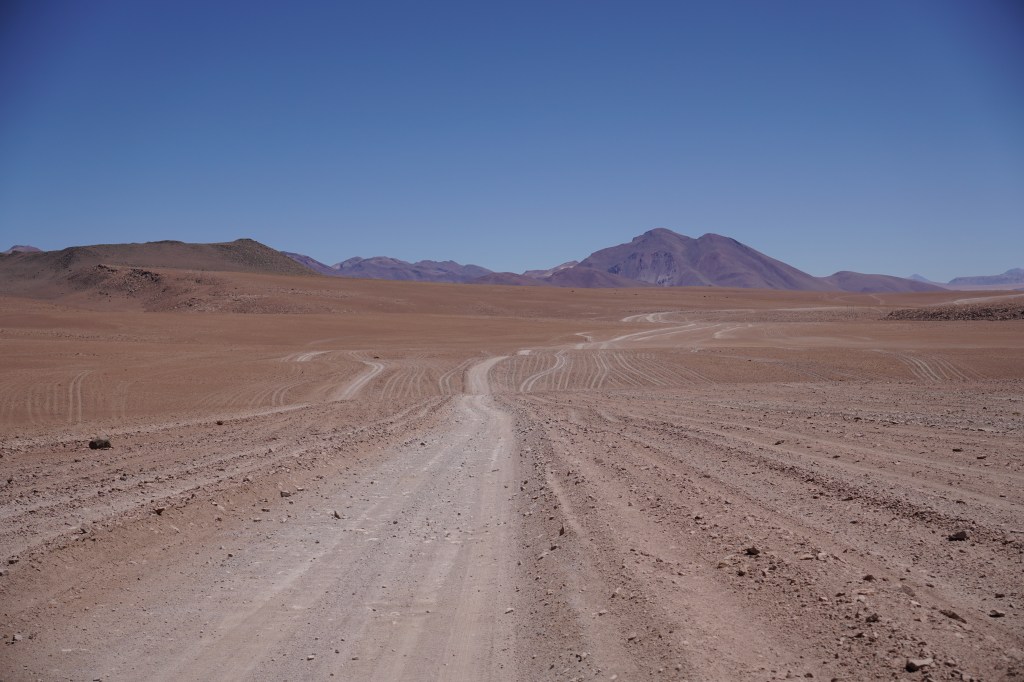
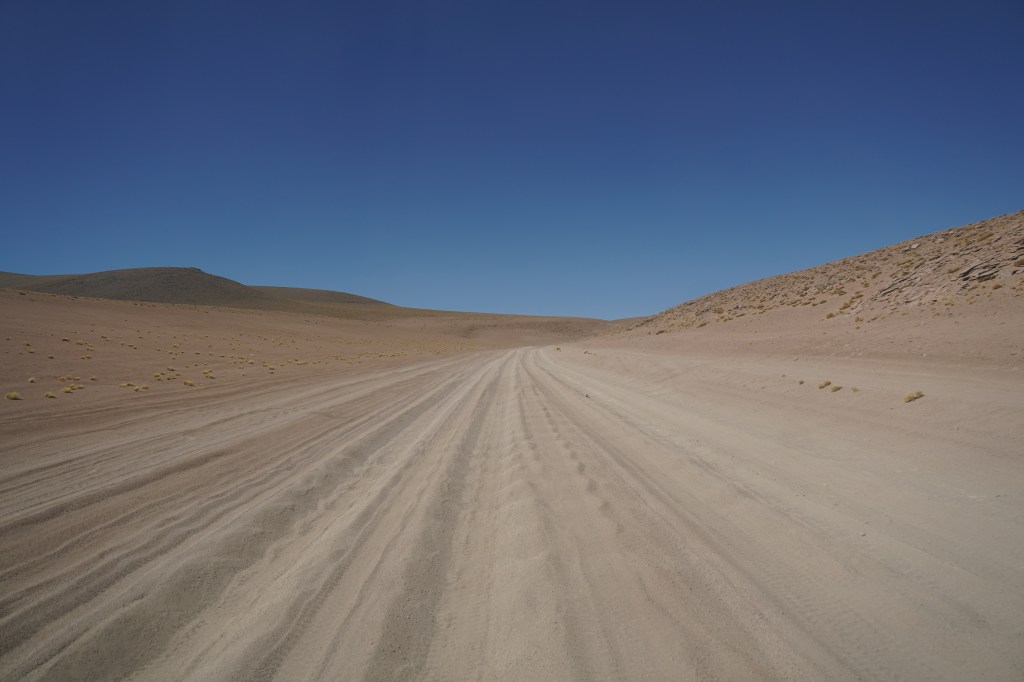
There we were…. In San Pedro de Atacama, taking care about the essentials and thinking about the Laguna Route.. a lot. In the end it was the perfect route to enter Bolivia, but e also heard that it might be quite challenging. The Laguna route can be described as an area in the southwestern corner of Bolivia. There are different routs that can be taken and one way (north to south or south to north) it is about 200km. The full round trip is about 600km. It runs through a big national park to protect flamingos and has no paved road at all. The main roads are supposed to be flattened by a caterpillar, but that happens only very unregulary which leads to heavy washboard roads. Many roads are not maintained at all or just lanes from the tour cars. In addition the route runs between 4300m and 4900m of altitude. Sometimes is described as an off-road route. The main vehicles on this road are 4×4 Toyota Landcruisers of the tours that tourists can book. Every now and than an Overlander with their own vehicle (as we did) takes the road as well. We did not know if Rosi can make it. We did not know if we can make it, since the altitude. What happens if we get stuck? What happens if Rosi stops working? What happens if we get really sick? We read a lot of blog articles, looked in the iOverlander app and asked everyone we could find how difficult the road is. As Linda already wrote we even had a long FaceTime call with Ina and Christoph, a bavarian couple that were on the route, to ask if they think we can make it. We wrote in every Whatsapp group and also over Instagram to find a travel buddy with a “real” off-road vehicle that we could team up with, so we can pull out each others vehicle if shit hits the fan. In the end we did not find anyone to team up with, but decided to do it anyway. The temptation for the adventure was too big, and the risk could be calculated. There were tours going the route every day, they could help us, if we really get stuck.
So we started to prepare:
– Buying enough canned food, since we crossed a boarder and were again not allowed to bring fruit. (In the end nobody checked for it)
– We filled the water tank and disconnected it from the water system. Rosi has a security valve that releases all the water from the water system incl. the tank if it gets below 4° Celsius to secure the water system from being damaged by water turning into ice. This could release all our drinking water at night and we could not risk loosing water at all.
– We filled the tank, a 30l jerry can and an additional 20l jerry can with Diesel. Fuel consumption in high altitude can increase up to double of the normal average fuel consumption. Additionally we heard how hard it is to get Diesel in Bolivia and had the plan to bring all the Diesel we need to do the Laguna Route, to go to the Salt flats in Uyuni and than back to Chile.
– We had the Coca leaves with us against altitude sickness. They shall help as a tea or just by chewing them. (At that point we did not know how much we needed them…)
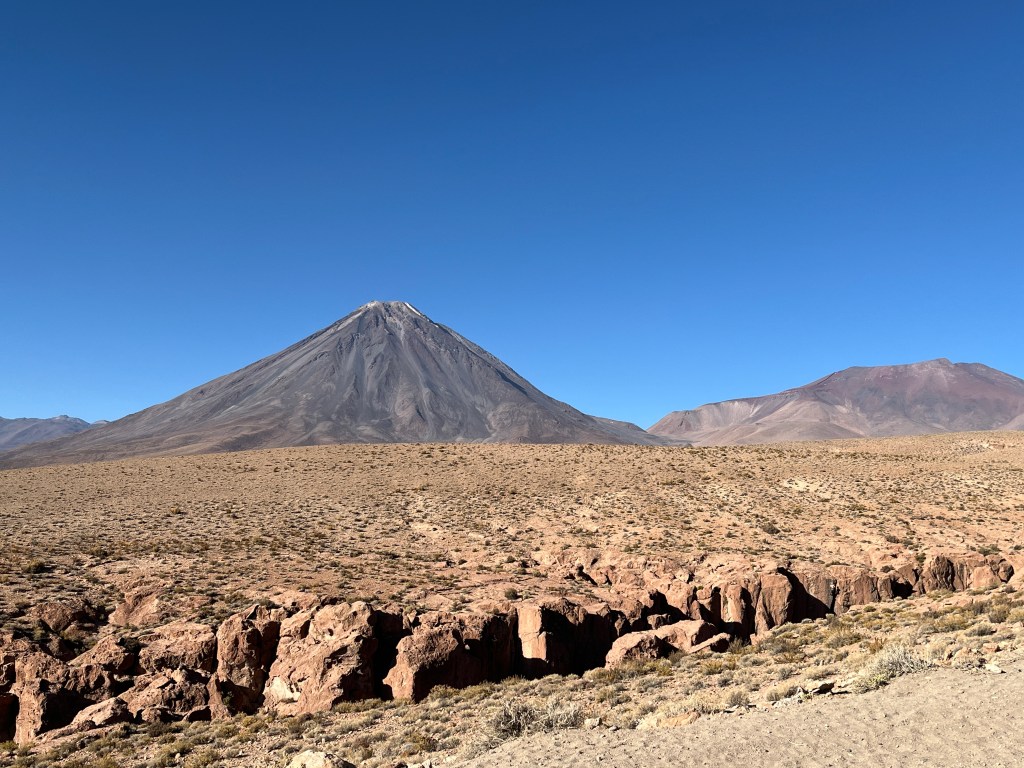
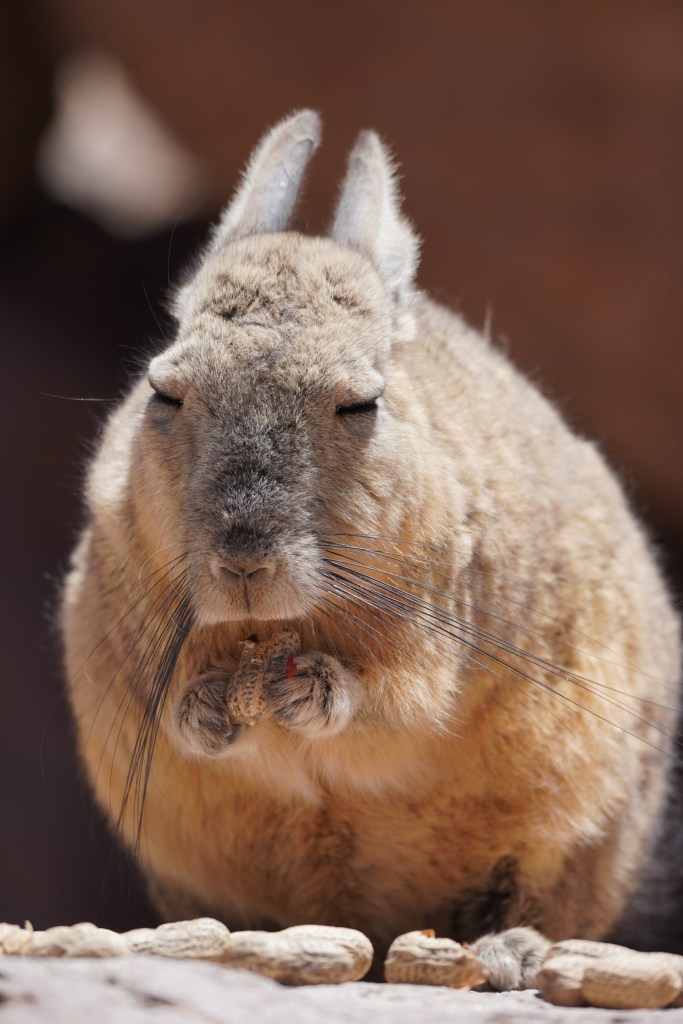
With all that preparation we left San Predo de Atacama in the direction of Bolivia. San Pedro lies at about 2500m of altitude, while the boarder crossing is at 4600m altitude. To not get altitude sickness, we did half a day and a night of adaptation at 3600m, although it is just about 30km between San Pedro de Atacama and the border. Since it is pretty much just alongside the road we had to hide a little close to canyon. And while drinking tea and watching the volcano, Linda suddenly spotted climbers that were mounted to the wall of the close-by canyon. I was deeply impressed that they could climb at such heigh altitude. Later we had a look in the canyon and spotted some Chinchillas. I hope that I don’t sound racist, but to me they look like a mixture of a rabbit, a squirrel and a very old Chinese kung fu master.
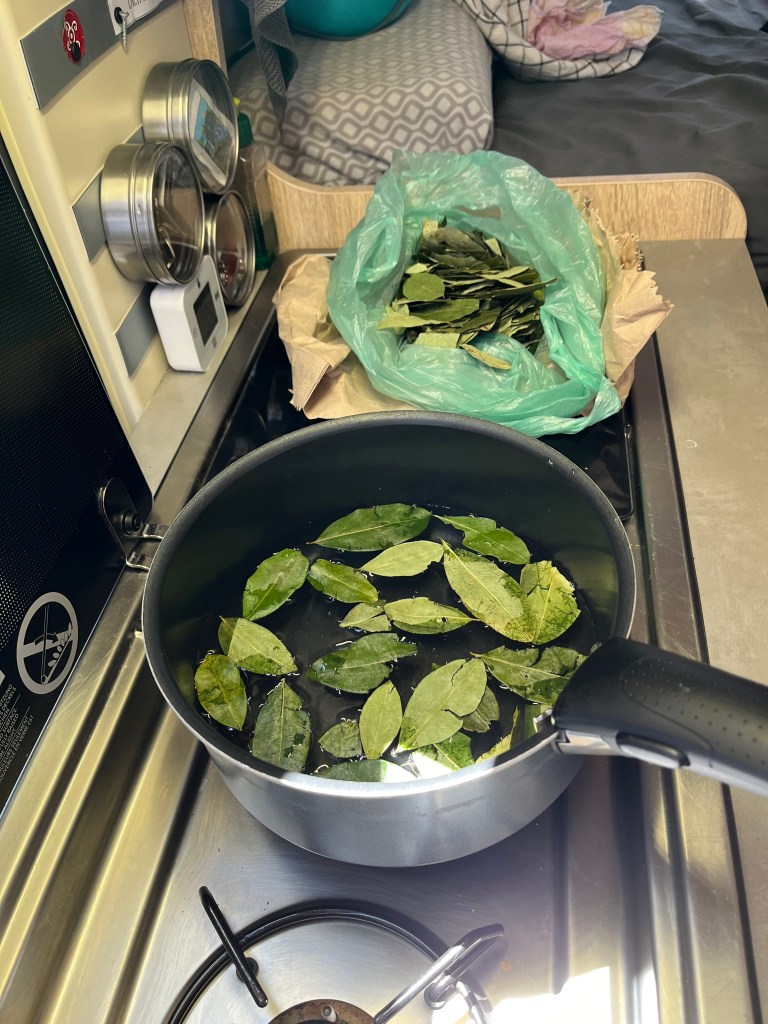
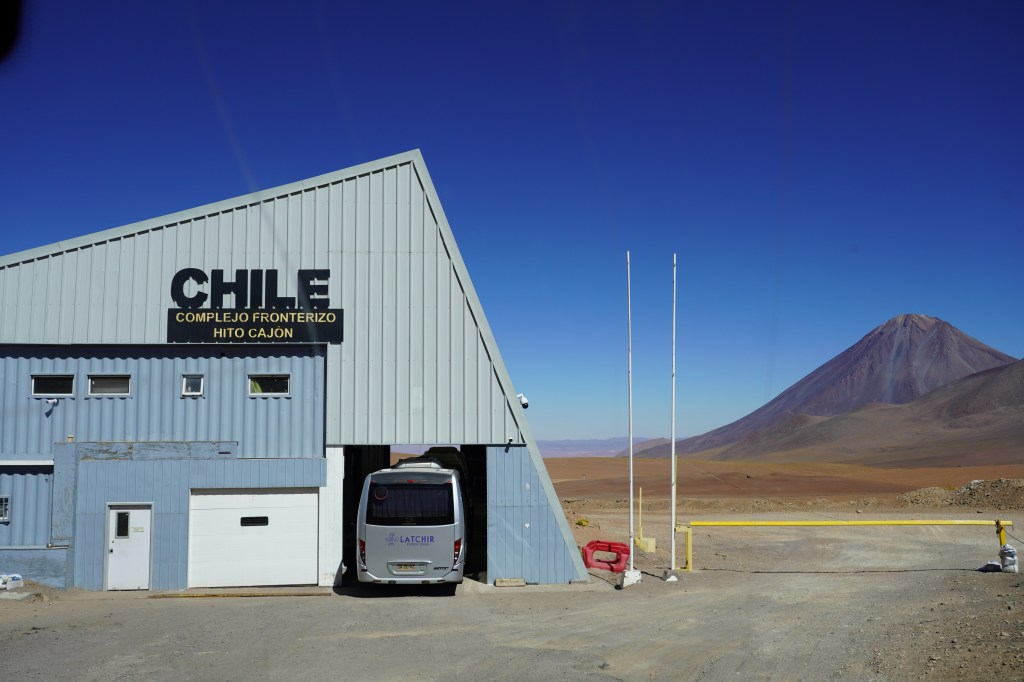
We did not really have a good night, but felt good enough to cross the border next day. The Chilenean border control went rather quickly, after that the road pretty much disappeared. After 5km the Bolivian migration office appeared and the old and fat guy asked immediately if we had Bolivian money with us. I lied to him and said „no“. He told me that I need to have money to pay the entrance to the national park that starts directly at the boarder. I lied again to him and said that I know I can pay it in Chilenean pesos. He was visibly pissed, gave us the stamp and told us that we can try. Luckily I had read the iOverlander reviews before, that this guy rips off people and charges an entrance fee to Bolivia that does not exist. This time we were prepared. The customs office was another 5km later and the guys there were very helpful and friendly. I paid the entrance to the national park and let air out of the tires to be prepared for the next few days off road. At this point Linda was already lying in bed with a strong headache. I also did not feel great, but since we left San Pedro I was basically constantly drinking Coca tea or chewing the leaves. Coca leaves help to reduce the affects of altitude sickness and have nothing to do with the cocain that is based on the leaves. Since we chew them raw, we also did not have the numb effect that the Bolivians get when they chew it mixed with a specific gum.
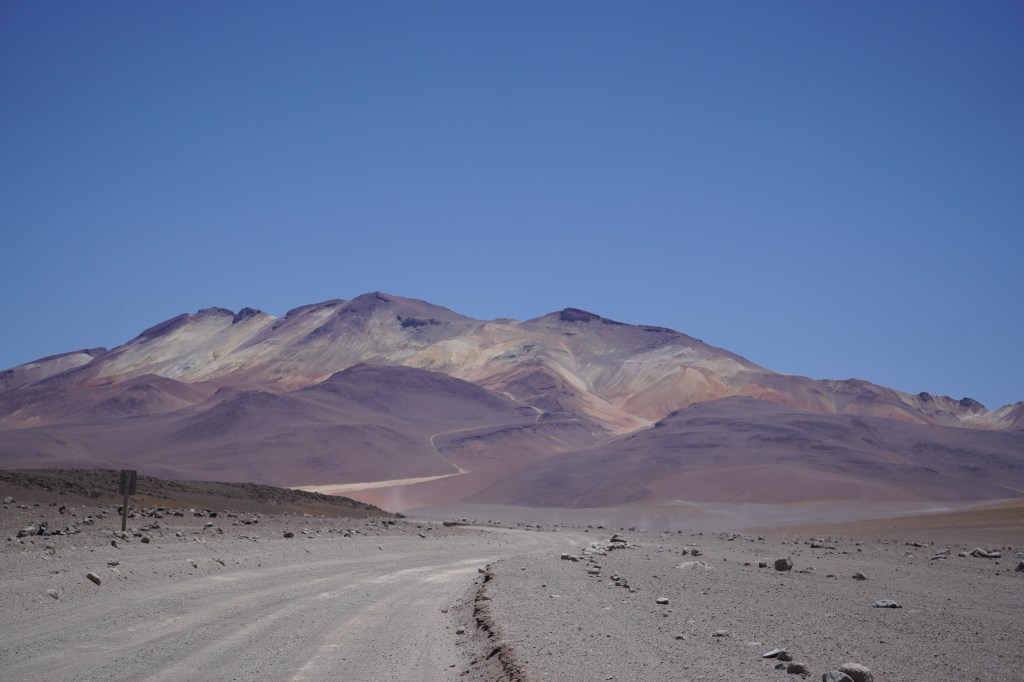
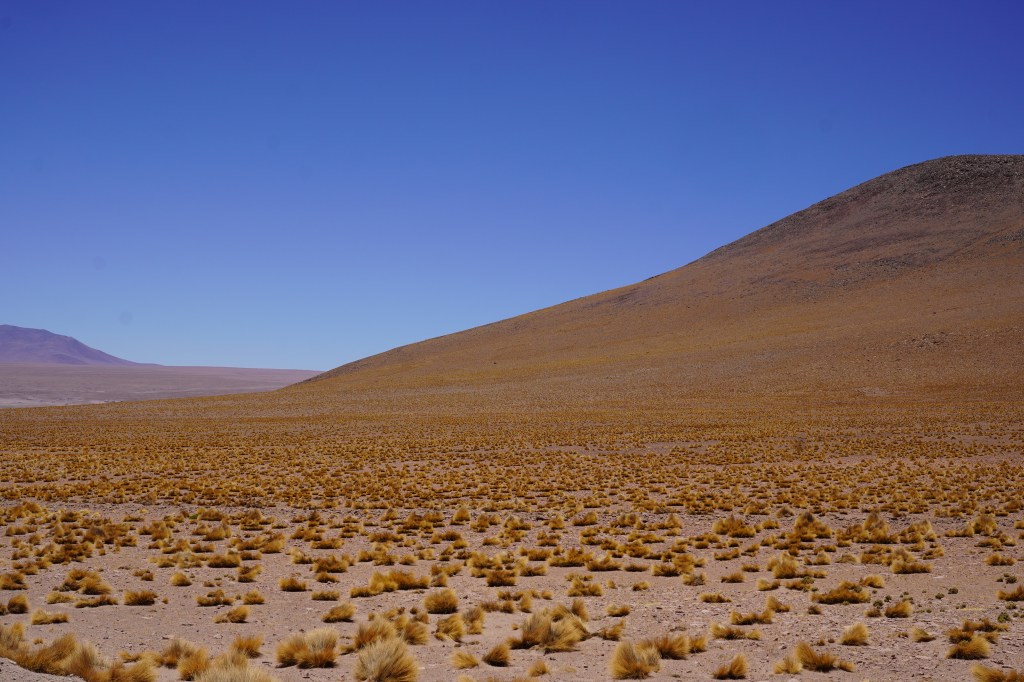
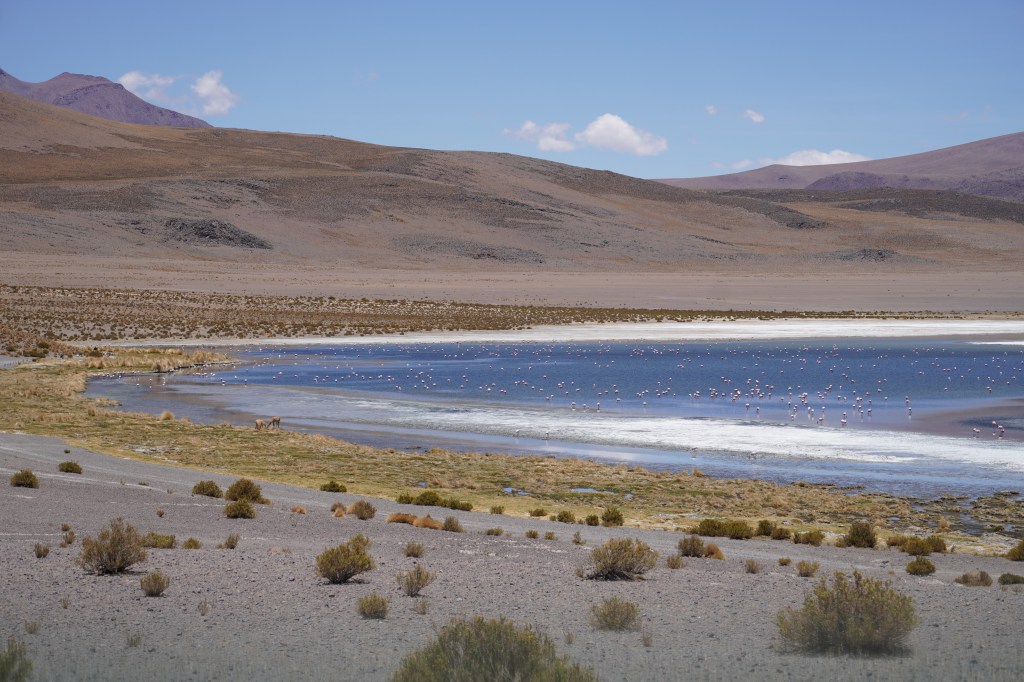
I immediately drove towards the first lagoon and almost got stuck in the sand. There we just paused. Linda had strong headache and we just laid down for a few hours. After a while also my headache started to get worse. And after contemplating what to do next we drove back to nation park entrance and parked behind a small building to have a wind cover. At this point we both felt really really bad and decided to spent one night and see hoe we feel the next day. The night was horrible. I couldn’t hardly sleep at all and breathing alone was a pain. During that night I was sure we would cancel the route and return to Chile the next day. I could breath in for 10 seconds and breath out for less than one second and still had the feeling that there was no oxygen at all in my lungs. So I was hyperventilating all night together with a constantly strong headache. The next morning we had another Coca tea, felt a little better and both decided to continue. The main road was basically a sand pit with the base line of a wash board. When we left for Laguna Verde and Laguna Blanca the road turned into….a stony off road piste with deep tracks from all the Landcruisers of the guided tours. Rosi and me got to the absolute limit of what is possible, but we managed to get to the view point and it was nothing short of amazing. You feel like on a different planet. The lagunes with flamingos and the backdrop of the volcanos gave me goose bumps. Connected with the hurdles to actually get to this point it really feels like on a different planet. Some of these lagunes have naturally toxic chemicals in the water that leads to the different colours of them.
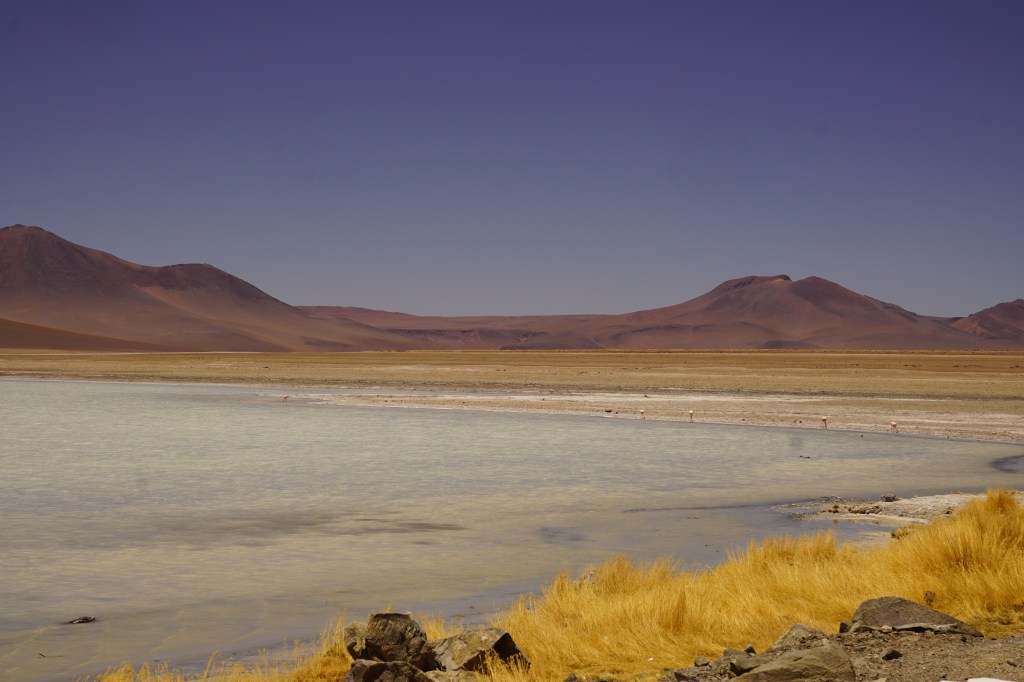
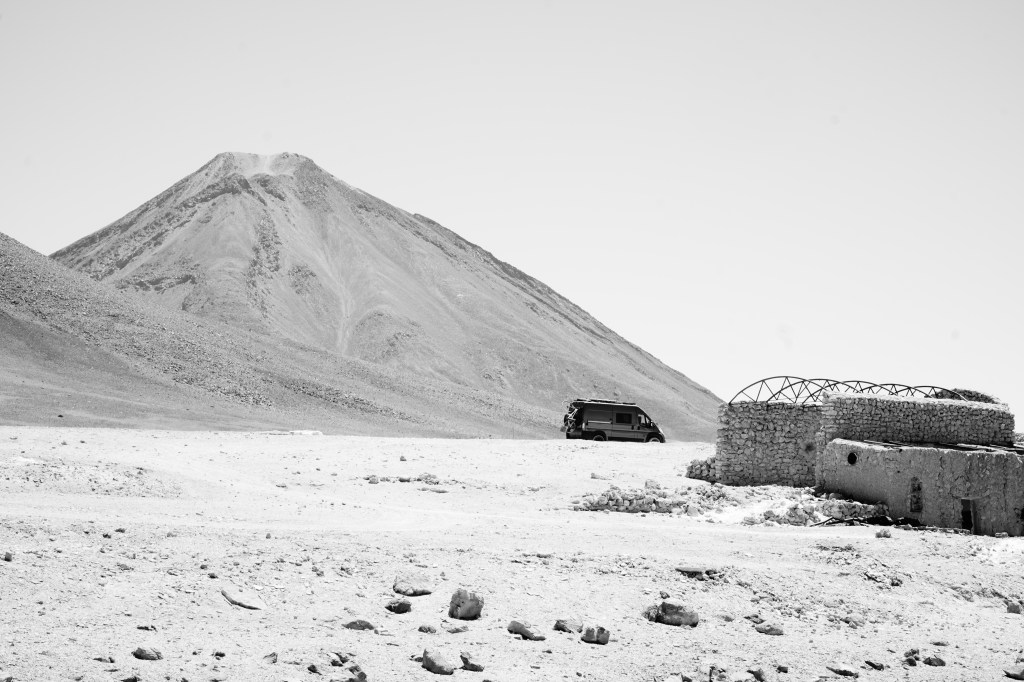
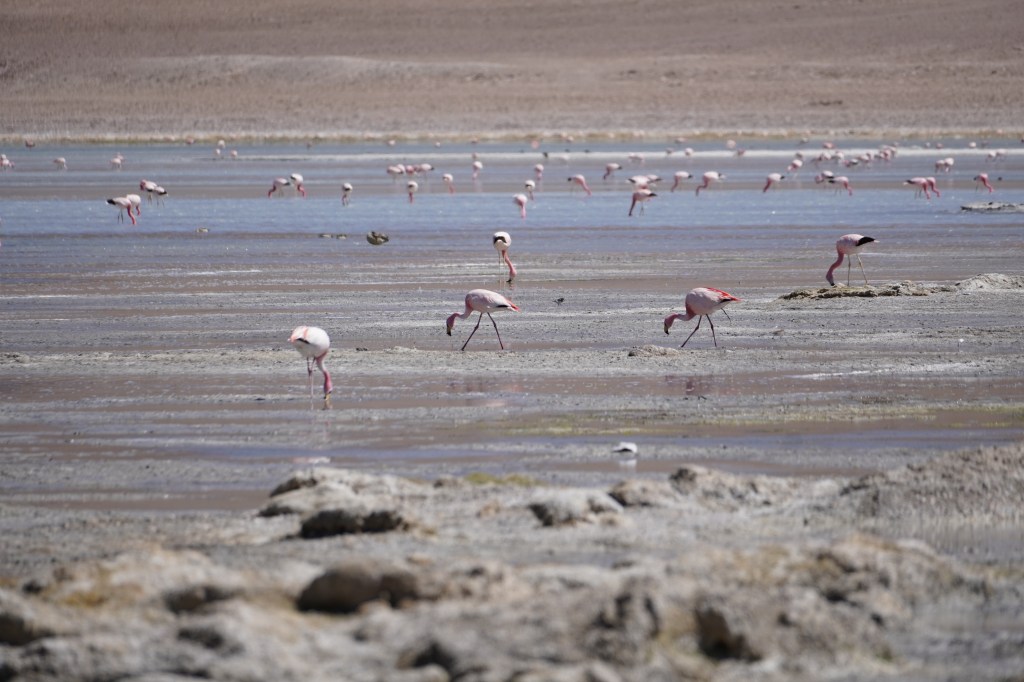
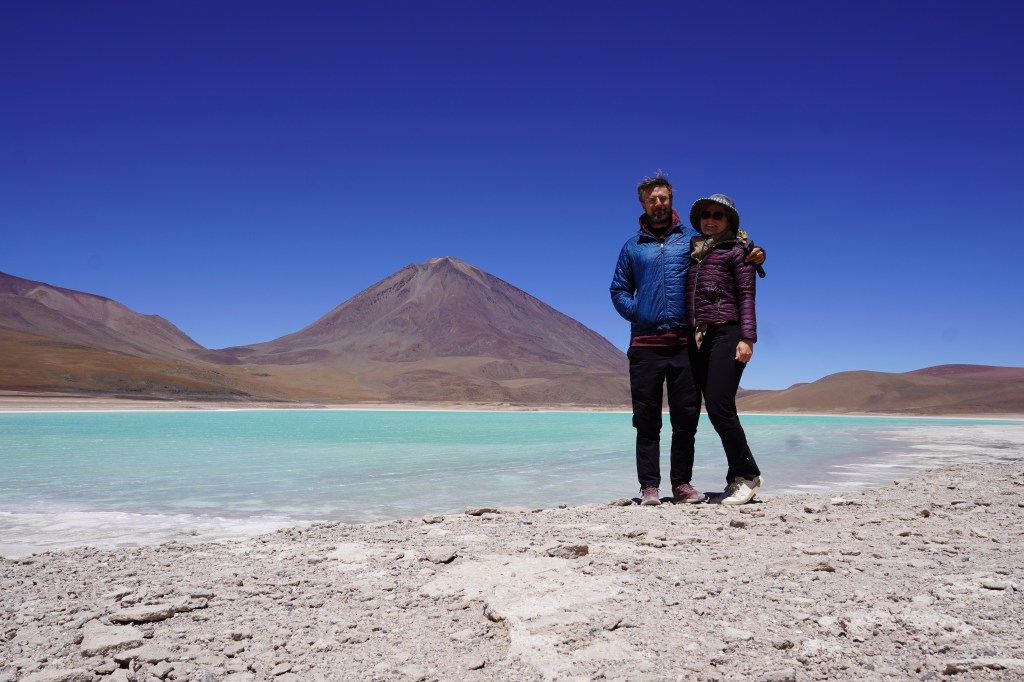
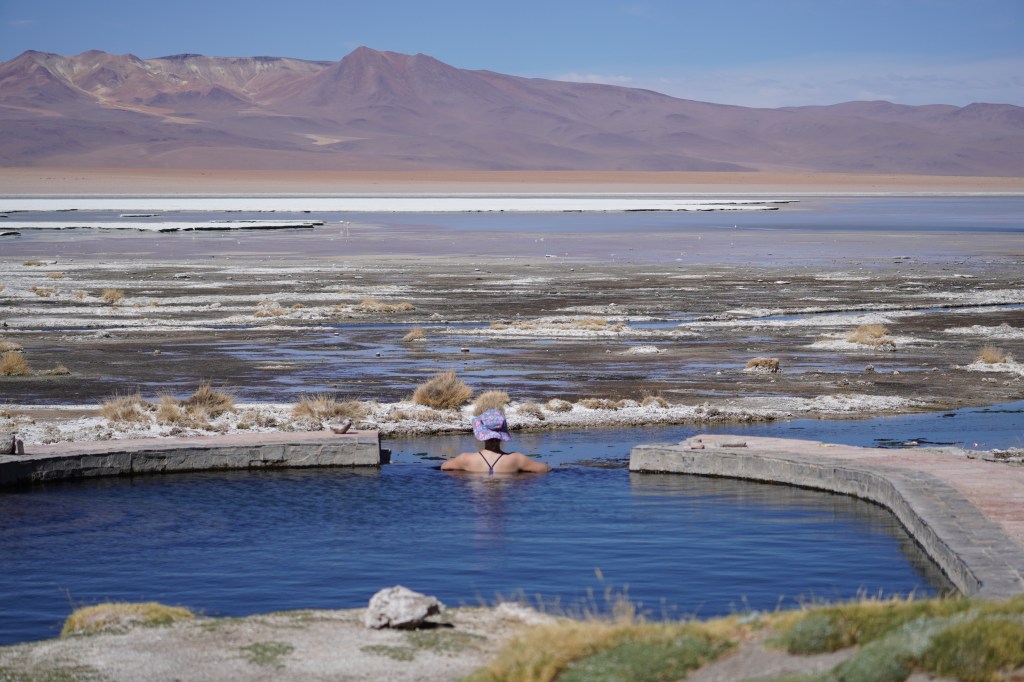
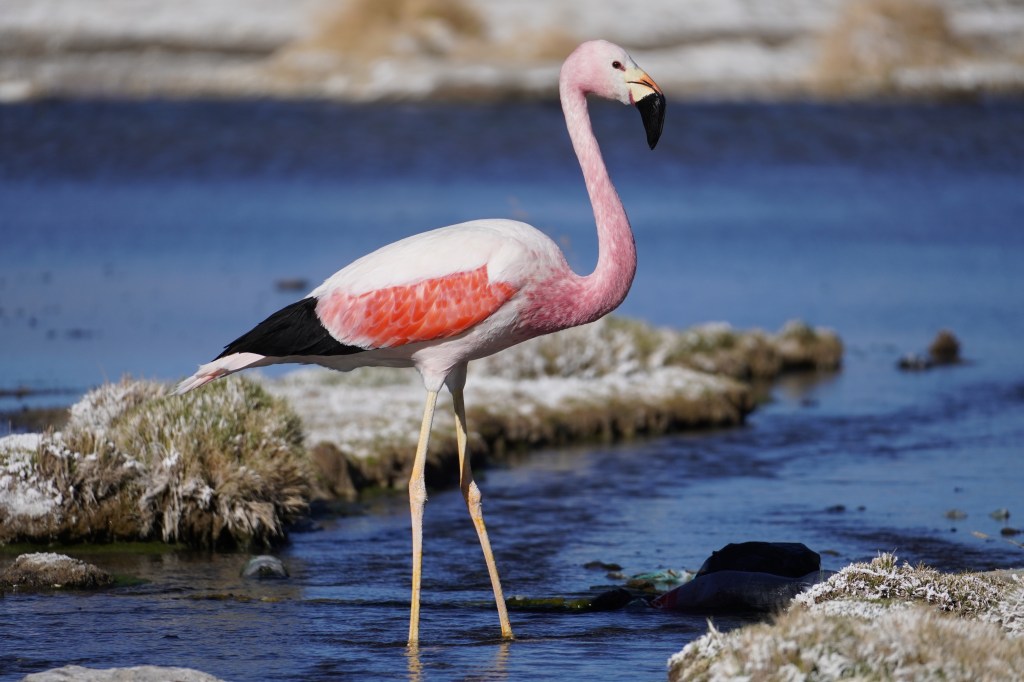
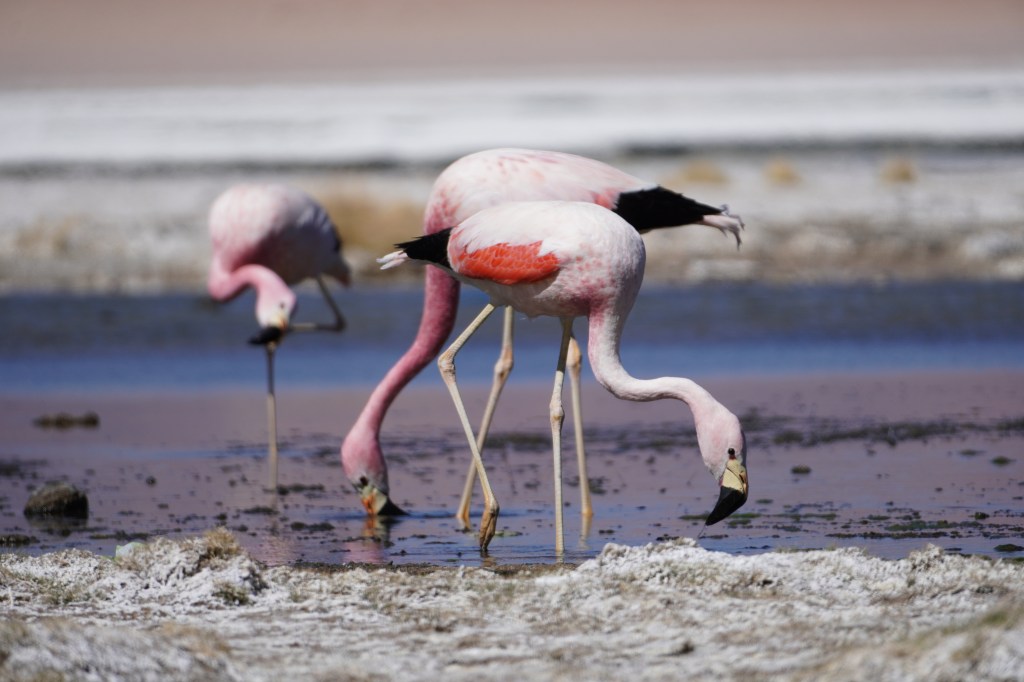
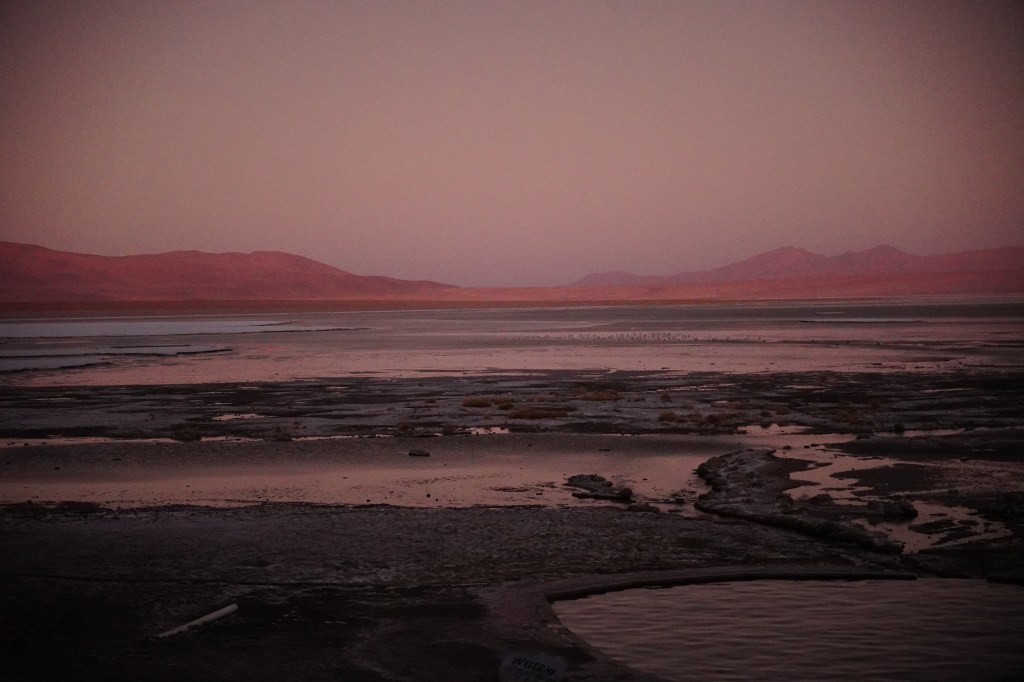
Back on the „main road“ we had to cover about 30km and pass a new highest point of 4700m. The landscape looked like painted and the corrugation of the road was at times as high as half of the wheels of Rosi. Most of the time we could not go faster than 20km/h, but finally we made it to the Termas de Polques. These are hot volcanic springs next to a huge salty lagoon. When we arrived there were still a few people in the two pools, so we parked the van with a view on the lagoon and made a tea first. After some of the Tour-Landcruisers left we paid the entrance fee and made our way in the pools. Once again it was an incredible feeling to see the lagoon while being in the warm water. The wind was cold, but the sun was incredibly strong. We both enjoyed these pools a lot, especially after the shaky ride of the last days. These wash board streets really hurt your neck and a warm pool really helped. Also there were a few flamingos really close to the pools and Linda was able to get a few really cool shots. After a while we got back in the van to relax and drink another tea. It was at that point where we found out, that we both got incredible sunburns while we were in the pools. We had underestimated the sun and the UV-index is really high at this altitude. Nevertheless we had a second dip in the pool after the sun went down and had one pool completely for us. In the other pool we had a chat with a french couple that is travelling since over a year with motorbikes. Once again I was deeply impressed. I was complaining about neck pain from driving the van, but these two were battling the nature every day on their motorbikes.
The next night was not better than the one before and I felt strong pressure on my chest and had problems to breath again. In the morning the nose feels completely dry from the dry air and Linda told me that she was worried about me that night and was close to cancel the route once again. I had blue lips and we both had bloody noses and were not hungry at all. We pretty much ticked every item on the list of symptoms of altitude sickness.
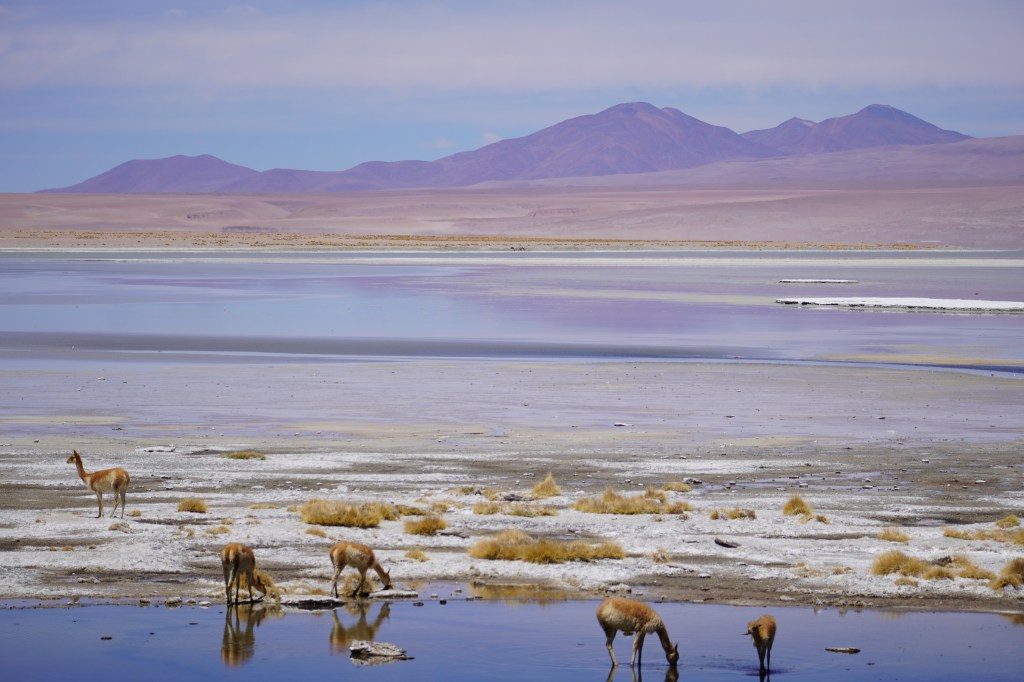
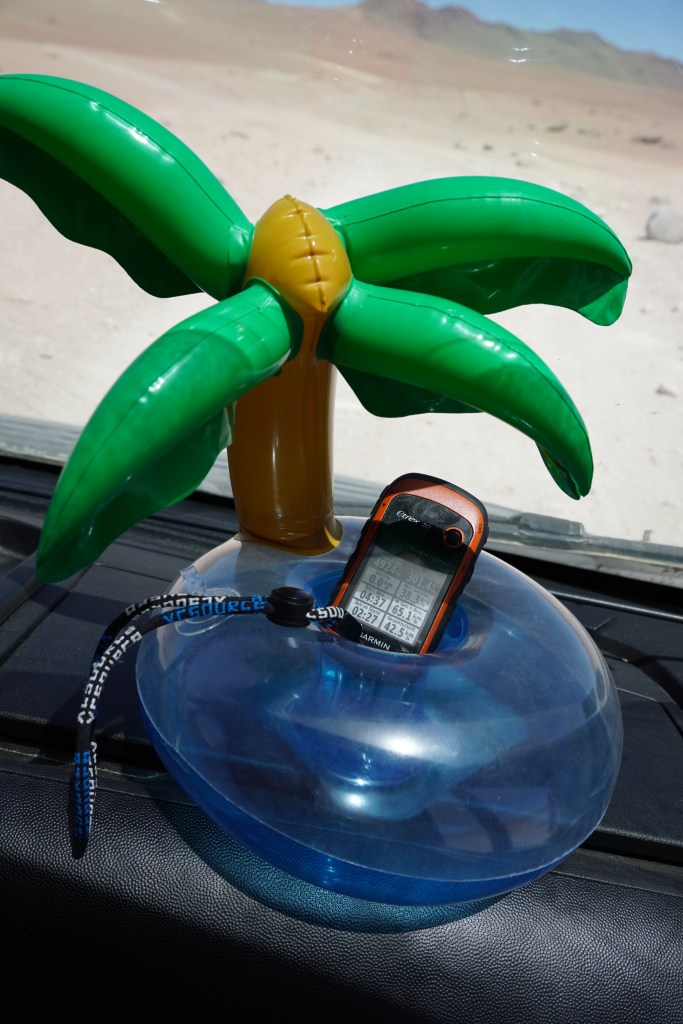
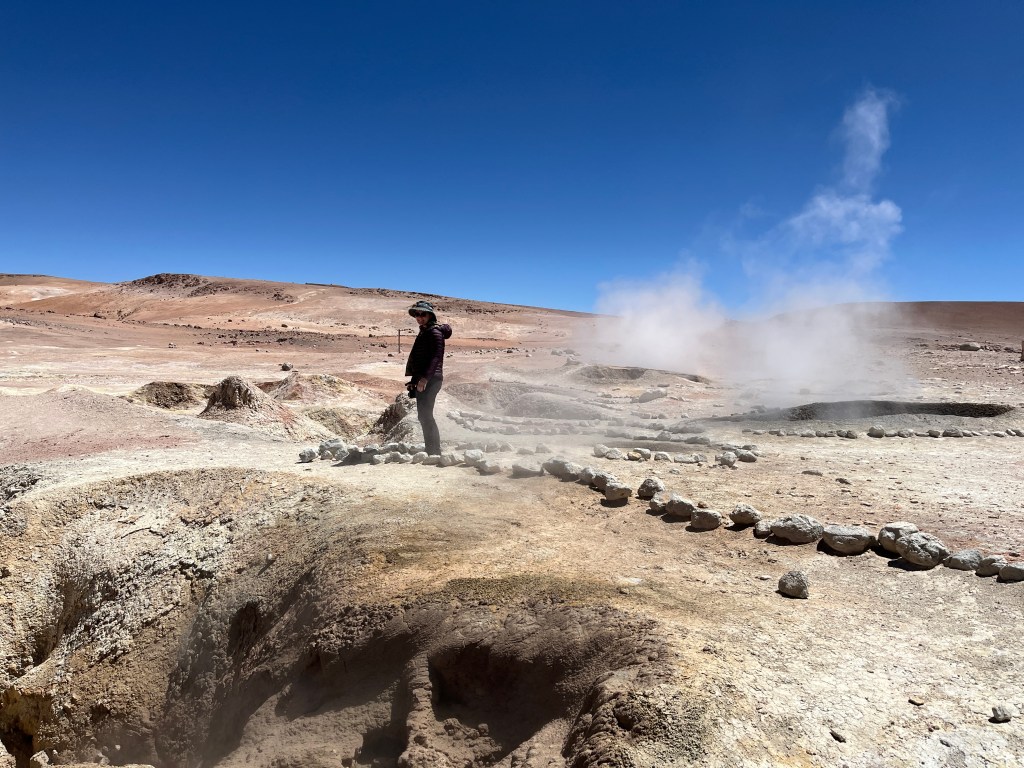
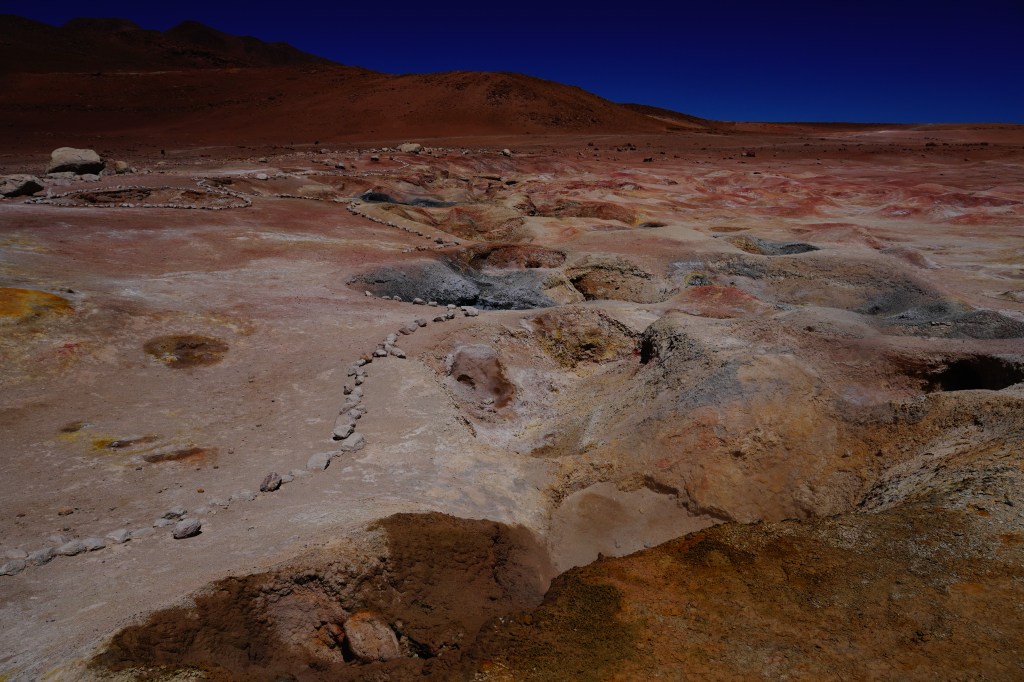
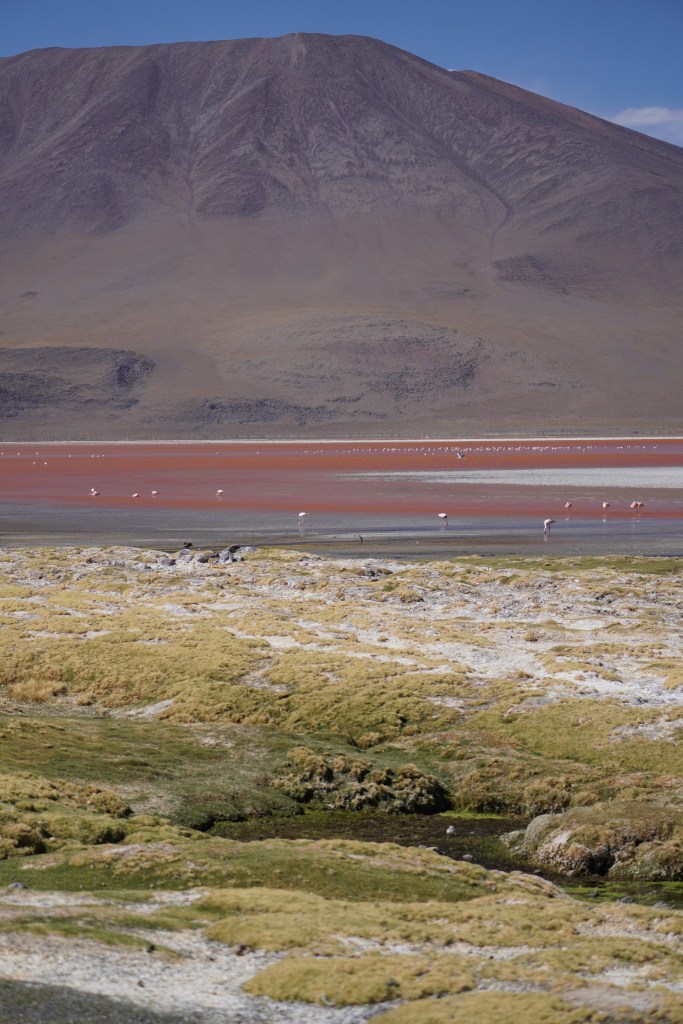
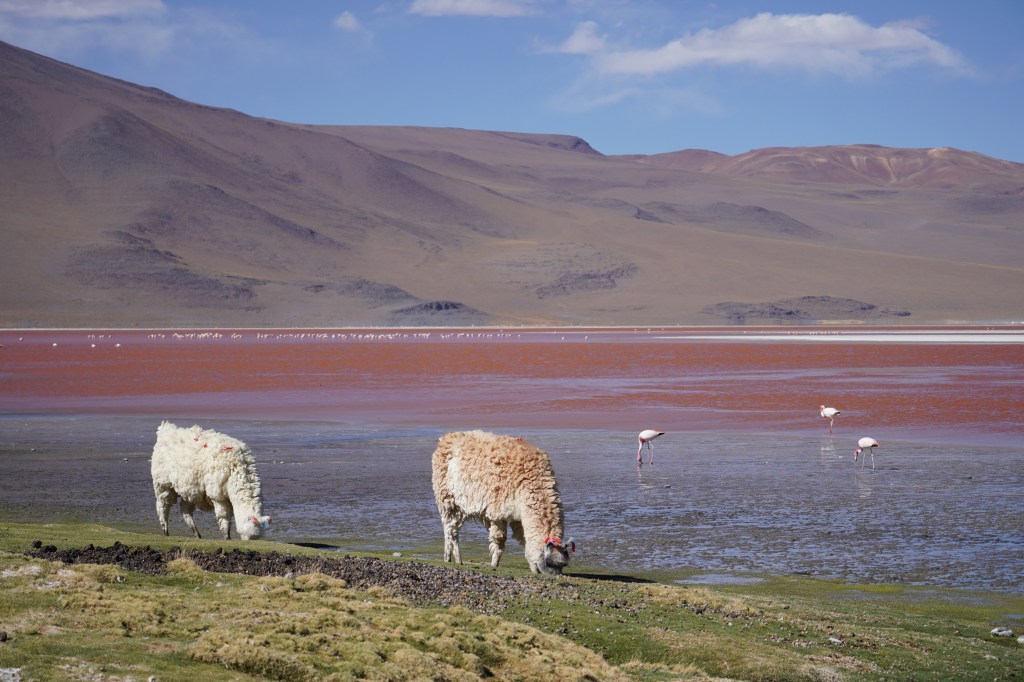
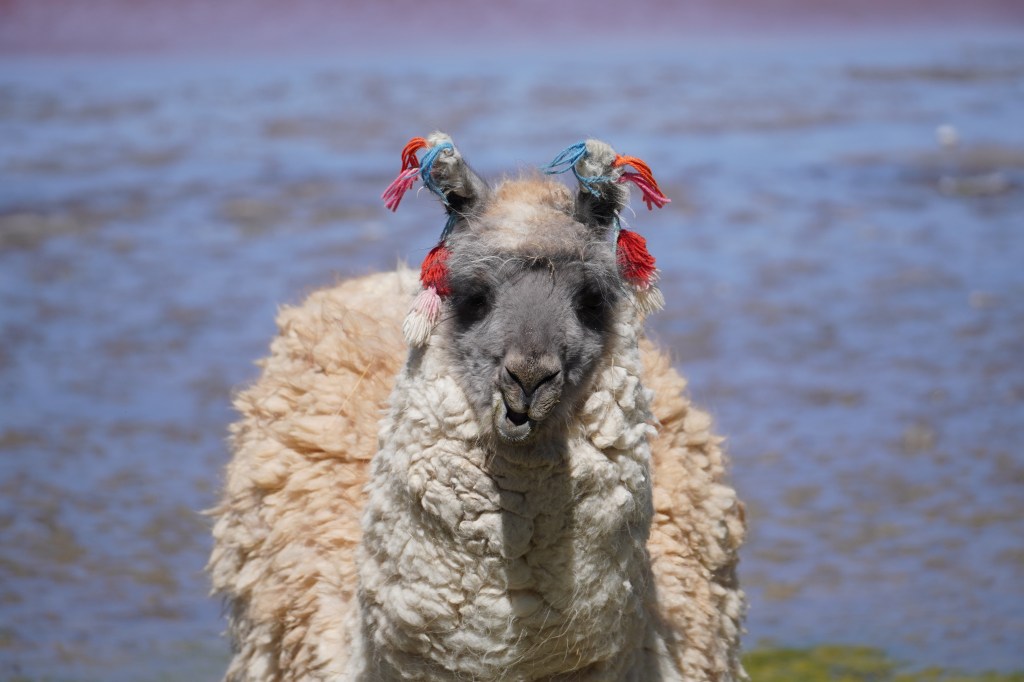
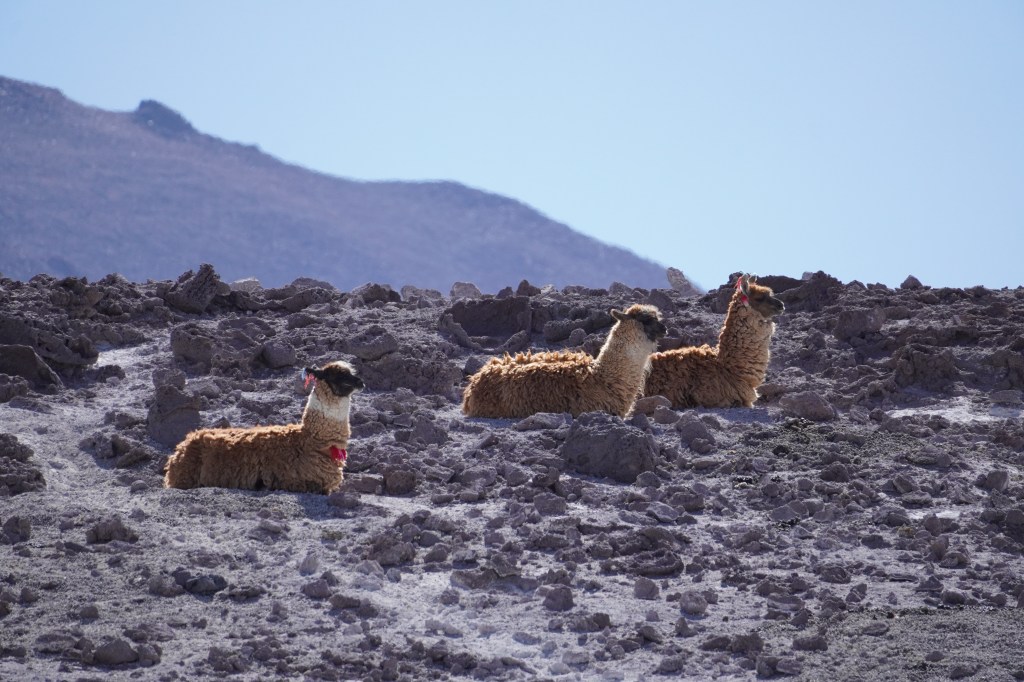
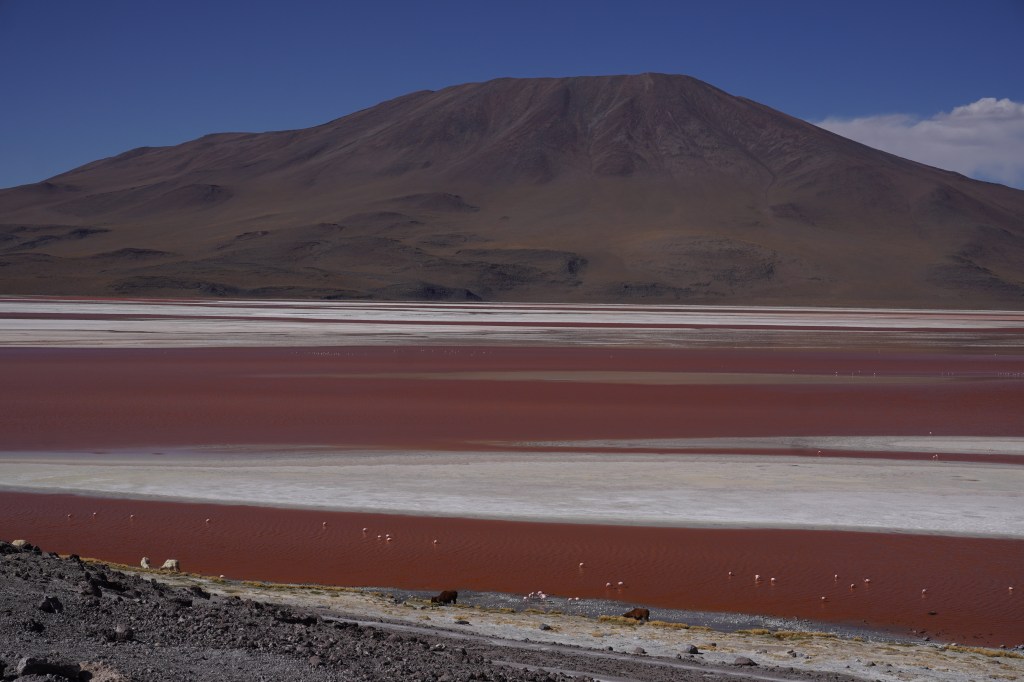
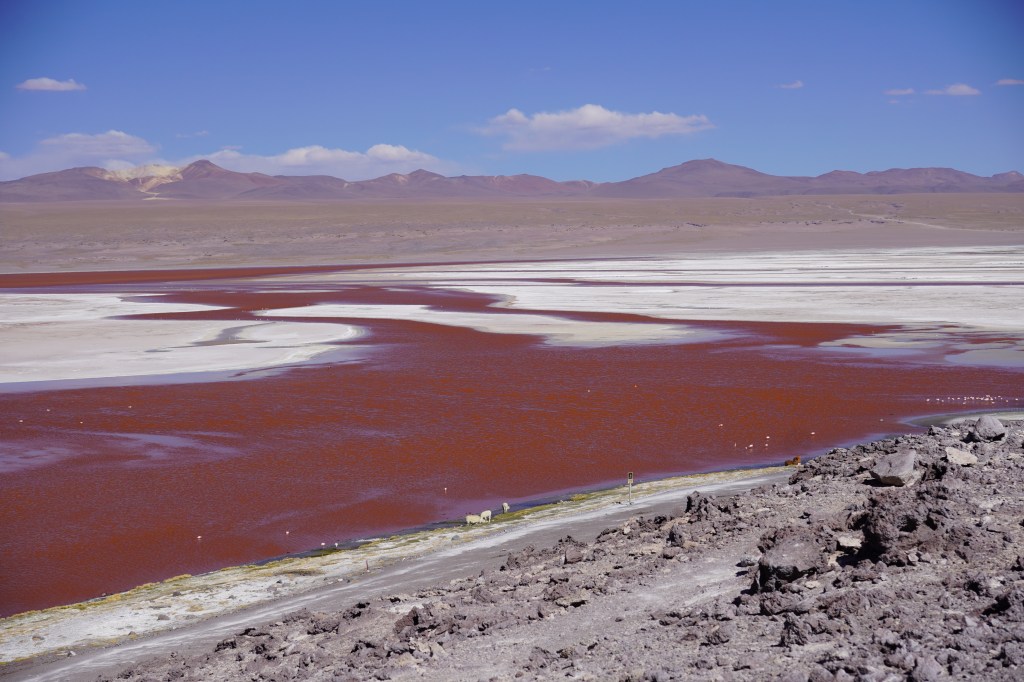
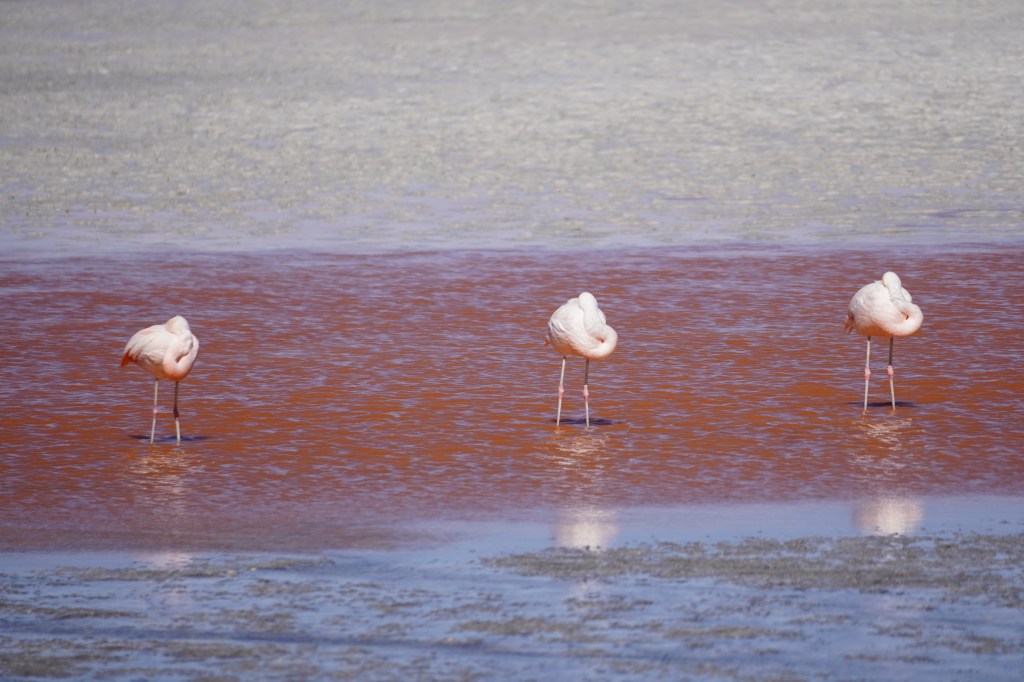
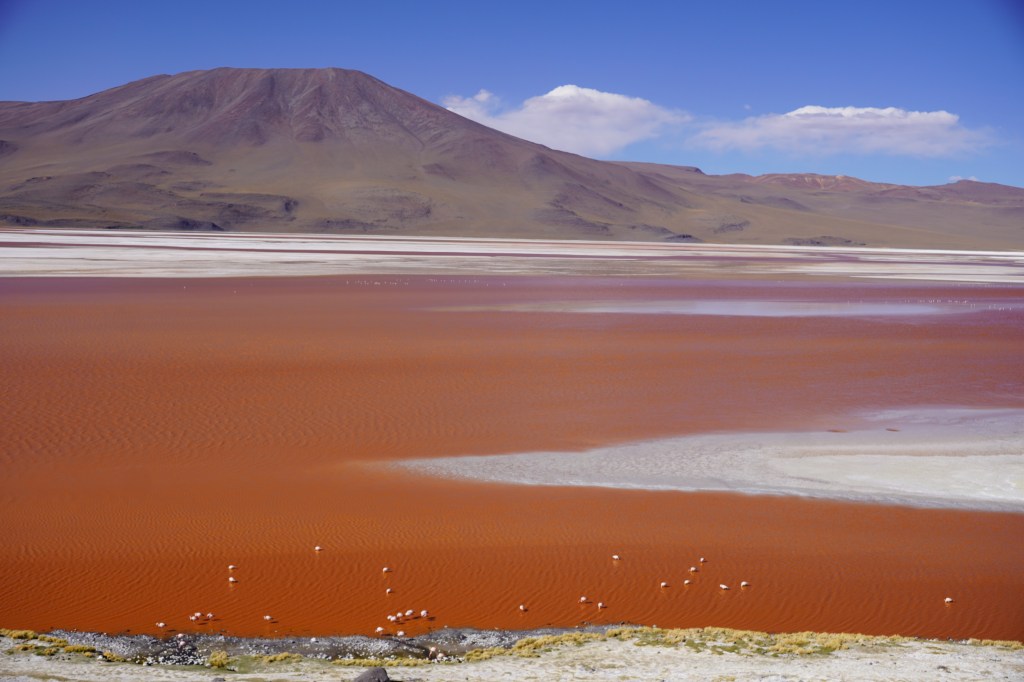
But again the next morning we decided to continue. The pools were at 4500m altitude and I wanted to be sure to sleep lower next night. But first we had to climb up again. To the highest point of the route. Rosi had to fight the cold nights and the altitude as well. It took her some time to start in the morning, but than she did not complain at all. I could feel at strong loss in power, but we also did not need so much power when going max 20km/h. The next goal were the geysers of Sol de Mañana at over 4900m. We measured the highest point at 4923m and again the drive to the geyser was highly challenging for Rosi. The geysers were impressive, colourful and smelly, but we did not stay long due to the toxic fumes and the pressure in our heads at this altitude. From there we went to the Laguna Colorada, which is a highlight of this tour and luckily again at 4300m altitude. It seems exaggerated, that I mention it, but at this point we felt every hundred meter and celebrated any decent of the way. On the way to Laguna Colorada there were the deepest and longest sand patches and Rosi had to really push through with all wheel drive to not get stuck in the sand. When we arrived we understood what all this fuzz was about. Again, I have never ever seen something like this. The lagoon was shining in bright red, while thousands of thousands of flamingos were standing in the water. At the shoreline there were loads of Lamas eating the little gras that was visible and in the background you could see the volcanoes and mountains. We took our time to stroll along the laguna and at this spot all the tours make a long stop so it was one of the more crowded spots of the Laguna route. After a while we continued to the exit gate of the national park, but not the end of the Laguna route. We slept in front of some houses where an old lady explained us proudly how many lamas she owns.
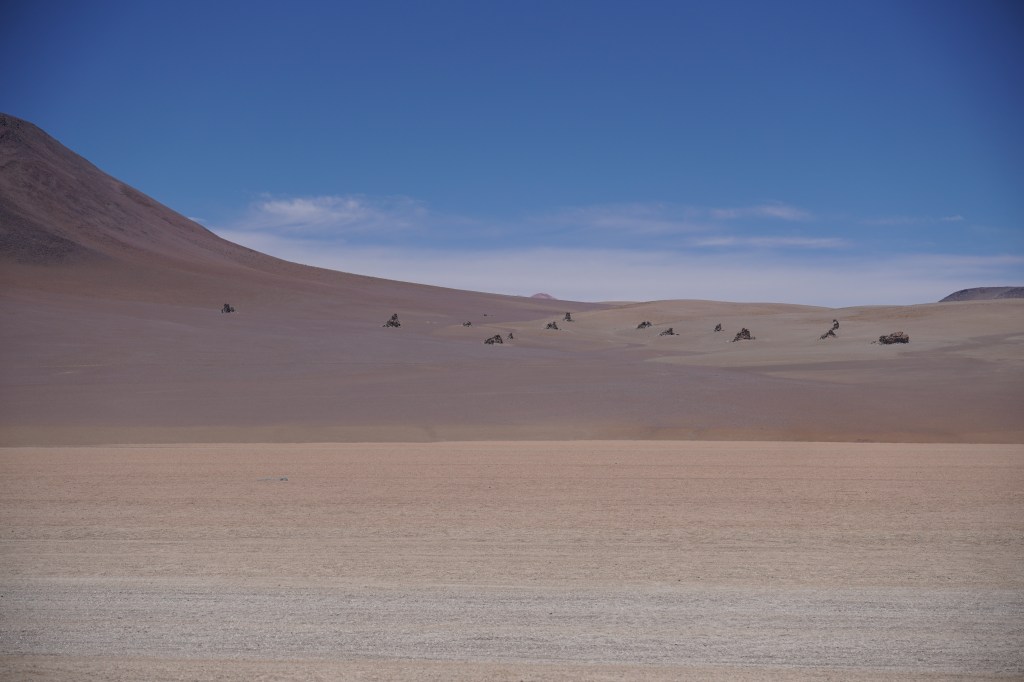
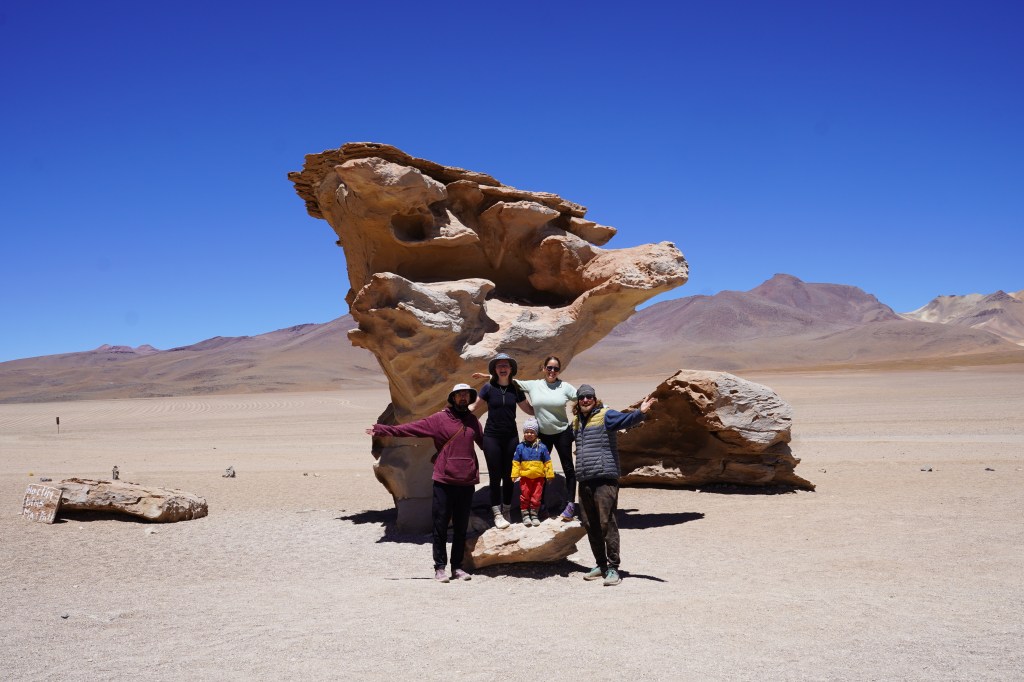
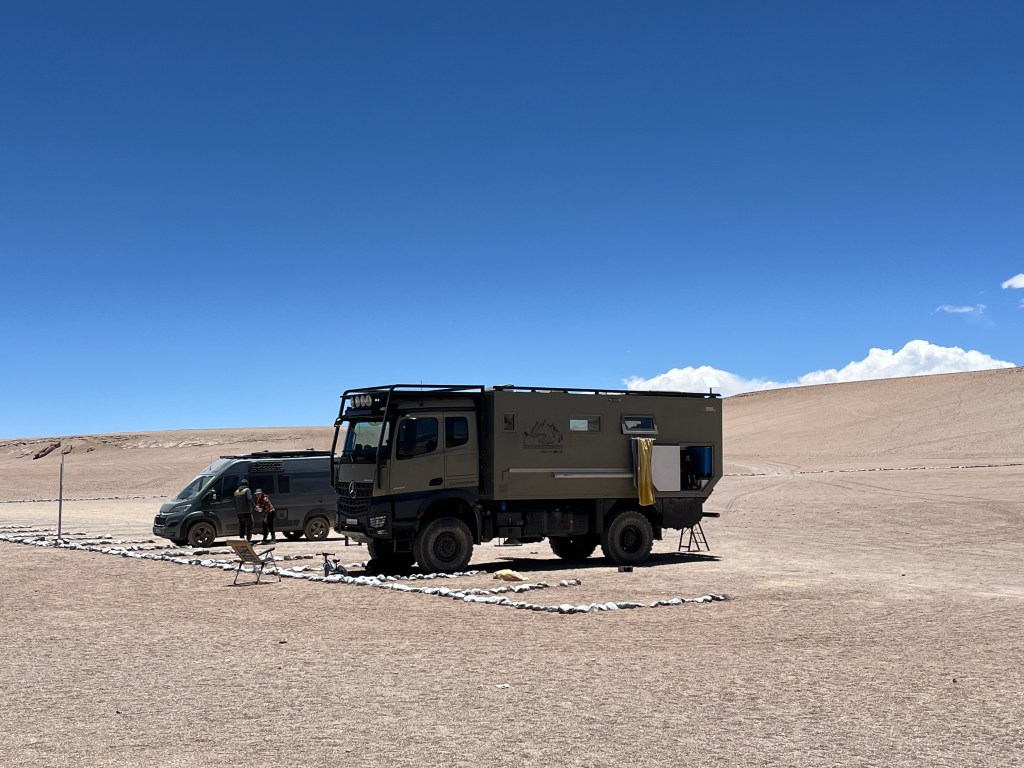
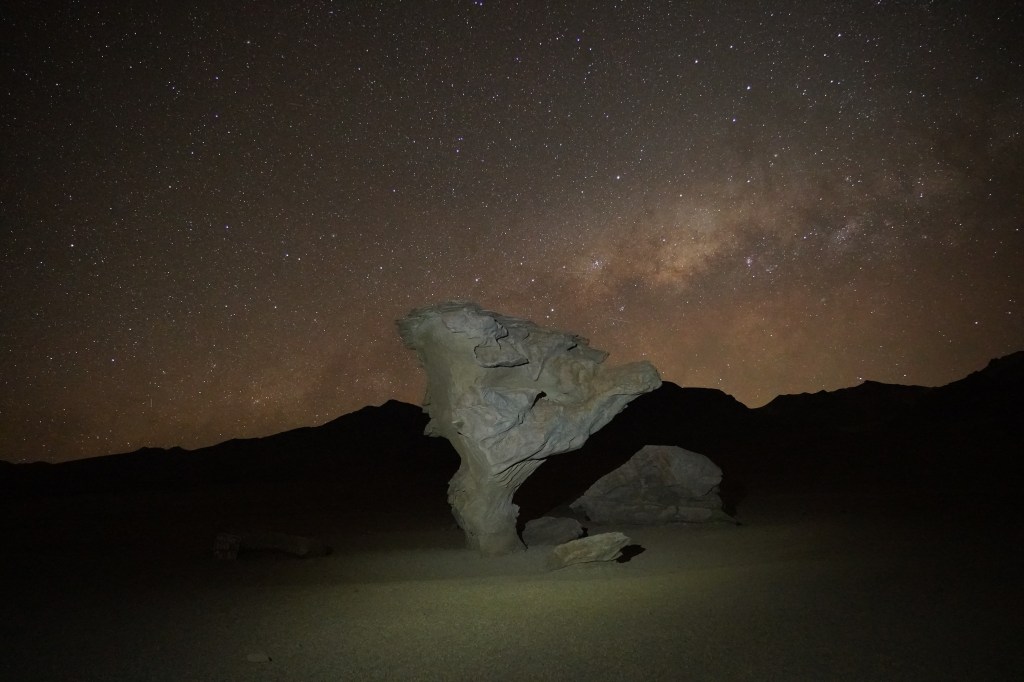
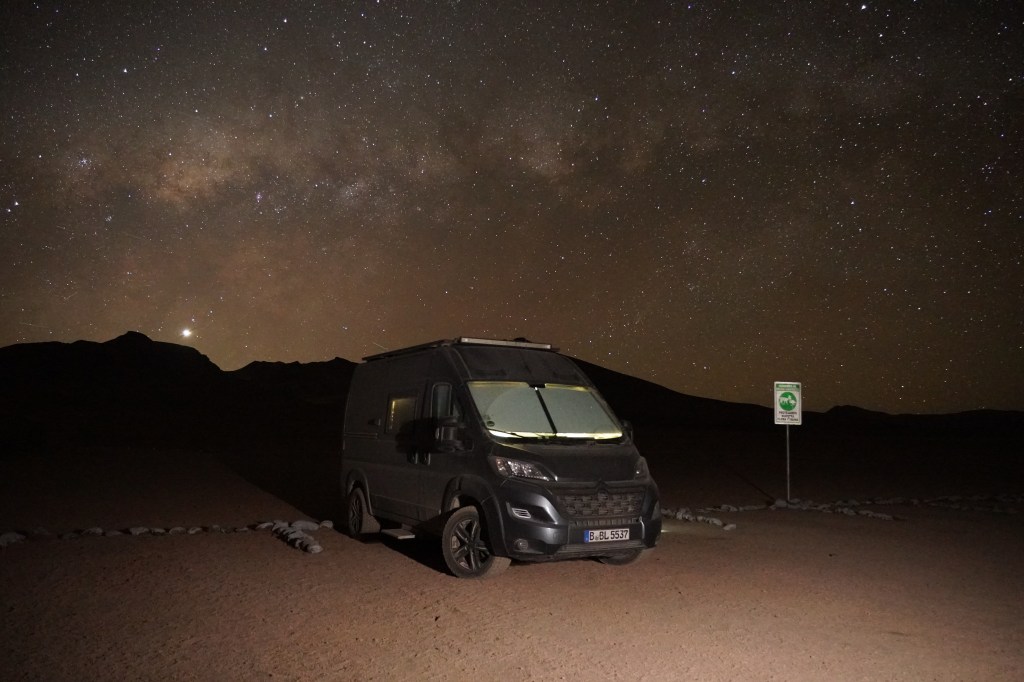
The next morning we started early. This day we wanted to cover way more distance. Up to 60km were planned, to get to below 4300m terrain for the next night. The first stop was the famous Arbol de piedra (Tree of stone), which is a lava stone formation that looked like a tree. We were almost alone here. Only a HUGE mercedes truck overlander was standing next to us. After a while we started talking and it turned out that Fabian had problems to start his house on wheels. I have no idea of engines but still offered my help and he said that a litre of Diesel might help, so I shared some Diesel and soon we started to talk and Fabian got his Truck to run again. Fabian is travelling with his wife Isabella and their 3 year old sun Mattheo. They have the successful youtube channel liveandgive4x4 and they invited us to stay for lunch. It was impressive to see their truck from the inside. It is really like a house with all the luxury that we were not used anymore. They have 800l fresh water, of course Starlink internet, a fully equipped kitchen and even a washing machine. Somehow we connected and were talking and talking and decided to spend the night at that spot, although it was against our plan at over 4600m, but it just felt too good to exchange with other overlanders, who were living since 8years in their “car”.
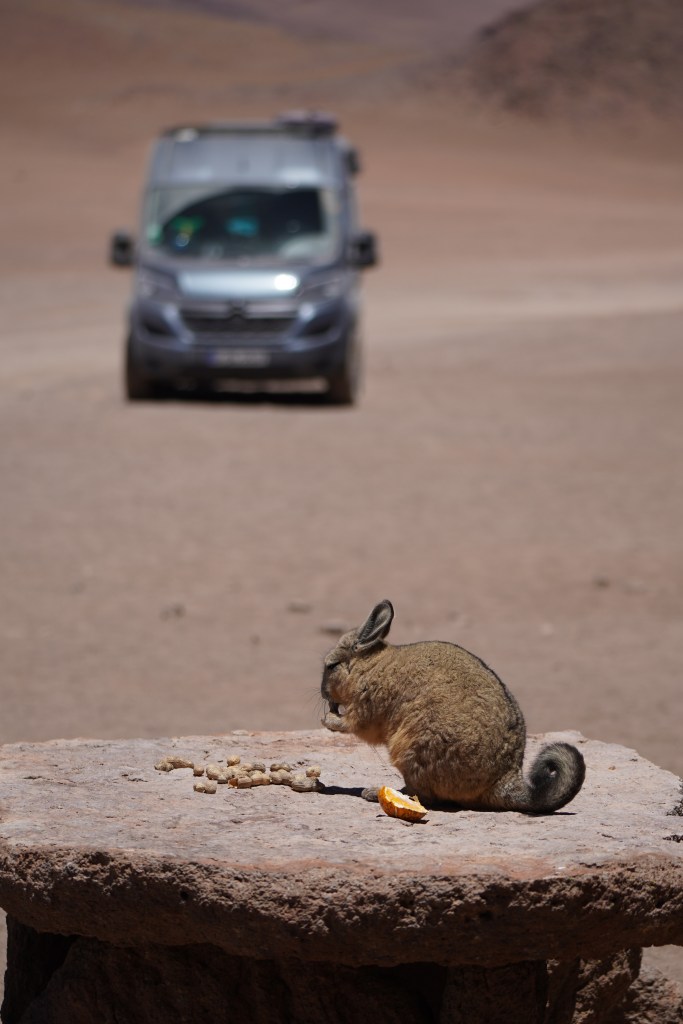
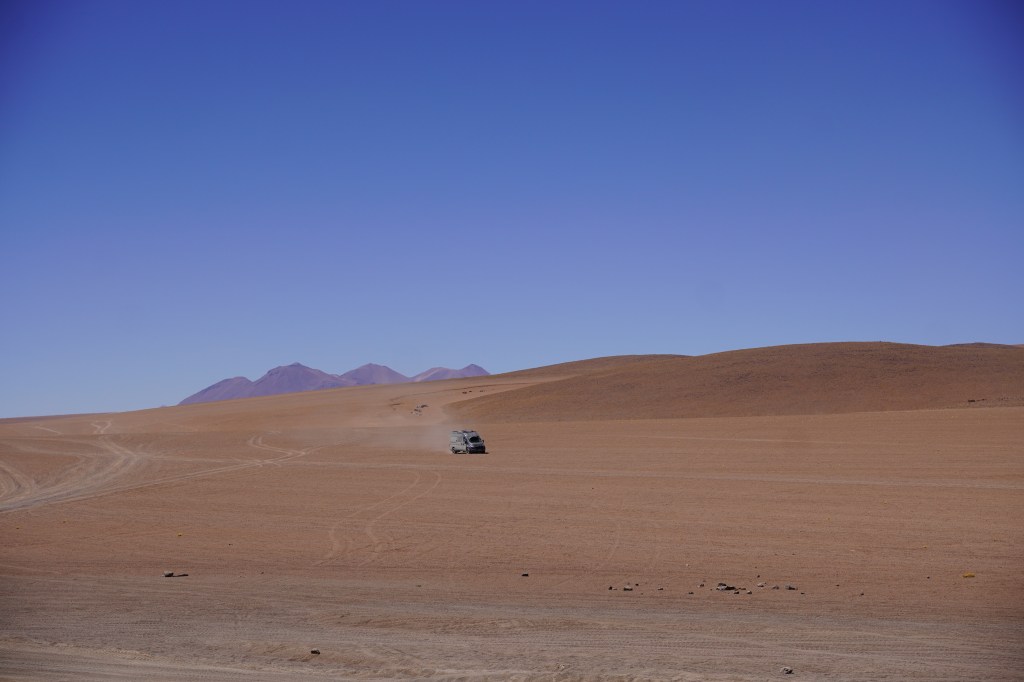
The next morning we drove together to a rock formation with many more chinchillas and this huge mercedes truck was flying by Rosi like a spaceship… not even on the road. After watching the weird Chinchillas, Fabian told me that Rosi could do the same and he gave me a little off-road coaching while Rosi was flying over the sand ignoring any kind of lane that was still visible ( and there were millions of lanes everywhere) I felt confident, because I knew, that Fabian could pull me out of any situation easily with his truck.
After a long goodbye we drove off in different directions and saw the liveandgive truck fly by one last time in a huge sand cloud. We still wanted to make it to one of the last four lagoons and had still some ground to cover ahead of us.
In a very sandy and narrow canyon, where I had to drive uphill and wanted to keep the momentum to not get stuck a Tour jeep was going in my direction and was flashing me. Obviously I could not give way, and since I was going uphill and he had the way more capable car I expected him to climb a little up the canyon wall, but he was waving to me and explained and showed me that he could not acellerate anymore and the connection from his gas panel to the engine was gone. His solution idea was to just roll down the hill…. which was pretty much ignoring the problem and also he would have to solve the problem anyway half a kilometre later, when it was going uphill for him again. Out of nowhere suddenly 5-6 Tour Landcruisers appeared to our vehicle stand off and many people were leaning in the open hood of the broken down car. After 30 min they were able to fis the car and he could free the way for Rosi.
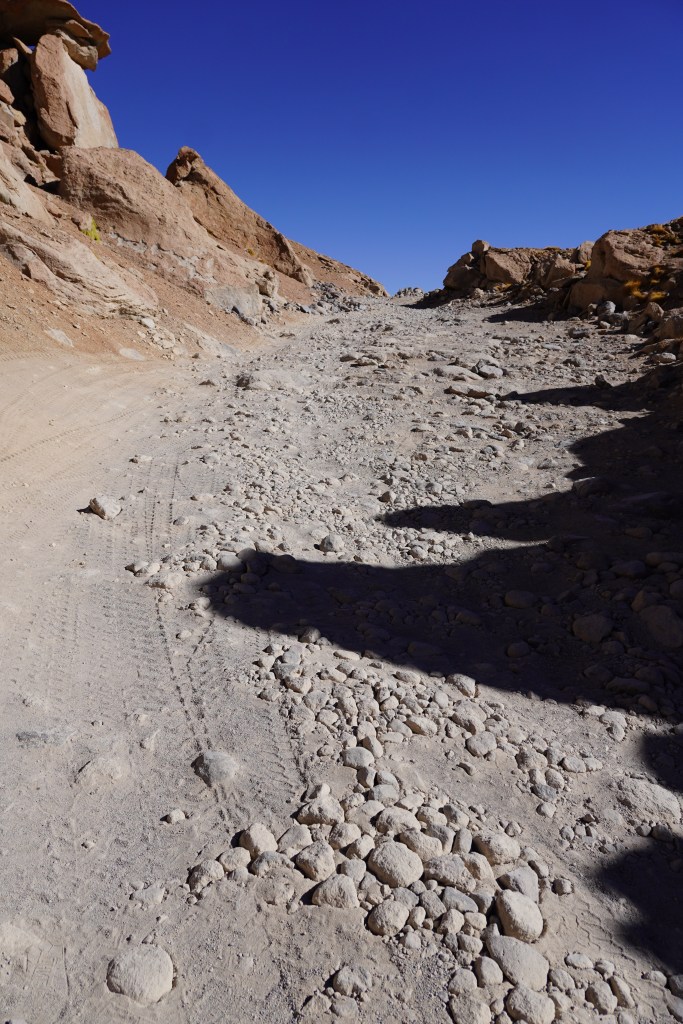
The next big hurdle was the escalera de piers (Stone stairs). We have already been warned about this part from other Overlanders and looking at it I was pretty impressed. It is a narrow stone passage with very stony and uneven ground. Luckily we had to drive it down and not up. The goal was to make it down safely without touching the stones from below and without wheelbite. Rosis wheels are incredibly helpful in the terrain, but if you pierce the weak sidewall with sharp stones they will break as well. We walked down the escalera and I tried to select a route that will work, than we drive Rosi down very carefully and slowly and it worked. Nothing but the tires was touching the rock and I let out a scream of success at the bottom. From there it was wide dessert to the last four lagoons of the route. At the second one we found a spot that was decently wide sheltered and right next to the lagoon. We could see the flamingos directly next to Rosi and spent the last night of the lagoon route here. The next morning we were having a coffee right at the lagoon at could listen to every sound the flamingos made, while spreading out over the lagoon. For the night they had gathered in a big pile in the middle of it. It can even happen that the lagunes freeze in the night and the flamigis get stuck in it, so they have to wait until the ice melts again next morning. We could only hear nothing but the flamingos and that was pretty magical. After a while the tour jeeps arrived and we explained patiently for a millions time to the tourists that we REALLY shipped the van all the way to south america.
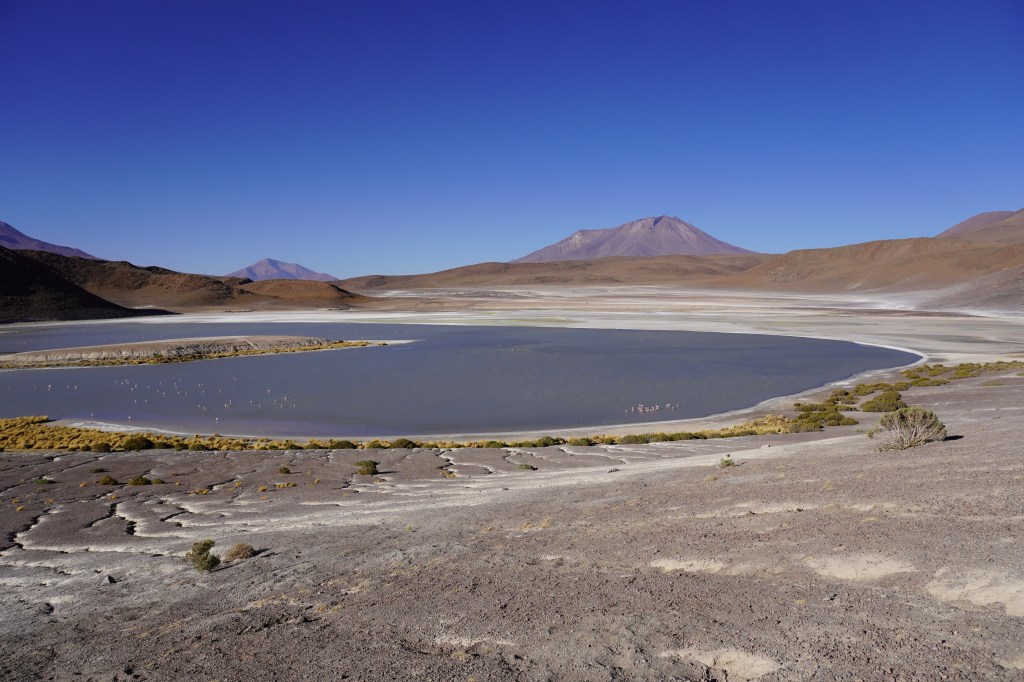
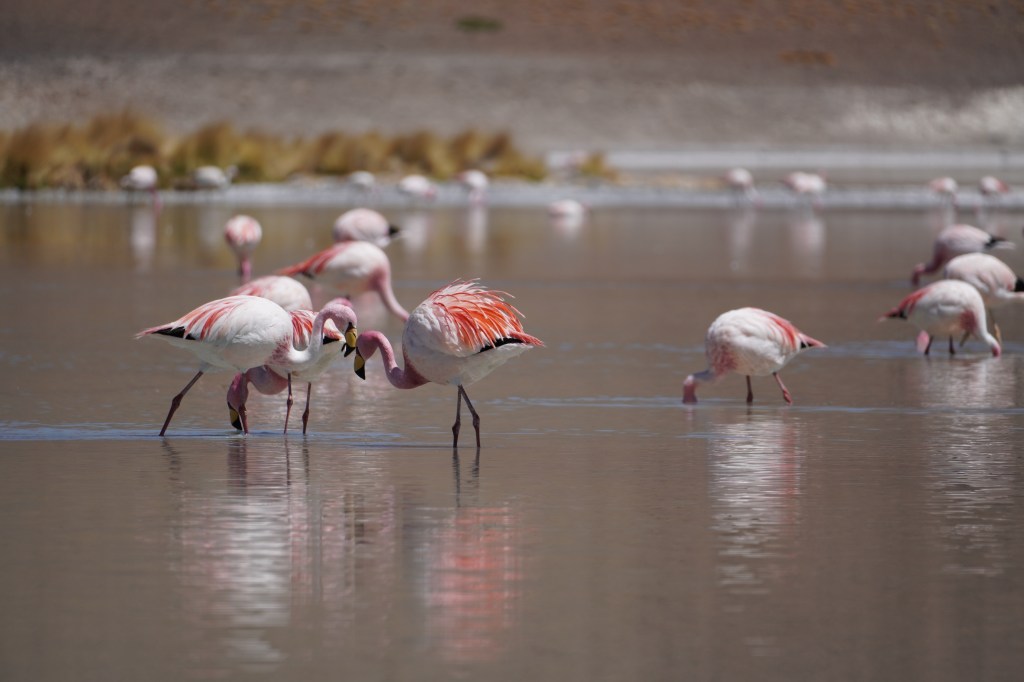
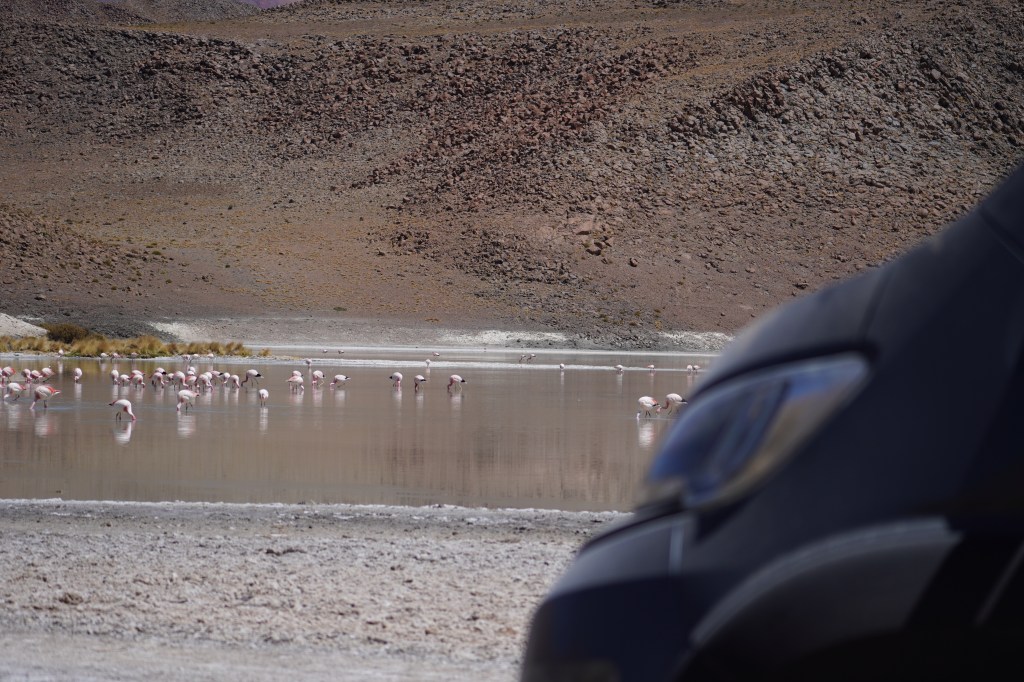
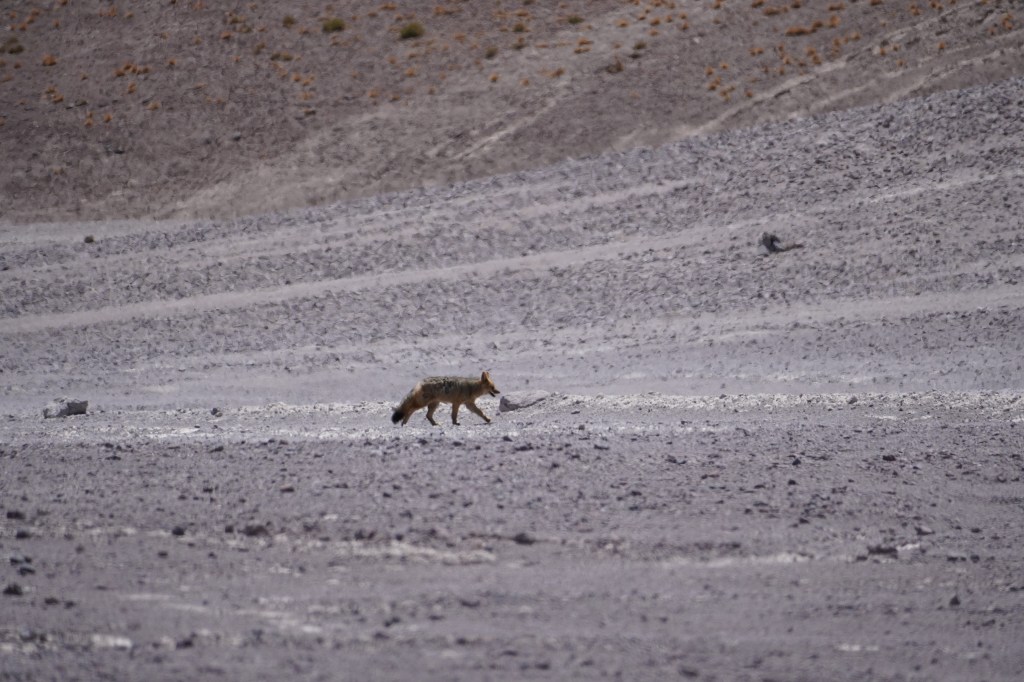
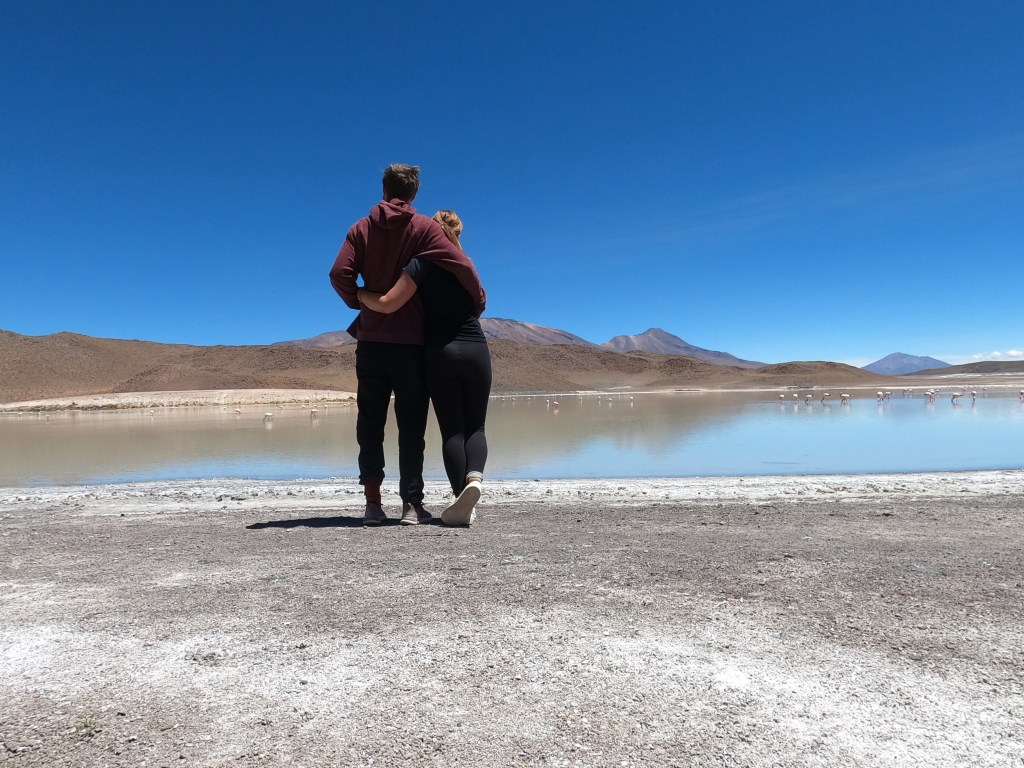
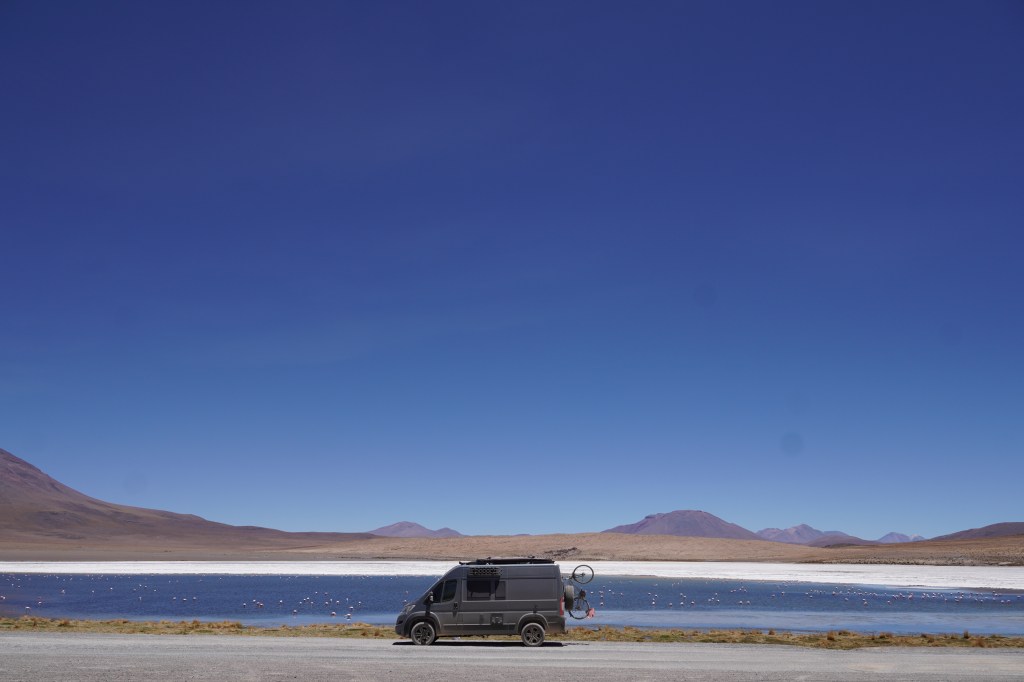
The next few lagoons were still impressive but since they were closer to the main road, there were more and more tourists there. We could feel that we were getting closer to civilisation.
After one of the last lagoons we passed a military checkpoint and a kid with a black shirt and a camouflage hat came towards Rosi and asked us something really fast and unclear. I got not even half of it and asked again. A second guy in a Brazilian soccer jersey came up to Rosi and explained that he needed help and if we could bring a sick woman and her child to the hospital in Uyuni. At the same time he was carrying a package that should be the child. Linda said immediately that this is not a child he is carrying. The woman was nowhere to be seen, I explained him that we need at least two more days until Uyuni and that there are hundreds of Toyota Landcruisers from the organised tours pass this checkpoint every day, most of them have still enough places left in the car and they go without a stop to Uyuni. He was visibly upset and repeated his request, so I repeated my explanation, that we cannot take anyone with us if it is an emergency. After a while we they gave up and we could pass. We will never find out of their request was legit, but it seemed incredibly shady to the both of us.
The last km were not so challenging and we just had to cross a bigger sand pit before the main road. For a last GoPro video we opened the window while Rosi was slashing through the deep sand and 200m away from the end of the Laguna route we again almost got stuck, but Rosi managed and thanks to a wind gust from the wrong direction not only Rosi but also Linda and me were completely covered in fine sand…. but we made it! We conquered the laguna Route and it felt incredibly good. Next stop: The salt flats of Uyuni.
 höme
höme 
Leave a comment