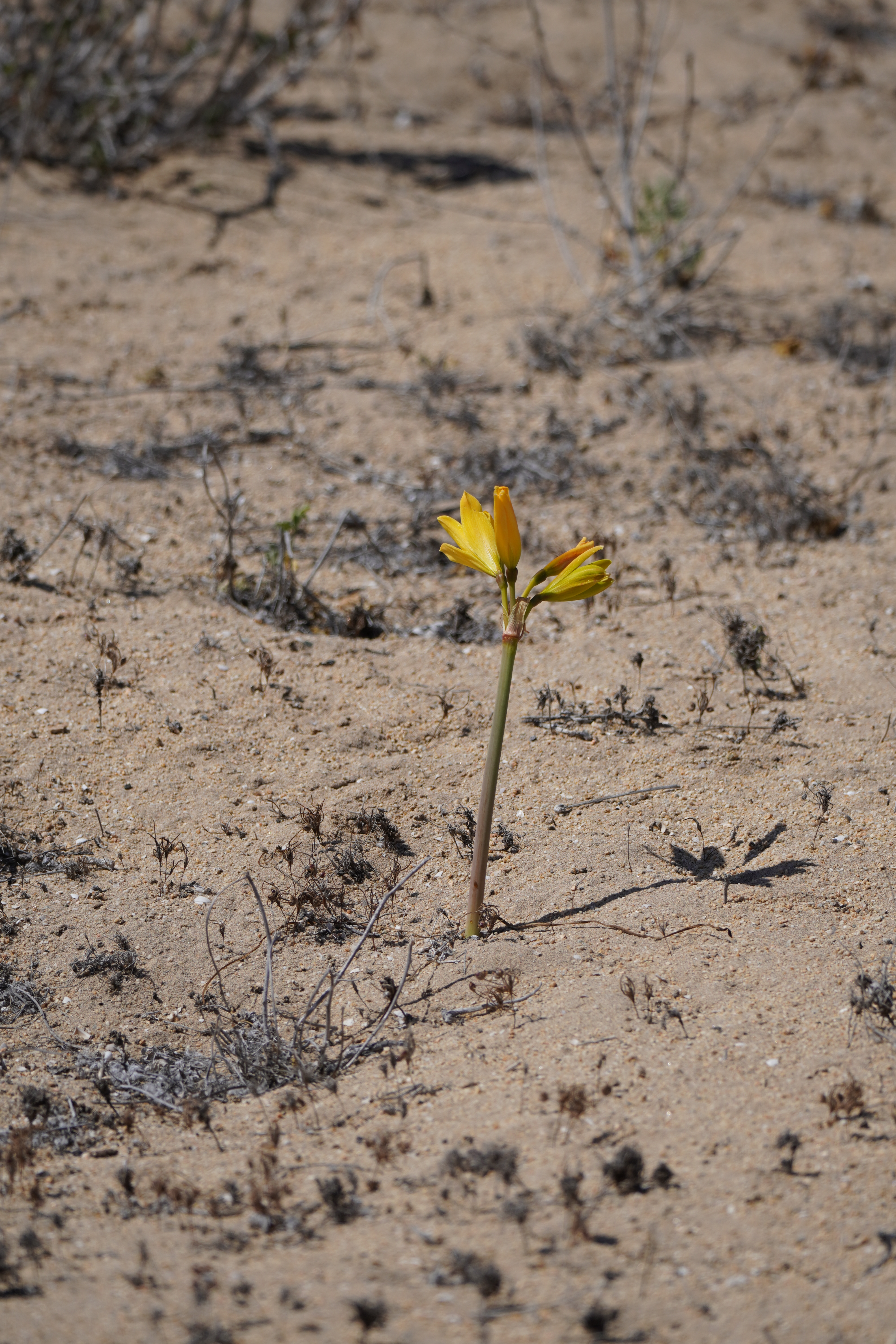
After getting out of the sand and sitting in the car, we couldn’t help but laugh. We high-fived each other and said it was good practice. This is the kind of adventure that comes with traveling. Besides, it would be a shame to take the sand tracks back to Germany unused. Not that we bought them new anyway – thanks to Kleinanzeigen! Back to the adventure: since meeting Dominik and Saskia (durchsuniversum.de) in Mendoza and hearing their stories about Bolivia’s legendary La Ruta de las Lagunas, the idea of driving it ourselves started taking root. We were 90% sure we’d do it. But we still had doubts and worries. Still, the feeling of getting out of the sand together lifted our spirits and gave us confidence. But first our next stop: the Atacama Desert. A traveling Chilean had told us that the Atacama sometimes blooms in November. I had imagined the Atacama as a huge sandbox, without plants or flowers. But I was wrong. The desert is incredibly diverse, with dramatic elevation changes, coastal stretches, canyons, mountain and lunar landscapes, dunes, and barren inland regions. Our first stop was Parque Nacional Llanos de Challe, which, in typical Chilean fashion, required an online ticket. As typical Germans, we complied, even though there wasn’t a soul around, and a public road went through the park. Of course, no one checked. But if the money goes to conservation, all the better. The park is part of the greater Desierto de Atacama ecosystem, renowned for its unique landscapes and biodiversity. The region supports remarkable ecosystems due to ocean fogs (camanchaca) and rare rains.
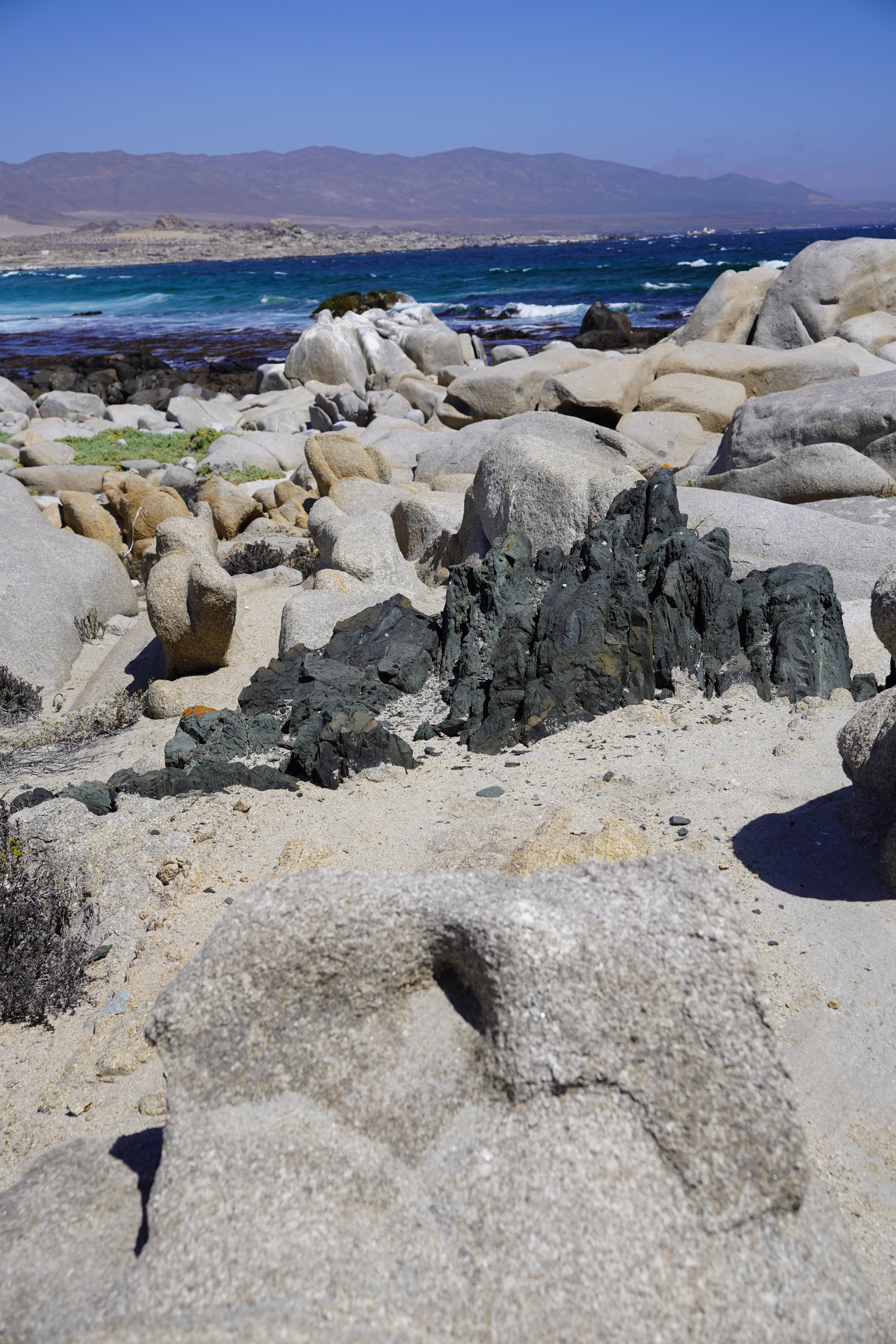
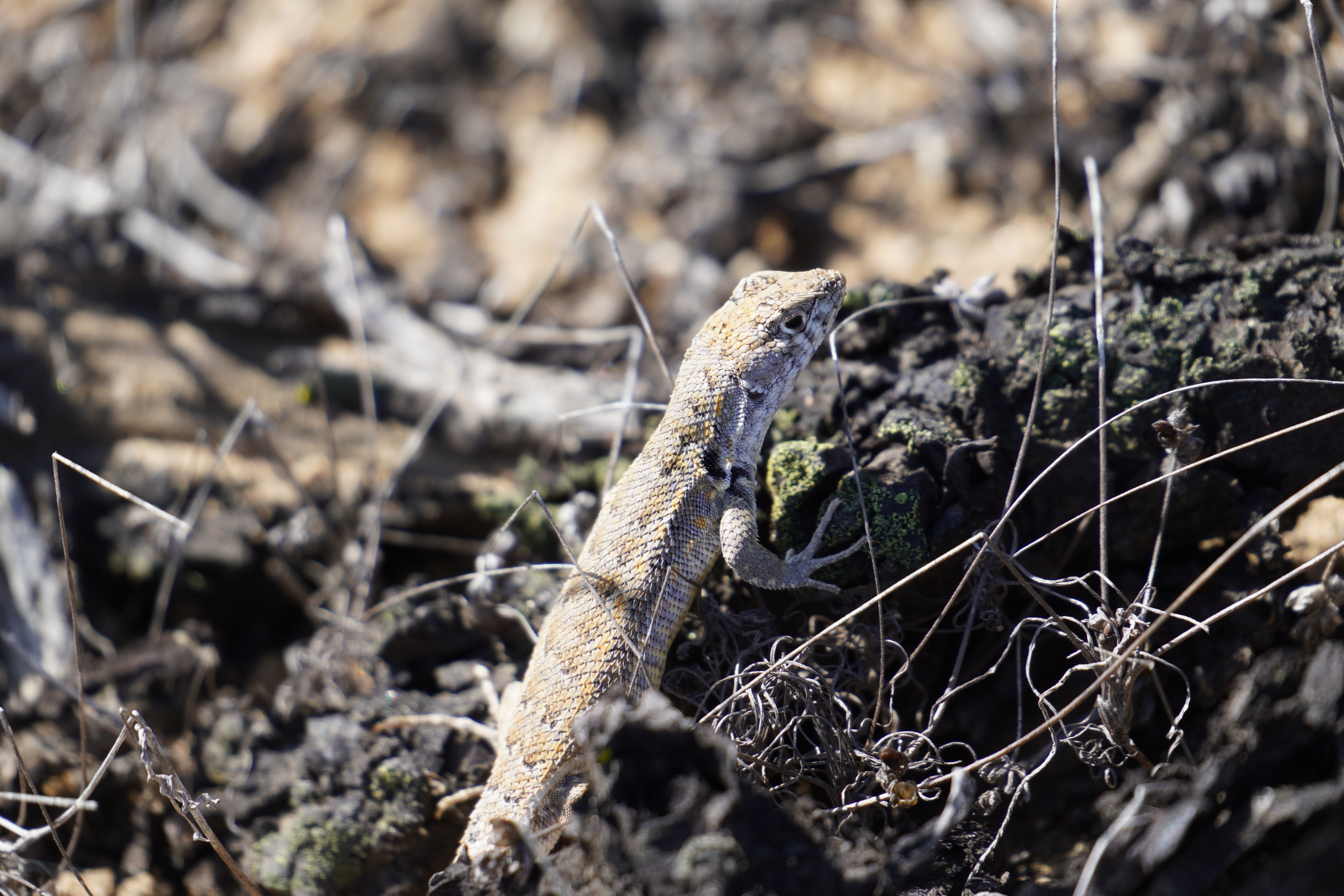
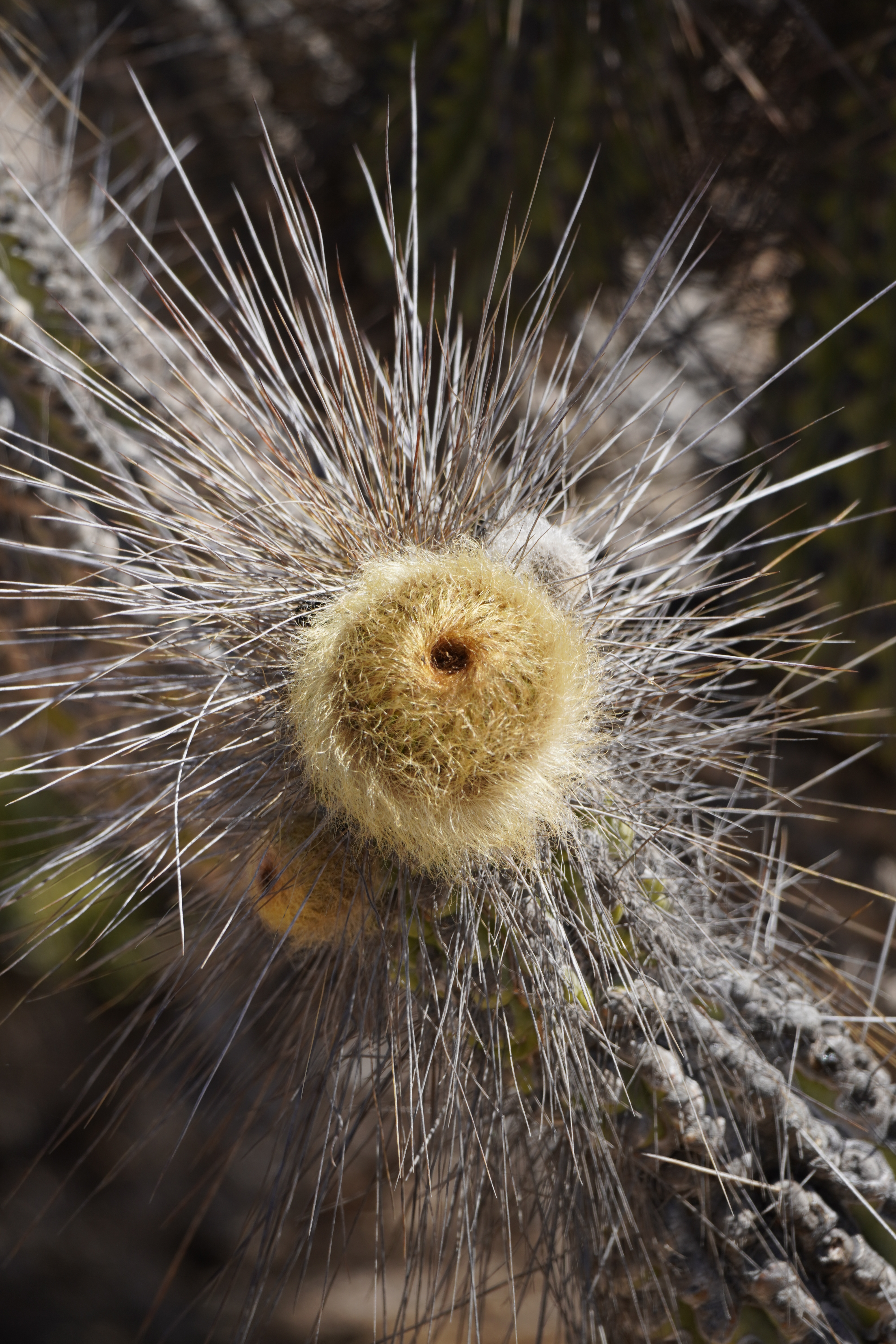
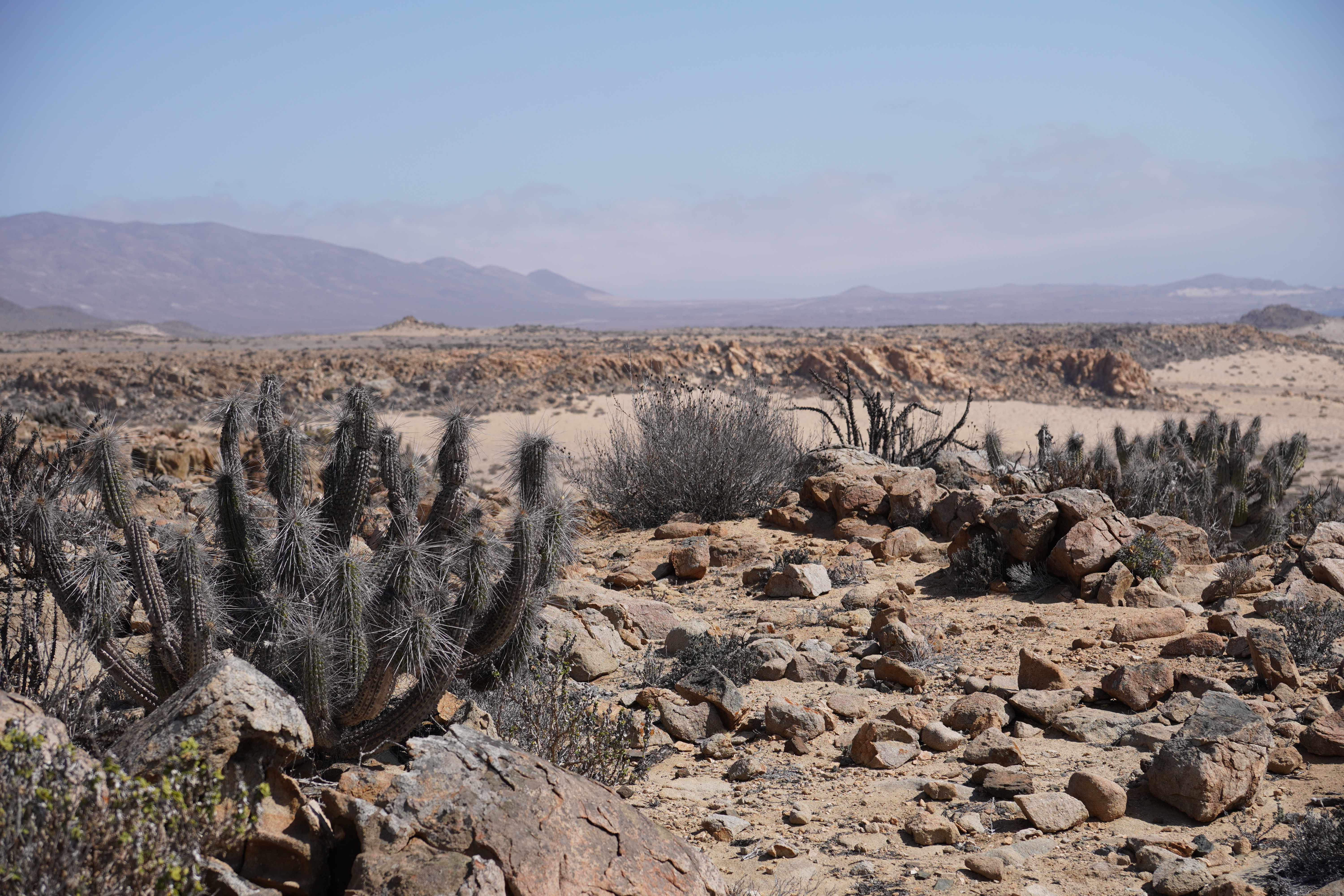
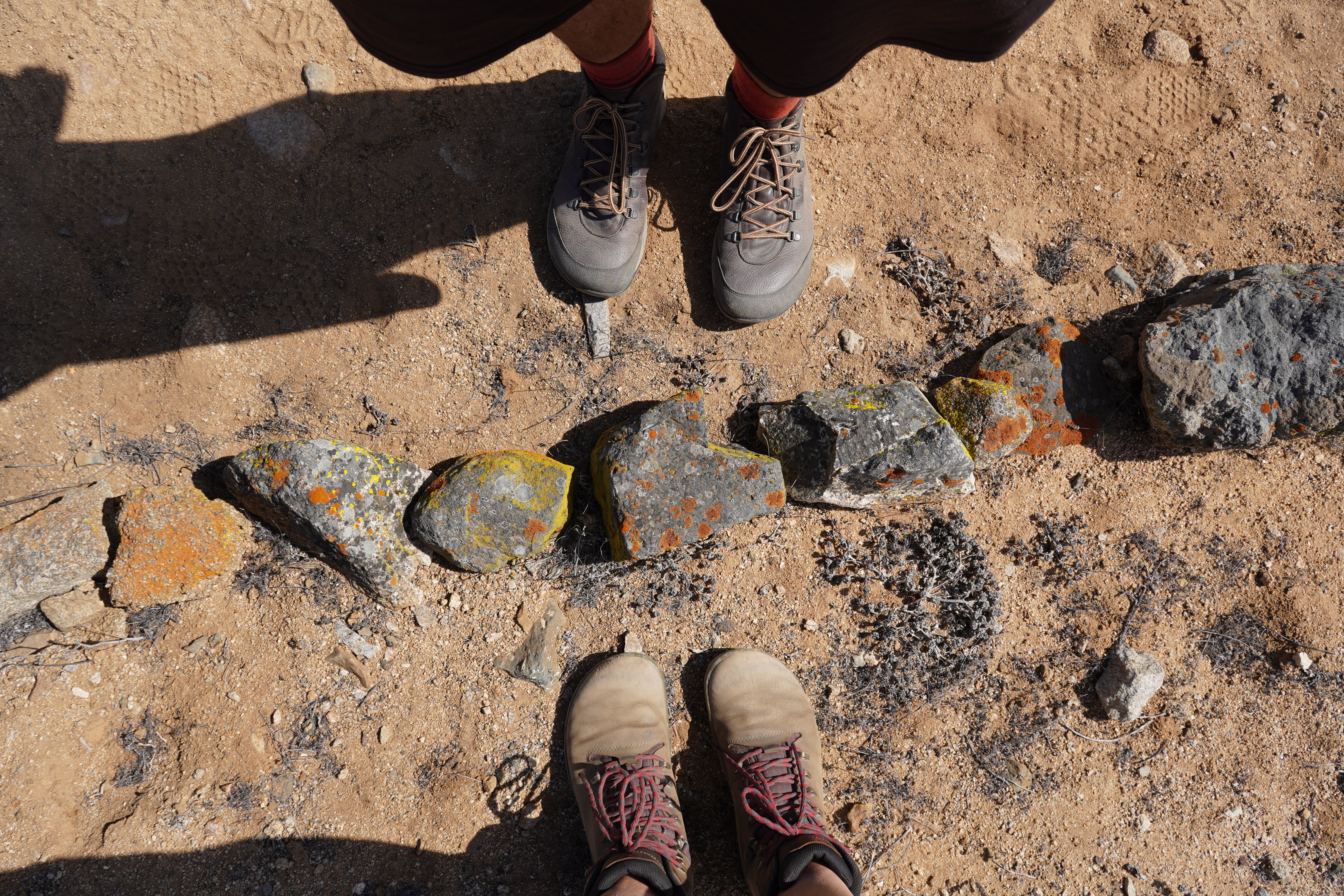
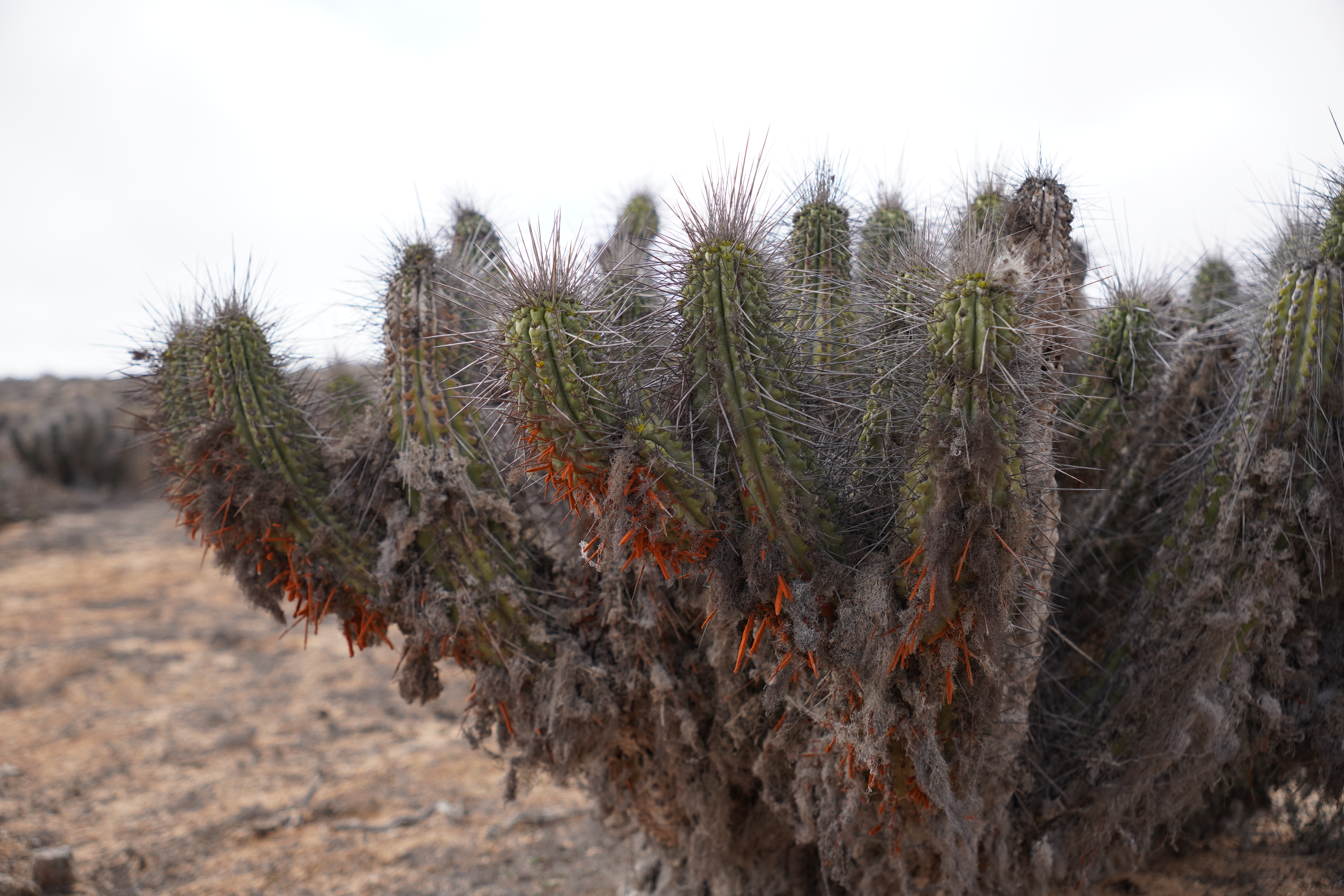
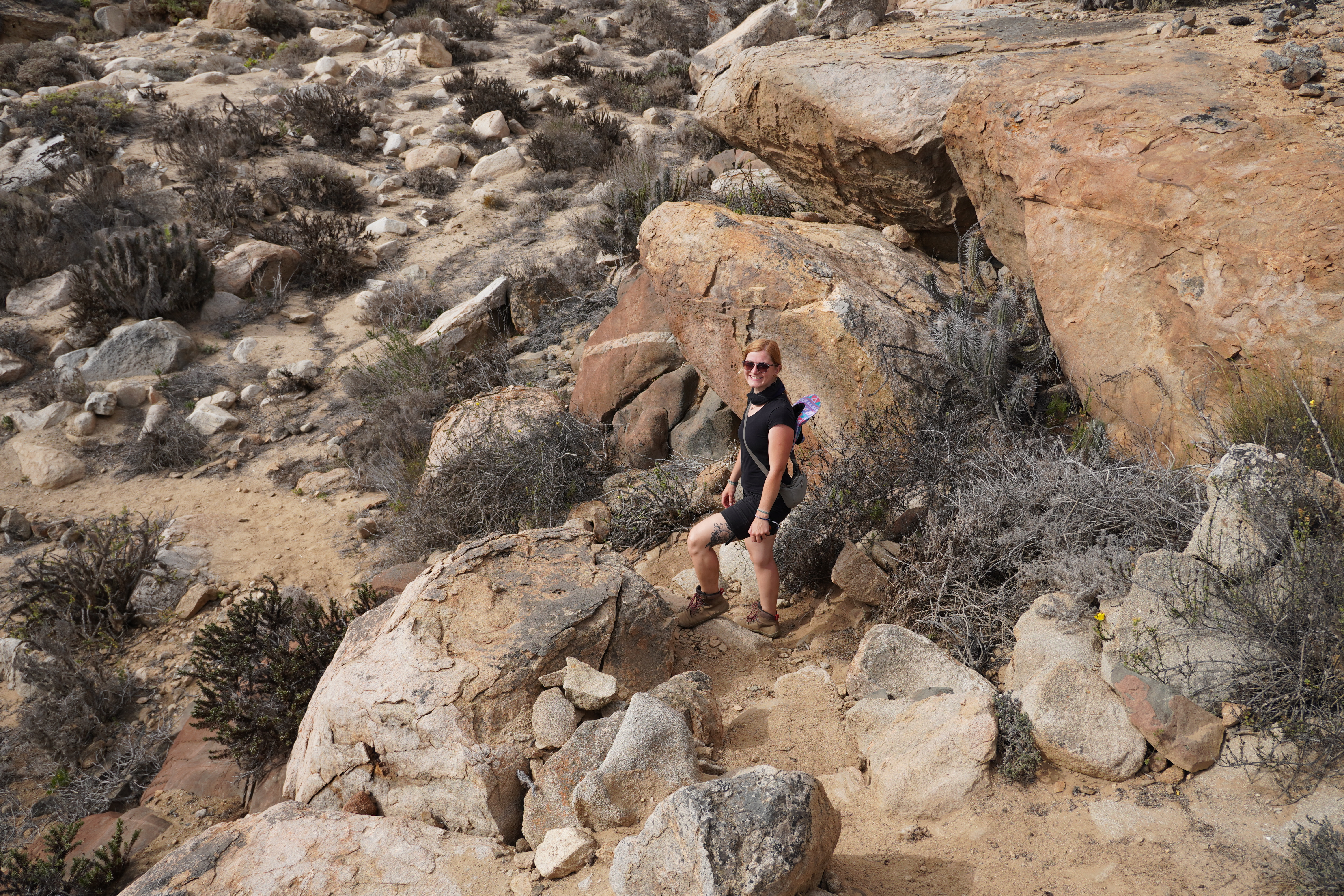
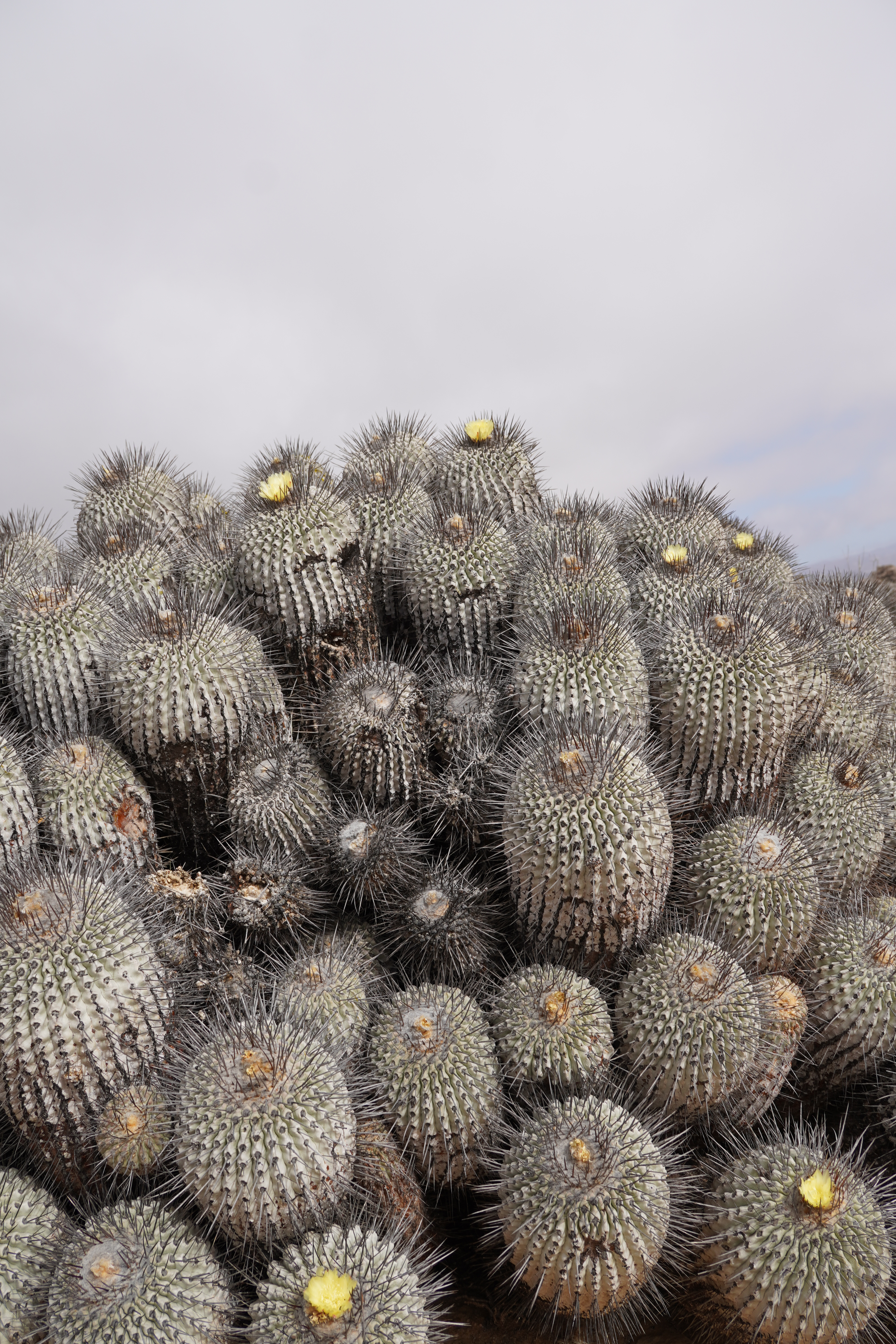
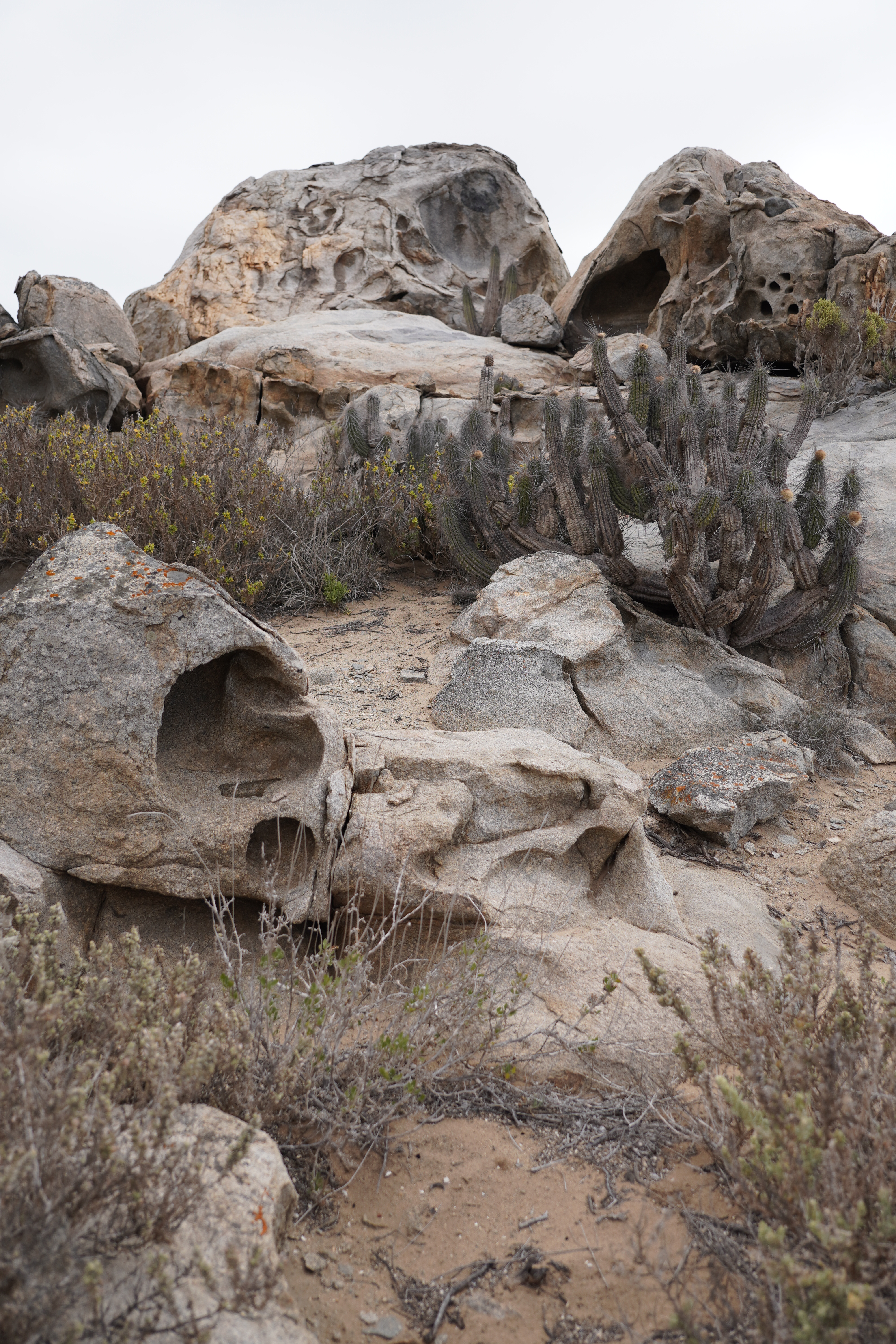
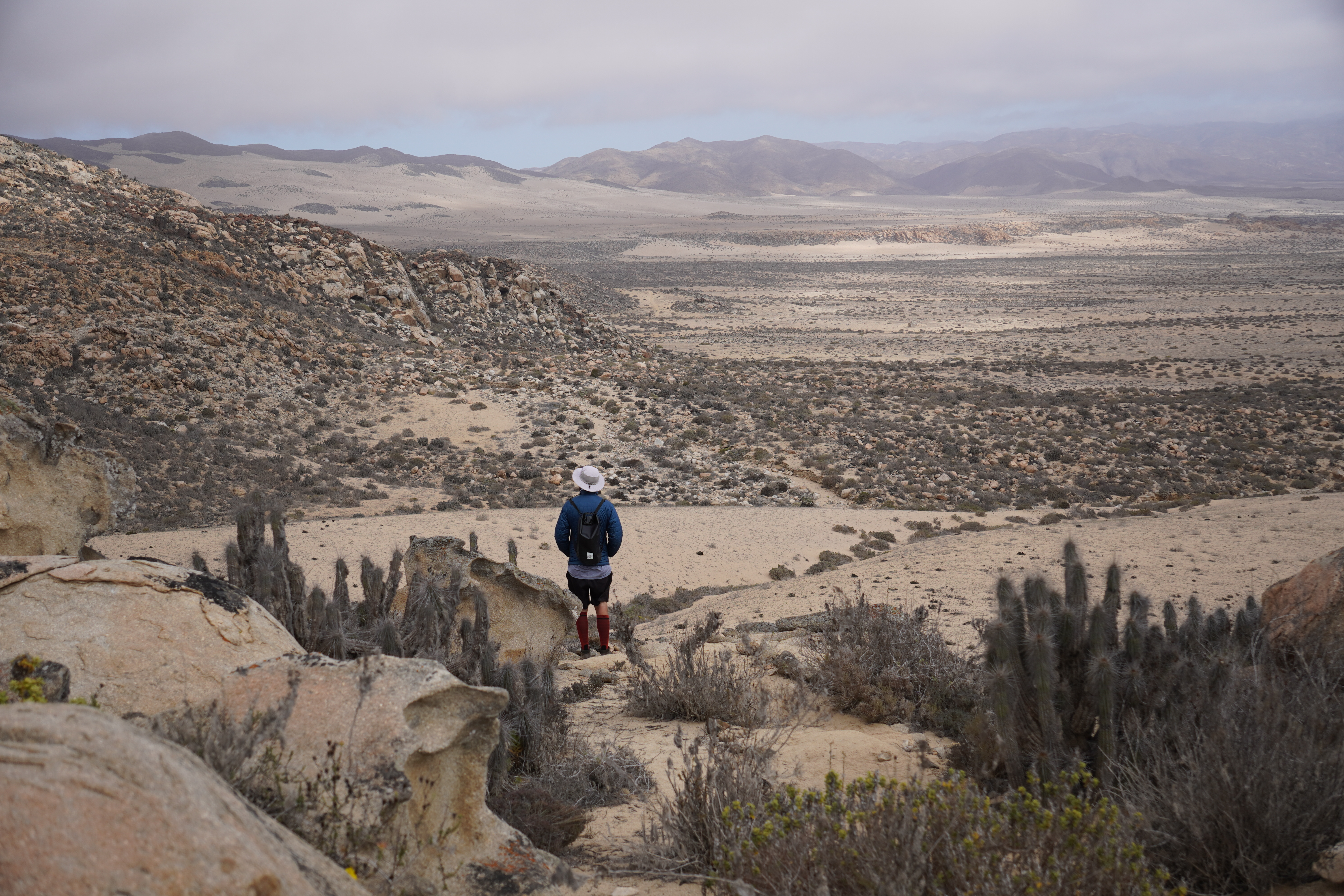
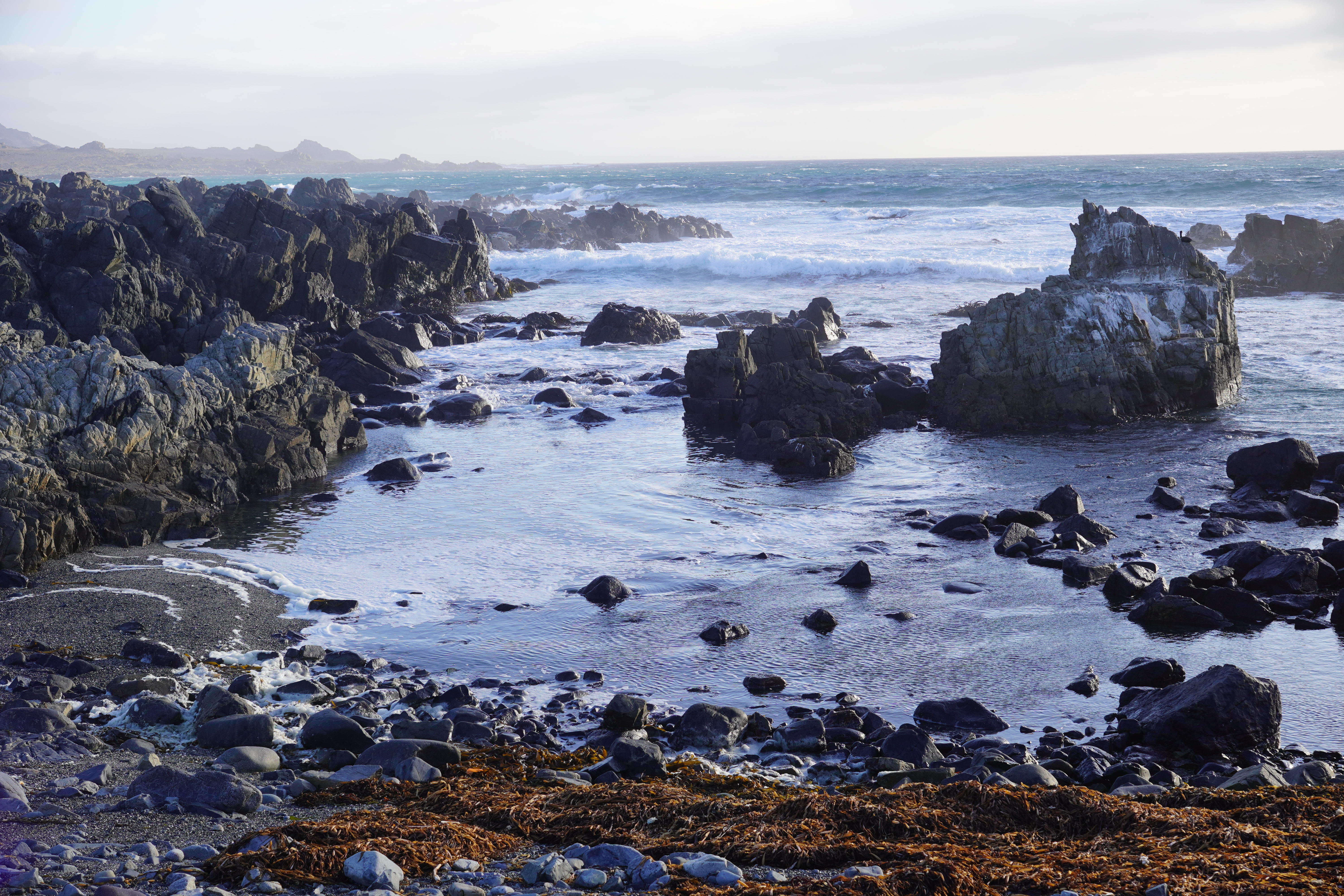
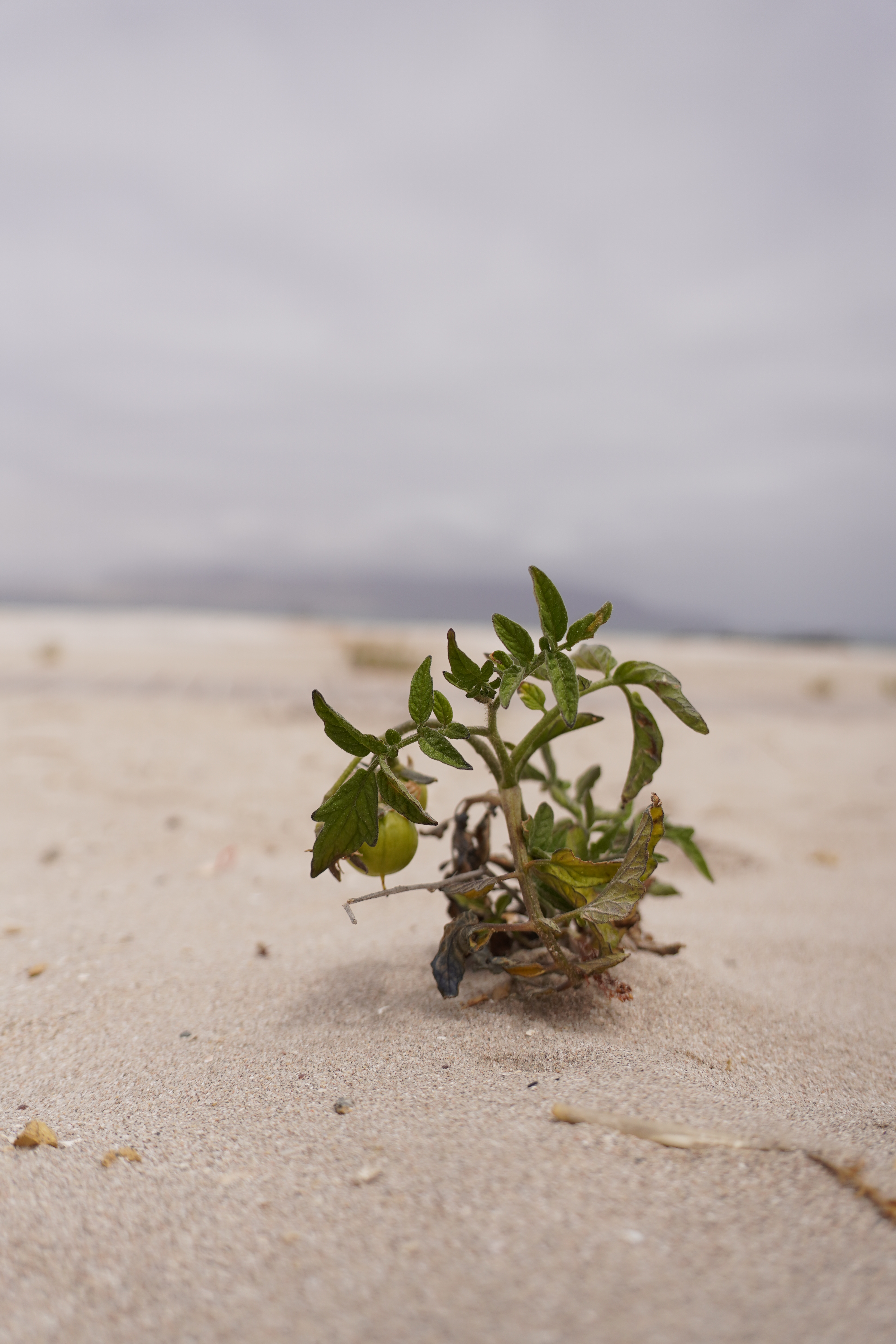
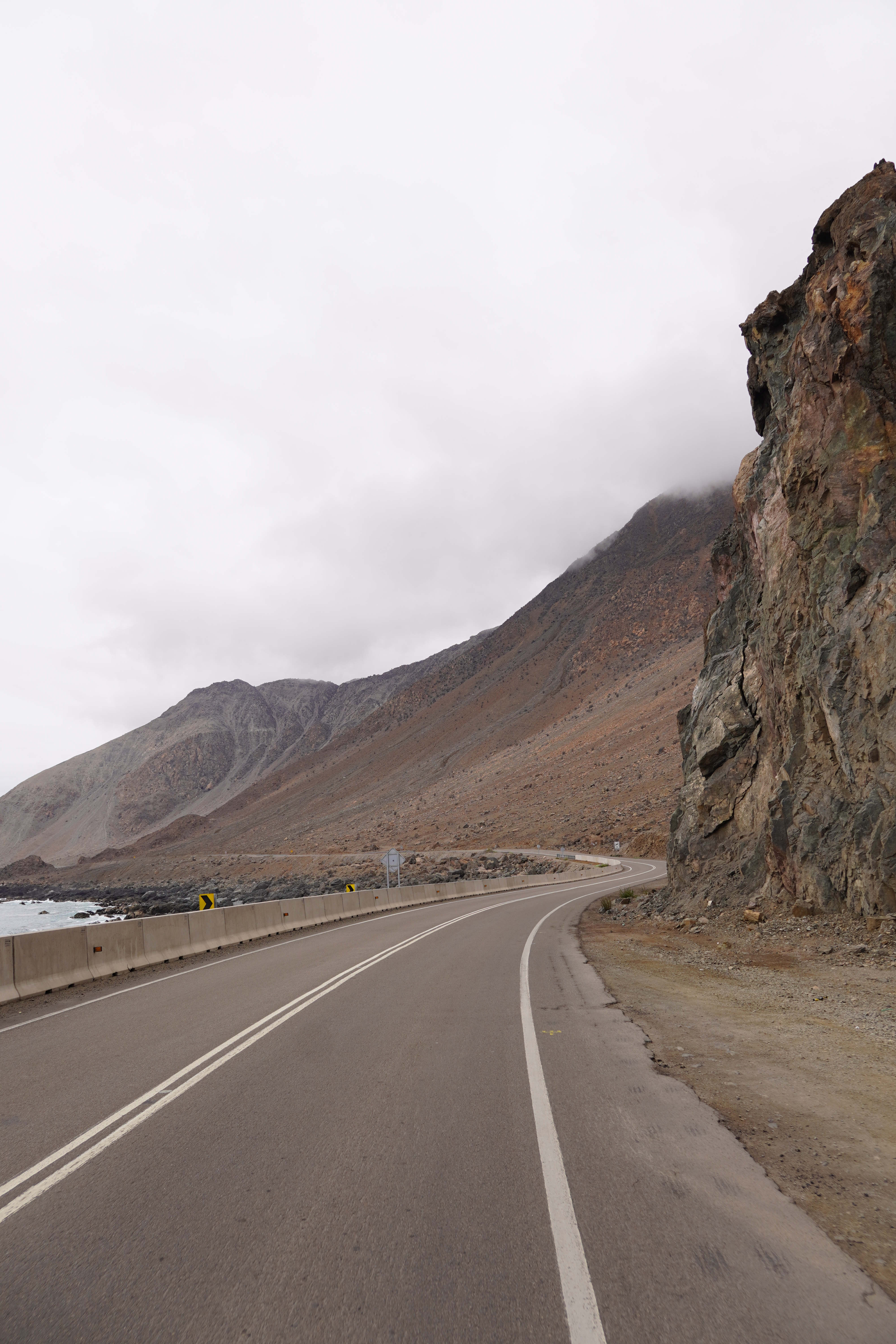
We started a hike along the beach under cloudy skies and did not really applied sunscreen. In the park, we noticed two people harvesting kelp. As we approached, they stopped. I doubt it’s allowed, though people seem to harvest and dry kelp along Chile’s coasts. Less pleasant was seeing jeep tracks in the dunes and on the beach. Our hike continued inland, where we saw numerous lizard species, cacti, and even a few tiny blooming plants. The ground was dotted with small holes, perhaps the lizards’ shelters during cold nights? Unfortunately, by the end of the hike, we both had painful sunburns on our legs. Despite the clouds and wind, the UV index here is extremely high. This was not my last South American sunburn… Aloe vera cream in hand, we drove north along the gorgeous, deserted coastline. The season here only starts in December, so we had the beaches to ourselves. The nature is stunning – if you can ignore the litter. Sadly, people here discard anything and everything in the wild. We’ve even spotted car batteries.
Red Algae and White Sand Beaches
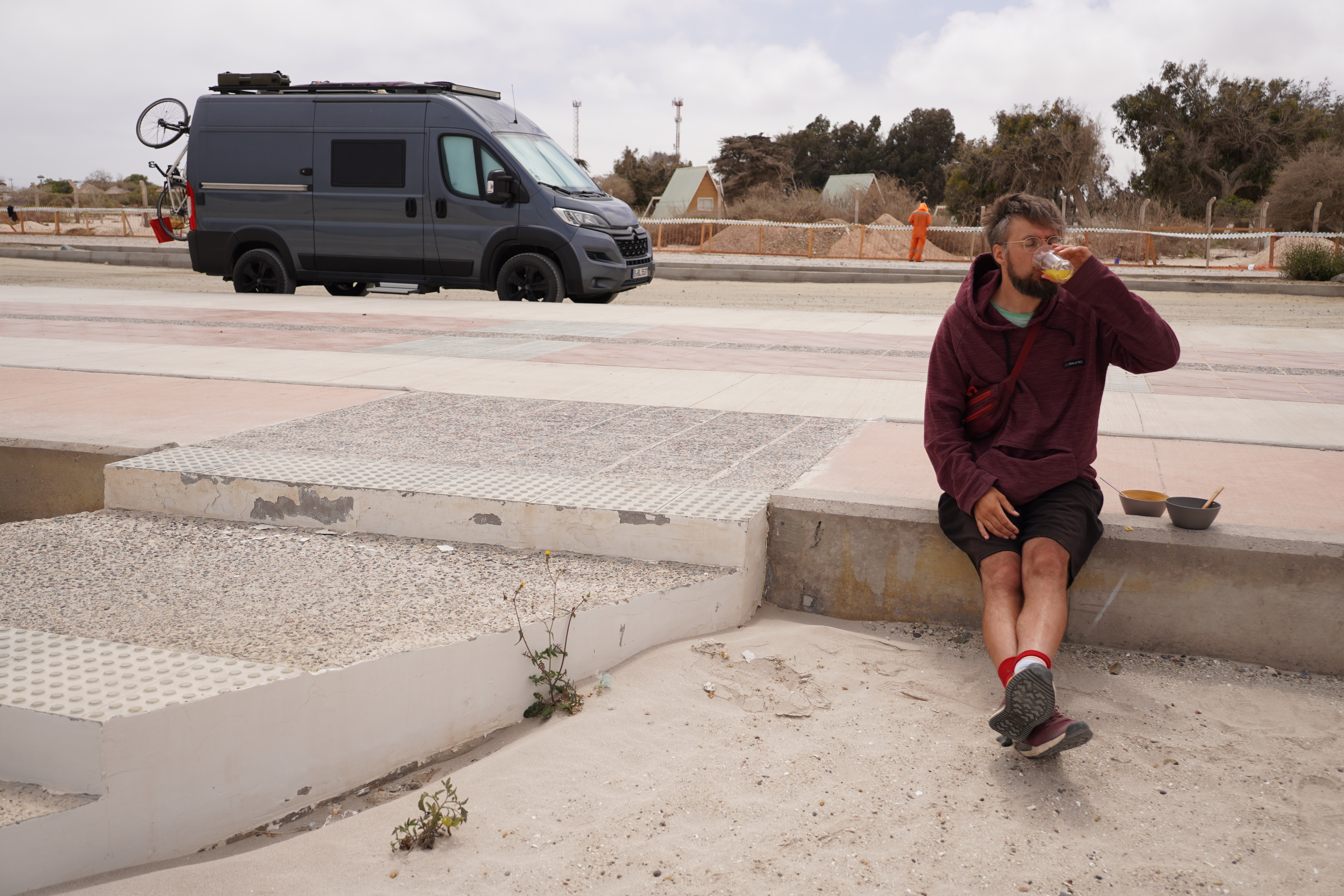
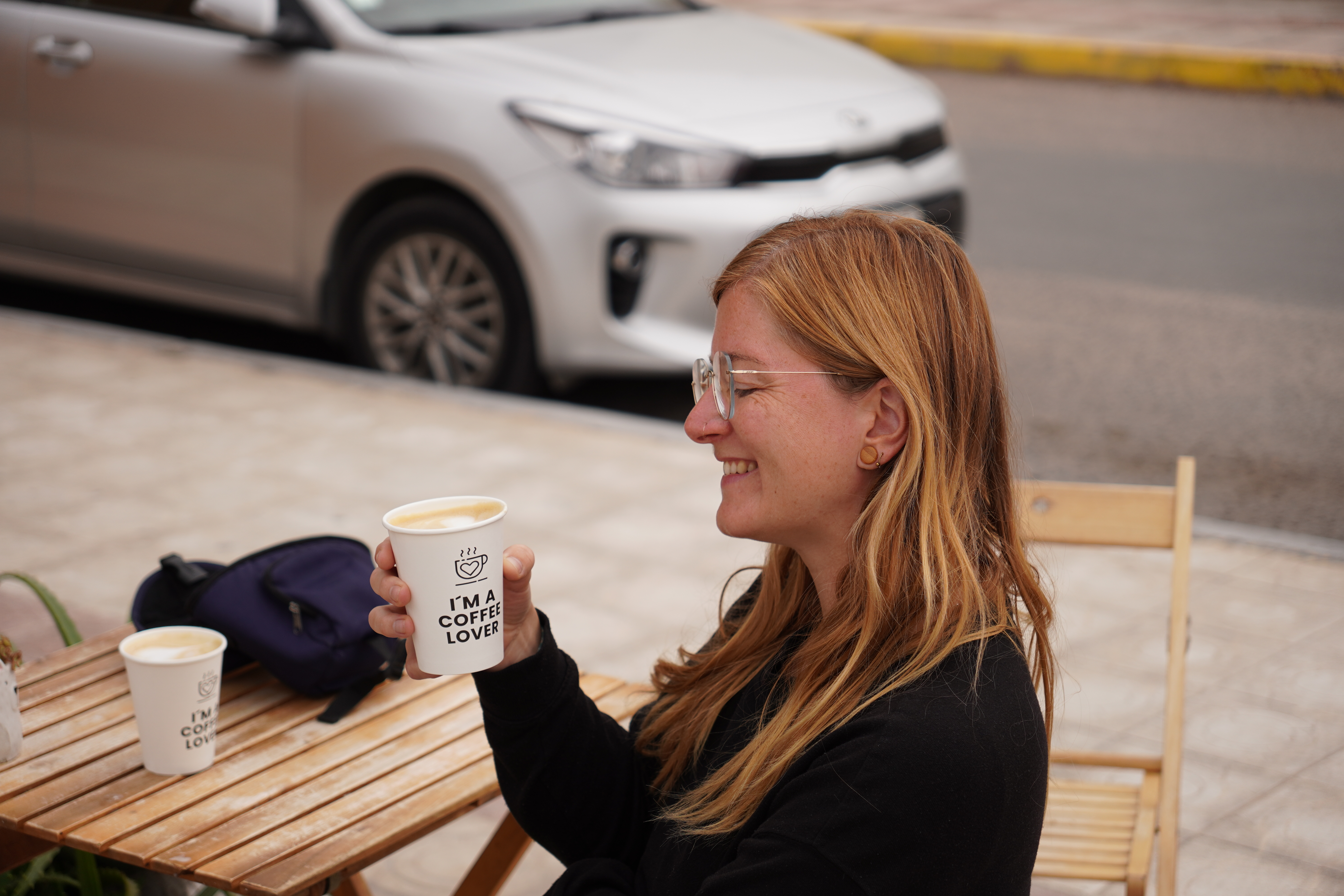
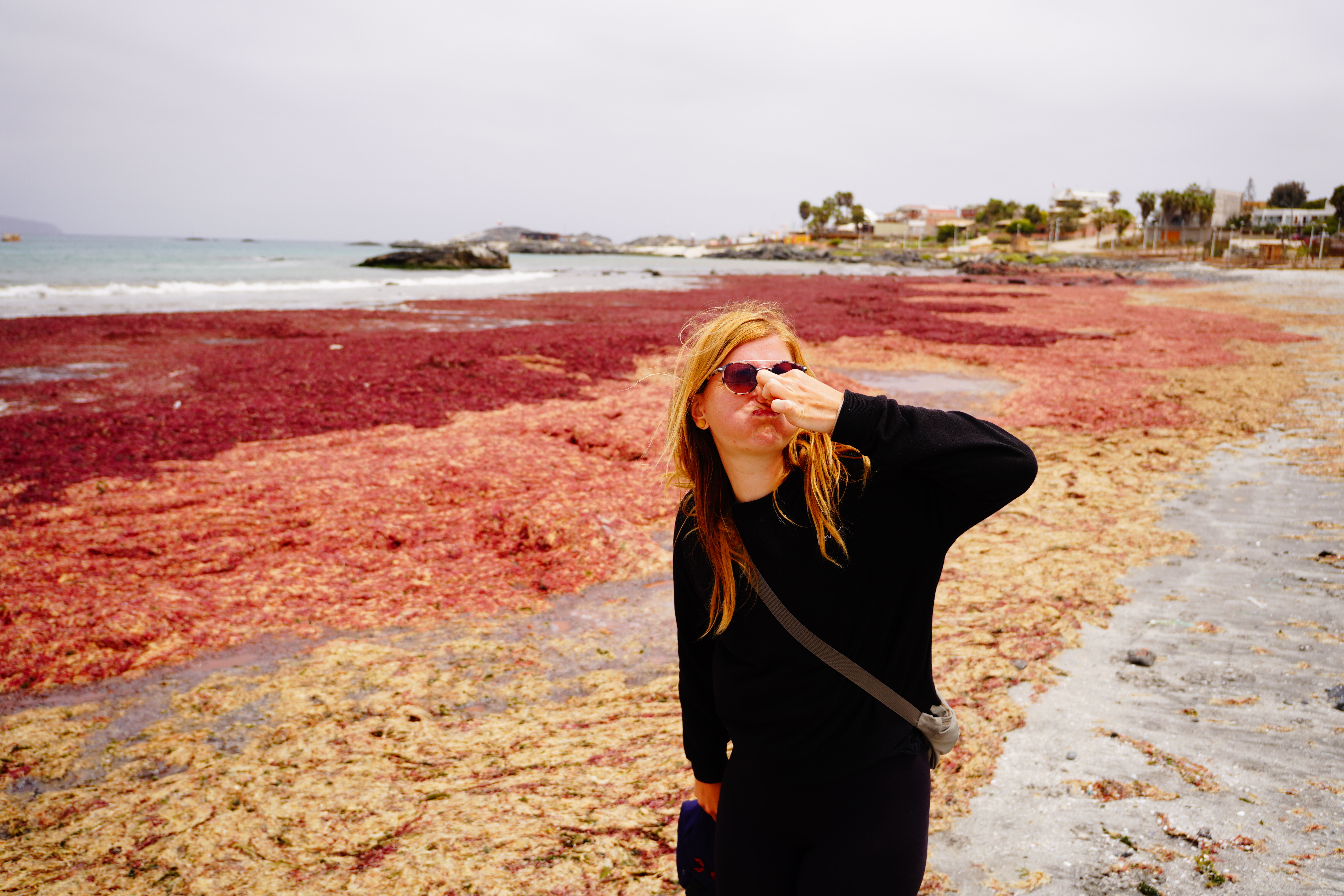
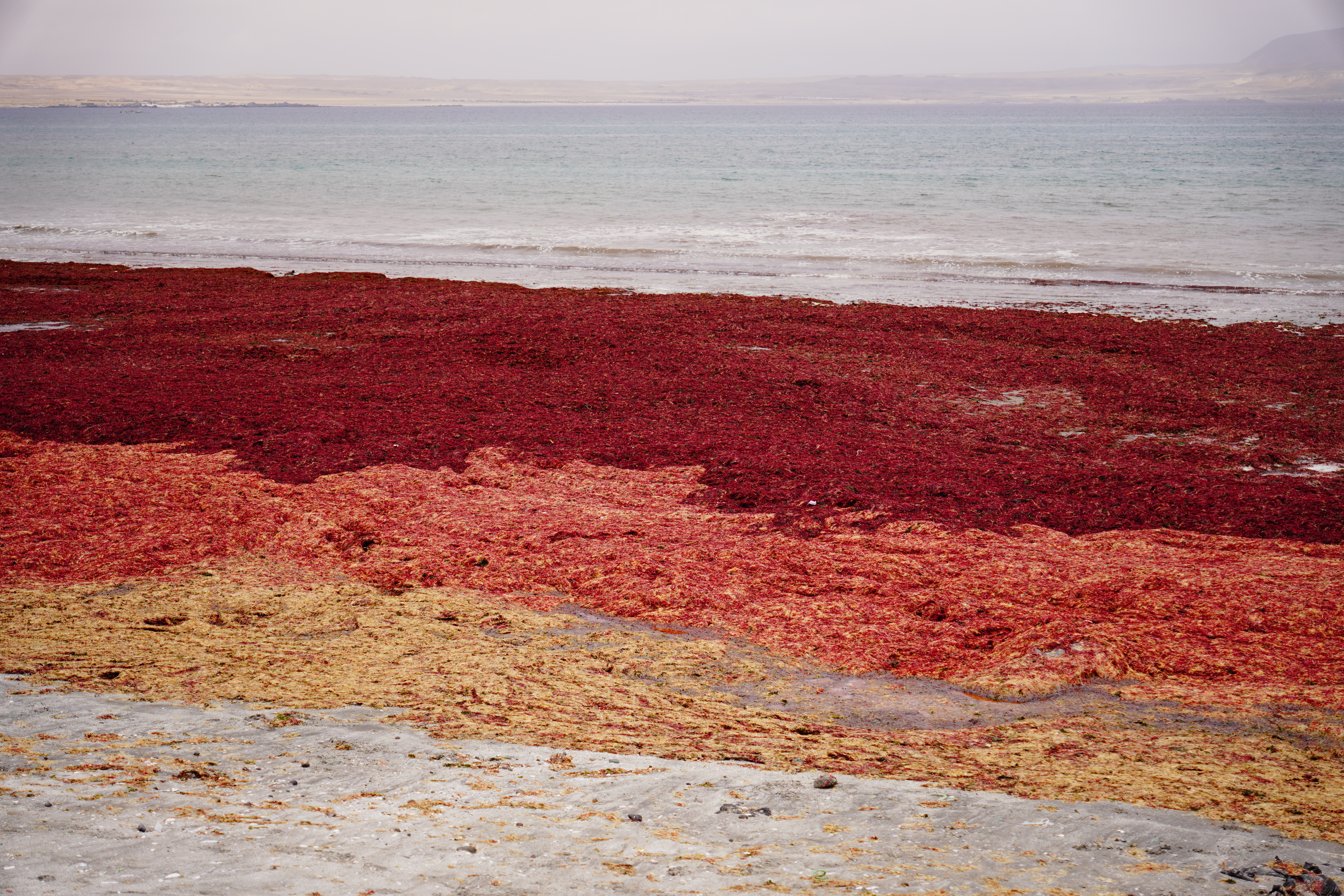
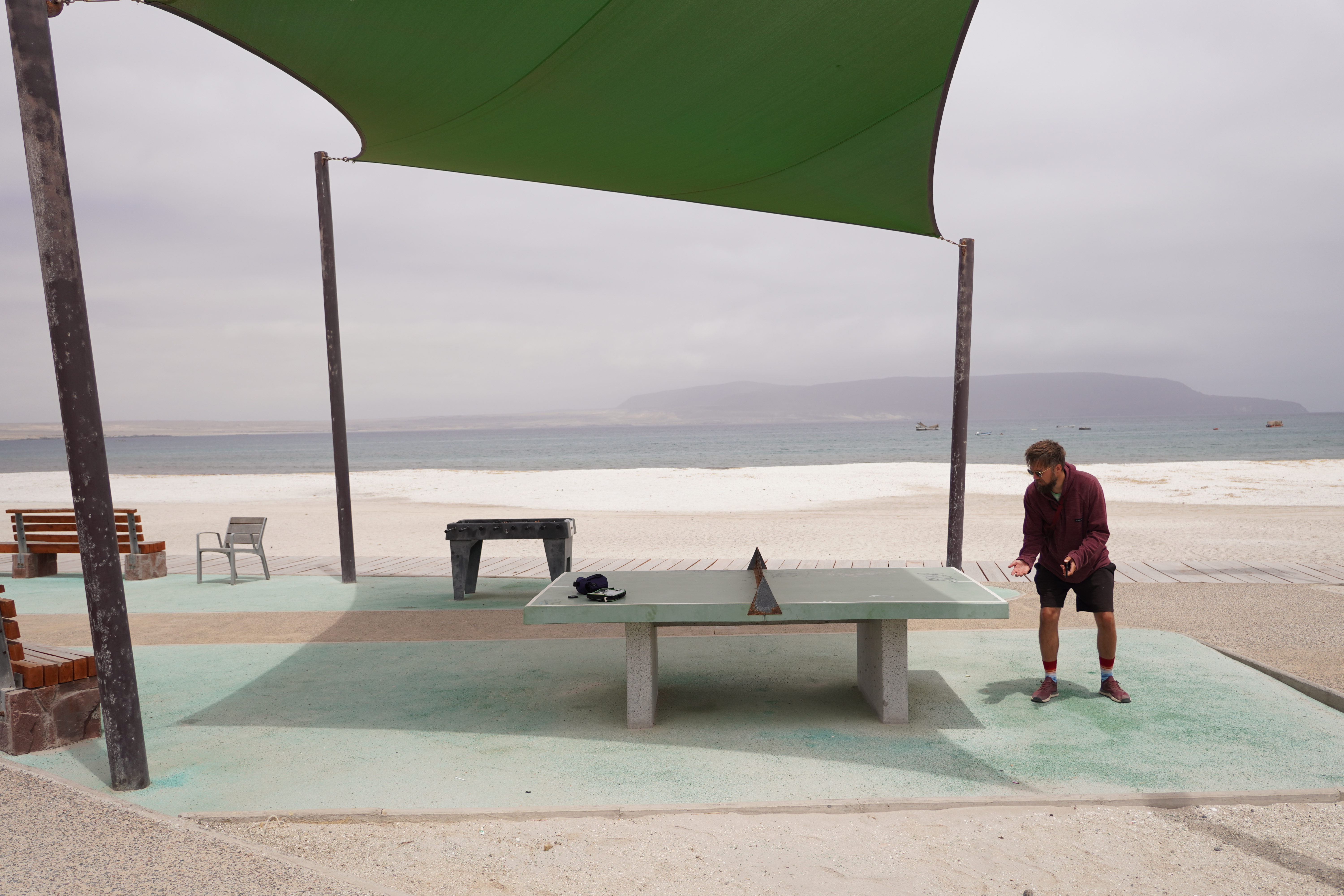
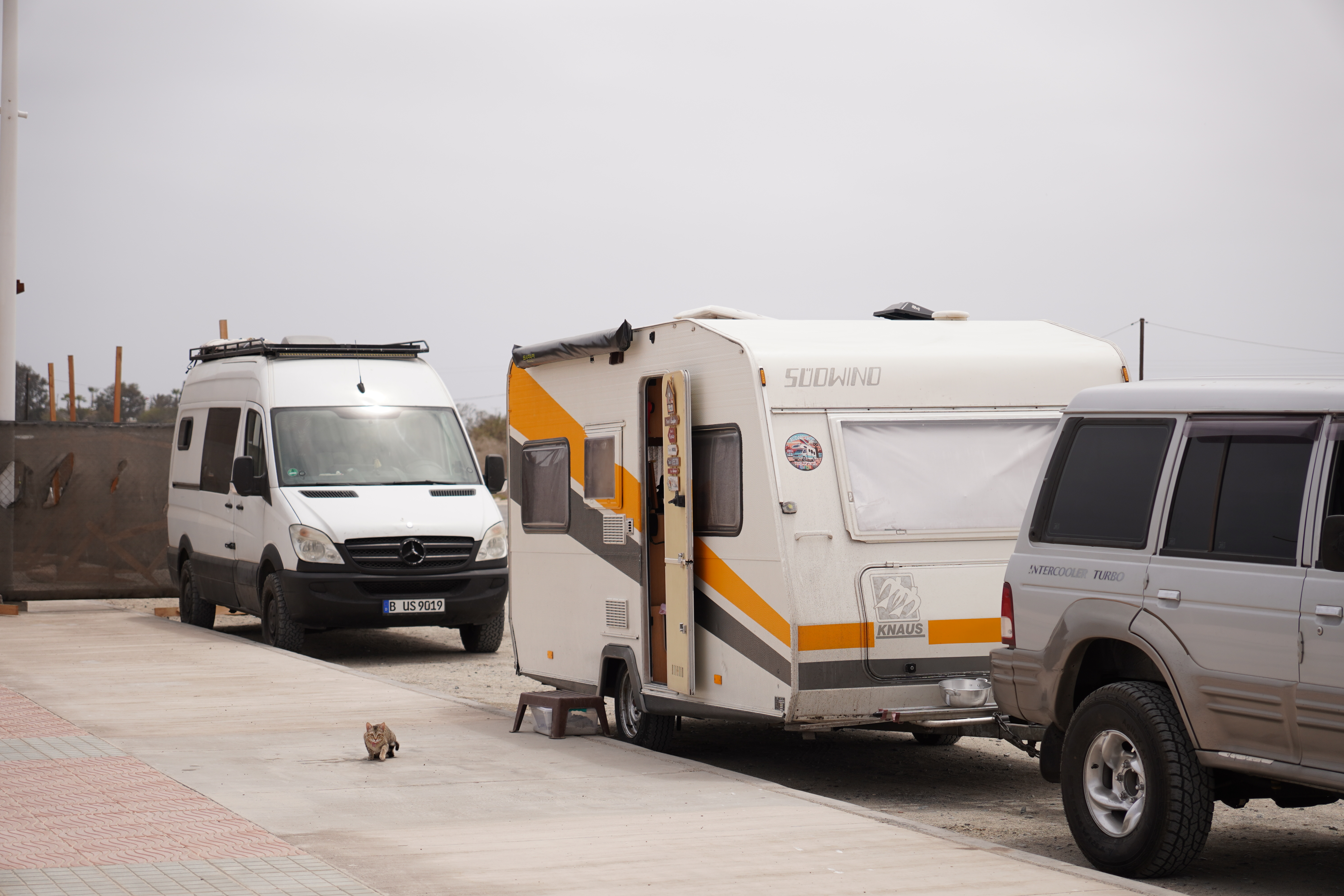
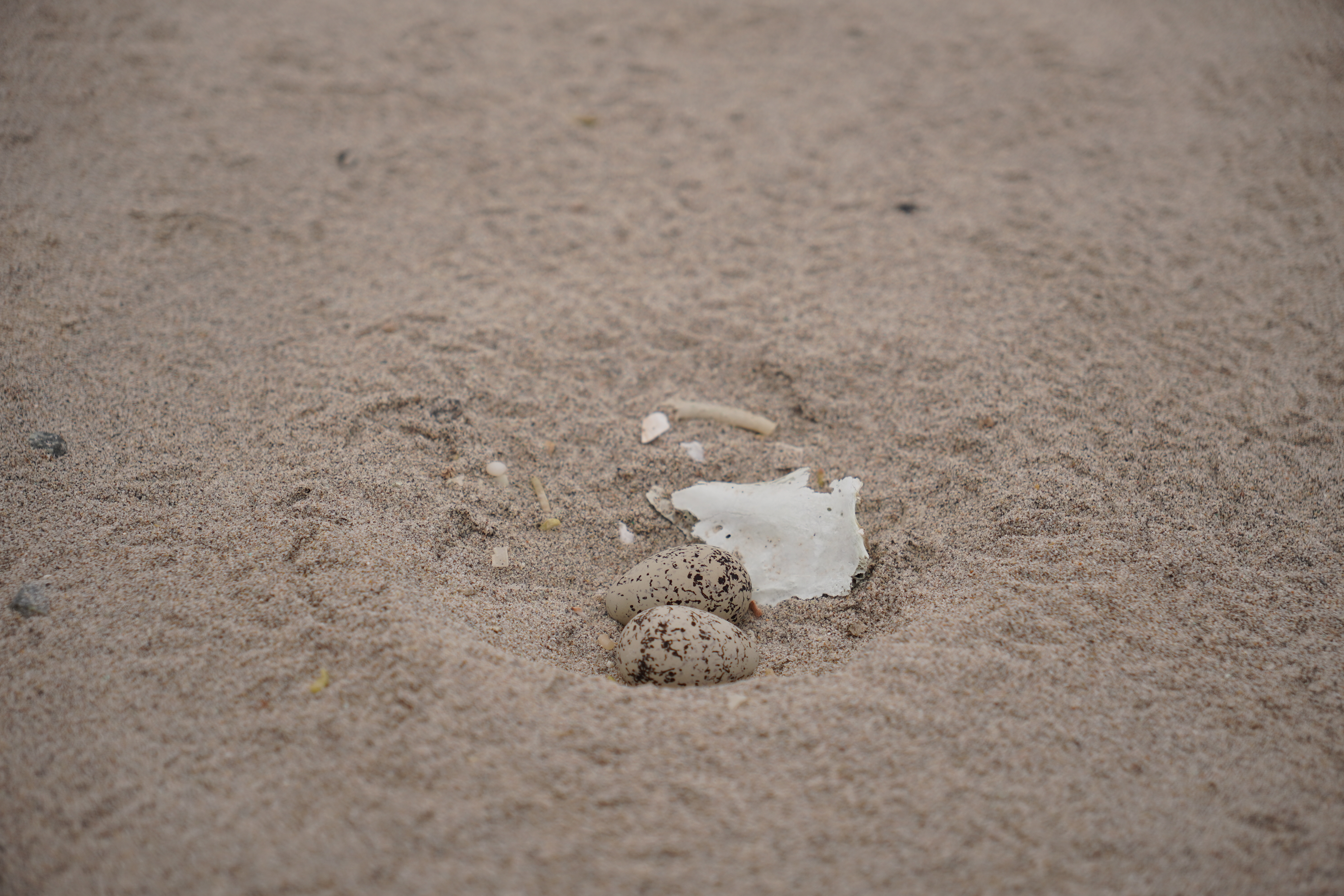
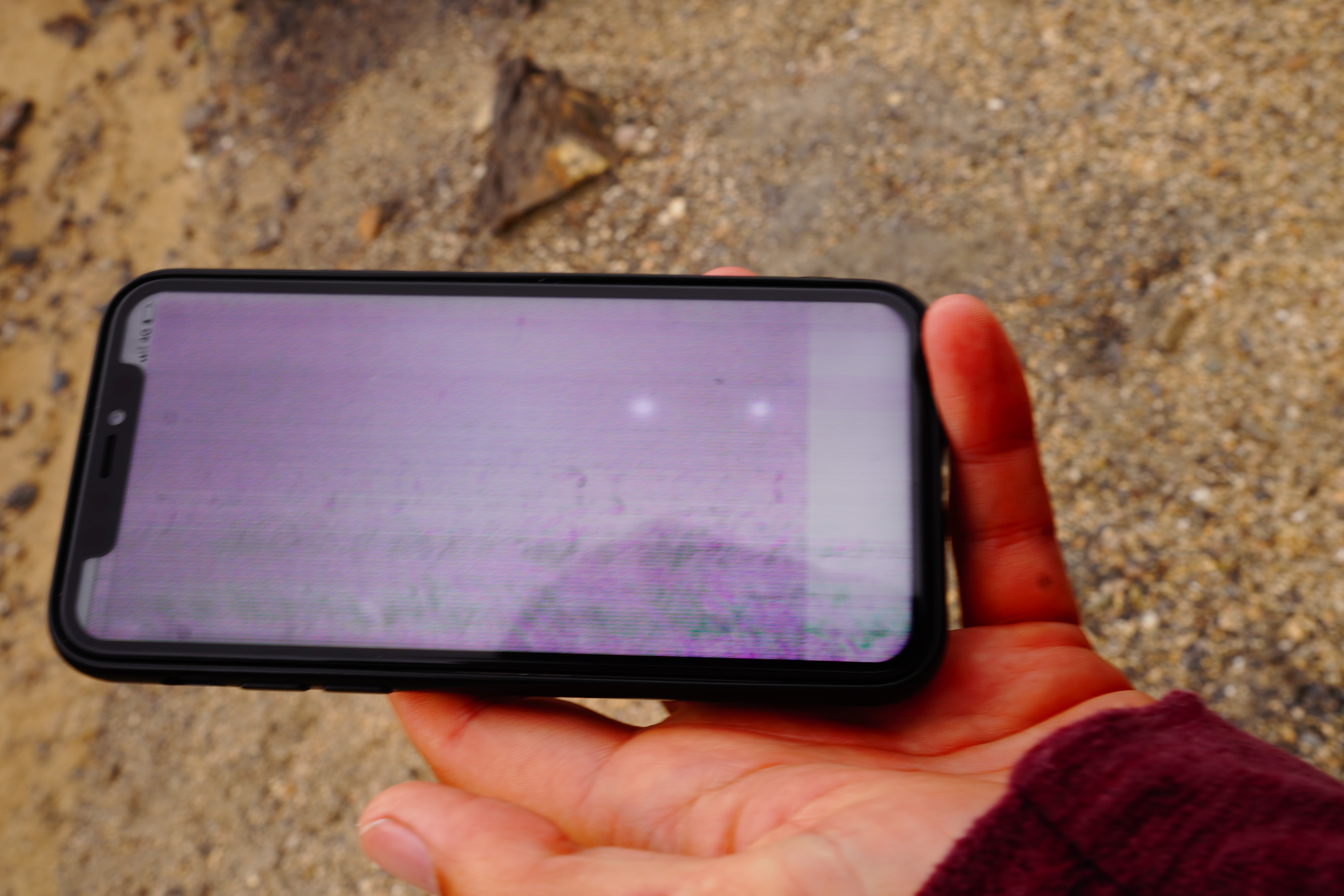
We made a coffee break in Bahía Inglesa, known for its white sand beaches crowded with vacationers during peak season. When we visited, it was quiet, as the town prepared for summer tourists. Construction was everywhere. We found our first tabletennis table of the trip – what a flop! The wind made playing impossible. Seriously, who sets up ping-pong tables right by the sea? The normally bright-white sand was covered with a striking, smelly red mass – algae. A local assured us it wasn’t the toxic “red tide”, but we kept our distance anyway. For once, I skipped swimming. On the promenade, a few campers were parked. We met a Chilean family traveling with two kittens, which melted my heart. Further along the Ruta 5 – the Panamerican Highway – we reached Playa los Amarillos, a miles-long, deserted beach. There, we discovered a tiny nest with two eggs in the sand. I hoped no jeep had run them over. Chilean drivers love driving across beaches, even in protected areas. It wasn’t just the eggs we were worried about. Björn’s iPhone finally died here, too. The phone had been complicated since a screen replacement before our trip. In Montevideo, just before Rosi arrived, Björn had such bad hiccups in the hotel that I scared him to stop them. The phone fell to the floor in his shock, breaking the screen. Though repaired, it never worked properly again. Now, here in Chile, it gave up entirely. This night, the iPhone had to sleep inside a LocknLock container on the beach. Suddenly, we realized how dependent we were on it, for communication and safety. Our next stop: an Apple Store, 350 km away in Antofagasta.
Pan de Azúcar, Martian Landscapes, and Extremely Large Things
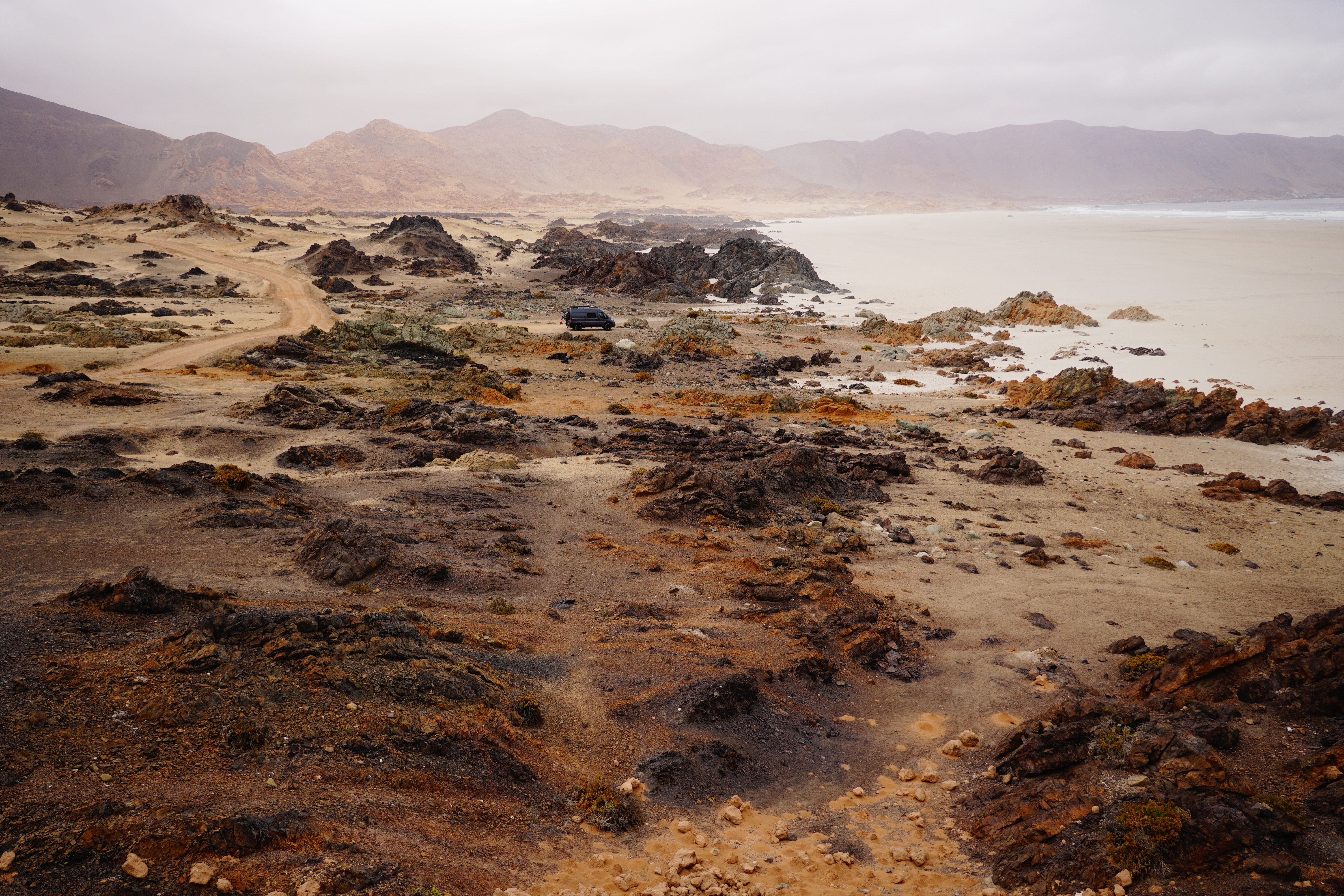
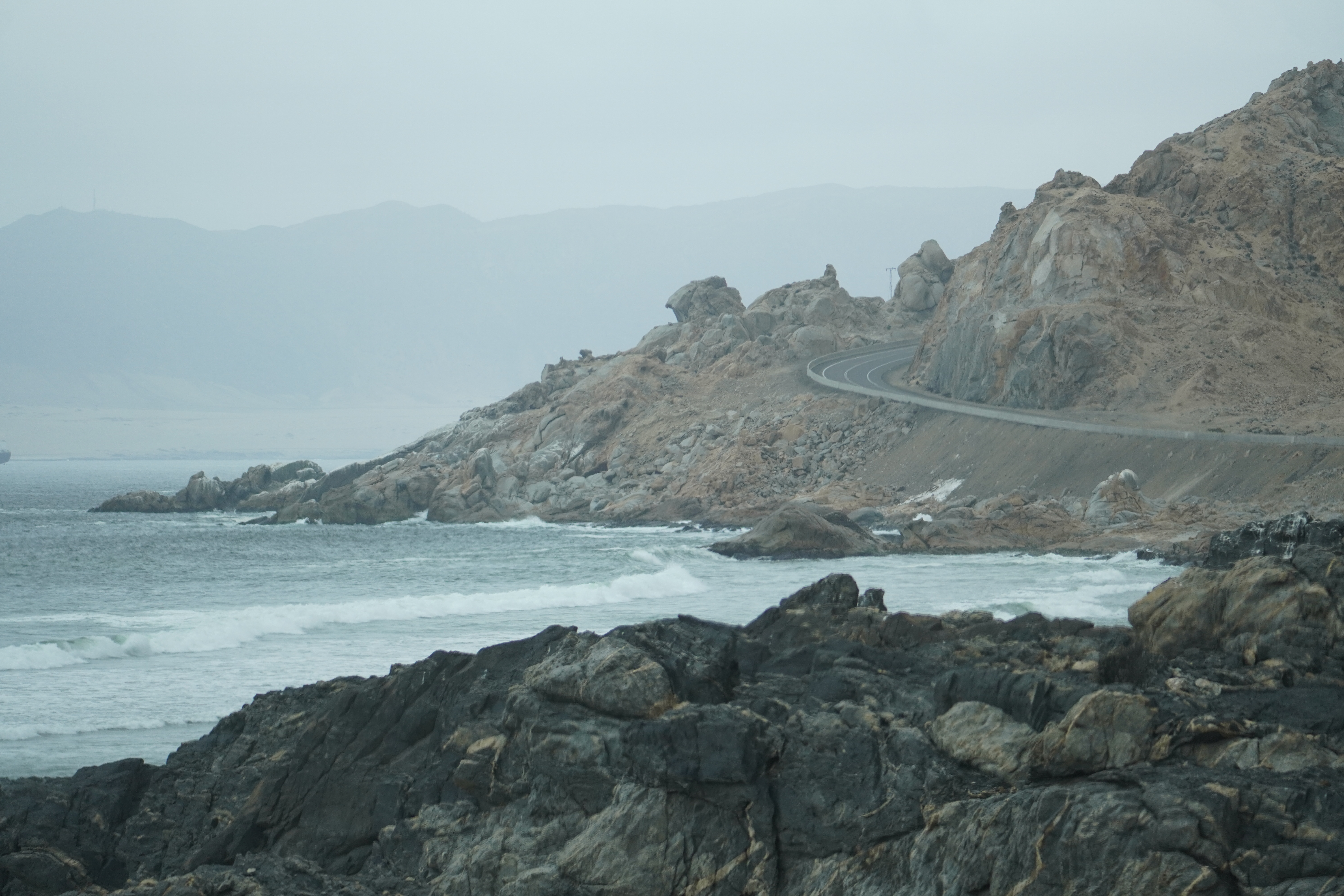
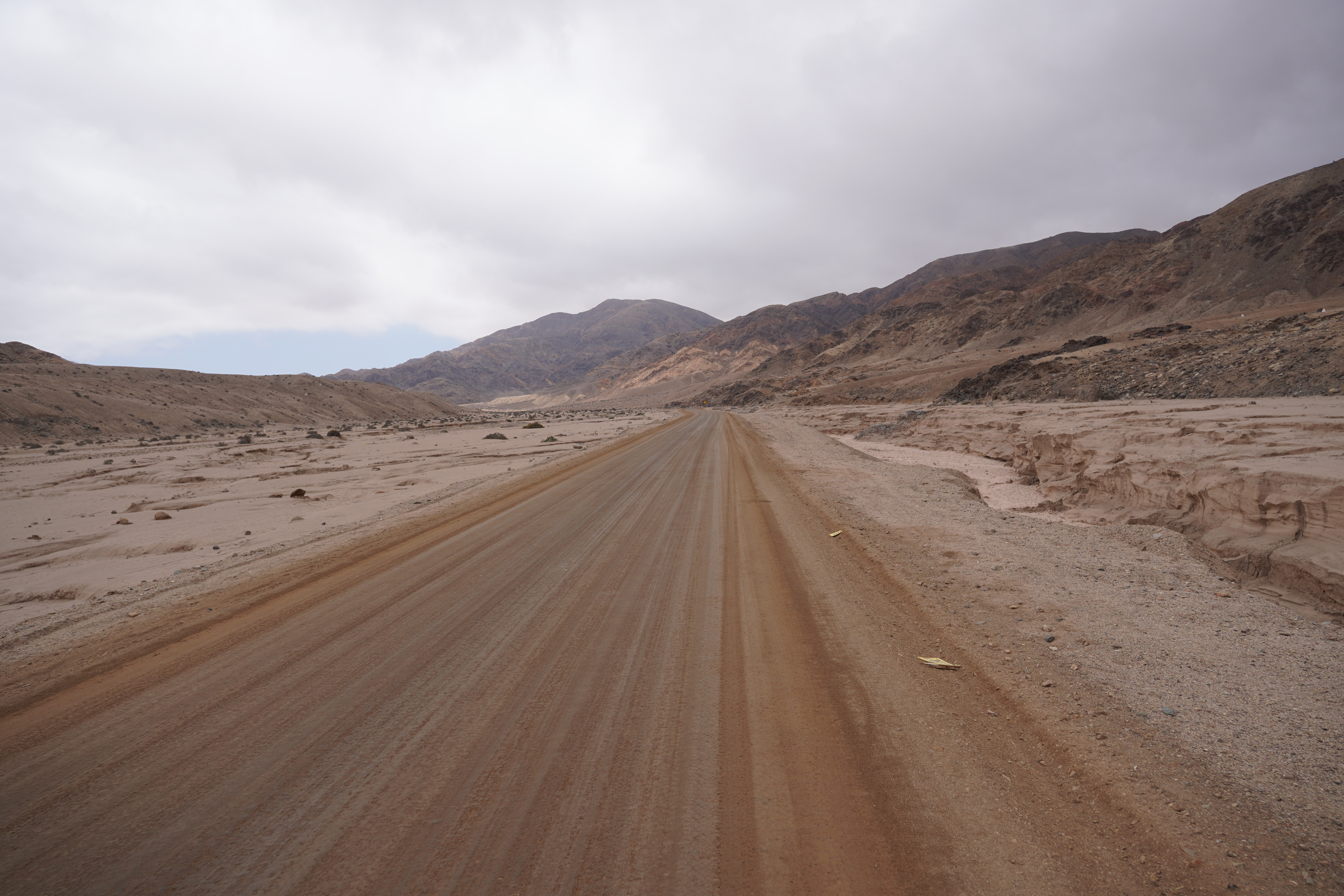
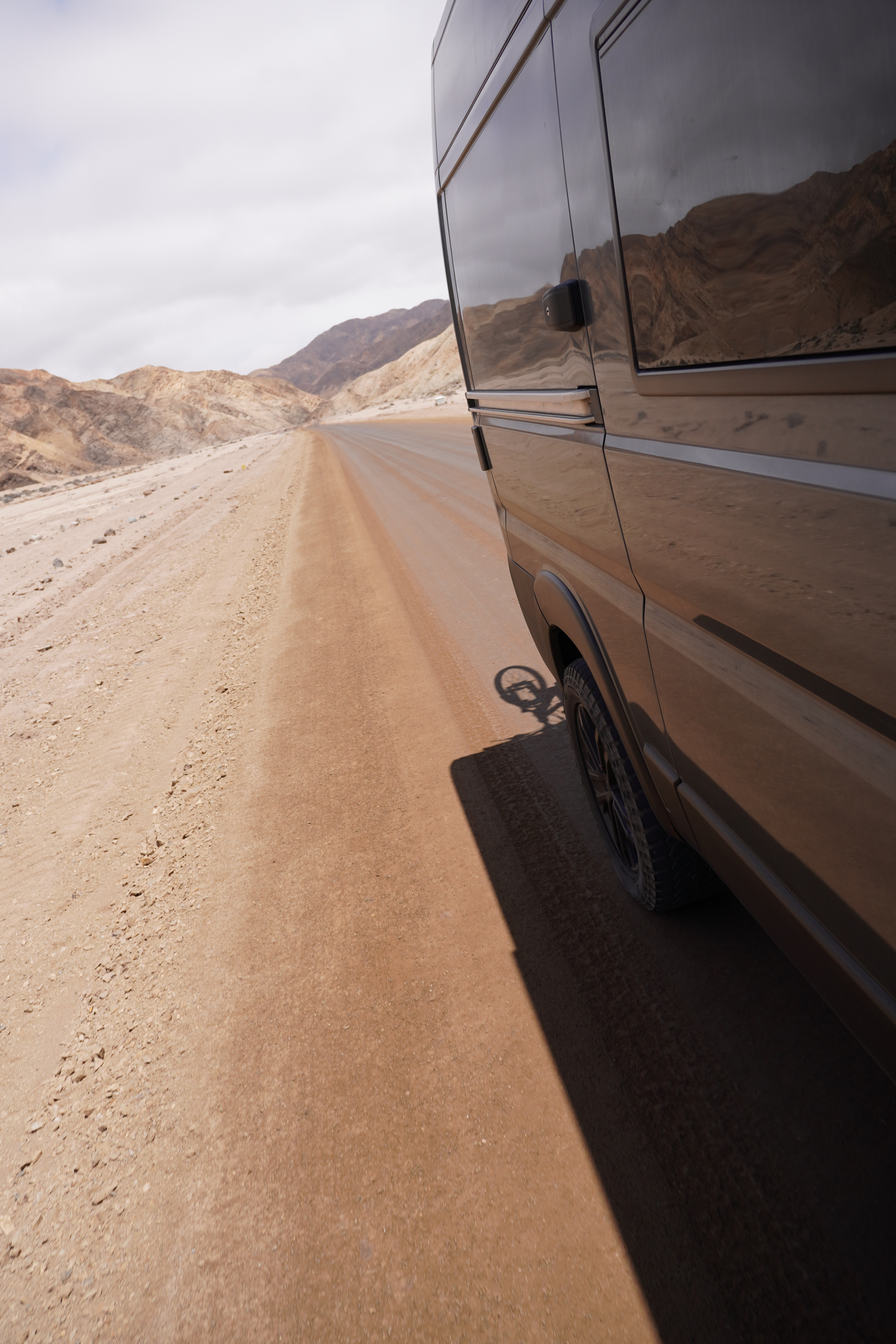
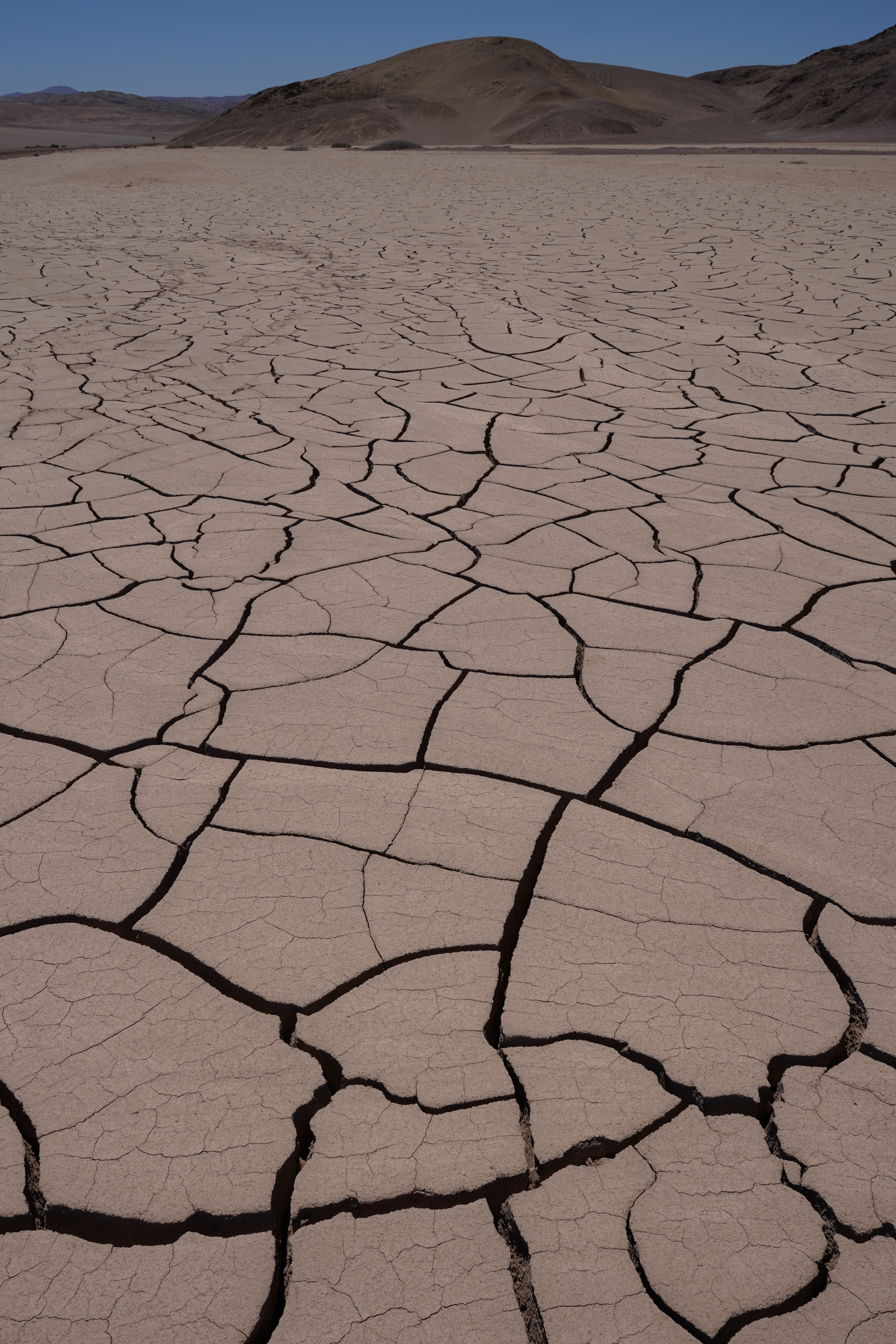
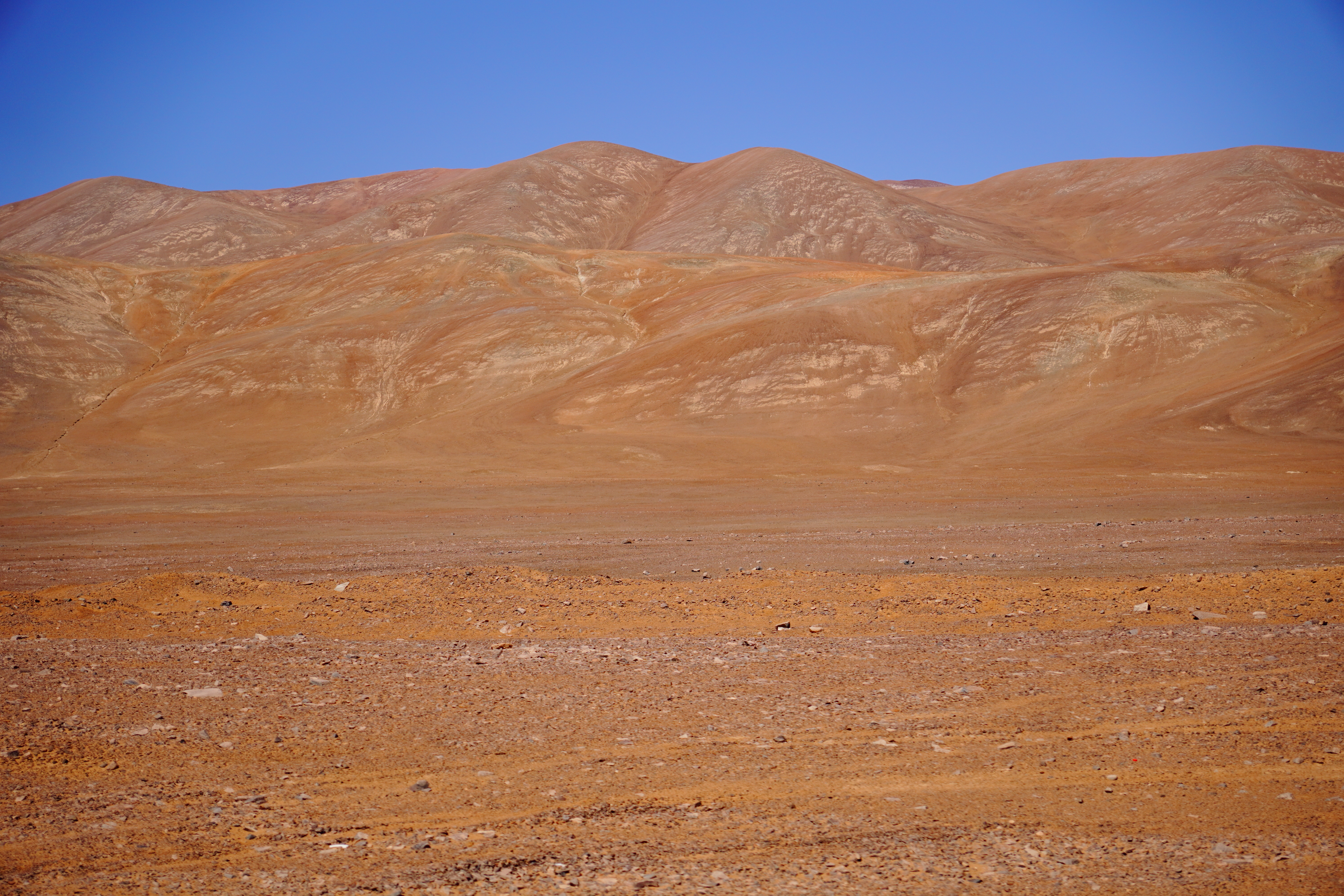
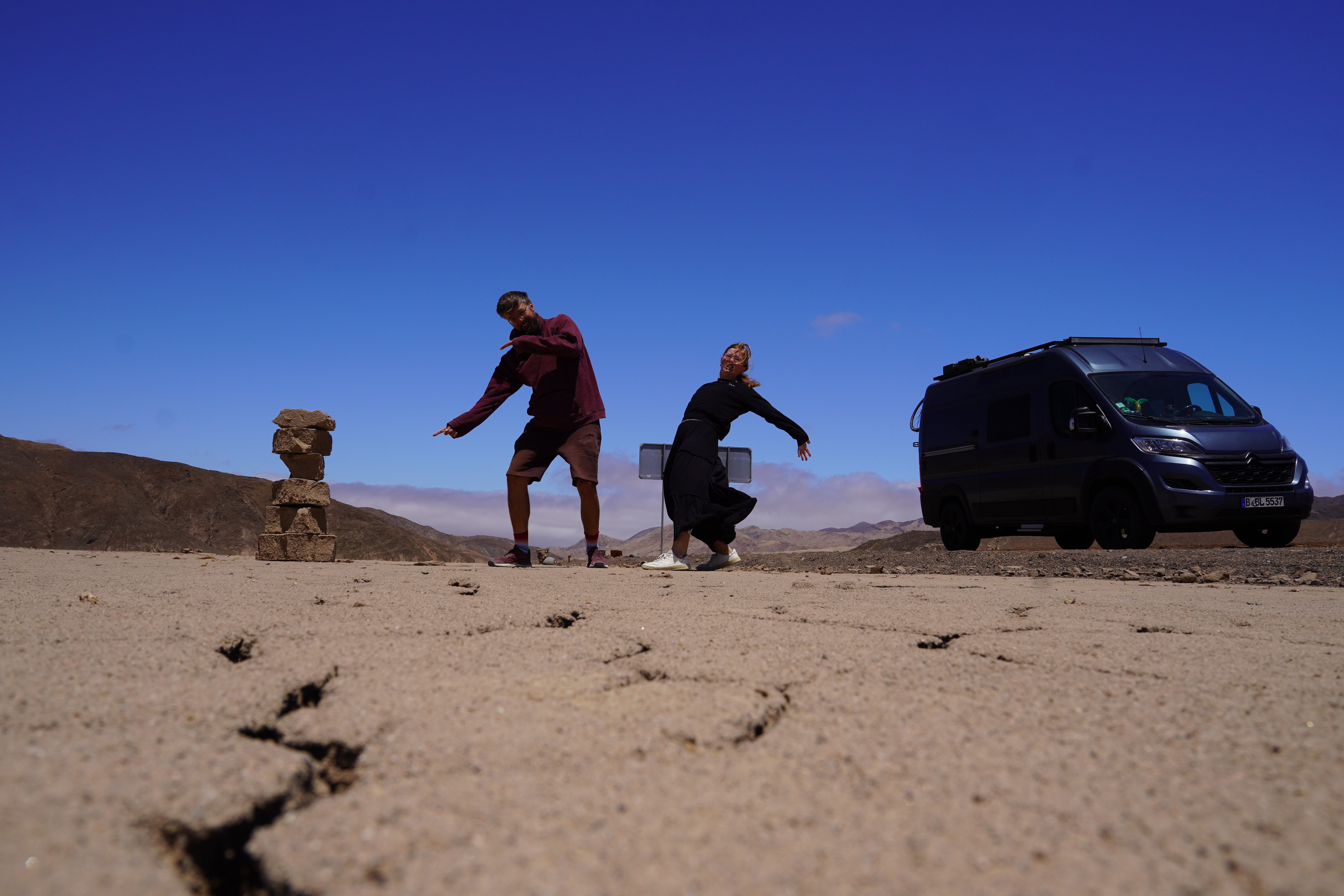
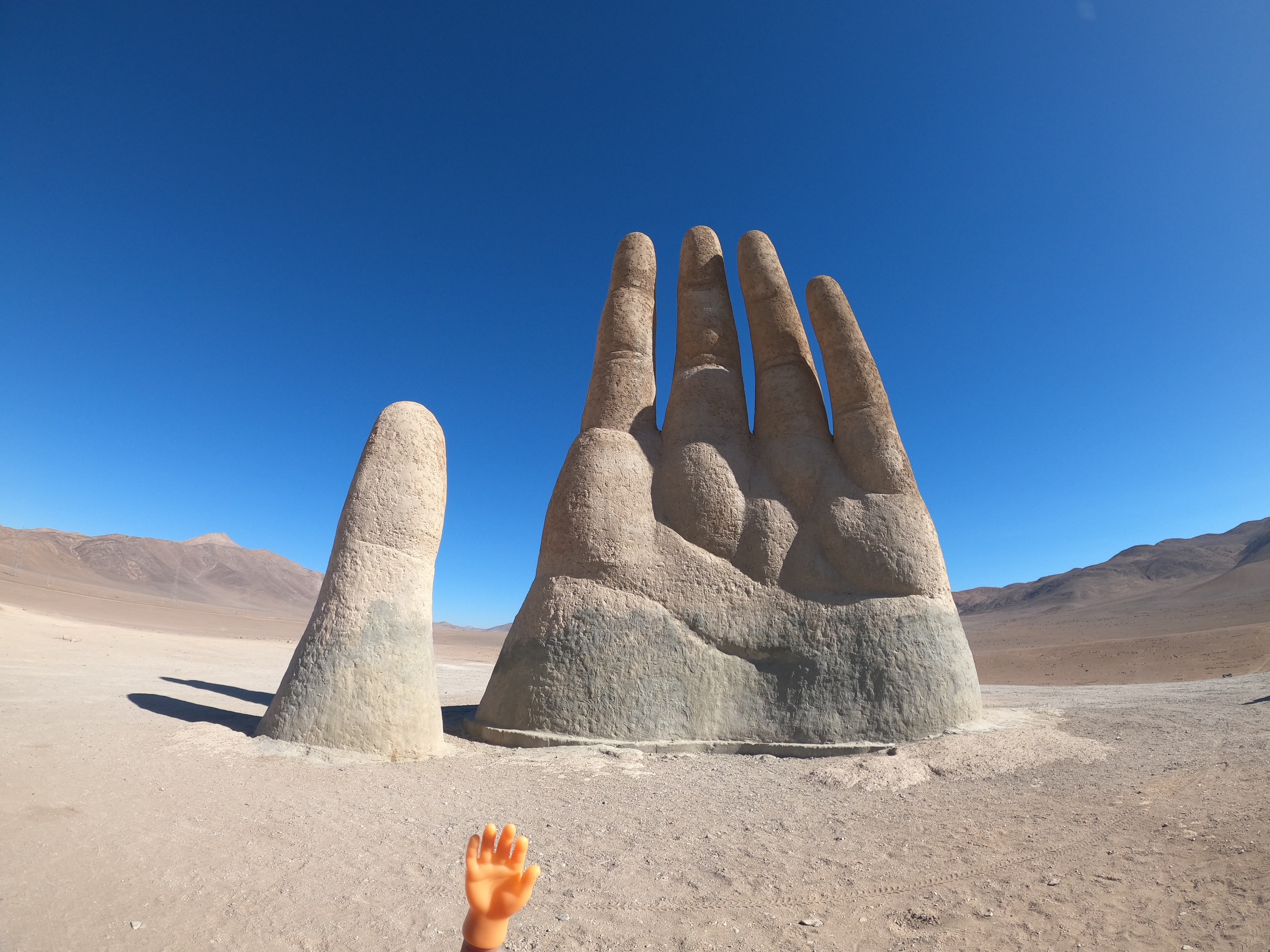
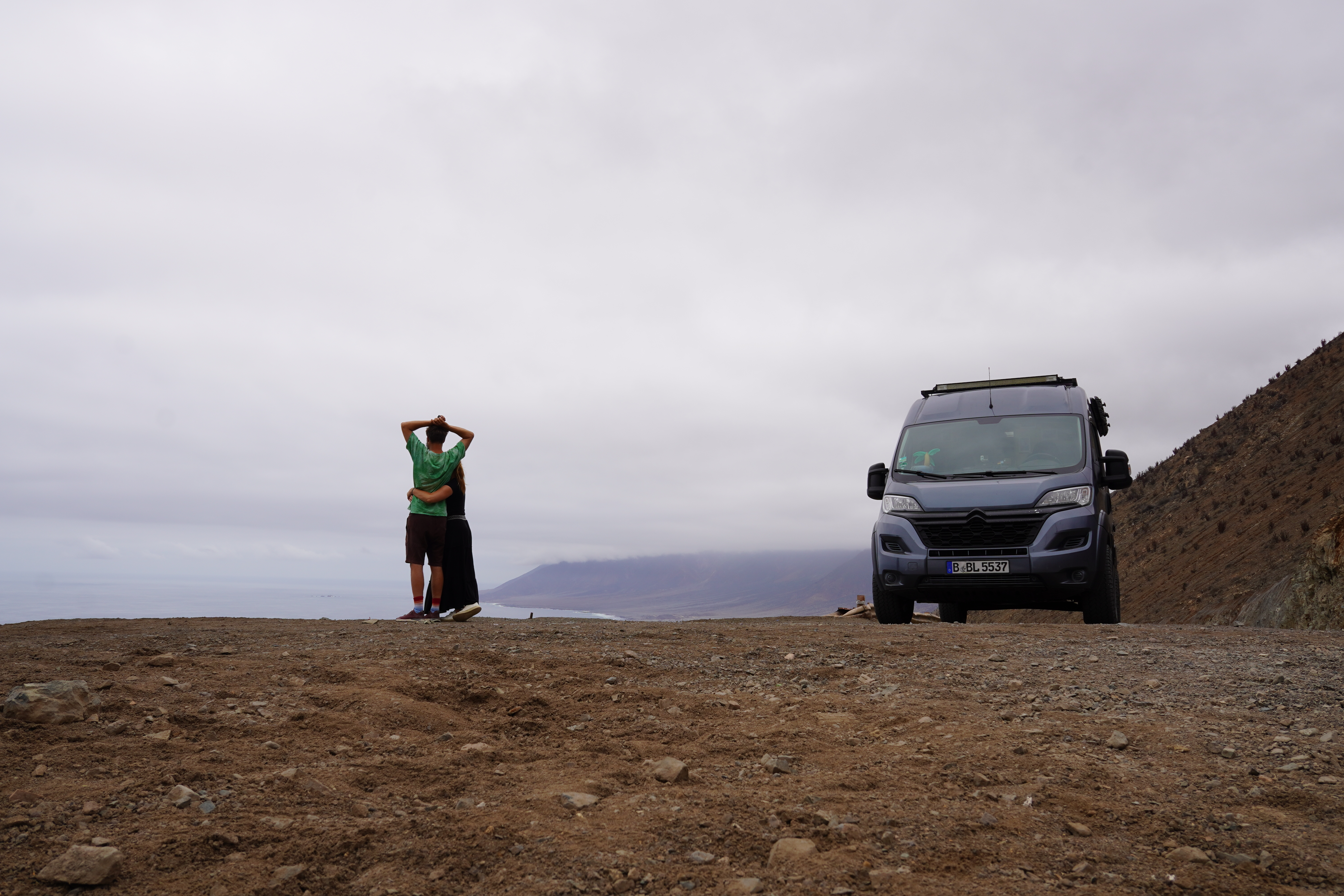
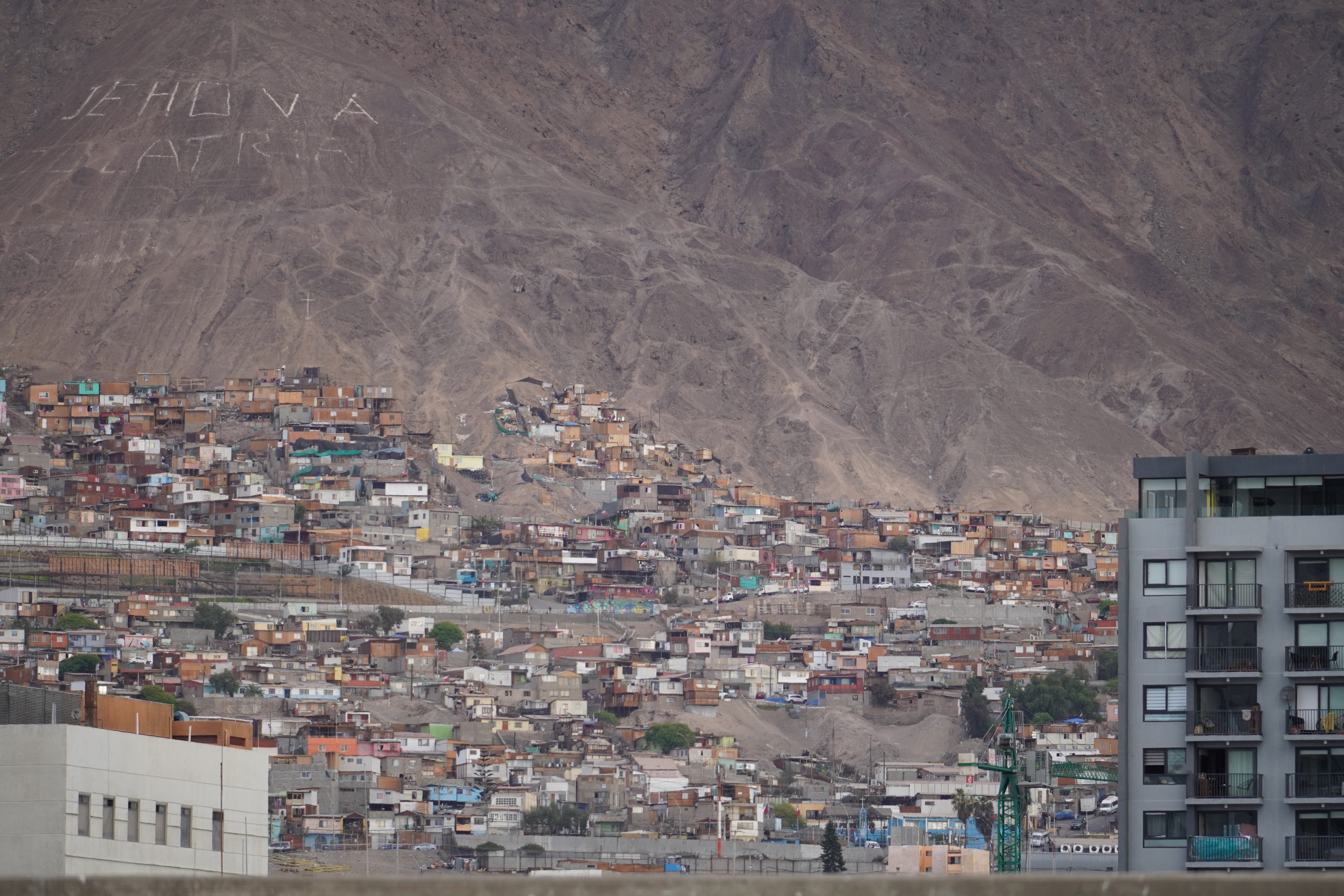
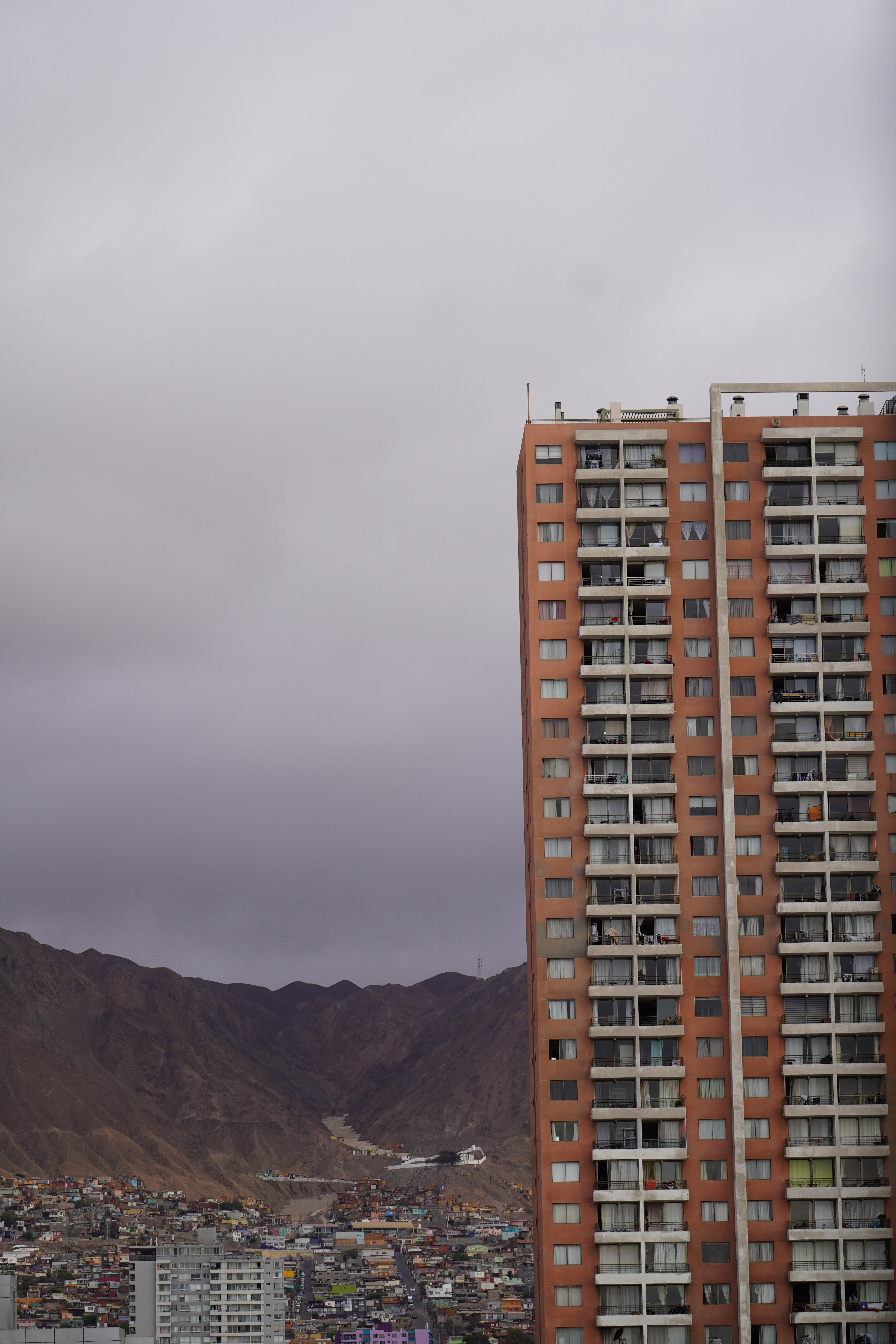
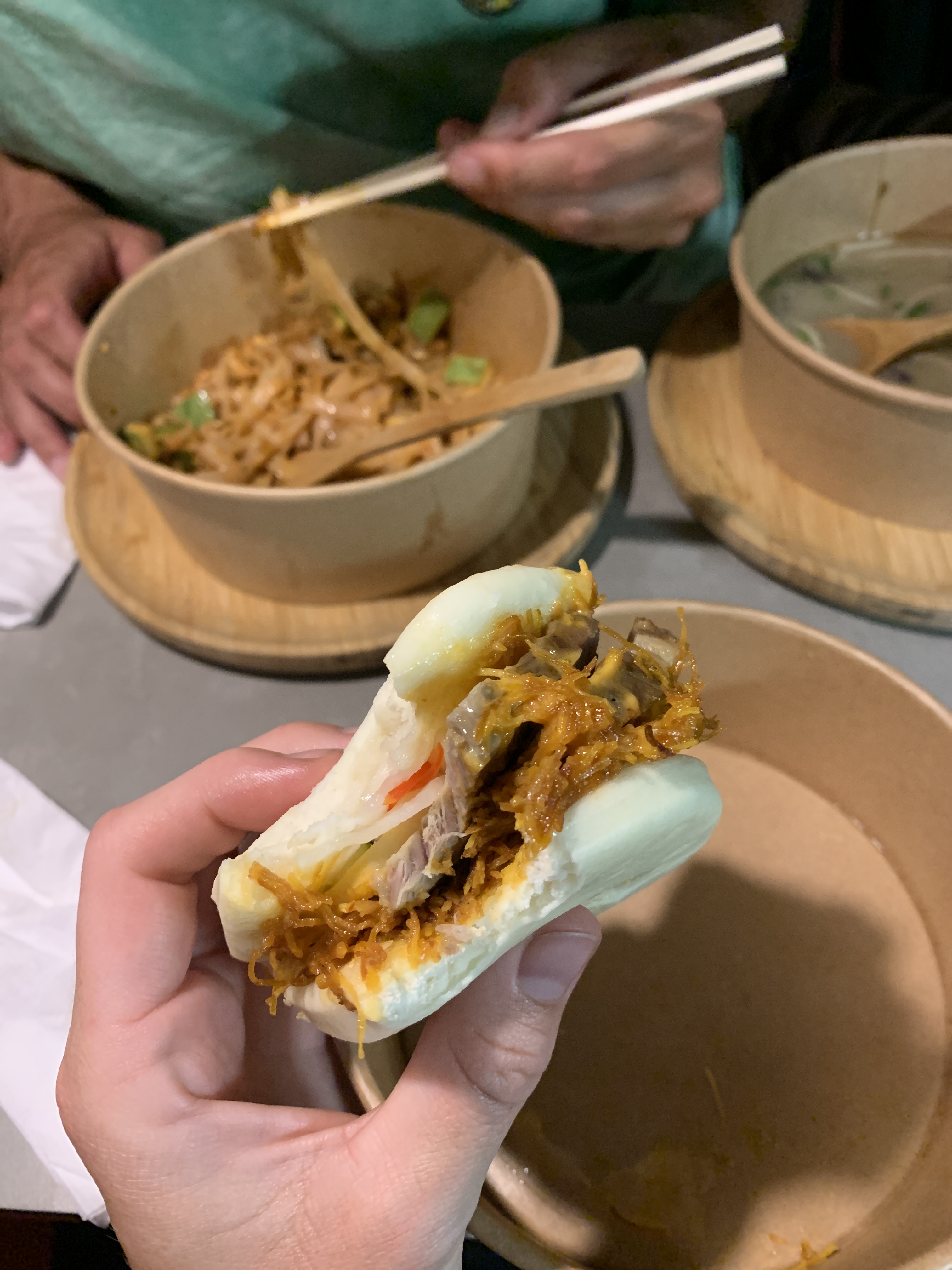
But before Antofagasta, we explored the spectacular Pan de Azúcar National Park. The dirt road here was so well-packed it felt like asphalt, a rare pleasure! The Atacama continued to amaze us with its variety. The park is home to an island off the coast where Magellanic penguins once lived. Sadly, an epidemic wiped them out. We moved on, driving along Ruta 1 to Paposo. Until the War of the Pacific (1879–1884), this area was actually part of Bolivia. Heading inland, the temperature rose sharply. Within seconds, the skies cleared, and it was over 30°C. The landscape turned red and barren, no cacti, no plants, just raw, Mars-like terrain. We passed the Paranal Observatory and saw the construction of the Extremely Large Telescope (ELT) on Cerro Armazones. Once completed in 2028, it will be the world’s largest optical telescope. The Atacama’s dryness, high altitude, and minimal light pollution make it ideal for astronomy. At the Mano del Desierto, we made a detour to see the famous hand sculpture. After seeing two similar giant hands (in Punta del Este, Uruguay, and Puerto Natales, Chile), we felt compelled to complete the trilogy. Reaching Antofagasta was exhausting, but the rooftop parking at the mall was high enough to enter with Rosi. While I stayed with Rosi, Björn bought a new iPhone and some delicious Pad Thai and bao buns.
iPhone Restoration and Extremely Large Holes
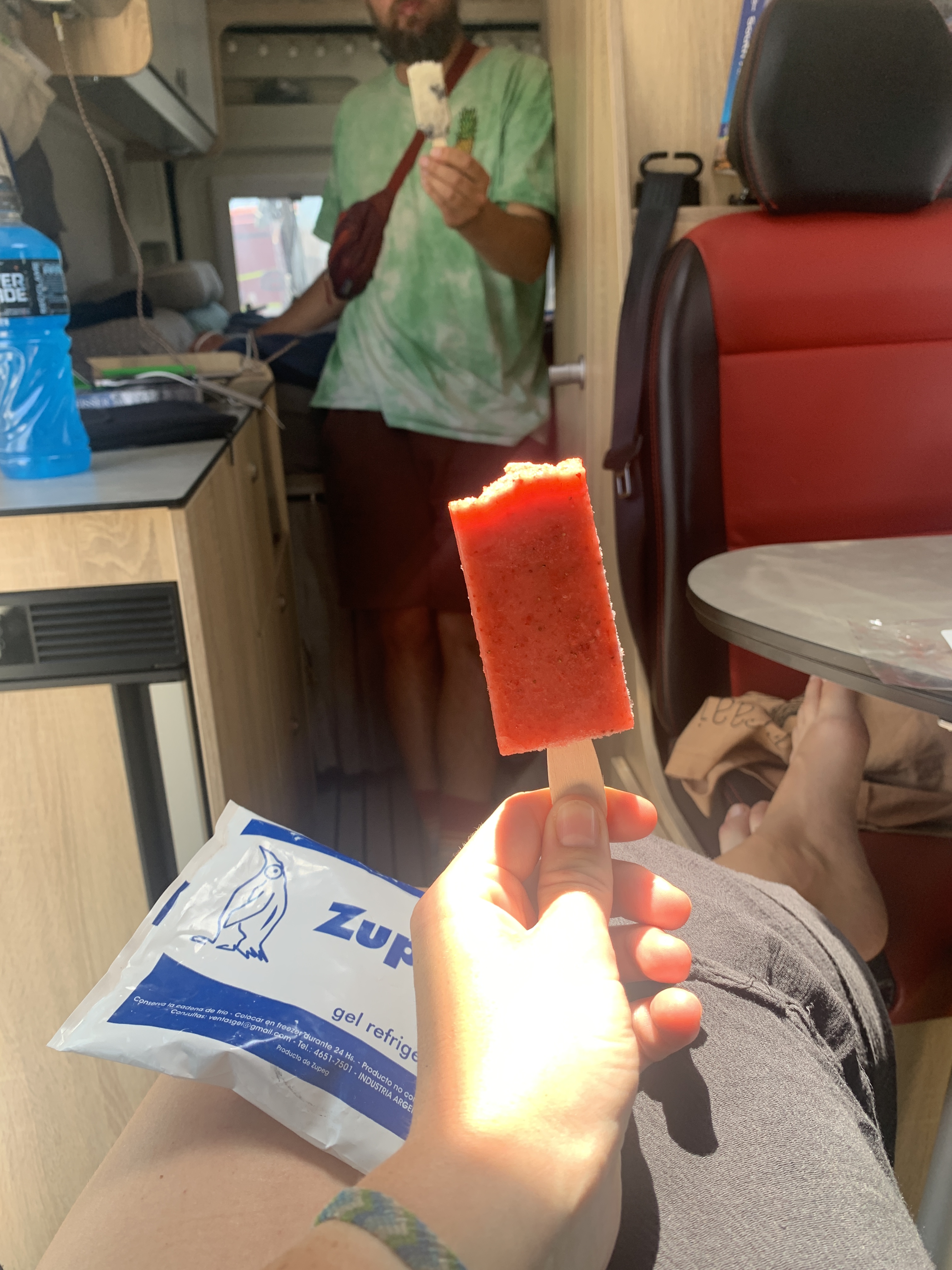
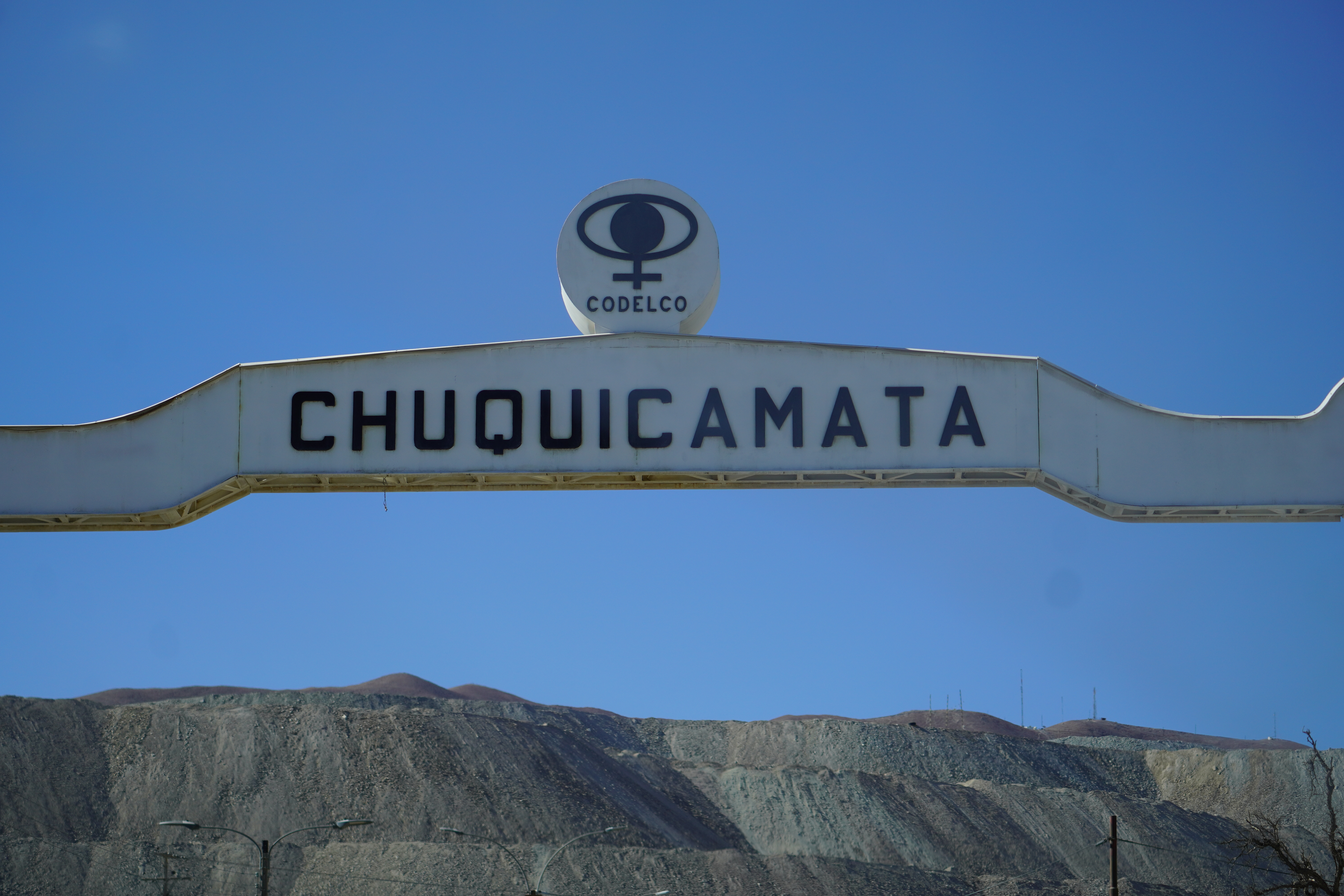
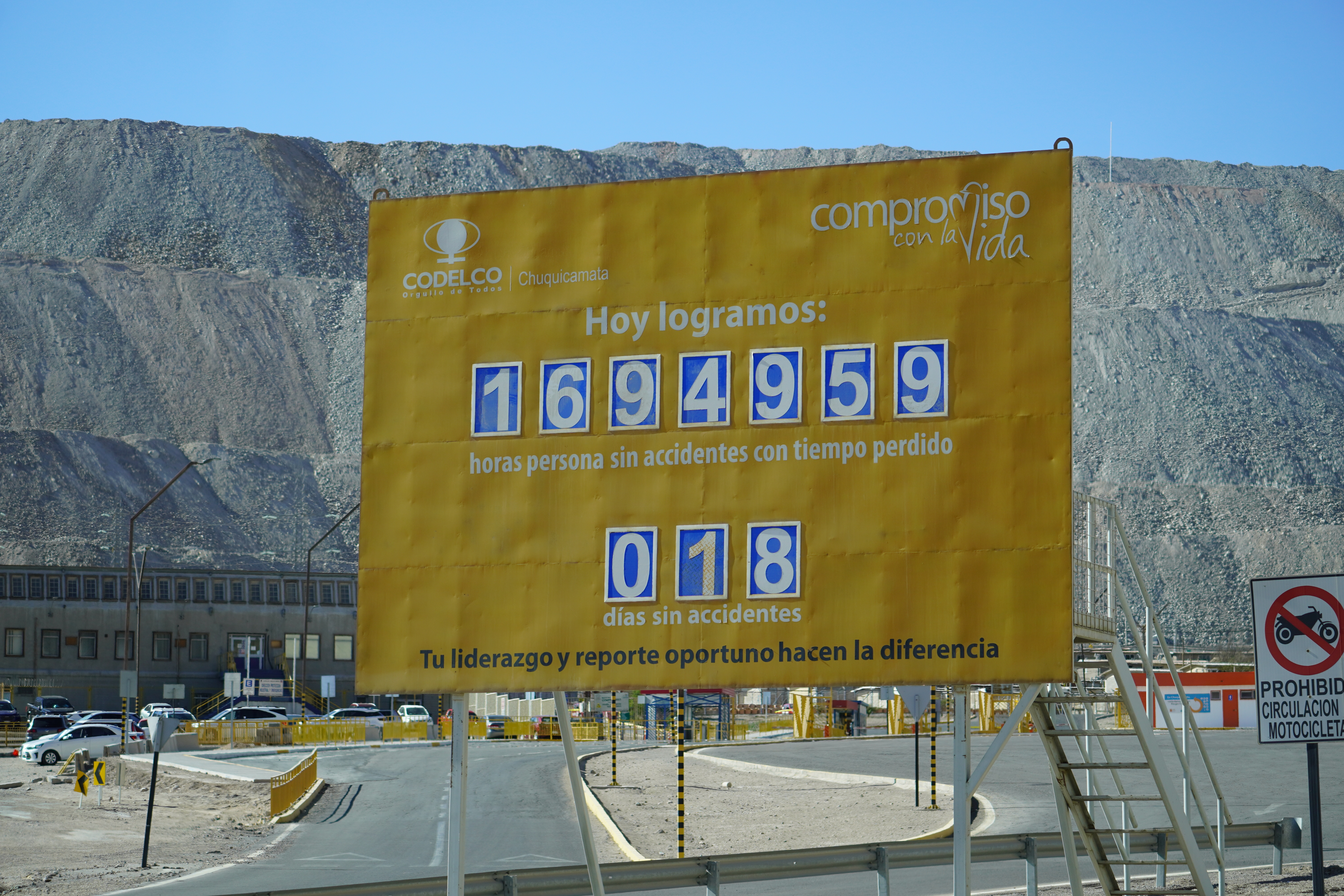
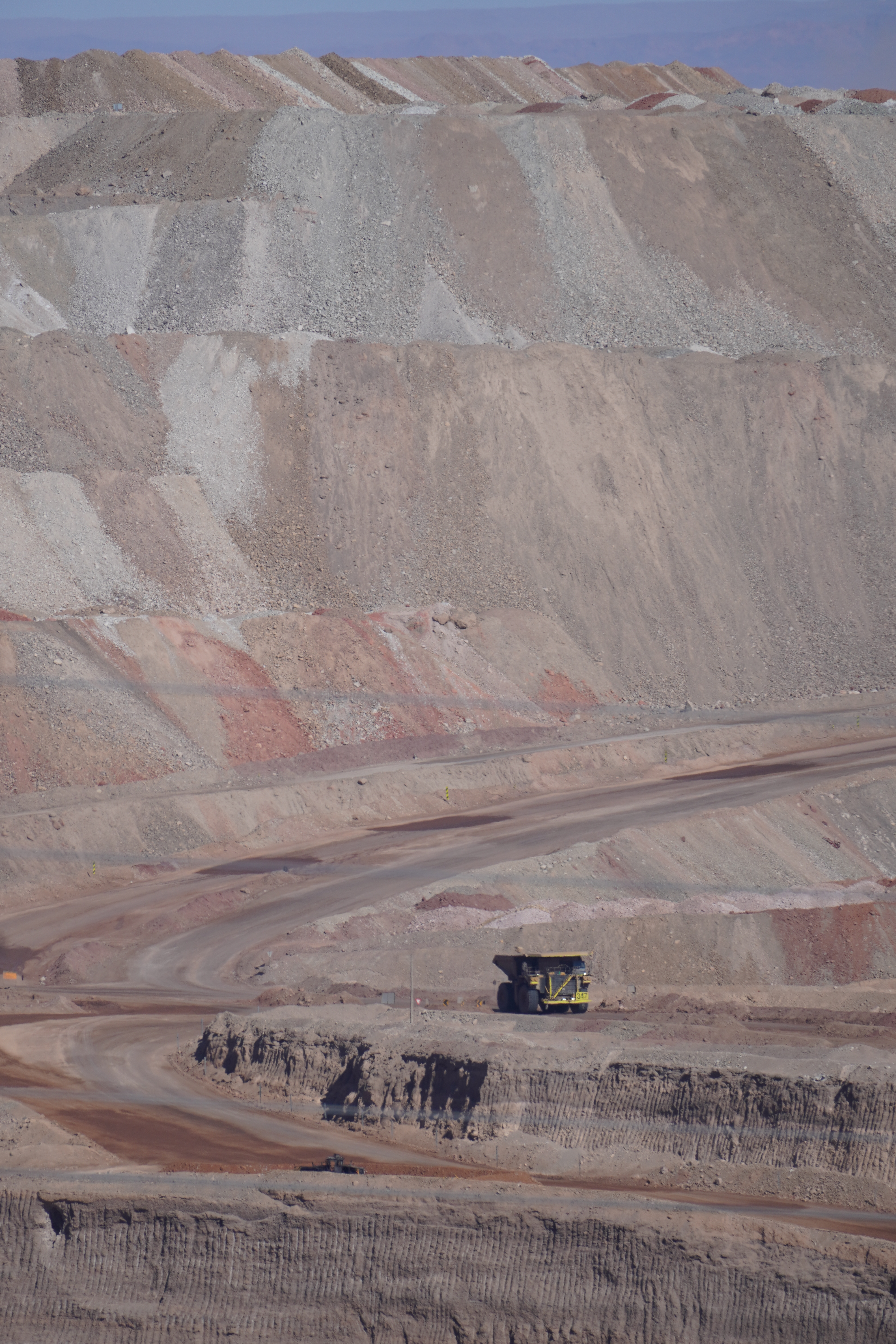
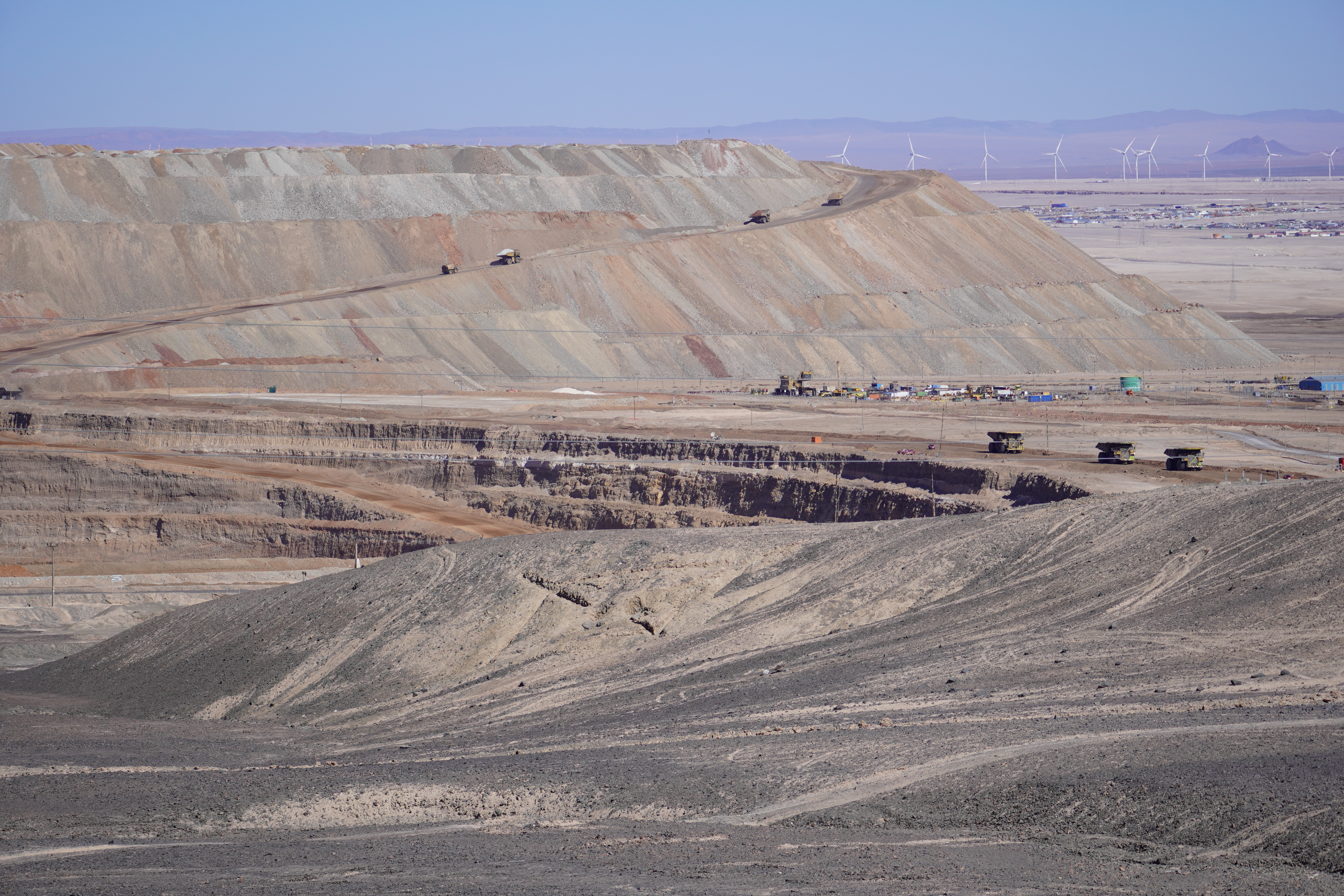
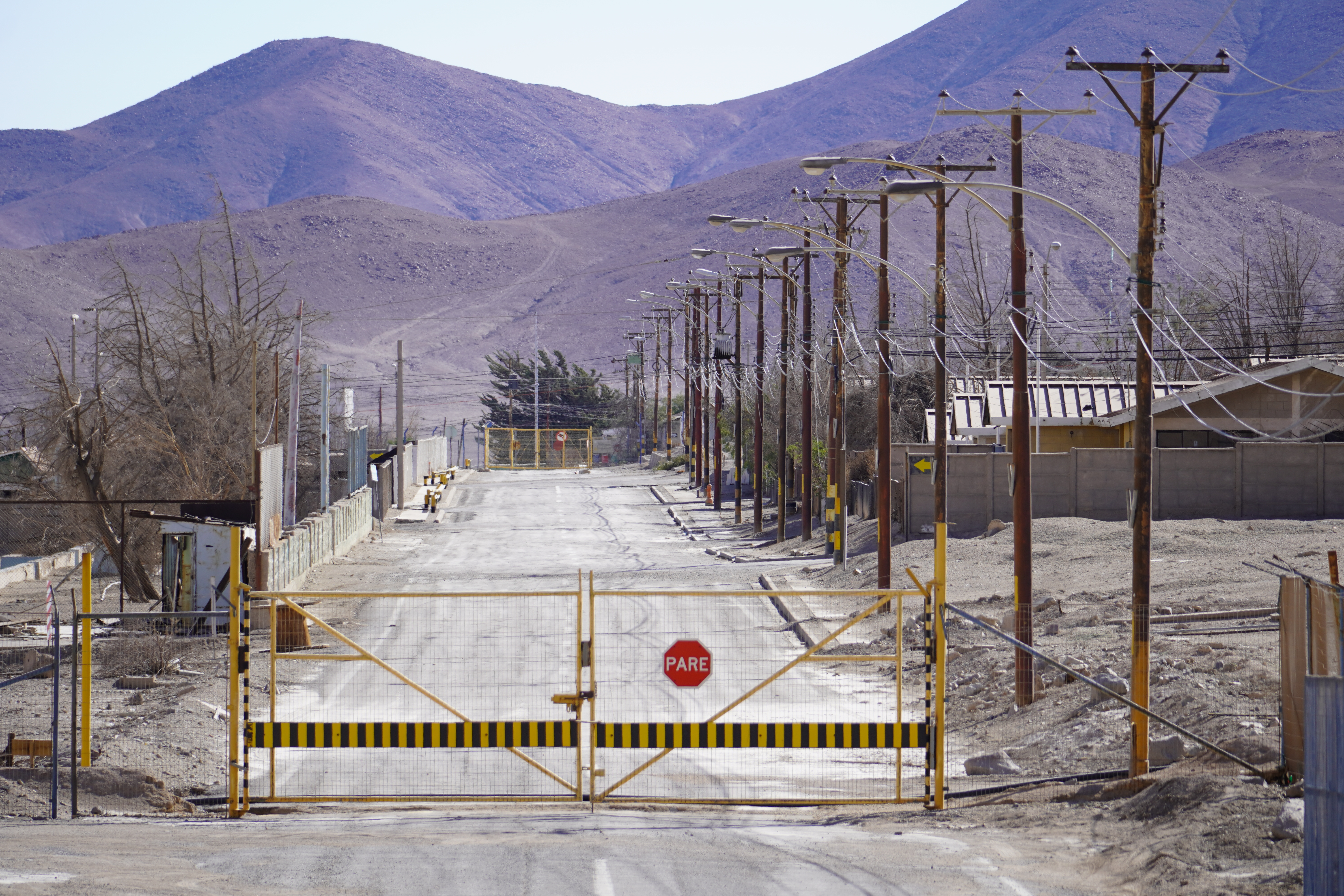
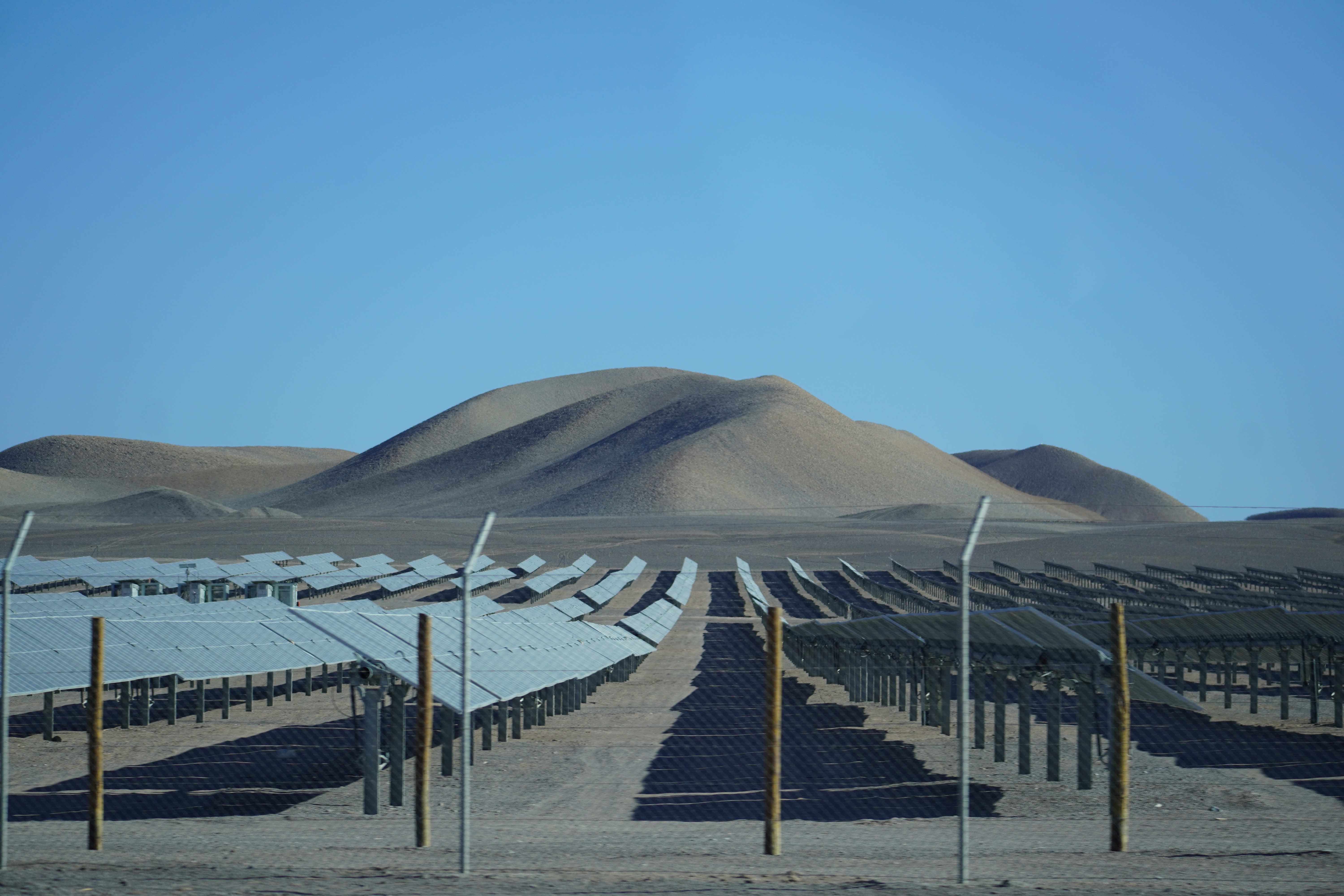
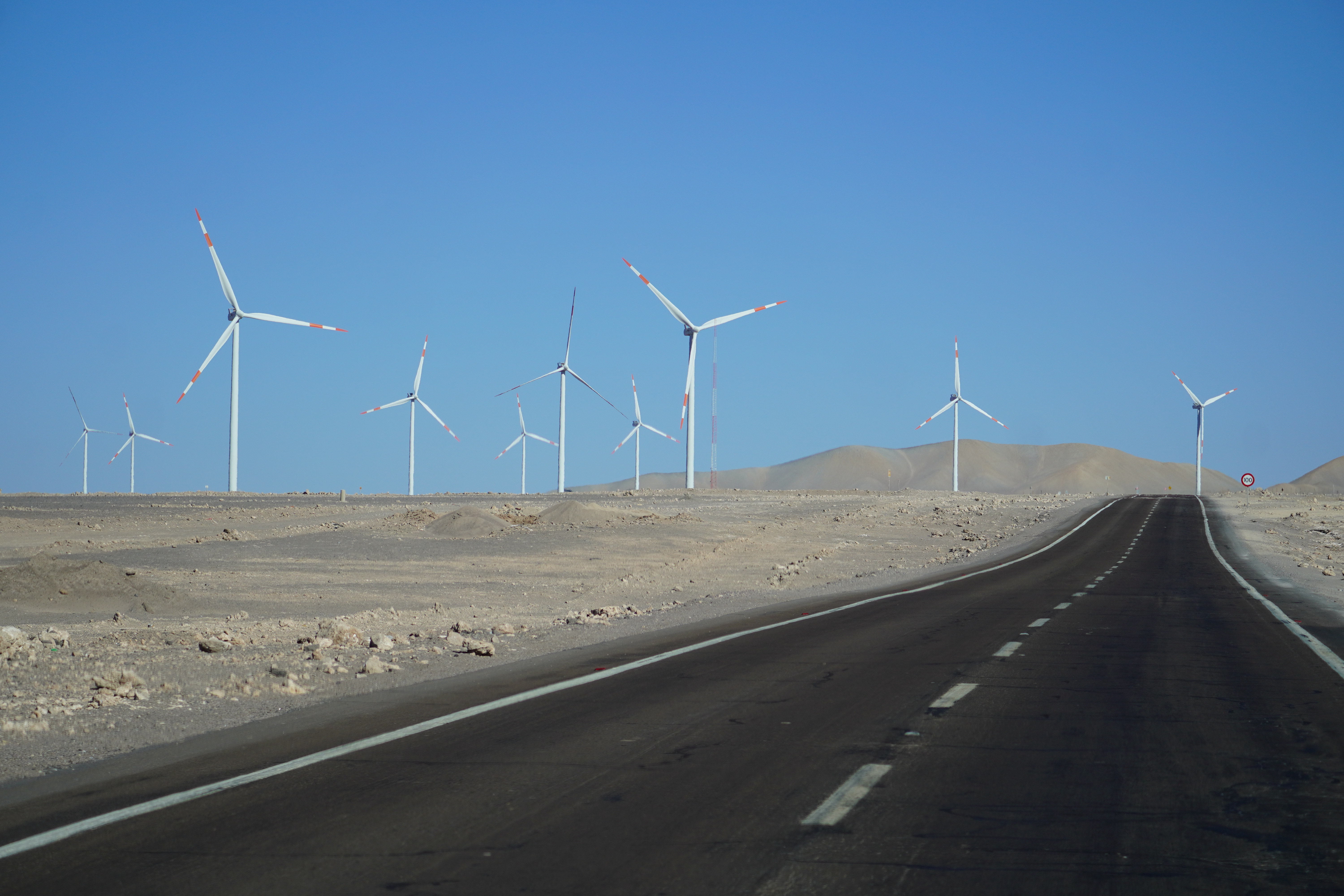
The next morning, Björn tried to restore his new iPhone using the Wi-Fi at the Copec gas station. But the connection kept dropping. After countless attempts and wasted time, we decided to move on. Driving through the blistering heat of the Atacama Desert, with temperatures soaring above 30°C, we found ourselves once again longing for Starlink. I discovered a free Wi-Fi spot in the small town of Baquedano. After several ice pops and nearly 40°C temperatures, Björn was finally able to set up the phone. However, the new iPhone had less storage than the old one, meaning it couldn’t accommodate the full backup. But it finally worked out. Once back on the road, we headed to Chuquicamata, one of the largest copper mines in the world. This open-pit mine is approximately 4300 meters long, 3000 meters wide, and up to 1000 meters deep. Enormous mining vehicles, with tires 3 to 4 meters in diameter, transport the rock. Surrounding the mine are massive waste heaps, an awe-inspiring yet unsettling sight. The town of Chuquicamata itself is now a ghost town. Its residents were relocated to Calama in the 2000s as the expanding mine made living there unsafe. Additionally, the buildings had to be cleared to make room for mining operations. Driving past wind turbines and countless solar farms, we continued towards San Pedro de Atacama.
Getting prepared in San Pedro de Atacama
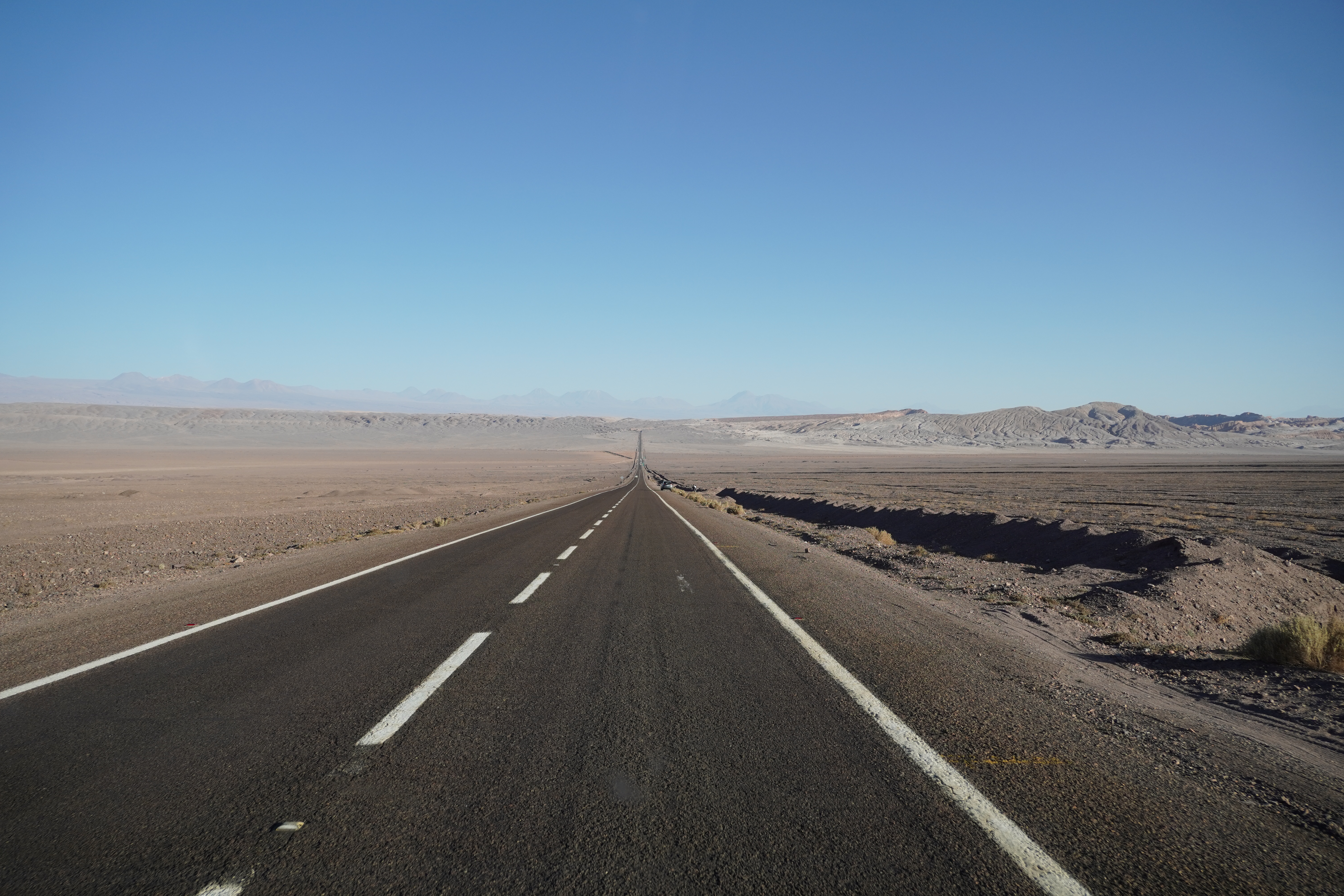
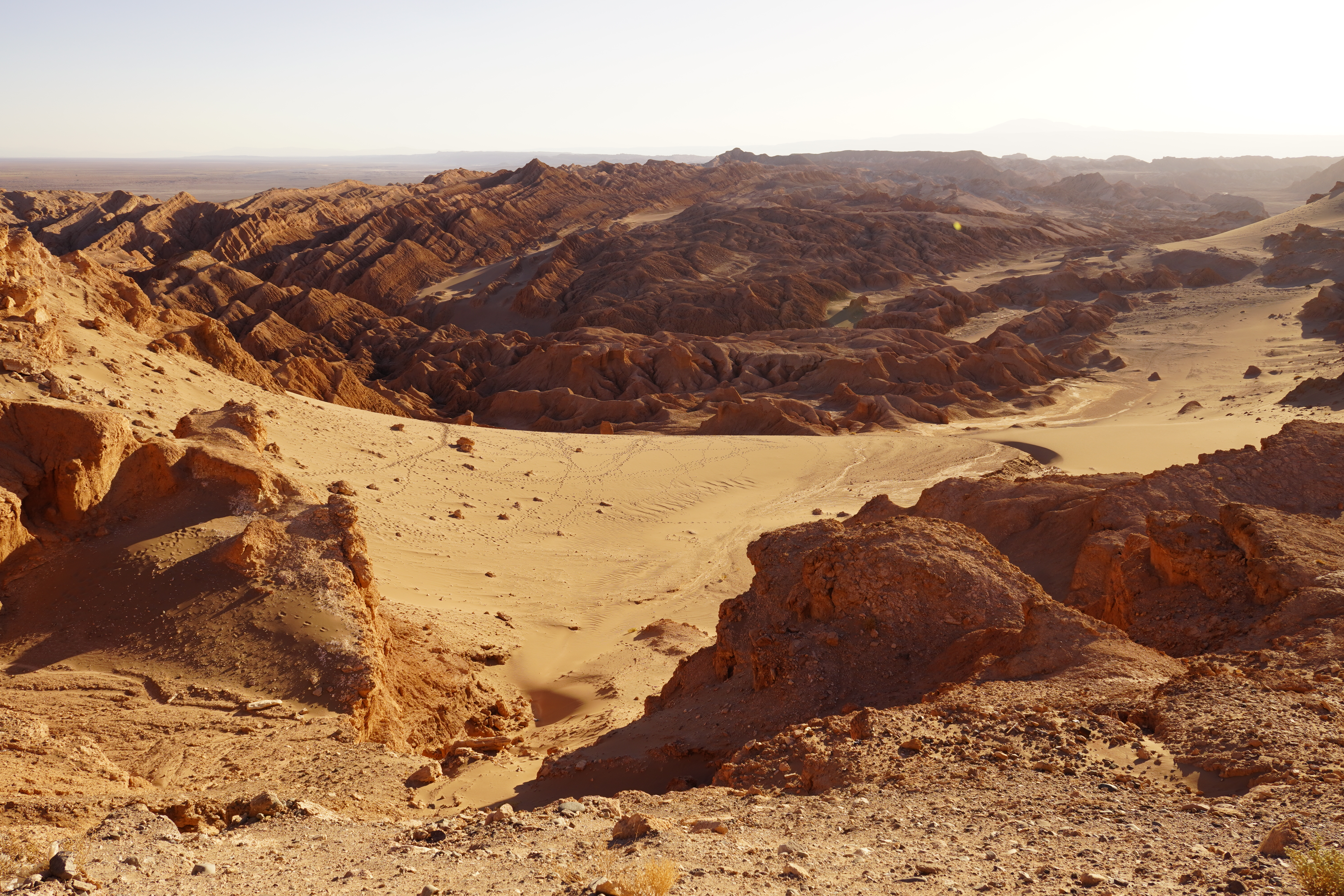
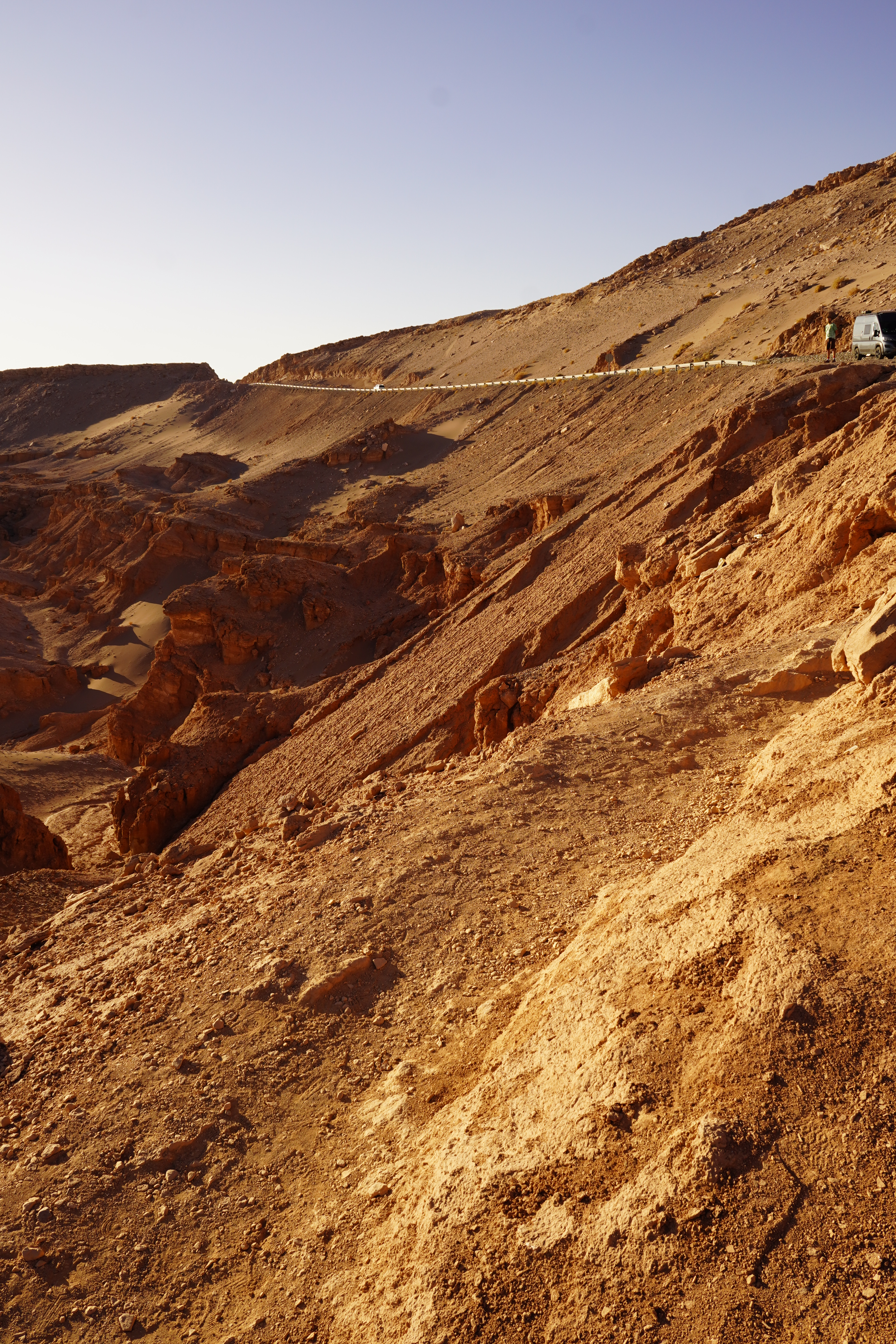
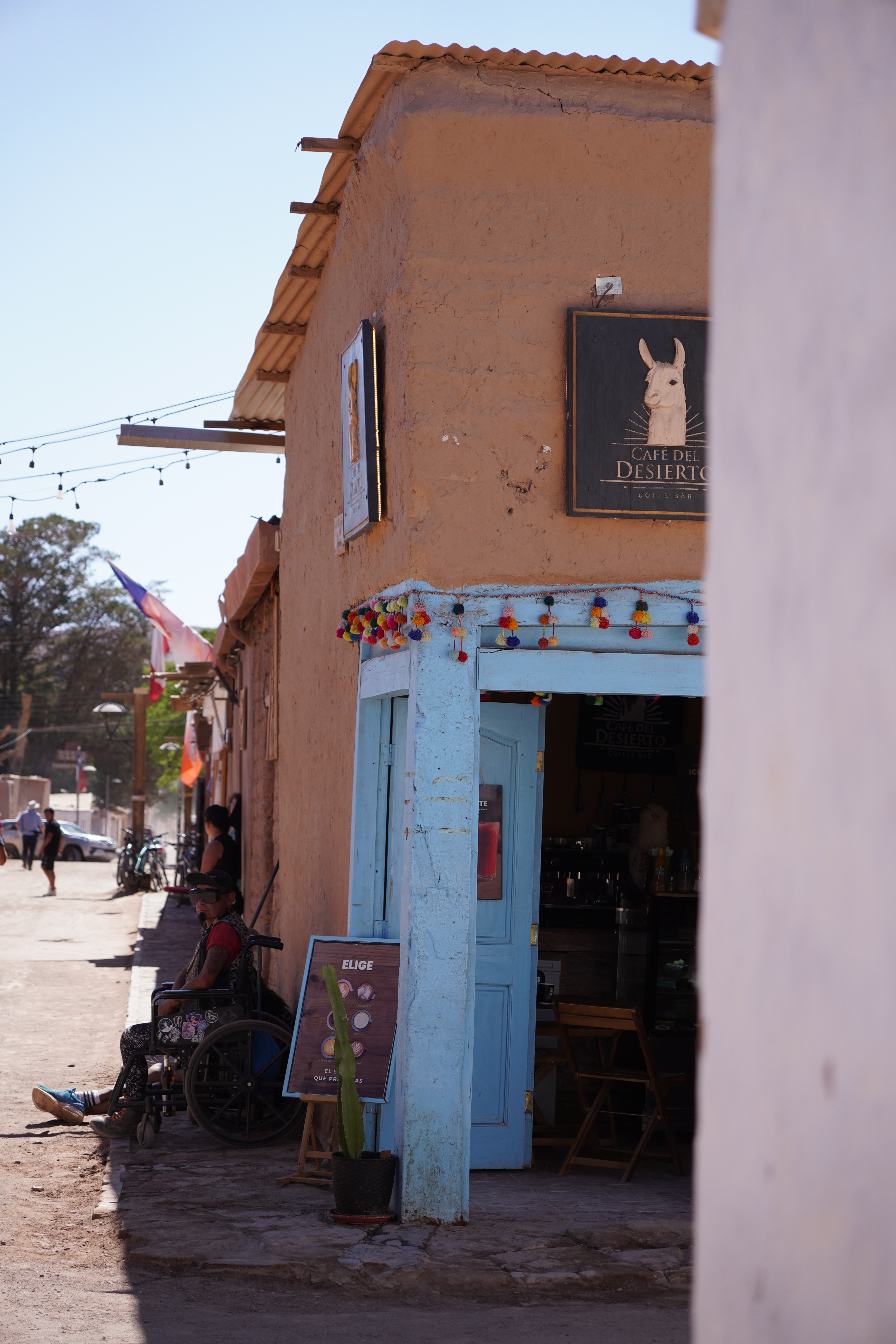
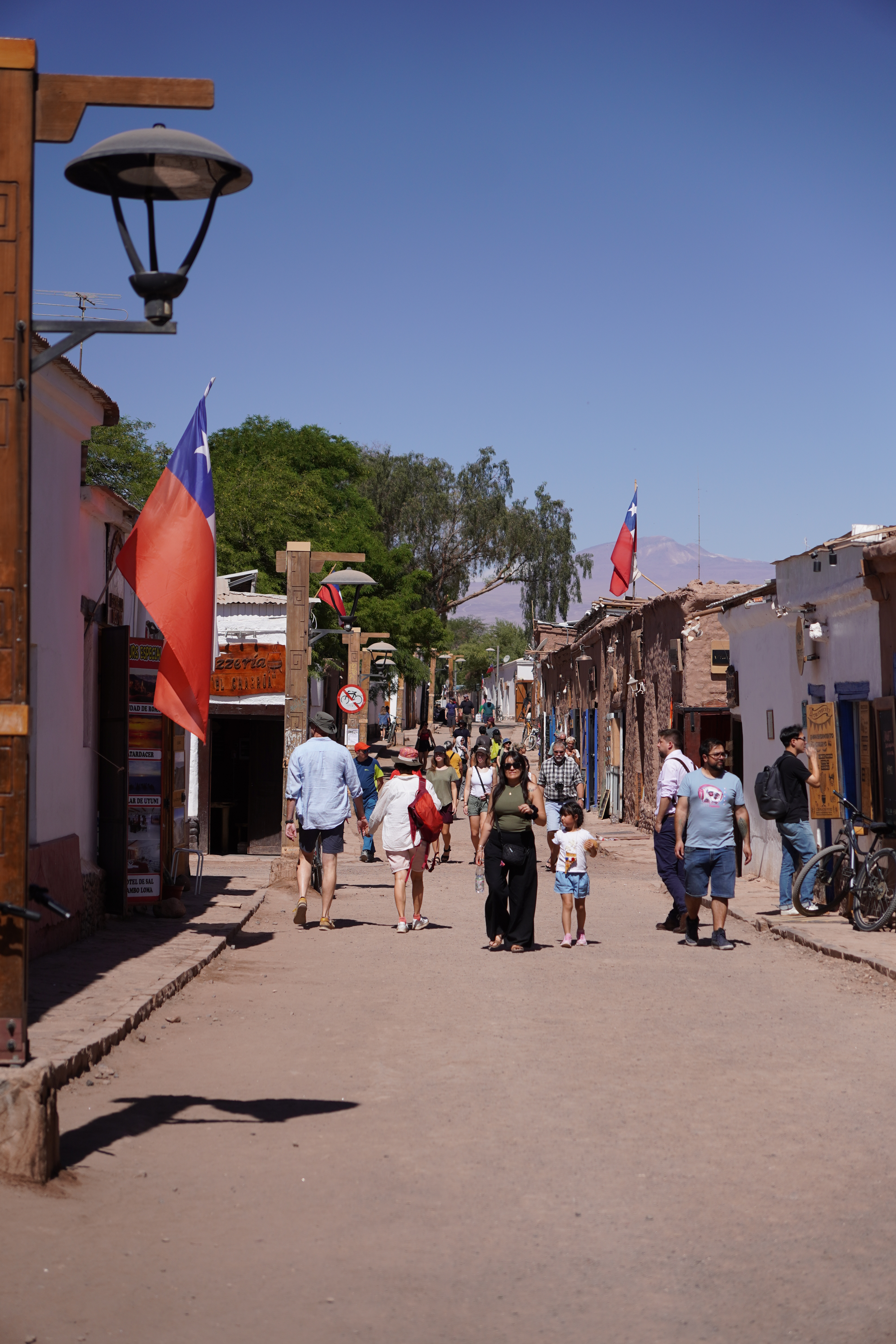
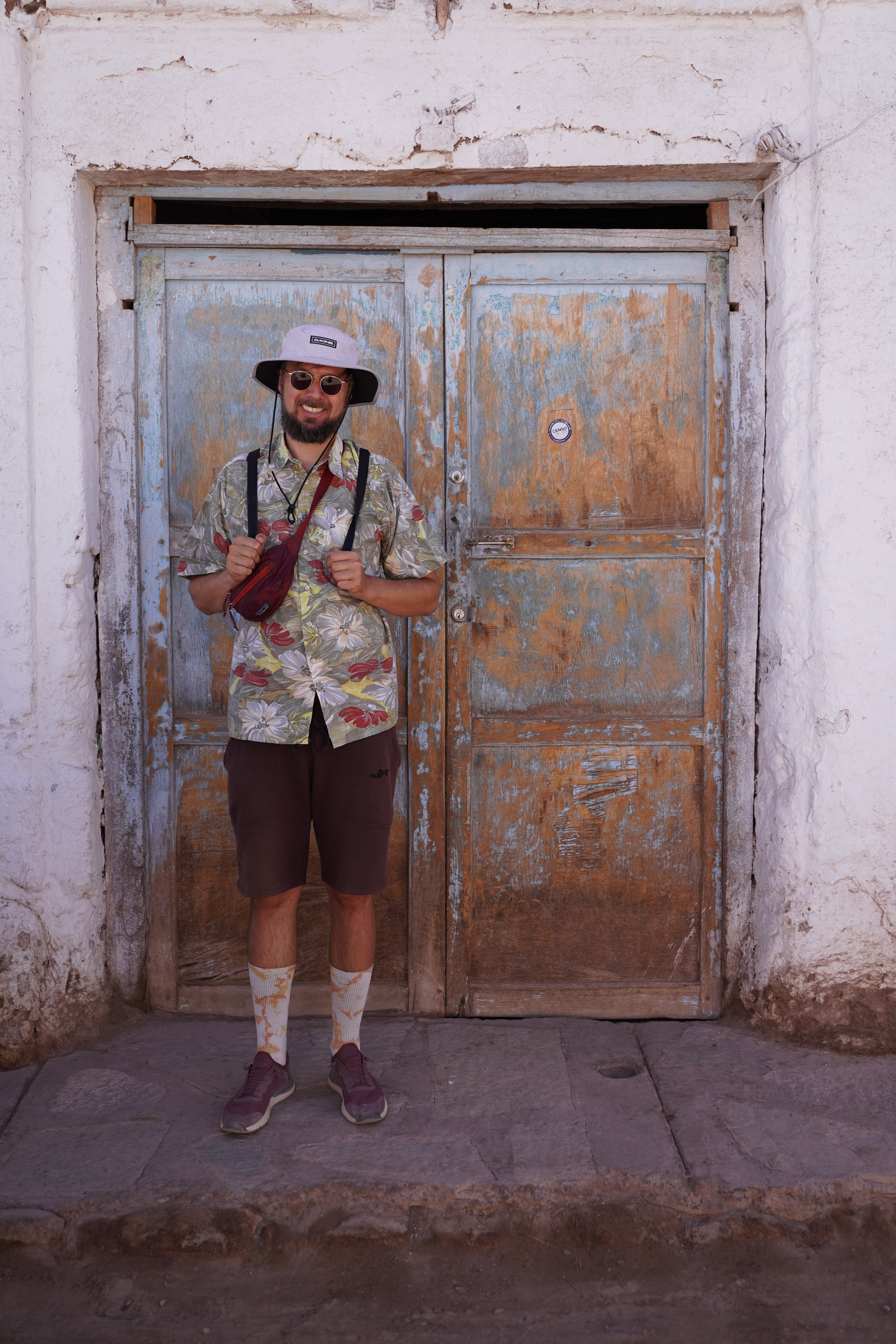
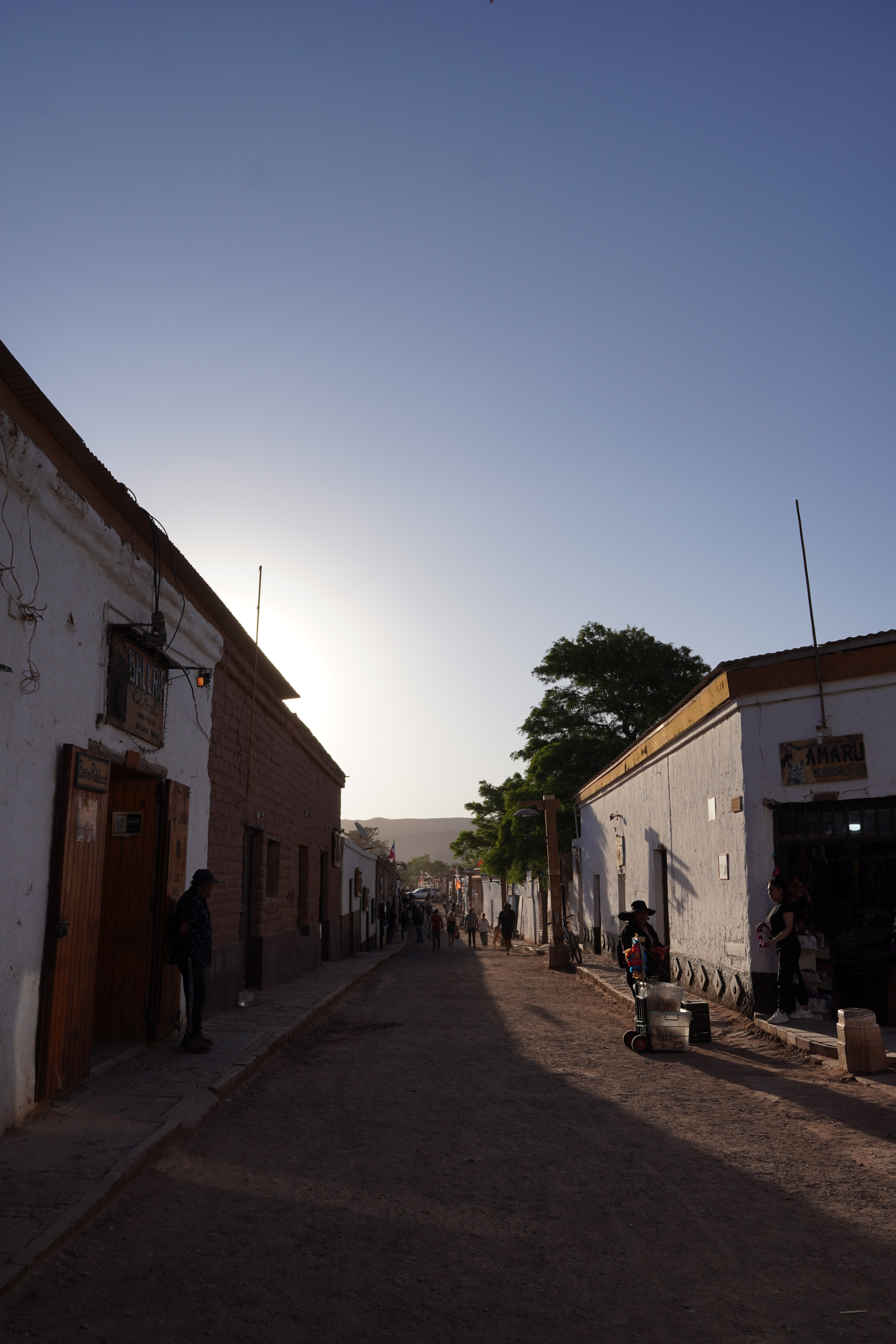
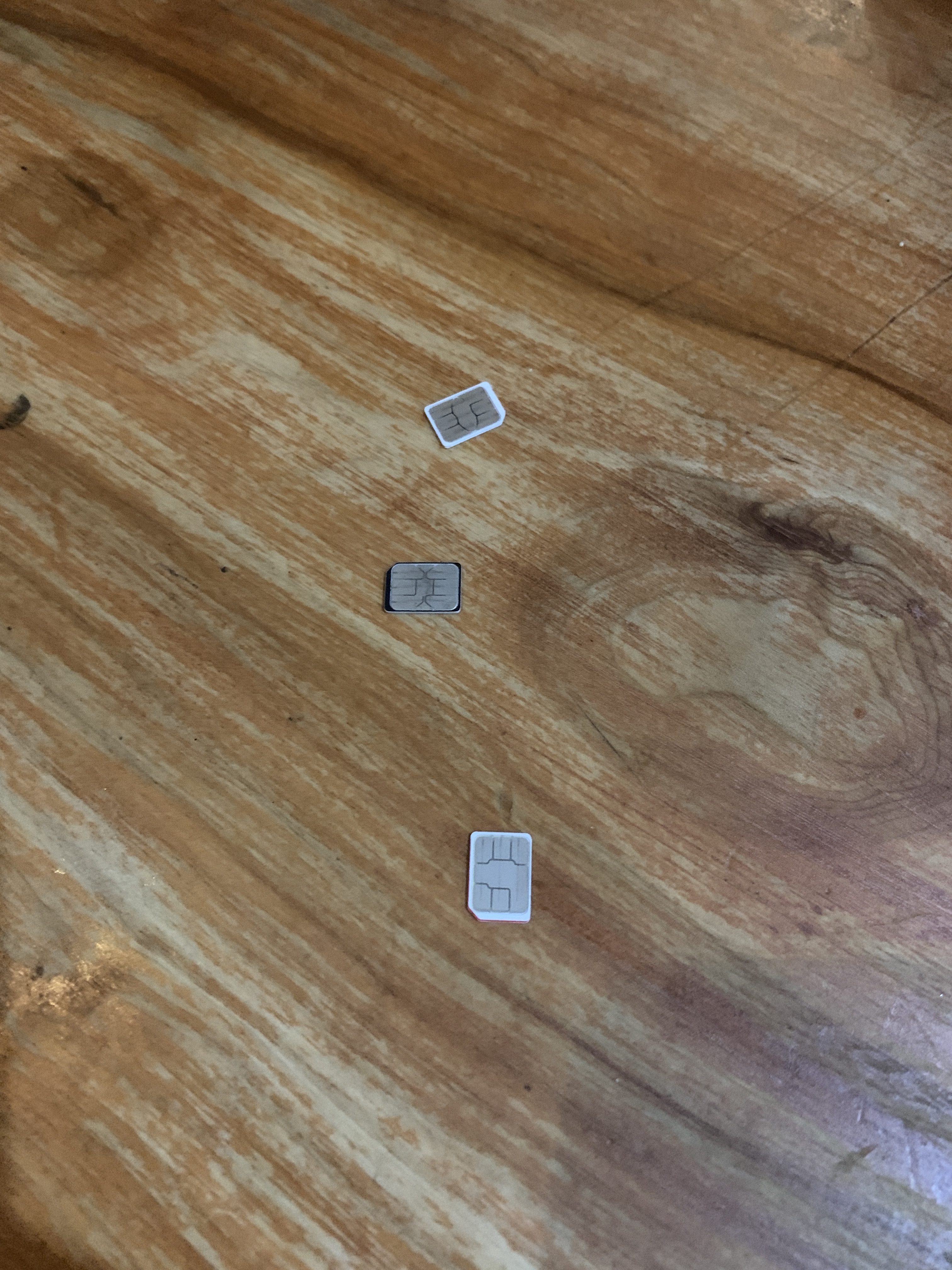
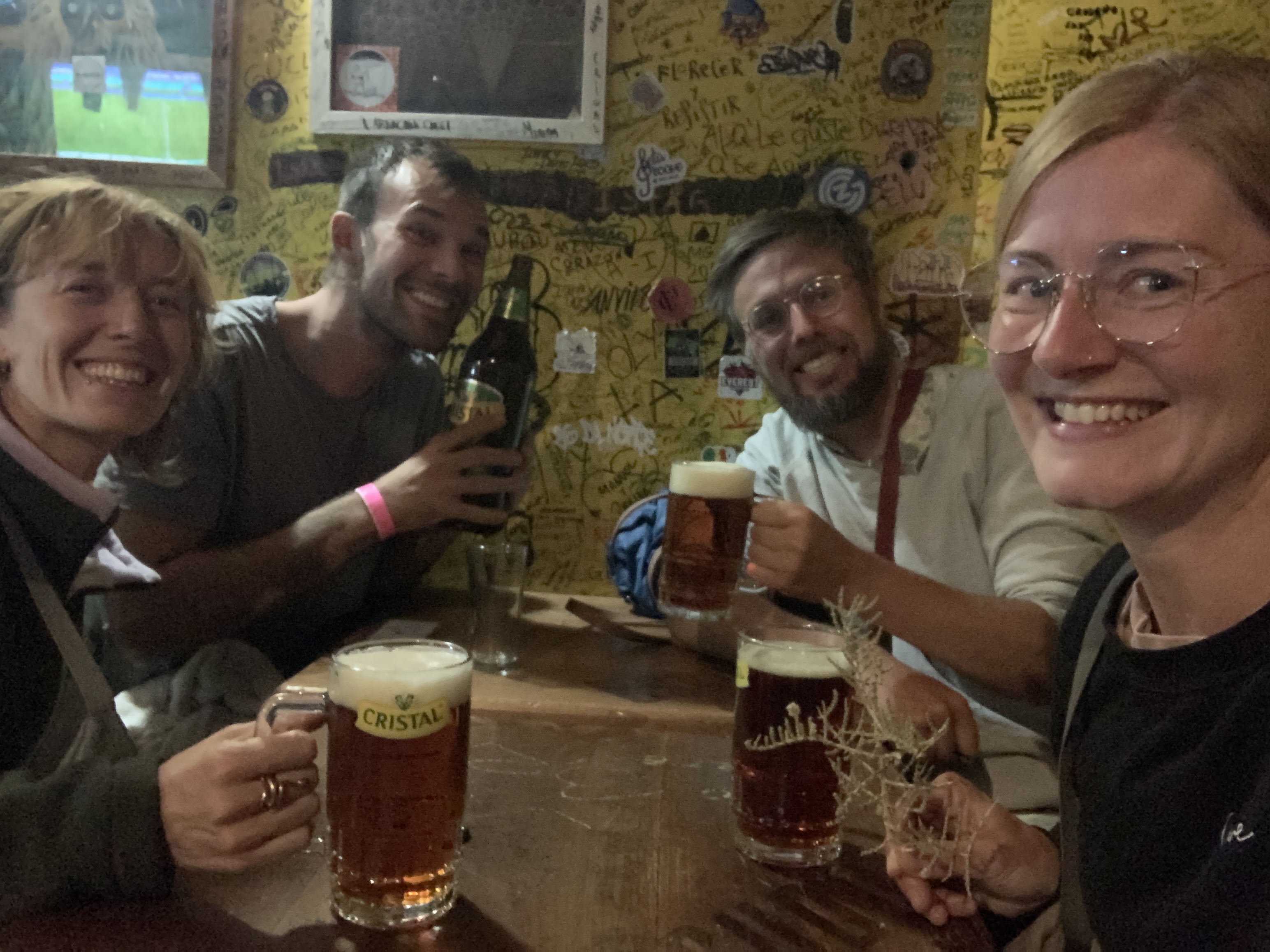
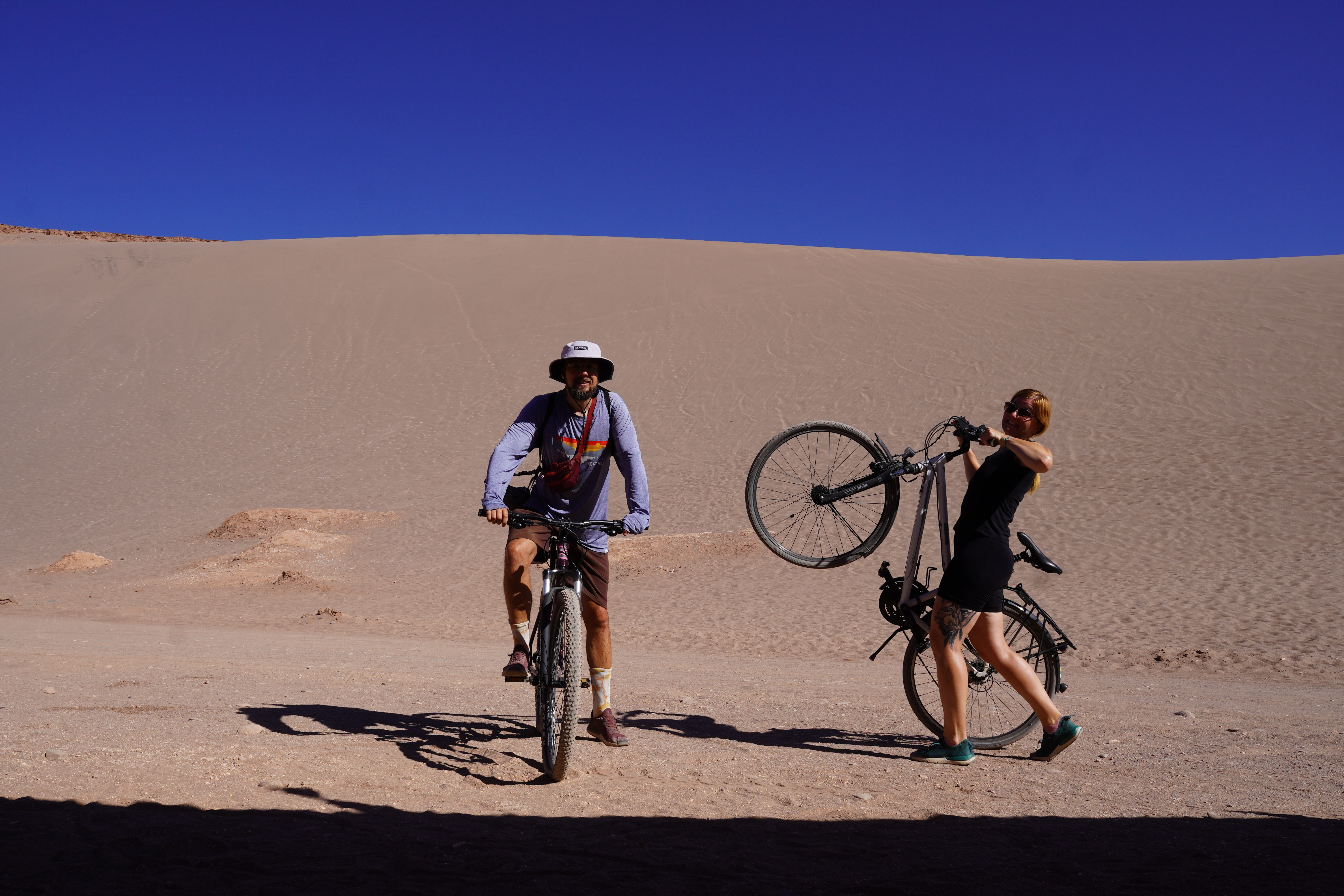
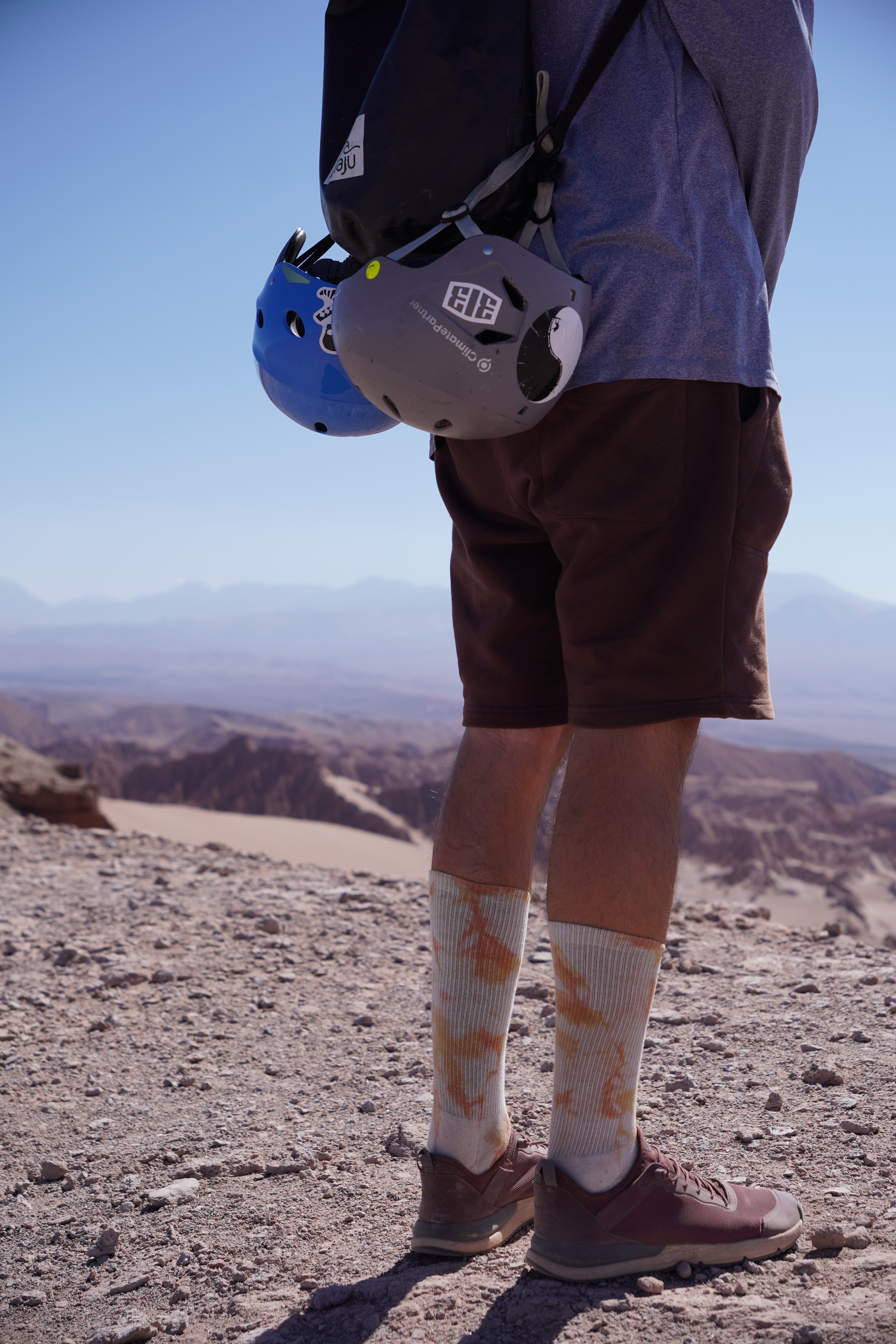
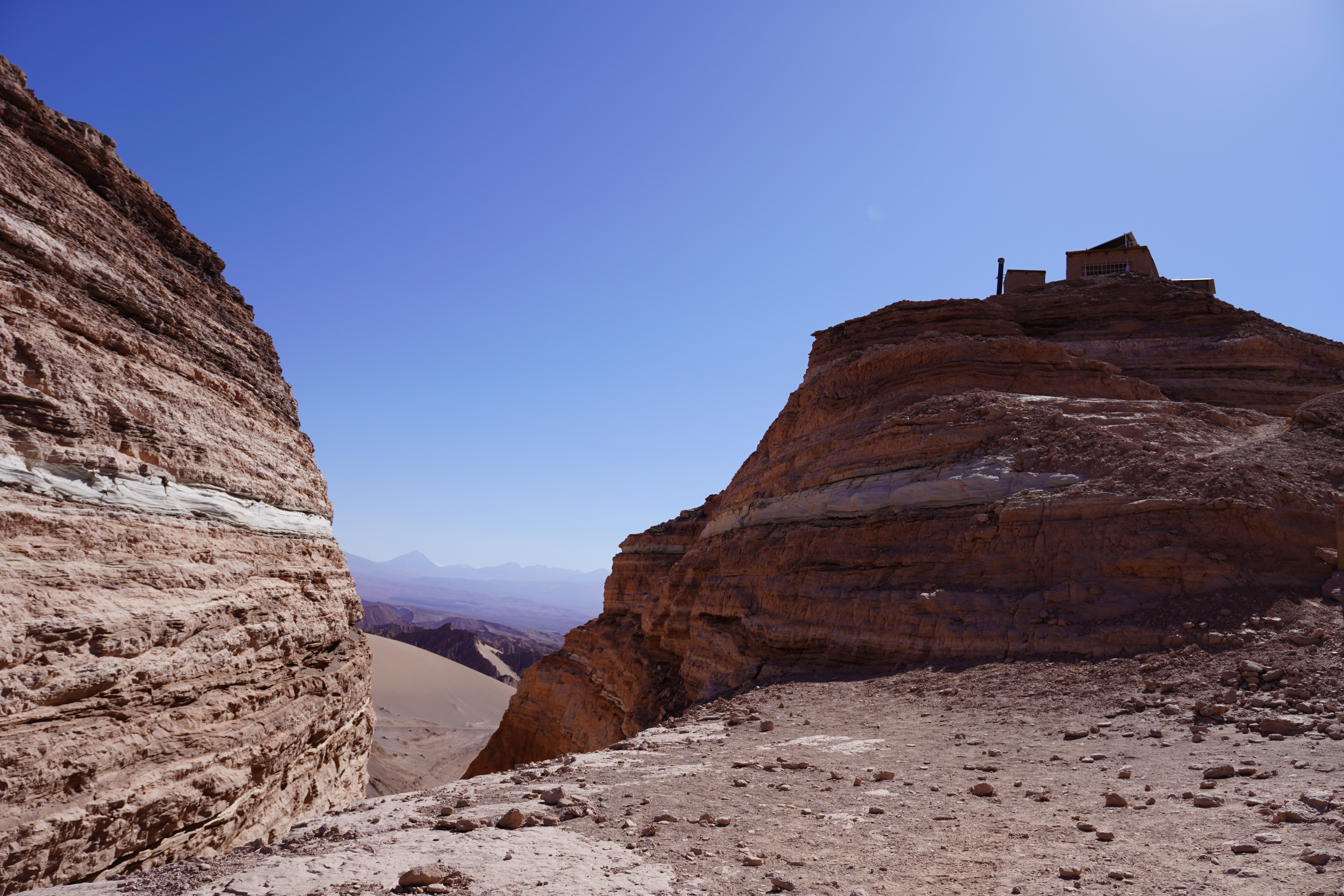
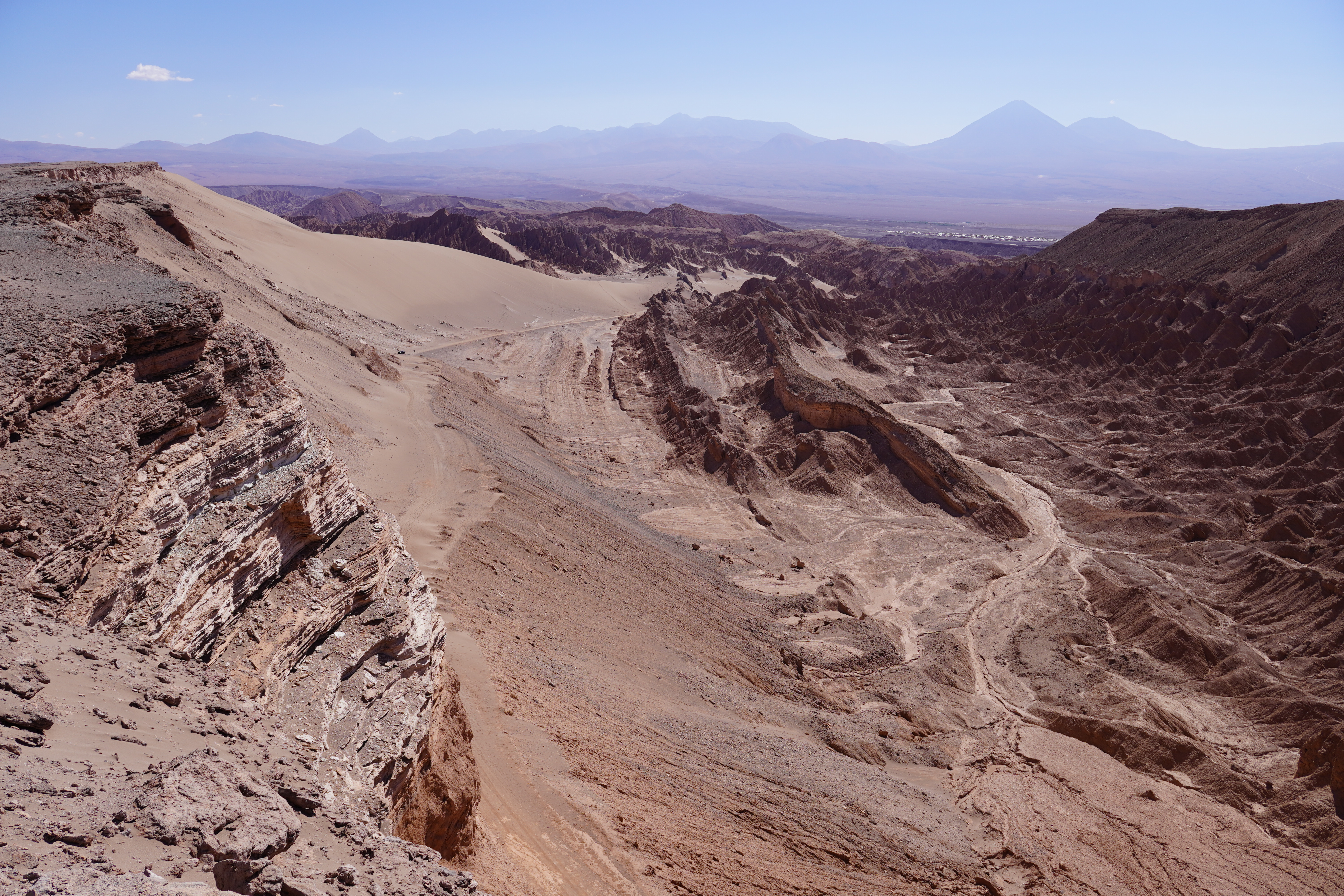
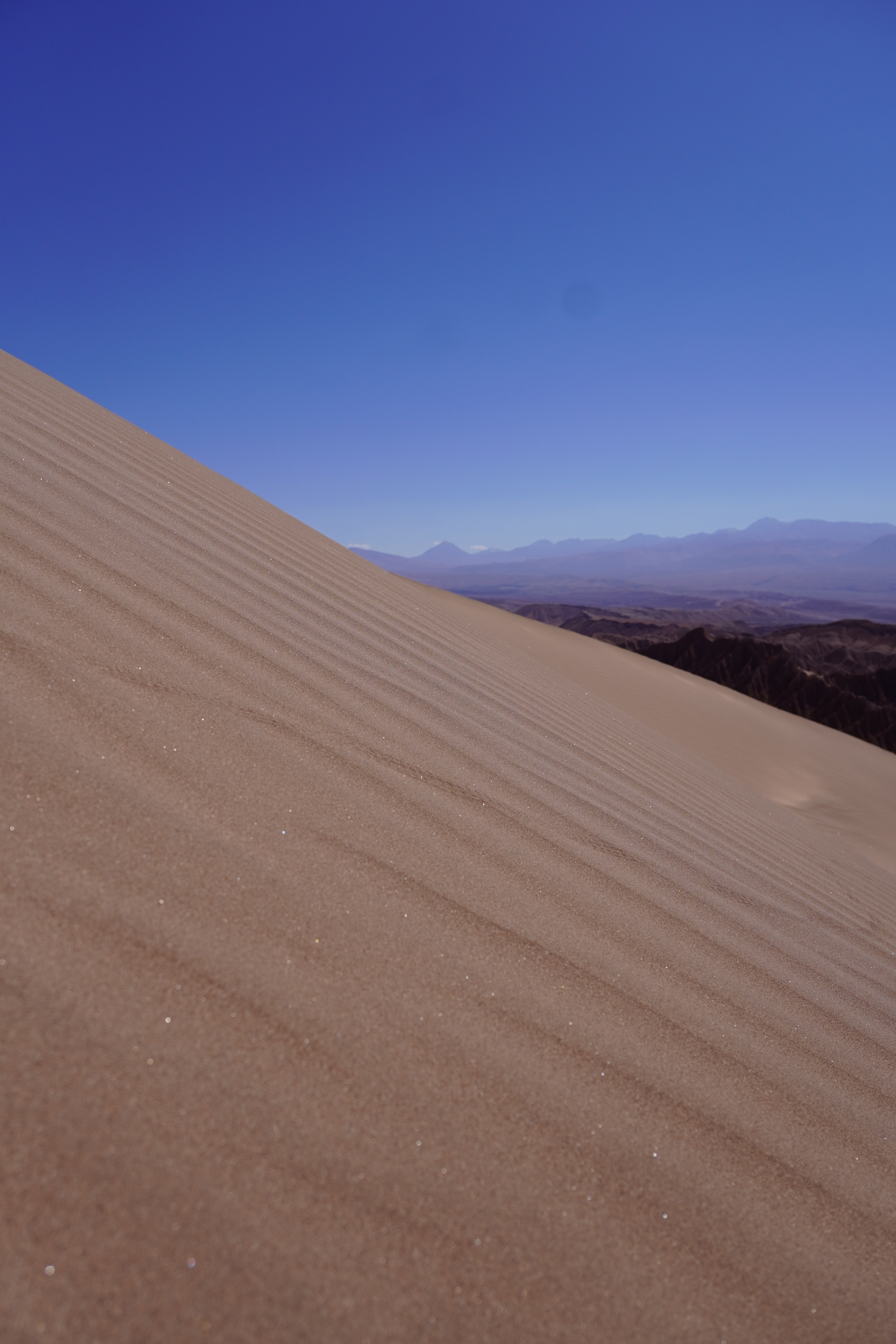
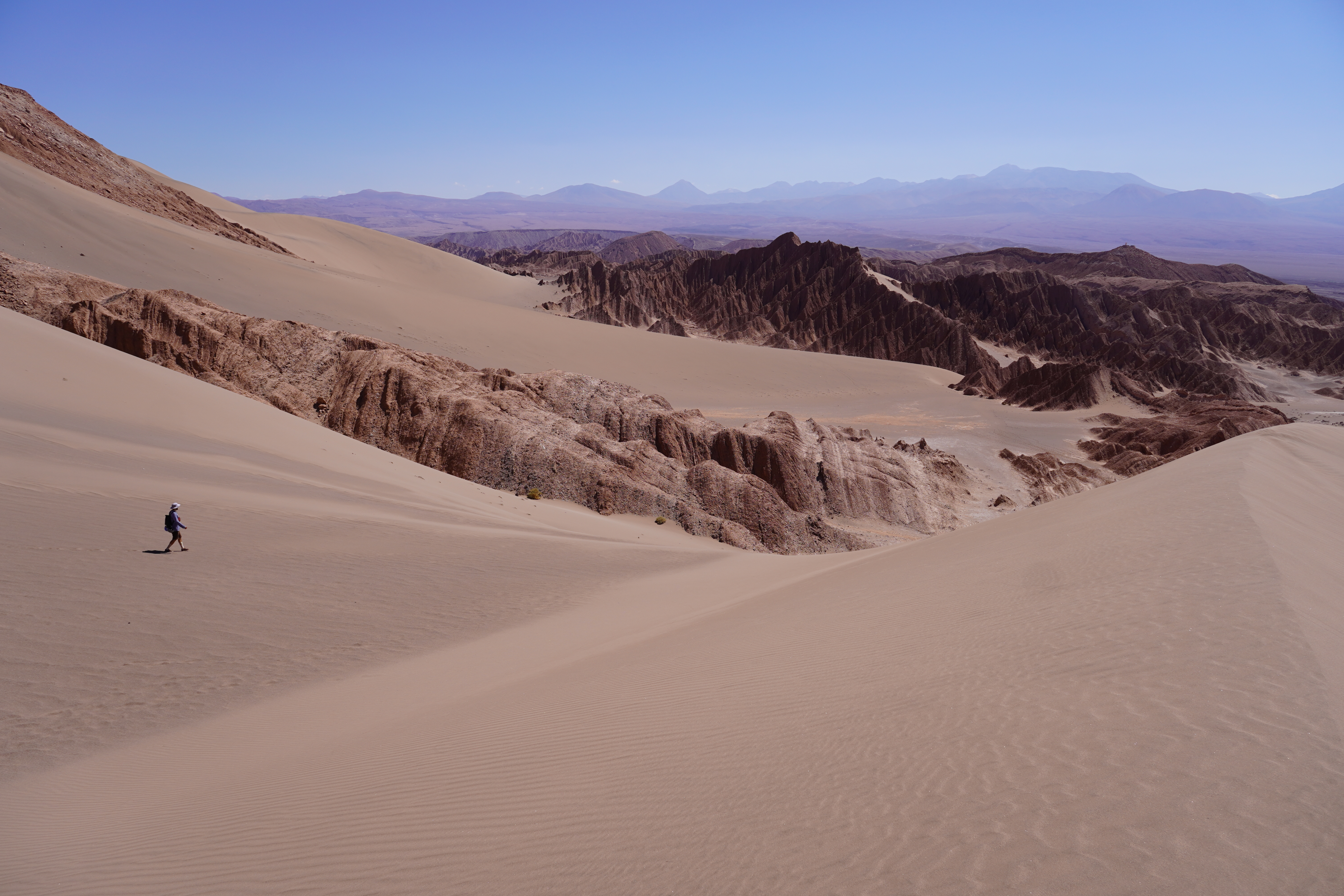
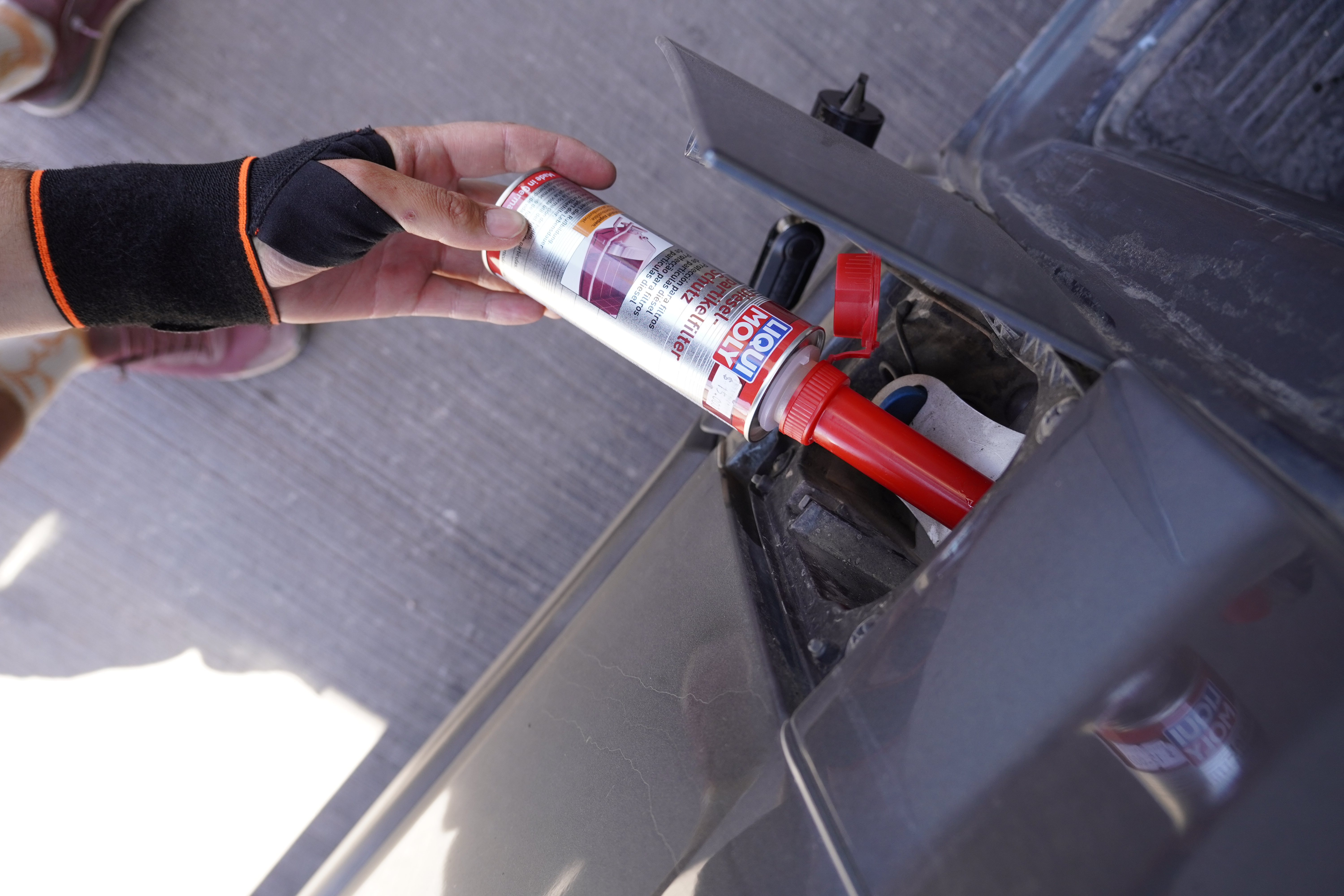
We drove through a sandy, red, moon-like landscape into the town. Traveling in the offseason meant most campgrounds were either closed or empty. The most highly rated one in San Pedro was fully booked, but we found a spot a few streets away. This wasn’t a typical campsite but a place where you could rent small bungalows with hammocks. We stayed with Rosi for three days to acclimatize to the altitude, San Pedro sits at 2407 meters above sea level. The highlight? A pool, which was great in the 30+°C heat. We used the time to prepare for La Ruta de las Lagunas, gathering information and stocking up on supplies. Unfortunately, we couldn’t bring fresh fruits or vegetables because of the upcoming border crossing. San Pedro de Atacama is known for its natural wonders, but we decided to take it easy, opting to relax and make the most of our time. We called Ina and Christoph, who were traveling south along the route, for updates on current conditions. They shared plenty of valuable tips. In a café, we met Lisa and Manu, two backpackers who had recently done the route with a guide. We spent the evening with them at a bar, swapping SIM cards for countries we no longer needed. They were heading south, and we were heading north. San Pedro had a fantastic desert-town vibe that we really enjoyed. On our last morning, we went on a bike ride and dune hike through Valle de la Muerte, starting early to avoid the heat. Despite wearing shoes and socks, the hot sand burned our feet. By the end, we each had at least 500 grams of sand in our shoes. We also took care of some essentials for Rosi: two full diesel canisters, a siphon hose for fuel to suck out of a tank (just in case), and a diesel additive to help the particulate filter burn off more easily at high altitudes. We knew diesel would be almost impossible to find in Bolivia. The country was also experiencing protests and widespread roadblocks.
Off to Bolivia, on October 30th.
 höme
höme 
Leave a comment