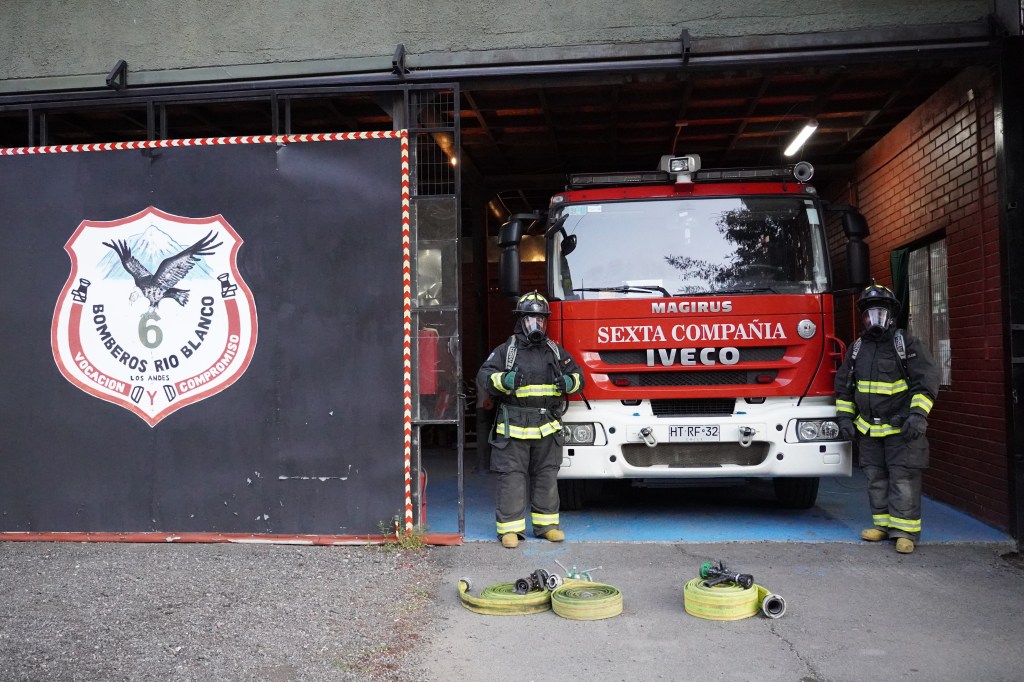
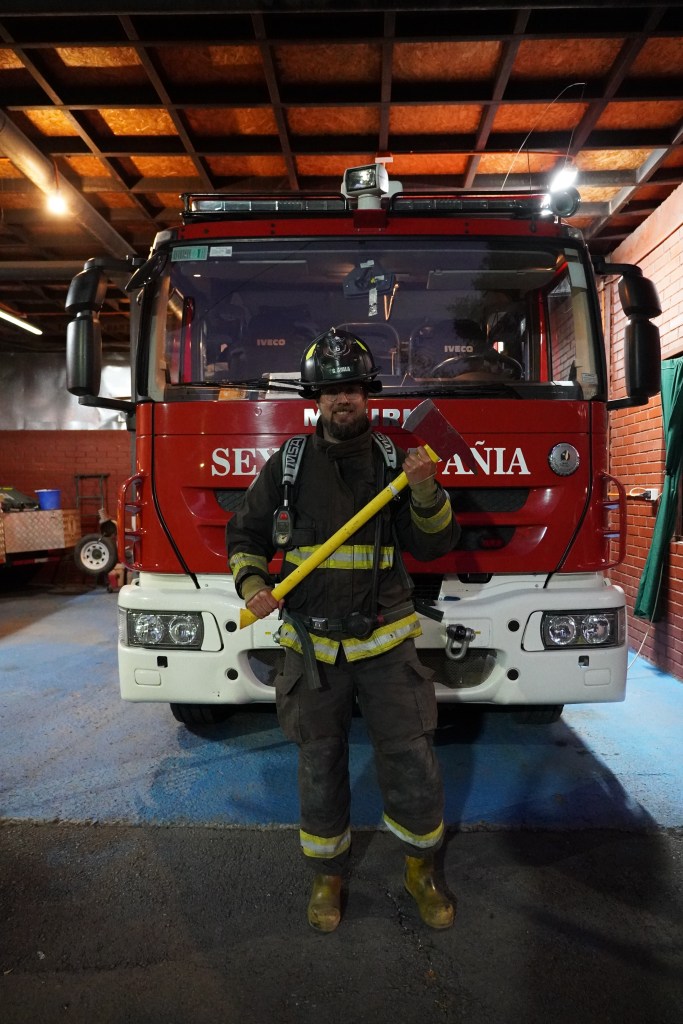
As Linda said, things escalated quickly. The fire chief was so proud of the fire station that he stared to show us every vehicle in detail and explained every tool. At the same time he had two young applicants that had to do a variation of test in full gear. I asked how much it weighs and within 5 min he gave me boots, trousers, jacket, a helmet and to complement the picture an axt. A lot of fire stations are themed based on the immigrants of the area. The chief told me about German (like the one we have seen in Frutillar), English, American, French and Italian stations in Chile. They all have signs and resemblence to the fire stations of the respective heritage. He knew every fire station and explained us very proudly as well that all fire departments in Chile are voluntary based on the example of the german voluntary fire stations. Companies help to sponsor the gearand vehicles but the fire fighters are all volunteers (he even told us how much what piece of equipment costs). Knowing this it made sense that we saw the next days fire fighters at gas stations collection donations, and of course we had to donate as well after this amazing experience.
After the incredible experience with the fire department we made our way straight to the pacific coast and wanted to drive a little road up the coastline along some smaller villages. After a lunch break at the beach which gave me some really california vibes including nice beach houses we drove further north and passed by accident the beach road of the little town Zapallar and instantly felt like we were in Hollywood. The houses along the road were massive, often we could only see the driveway. Never ever before in South America we have seen such a demonstration of wealth. I am not speaking about a typical german neighbourhood with one family houses. I mean huge, massive and modern villas or just a glimpse of these villas over a fence. It was pretty interesting and we were constantly telling each other „look there“ or „Look at that crazy house“… There is wealth in Chile that was clearly visible… if it is distributed fairly is a different discussion.
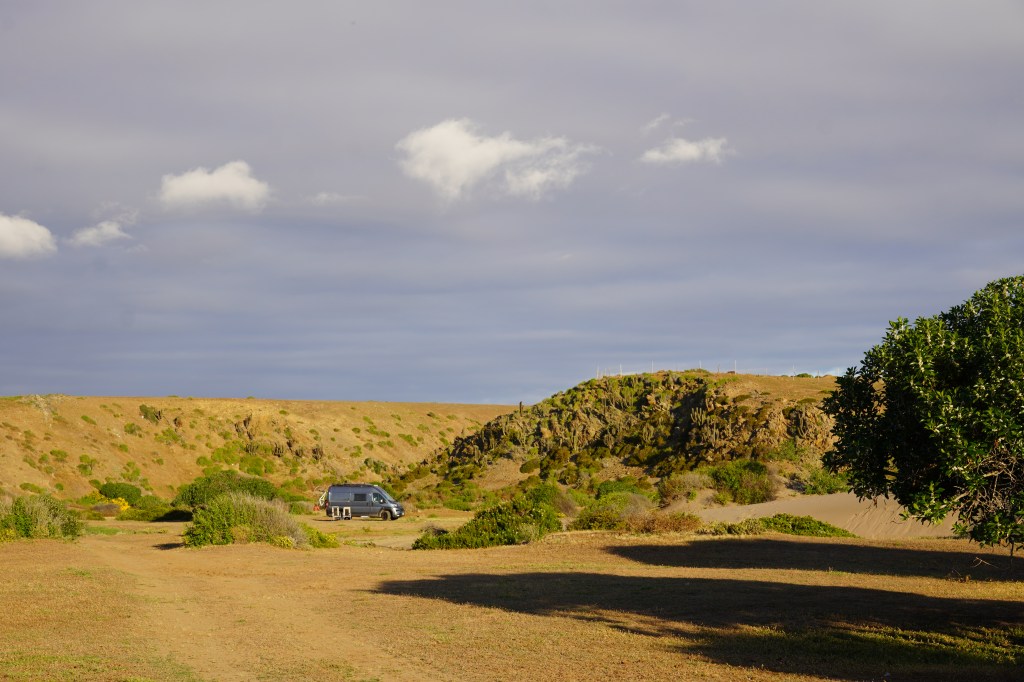
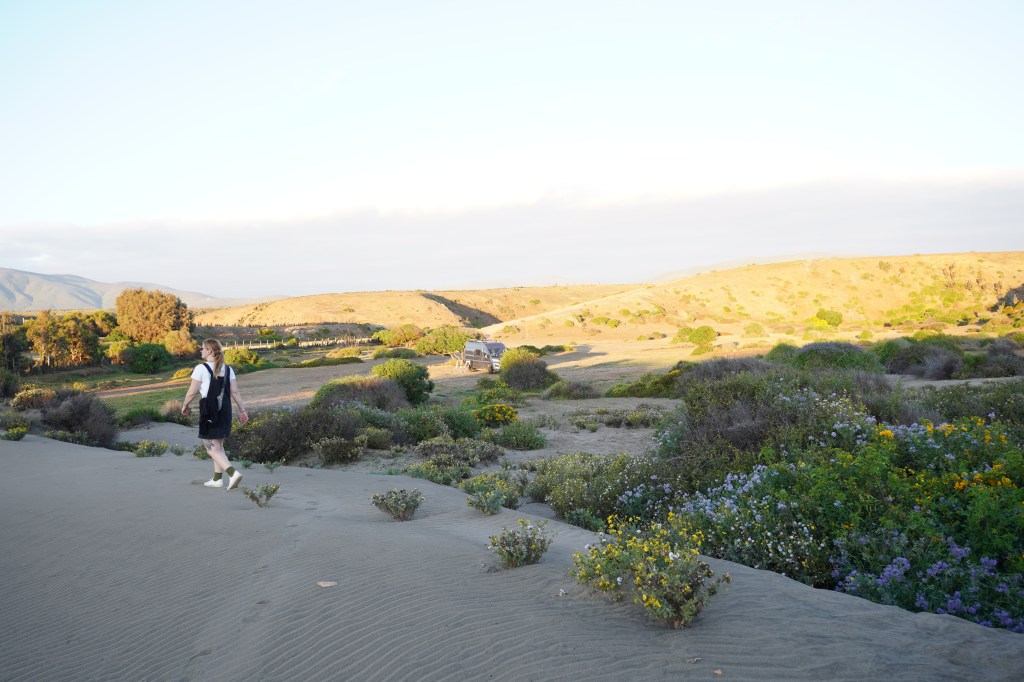
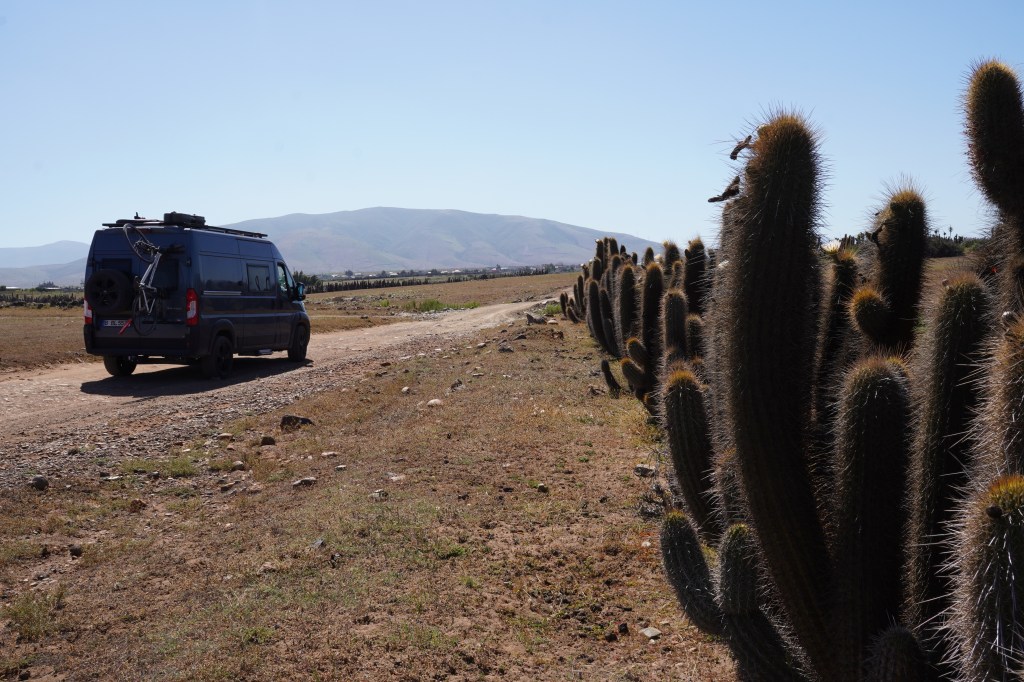
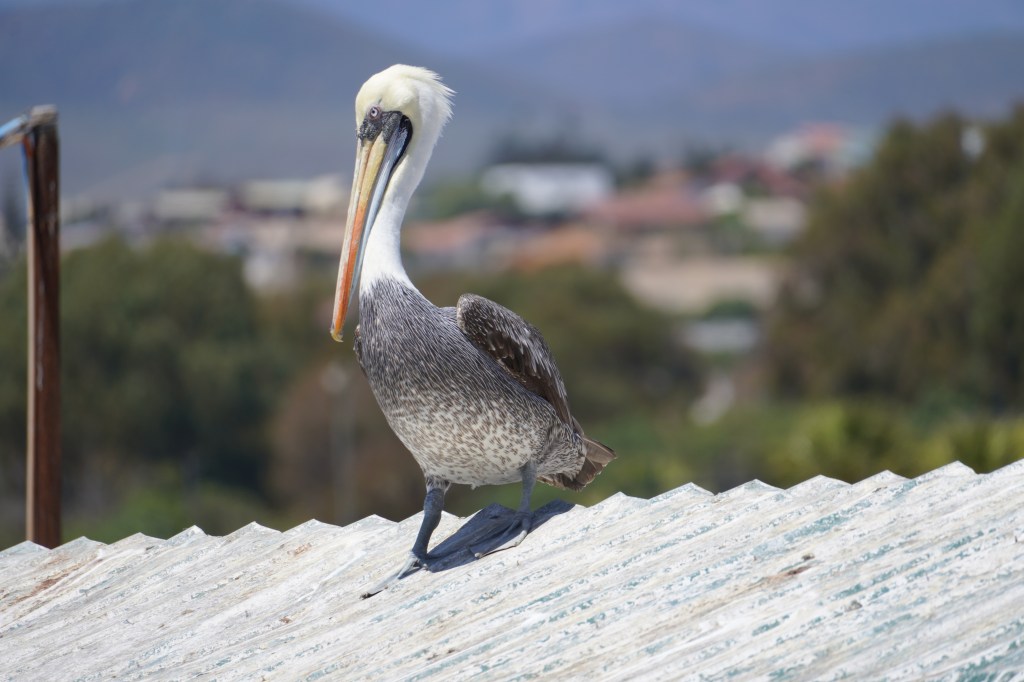
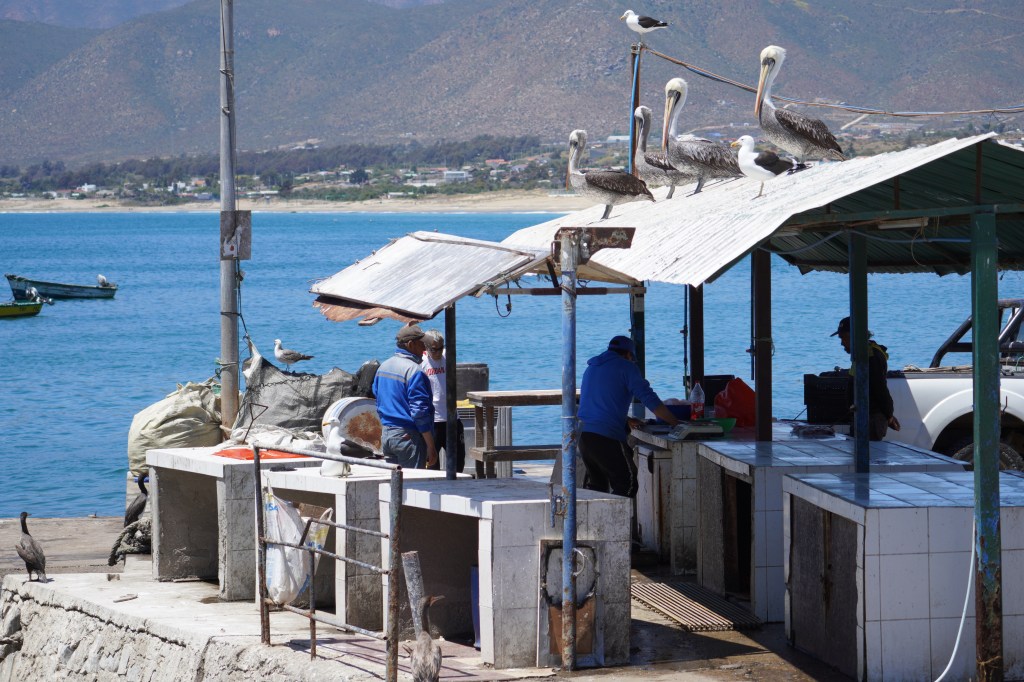
Back on the highway we wanted to make some kilometres and drove further North where we wanted to stay on a camp ground in Huntelauquen. When we arrived, we had to pass an official checkpoint to a protected area where the camp ground was and had to call it to find out that it was not yet open. But the lady at the gate told us we could stay for one night in the area, if we pay the entrance (which was less than the expected camp ground costs), so we paid and passed through the bad unpaved road into a small valley with a steep rocky path down to find a beautiful camp spot behind a massive sand dune. It was surreal and we made a little hike to the ocean and over the dune. The next morning we had to use the 4X4 to get back up the road and continued our way up North. In the little village Guanaquero we admired the huge pelicans that were waiting for free fish next to the fishermen and in Totoralillo we looked for the surfers in the water but without swell there was no surf.
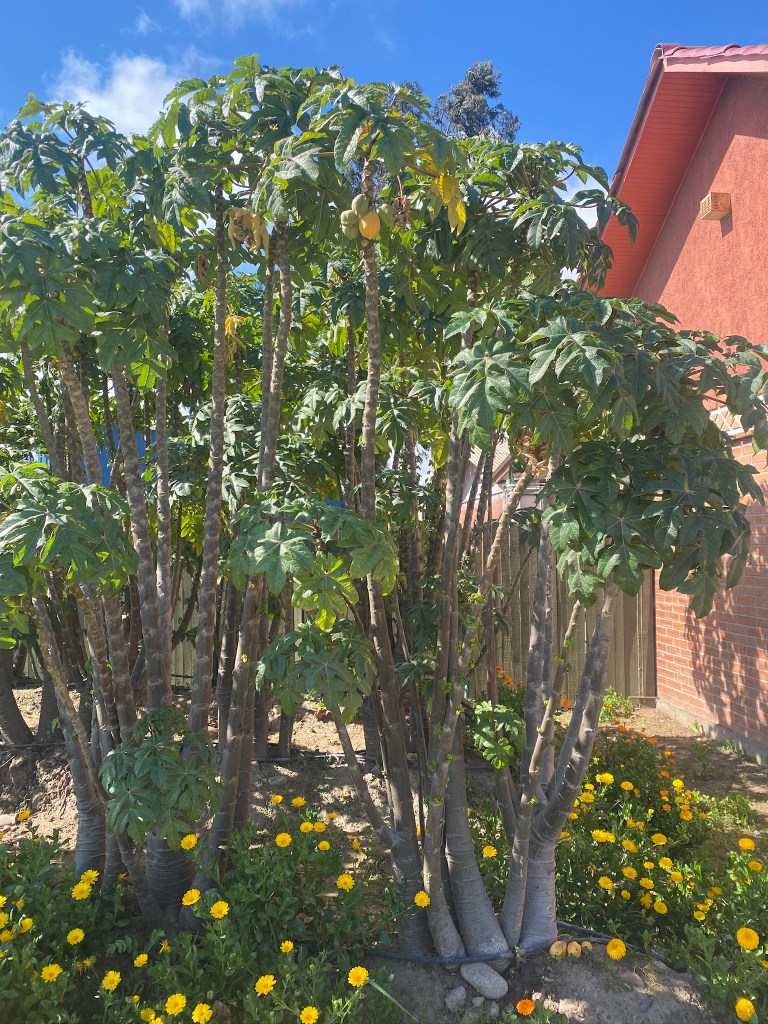
After passing through the bigger town of La Serena we made our way in the direction of the Elqui valley. On the way we stopped at a papaya shop. The area around La Serena is famous for an endemic type of Papaya. The guy in the shop explained us everything about this papaya and let us try Papaya honey and jam. We bought Papaya jam and juice and got two fresh papayas, that we wanted to eat raw…. As the guy explained us these papayas are more for cooking and less for eating raw….and after trying the raw ones nevertheless we agreed with him.
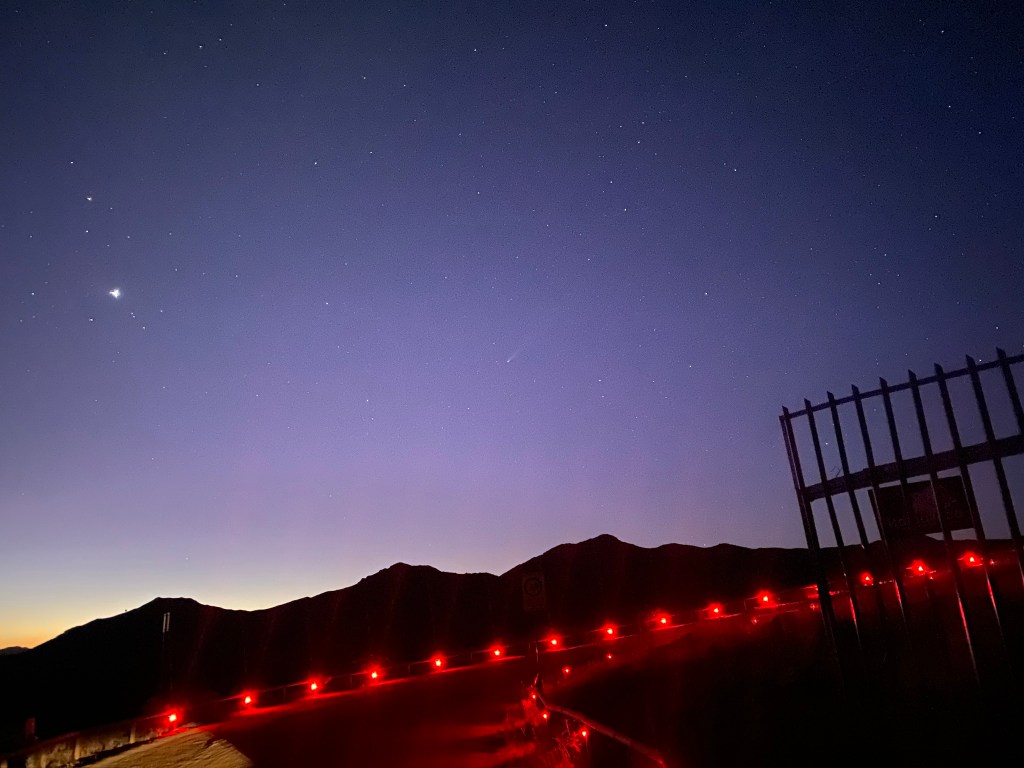
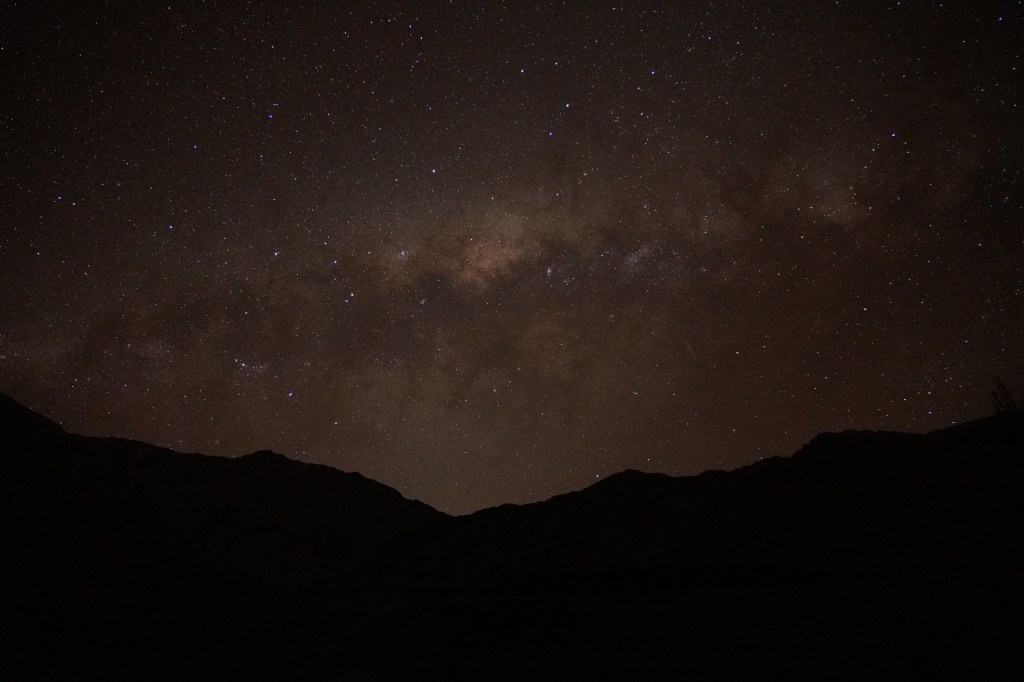
The Elqui valley is famous for stargazing, Wine and Pisco. There are a lot of tours you can make to watch the stars and also huge scientific observatories like the Cerro Tololo are in the Elqui valley. We booked a tour in the Mamalluca observatory and even while waiting at the entrance the security guy explained me about some meteor he was taking pictures of with his phone. The tour was sadly only in spanish but I tried to translate as much as I can for Linda and you could feel that the guide was really in to the topic! We could see Saturns rings, Venus and many more other star formations. After that we camped just in front of the of the observatory and tried to make some nice pictures of the stars.
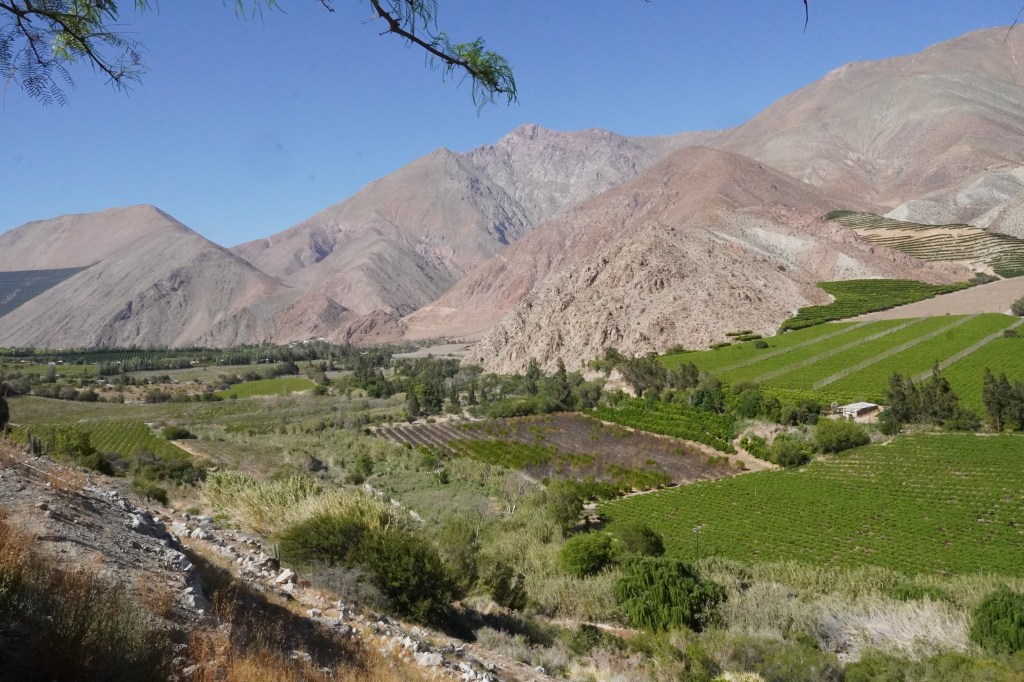
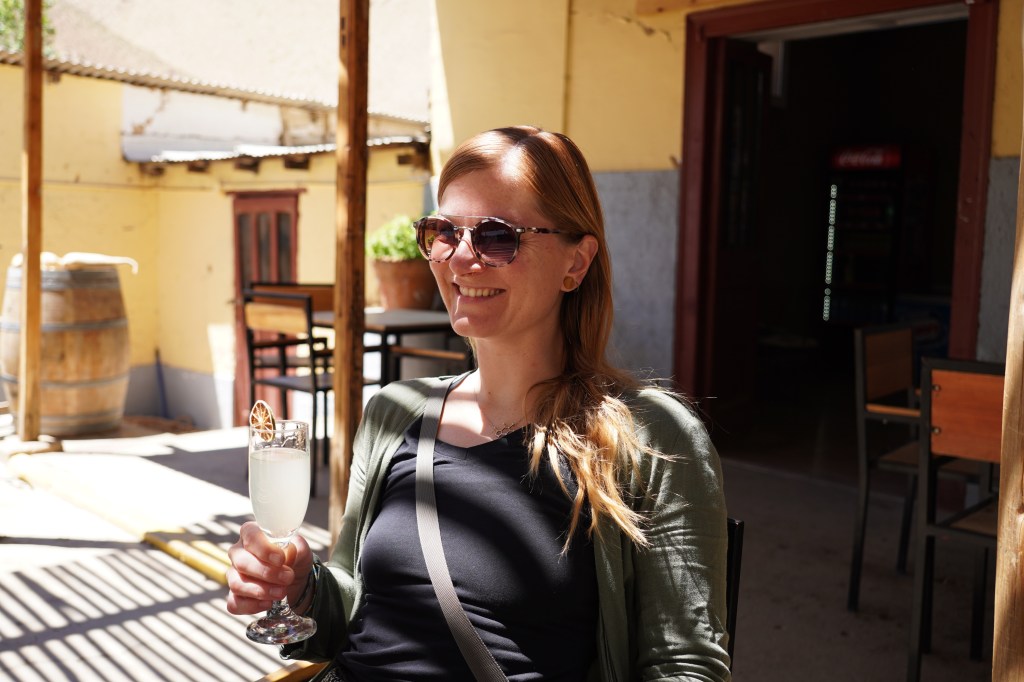
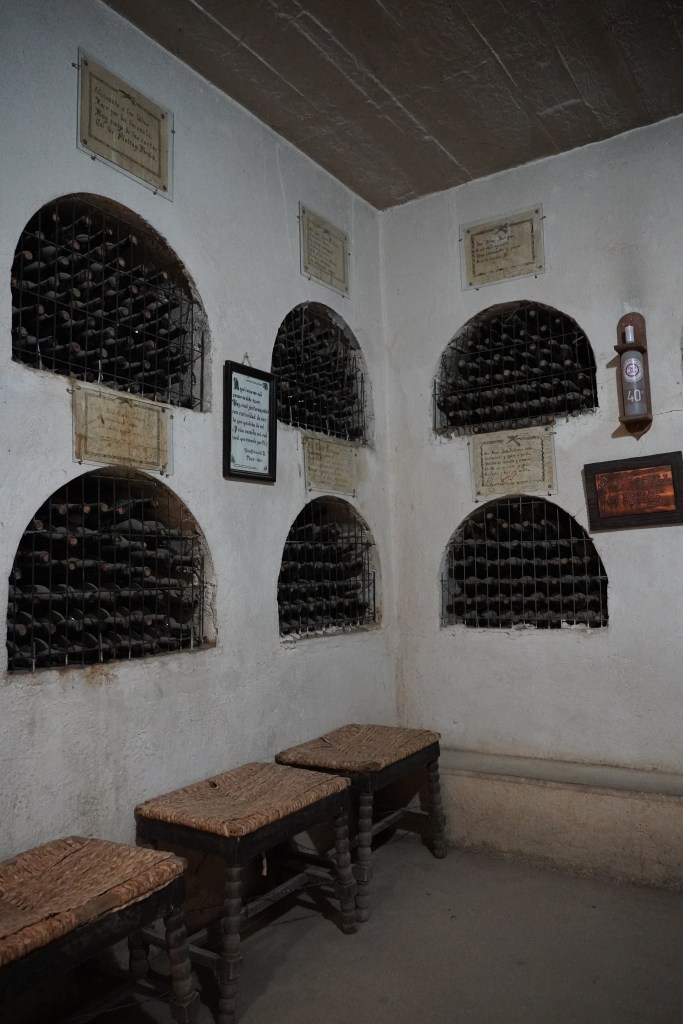
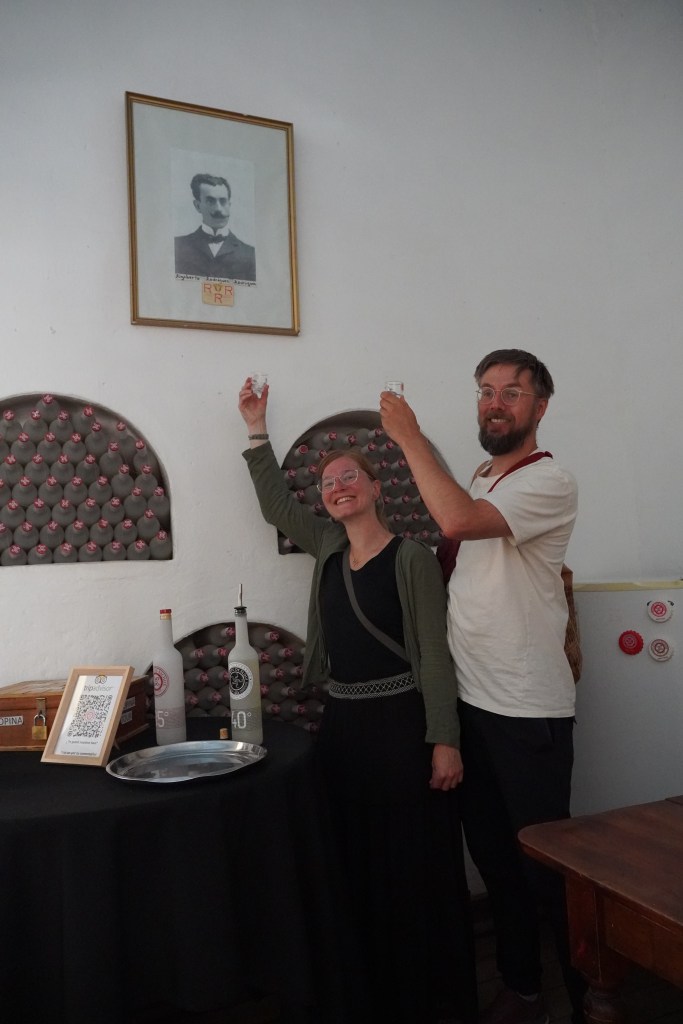
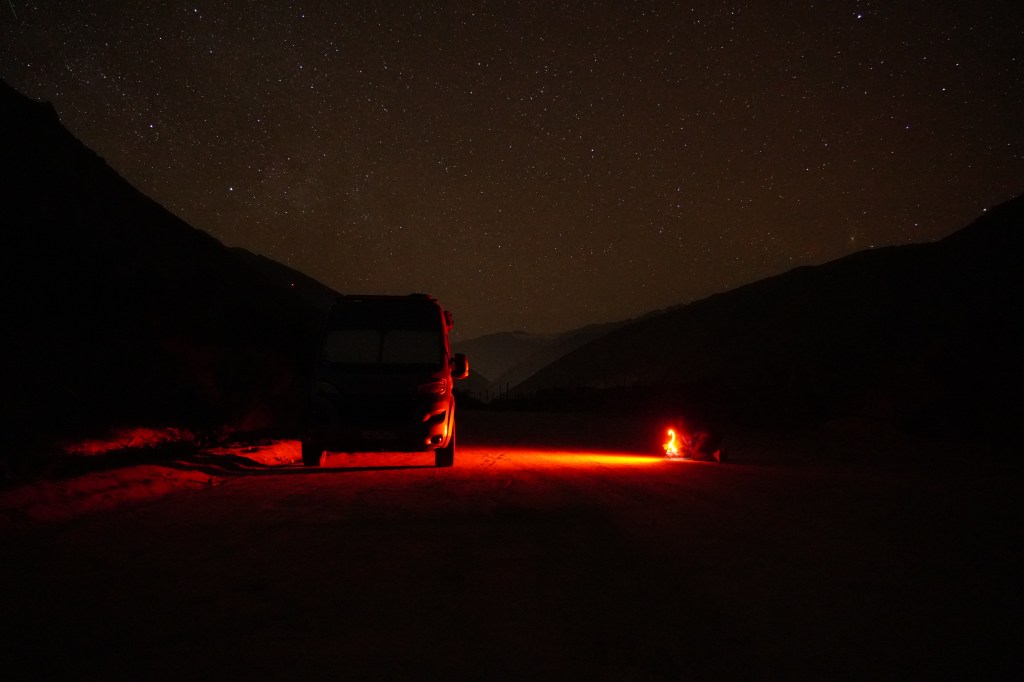
The next day we slowly drove into a side valley of the elqui valley. It was really beautiful and crazy to see that all the wine fields were just flat at the bottom of the valley, while the steep sides of the mountains were completely free. After dropping off our dirty laundry at a laundry place (that was just a wooden door) we visited the Pisco distillery Los niches. It is the oldest Pisco destillery of Chile and for just 3€ we got a comprehensive tour of the distillery. It was hands down one of the best tours that I ever got from a beverage facility and after an included tasting and a free shot glass we finished by buying some Pisco and having a nice conversation with the employees of this facility. From there we drove the street in the valley until the end and had another incredible night with a lot of stars to be seen.

The next morning we tried to pick up the laundry, but the lovely lady told us over WhatsApp that she did not get any dirty laundry at all. After we had already said goodbye to half of our clothes (of course we did not get any receipt), she wrote that all is fine and the clothes are ready. I did not care about her sudden change of information and the clothes were the cleanest and best smelling we had gotten so far.
From the Elqui valley we continued north and wanted to stay again close to the ocean. In the village of Freirina we stocked up on food and baked goods after an old lady explained us that we were lucky to buy at the best bakery ever and that we had to try the rolled bread. The bread was really not bad…. but as everywhere South America the bread is far far far away from german standard. From the we made our way to a little paved coastal road that was close to the beach. At some point we decided to leave the road to drive directly on the beach for the night. The drop from road to beach was pretty deep so I chose a different line with a little deeper sand. With some speed we made it to the rocky part and enjoyed a beautiful evening and next morning at the beach. Linda even went swimming. When we got ready to start driving again, I walked all the different path back to the road. The first one was mostly used and very firm, but with a big step to the road, that I thought was too big for Rosi, the second was the one we took the evening before, but uphill I was afraid we get stuck, especially because we already dug deeper into the sand. So I choose a new way back to the road over the sand. Linda was driving and just after 20 meter on this way Rosi dug herself deep in the sand…
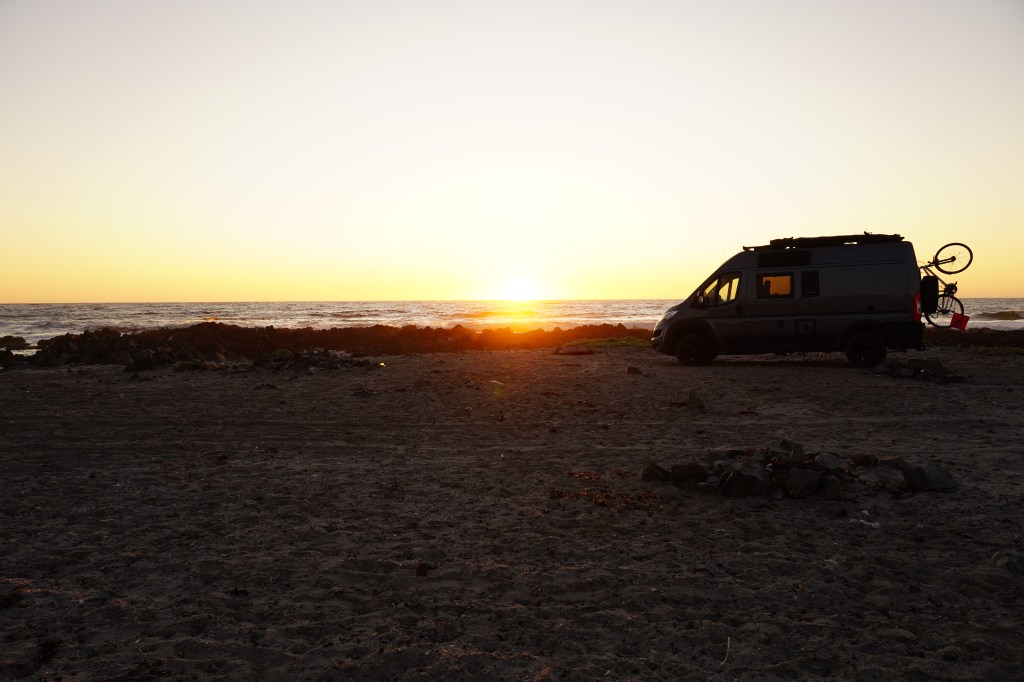
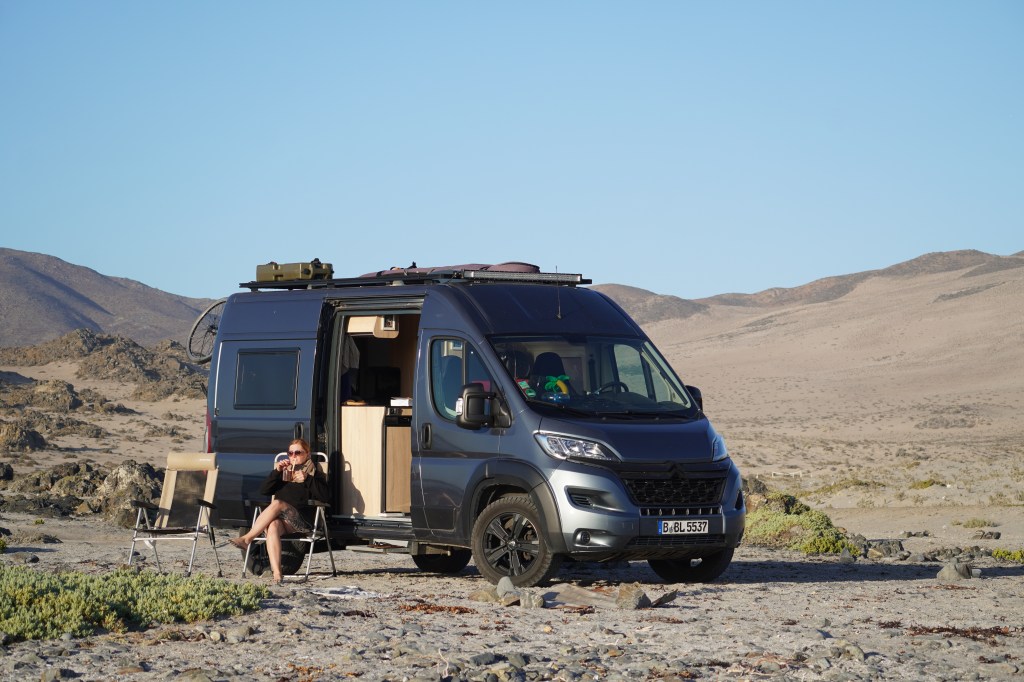
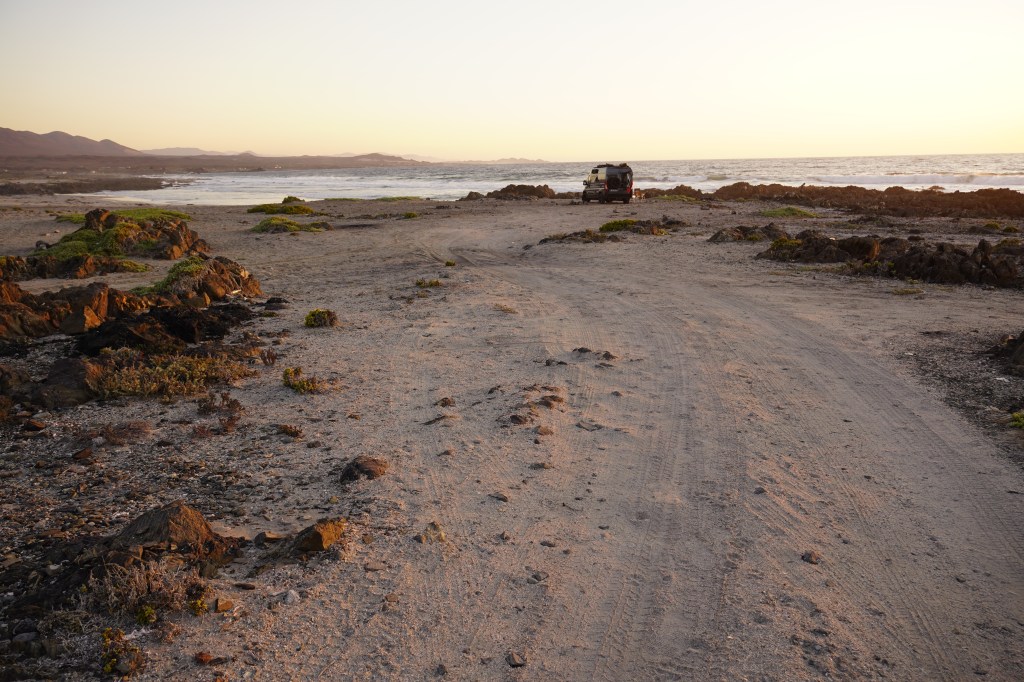
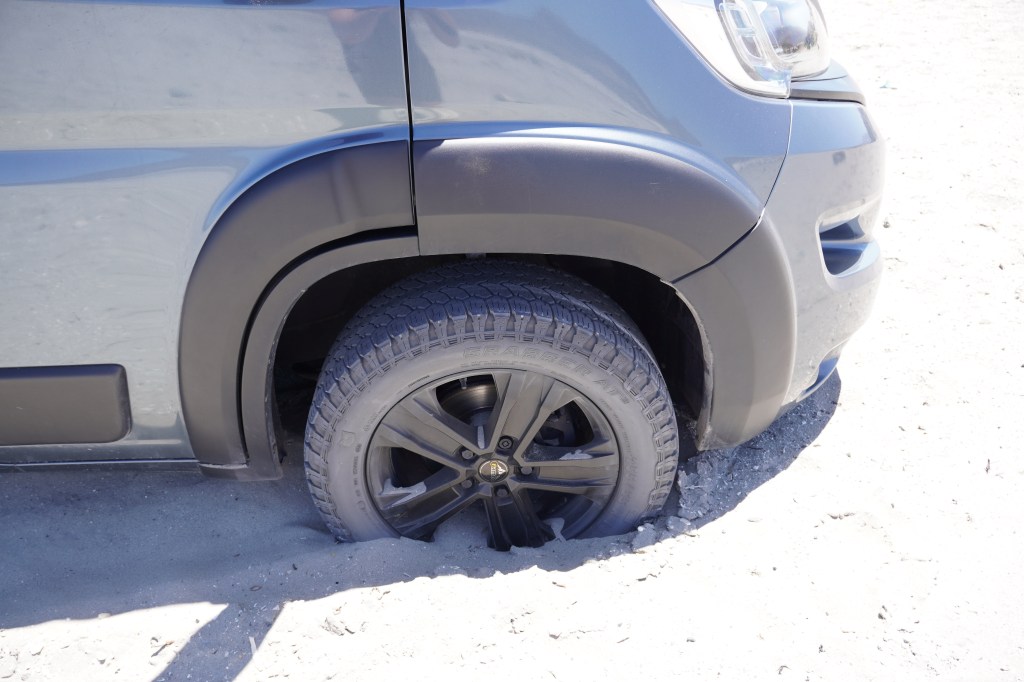
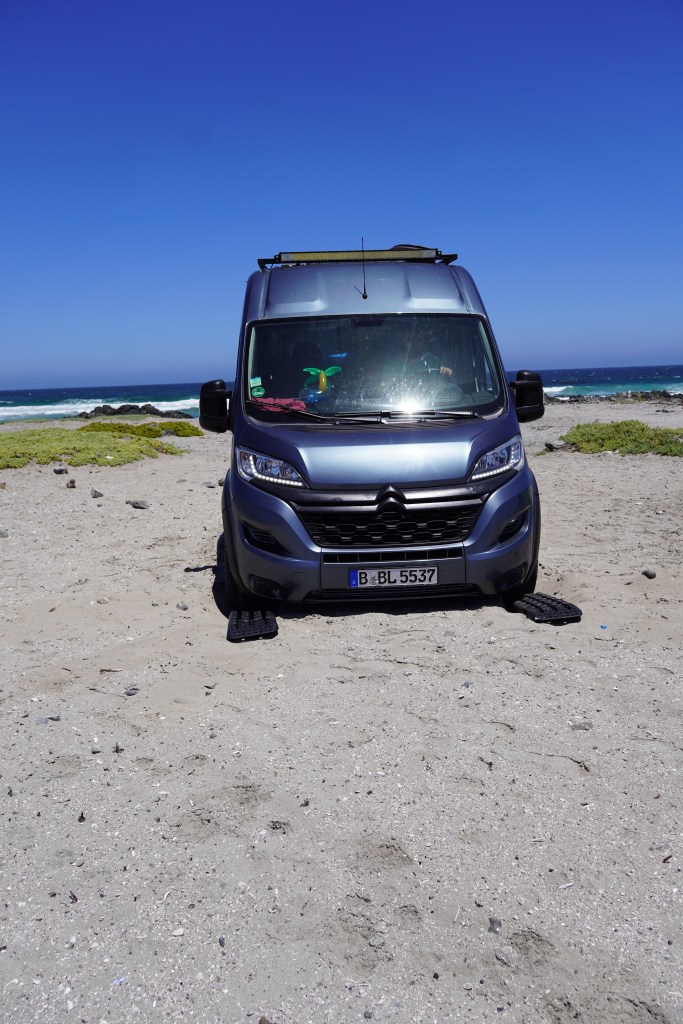
There we were 30m away from the perfectly paved road but stuck on the beach. Rosis 4×4 is a visco clutch, that means that the back wheels only engage when the front wheels slip. Sand seems to give enough resistance that the back wheels did not engage. So we started digging and used the sand trays, that we carry with us, to put under the front wheels. I pushed the gas and Rosi moved…. for about 2 meters. At the same time a tiny little chess figure flew out of the sand. Ever since this little chess figure is glued to our dashboard and is our lucky charm. We touch it before every difficult road section and it already has a greasy head. So we had to dig again after 2 meter, and again and again and again. After a while we built a way of stones after the sand tracks and that helped a lot. After 30 min we managed to be back on the road and I was relieved and happy and proud, that we both kept calm. Looking back at it we should have taken one of the other two ways and I also learned that we forgot one very important part to get out of the sand: We did not let air out of the wheels, which is normally the first thing you do. But nevertheless we managed to get out on our own and that felt good.
 höme
höme 
Leave a comment