Chiloé is a mystical island in the south of Chile, known for its primeval rainforests and the distinctive architecture of its wooden churches. The island is marked by a unique culture and folklore that includes legends of ghosts and sea creatures. Visitors also appreciate the local culinary specialties. It sounded promising and was our destination for today. One could have also taken the Carretera Austral further north, but even there, three short ferries would have been necessary. We decided to take the route via the island.
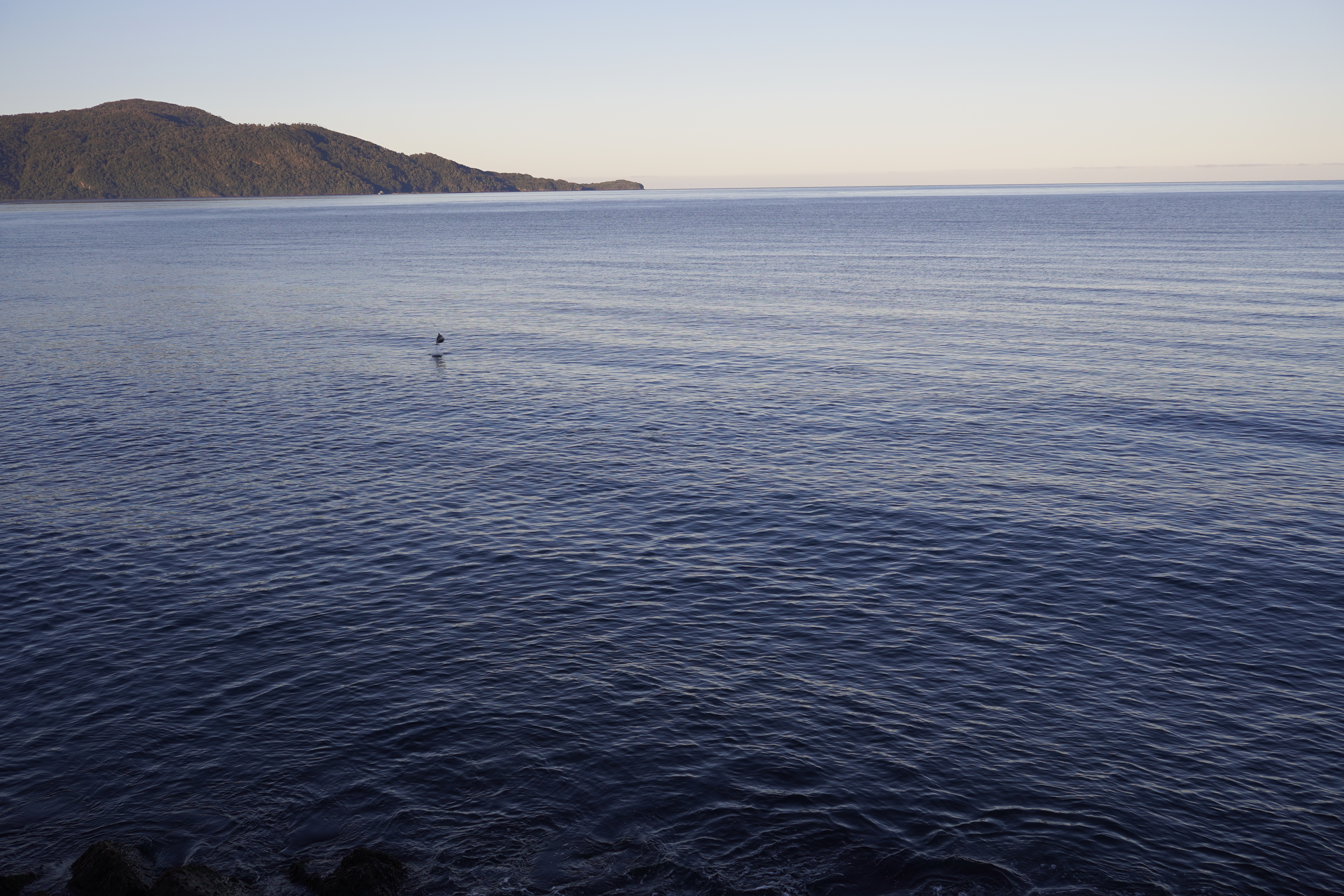
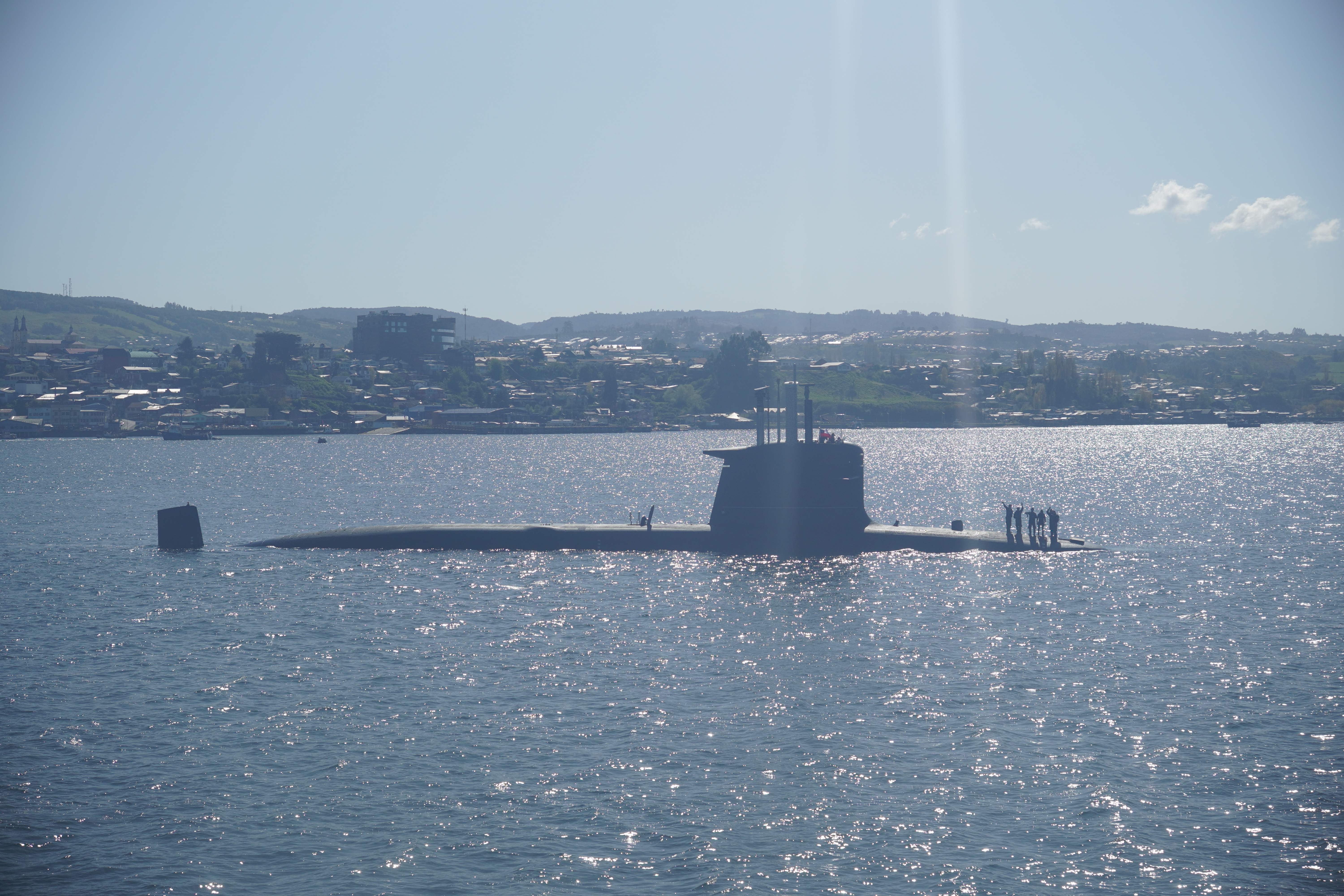
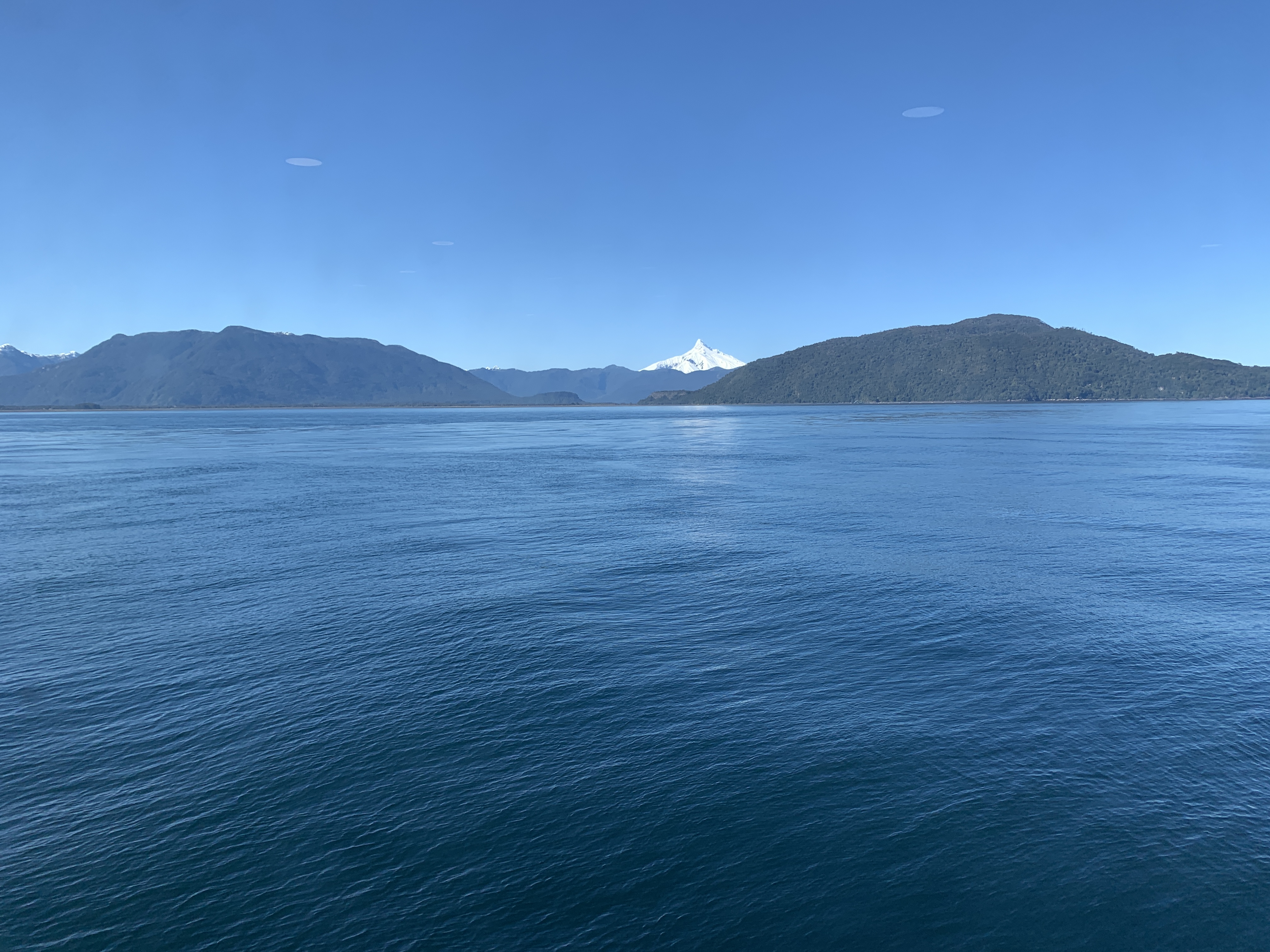
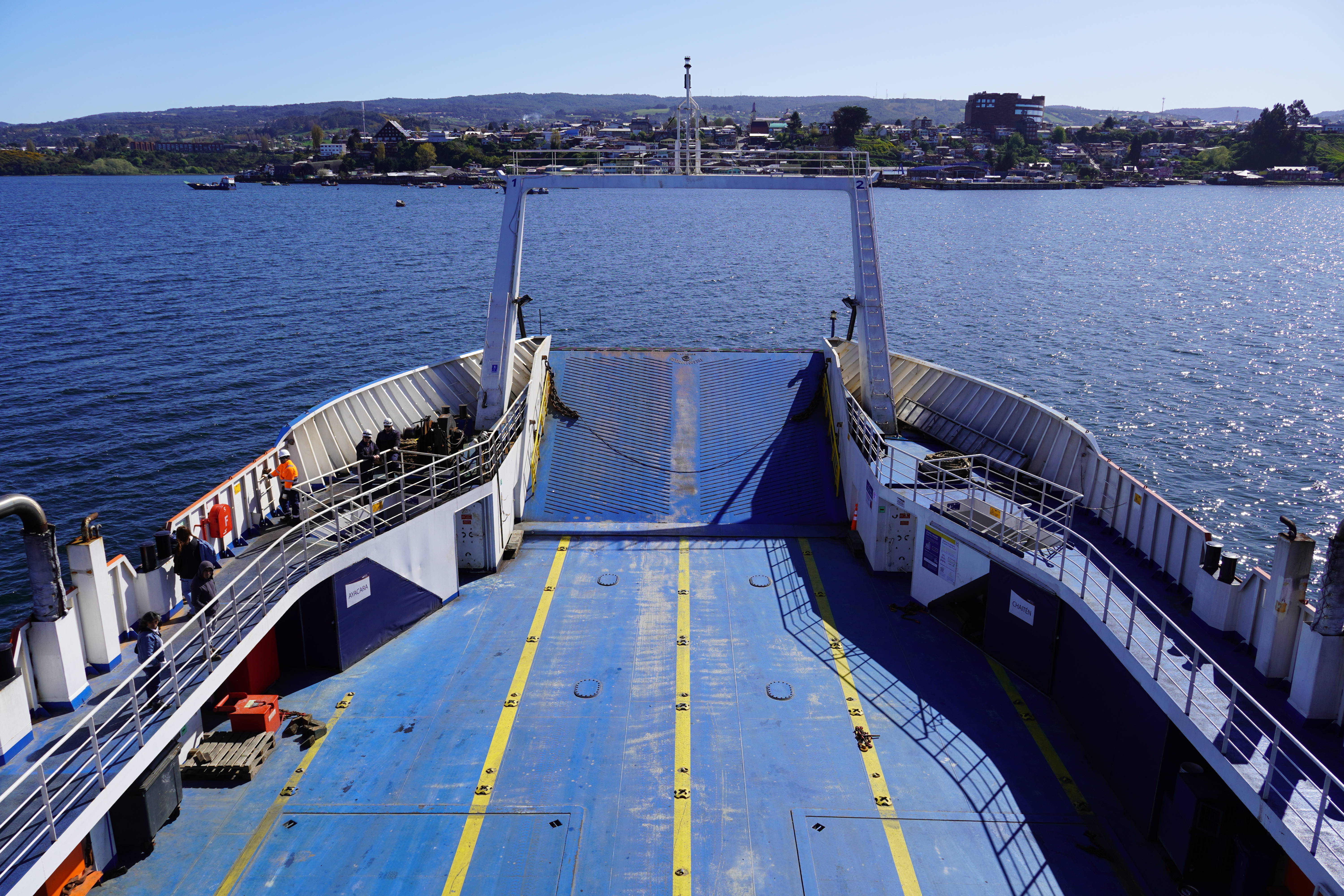
As German as one can be, we were at the ferry terminal in Chäitén two hours before departure. We slept very close to the ferry, got up, and set off. It was only a few minutes by car. On the online ticket it was mentioned that one should be there two hours prior. The ferry was set to depart at 10 a.m. It was 7:59 a.m. Apart from us and a three-member dog gang, no one was there. We only spotted one staff member in a small 1m² cabin who told us which line we were allowed to wait in. Not even the waiting hall was open, where there was a café and the toilets. Oh well, we’re self-sufficient. We had coffee from the French press at the terminal with a view of the Pacific in the early morning sunlight. The sky and water were blue. Behind us, the snow-covered volcanoes. I was still tired, but the caffeine was starting to take effect. While wandering around, I discovered we weren’t entirely alone. Down in the water, a group of 5-6 dolphins was frolicking. They were very close, leaping out of the water. It felt truly special, like a dream. Too beautiful to be true. Like so much on this trip. Much is only grasped later, like right now as I write this blog post, or when Björn and I consciously talk about what we experienced. The beautiful landscapes, animals, and experiences each day can sometimes be so overwhelming that the brain can barely process it. But the dolphins went straight to the heart. An incredibly wonderful moment. The dolphins disappeared, and the ferry terminal began to fill up with cars and people. On the horizon, the ferry approached. Time flew by. As it docked, many heavily loaded trucks came off the ferry. The dog gang had a clear hierarchy. One dog was the boss. For certain trucks, he decided they would all run barking alongside the trucks to bite the tires. They also repeatedly boarded the ferry and checked the situation. At 9:40, we were allowed onto the ferry. I wasn’t particularly looking forward to the five-hour ferry ride through the Pacific (which lasted more than six hours), but at least there was Wi-Fi, and we could catch up a bit – we had been almost without a good network for weeks and thus without internet. So, we downloaded maps and podcasts. For breakfast, we had coconut chips and empanadas. I felt sick. Probably a mix of the not-so-good empanadas from the ship and the strong waves. Again, I thought it was good that we hadn’t traveled from Hamburg to South America on a cargo ship for four weeks with Rosi. The ferry ride became calmer as we navigated past the islands. Around 4:15 p.m., we reached the green, blooming mainland of Chiloé in Castro. The Chiloé archipelago consists of about 40 islands. Many of the islands are inhabited and only accessible by boat. The largest and most well-known is Isla Grande de Chiloé, where we now were. We were greeted by a submarine along with its waving crew.
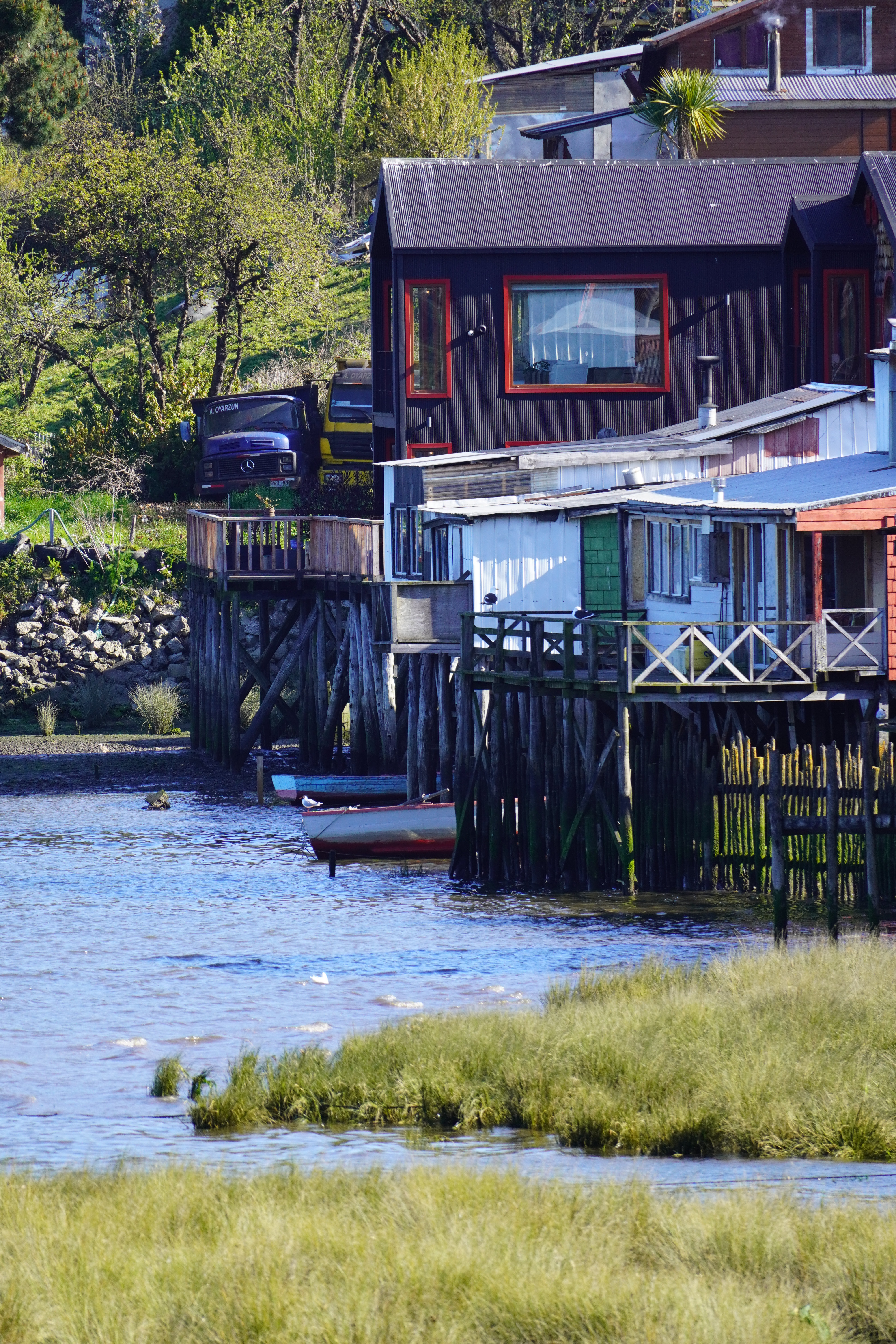
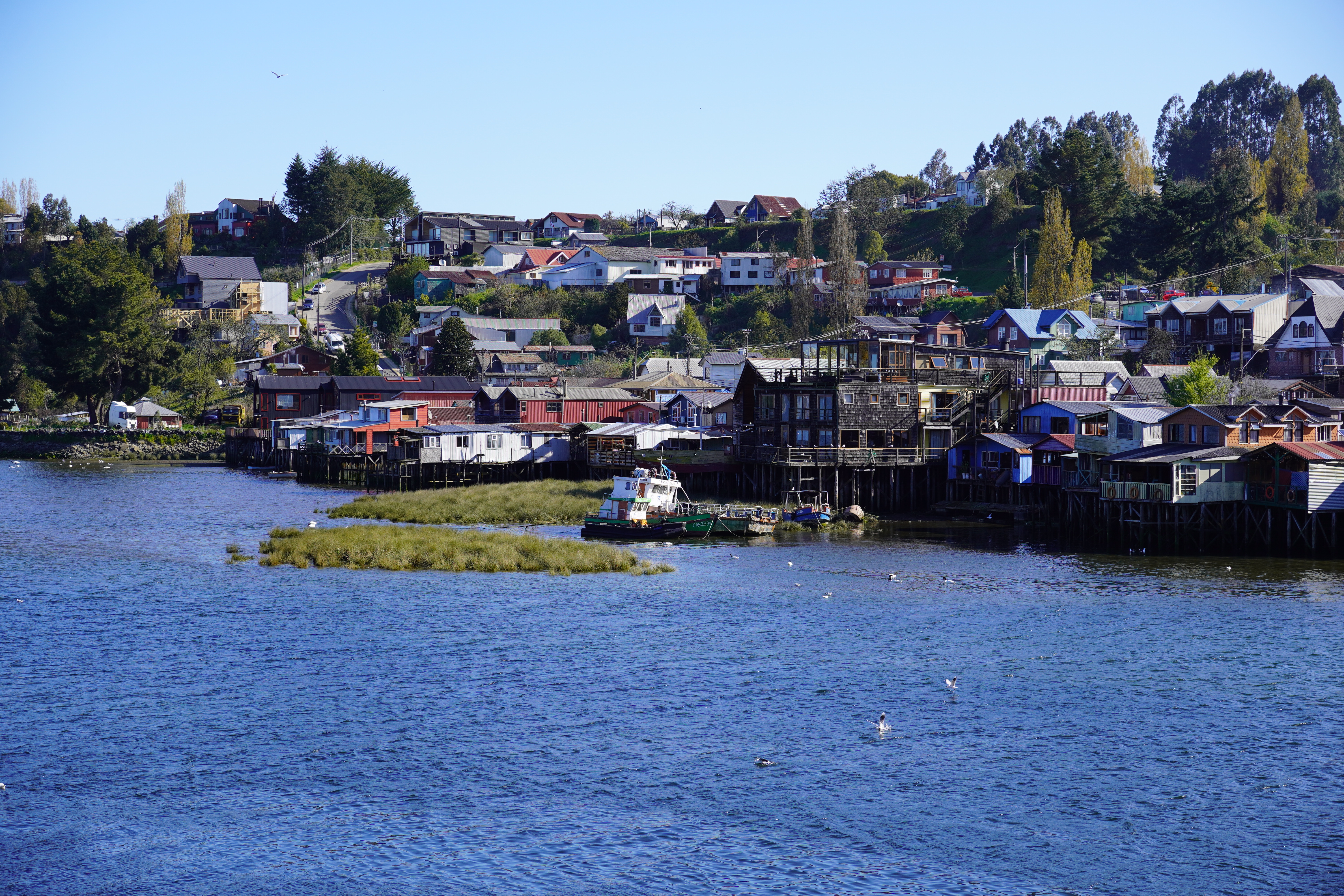
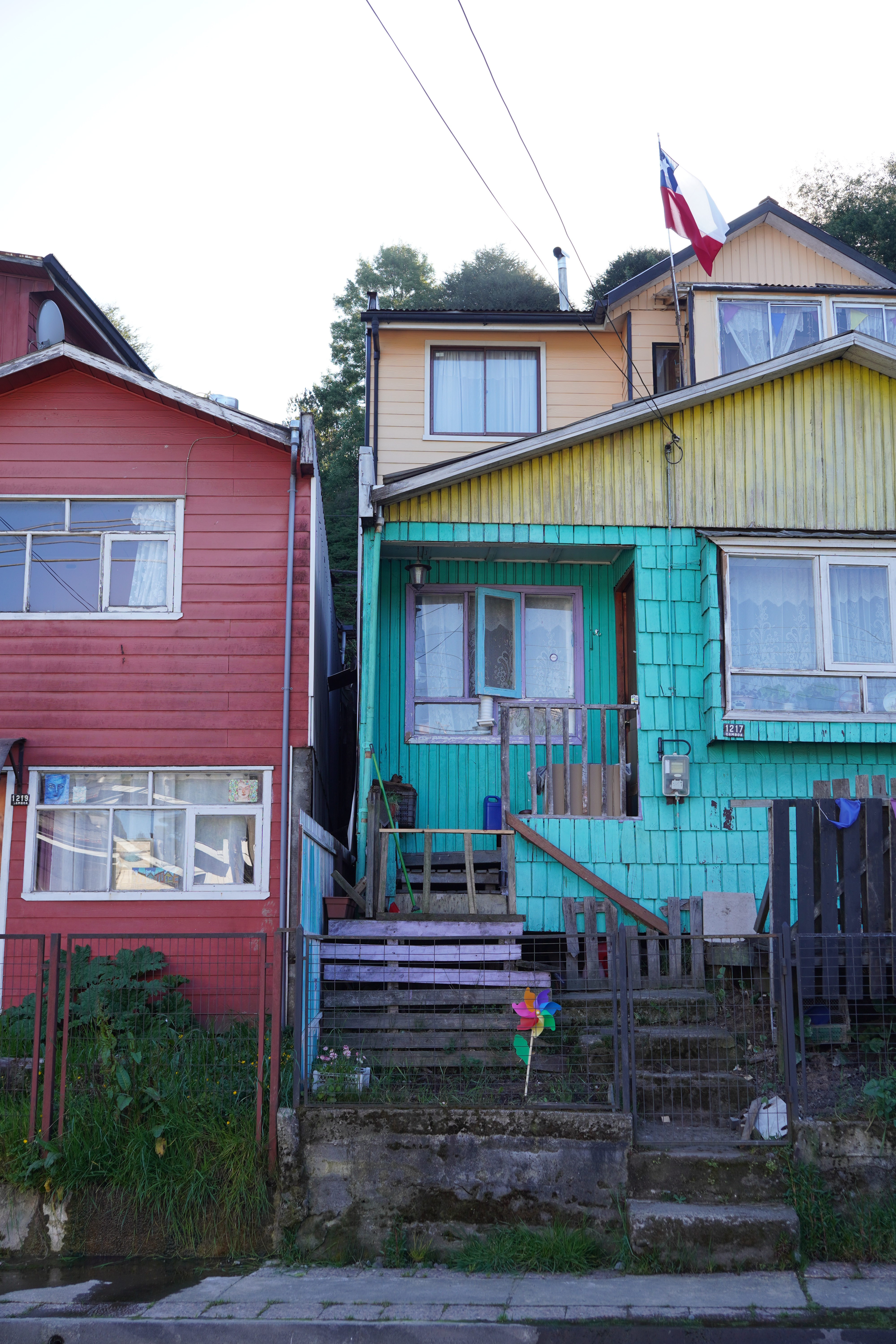
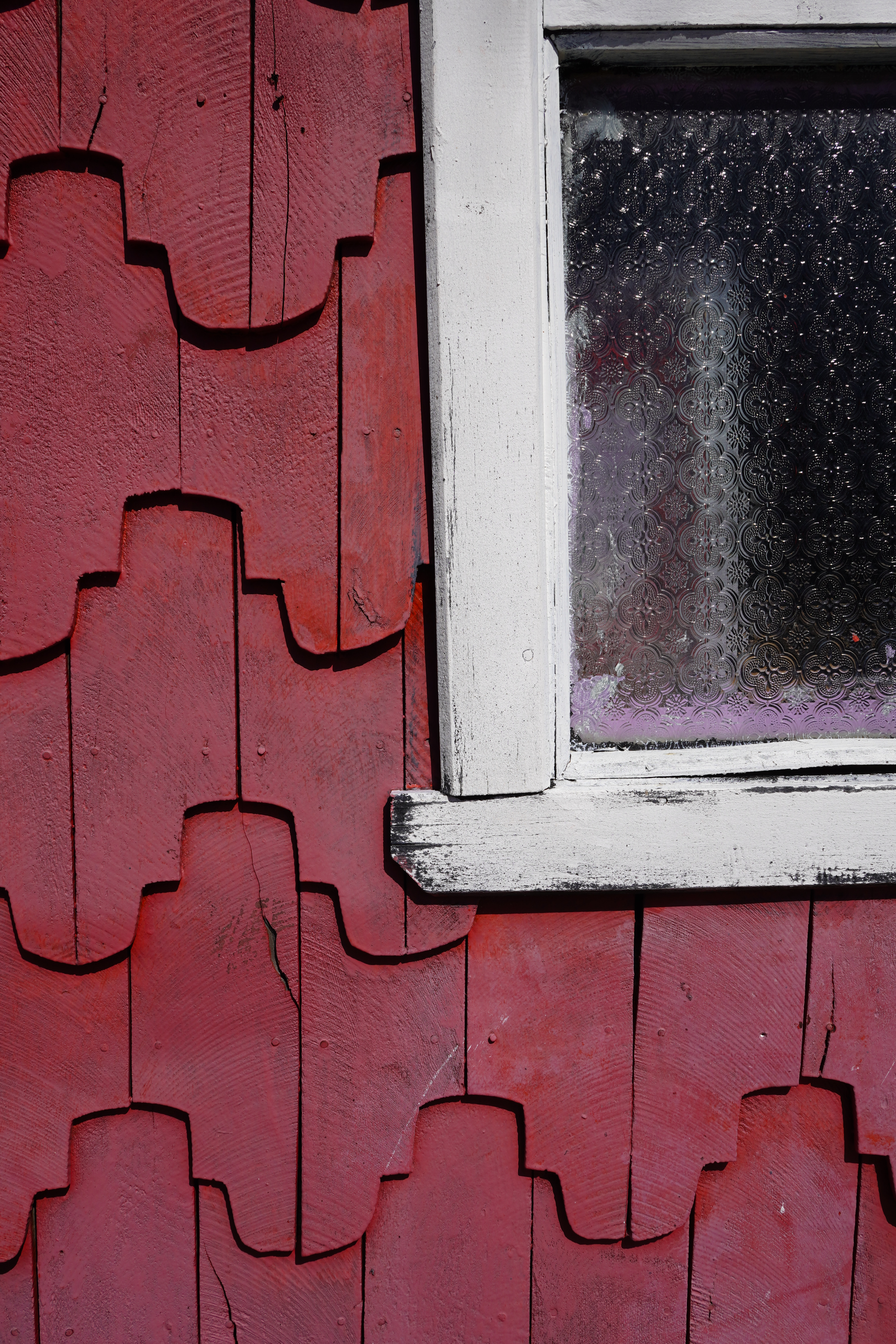
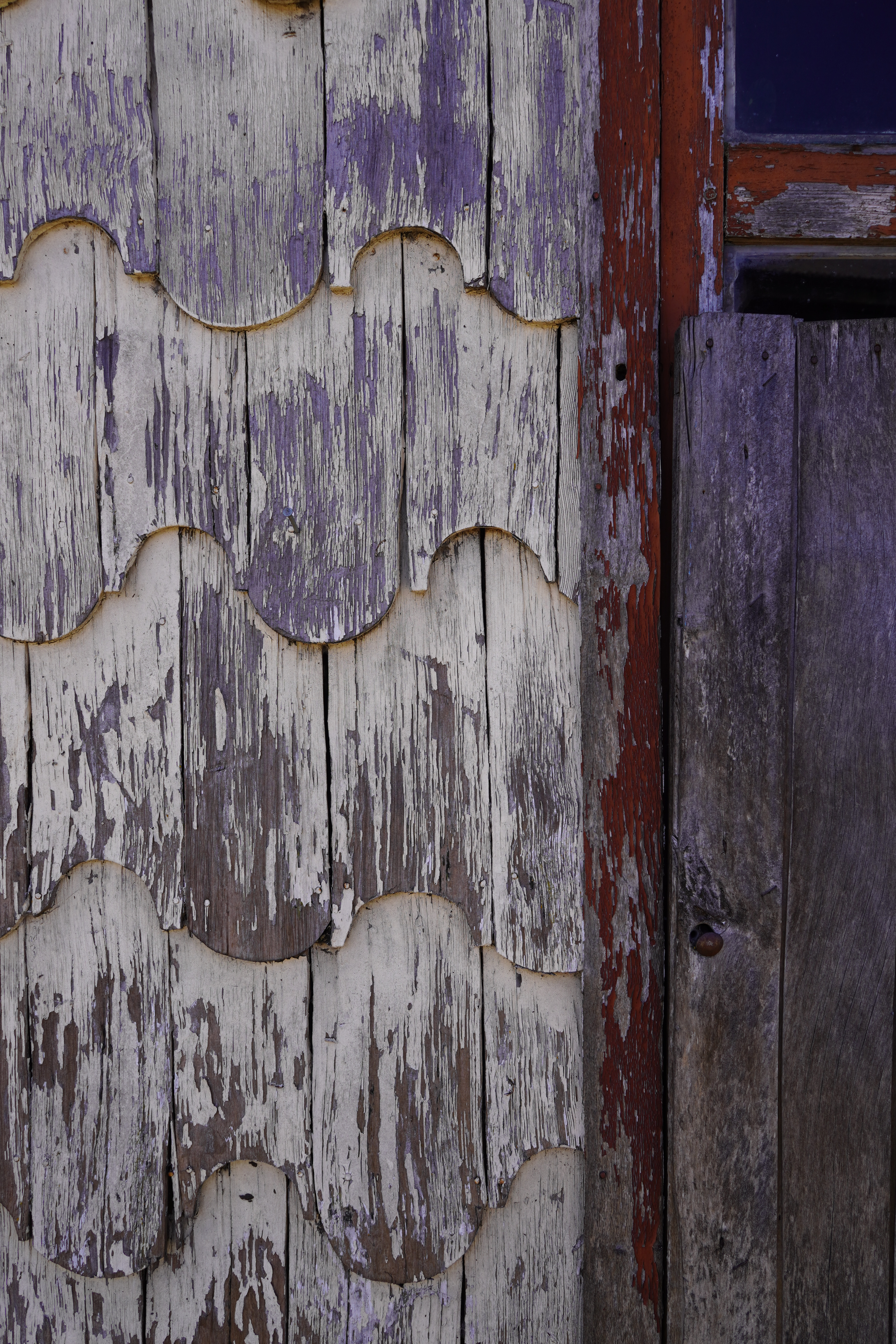
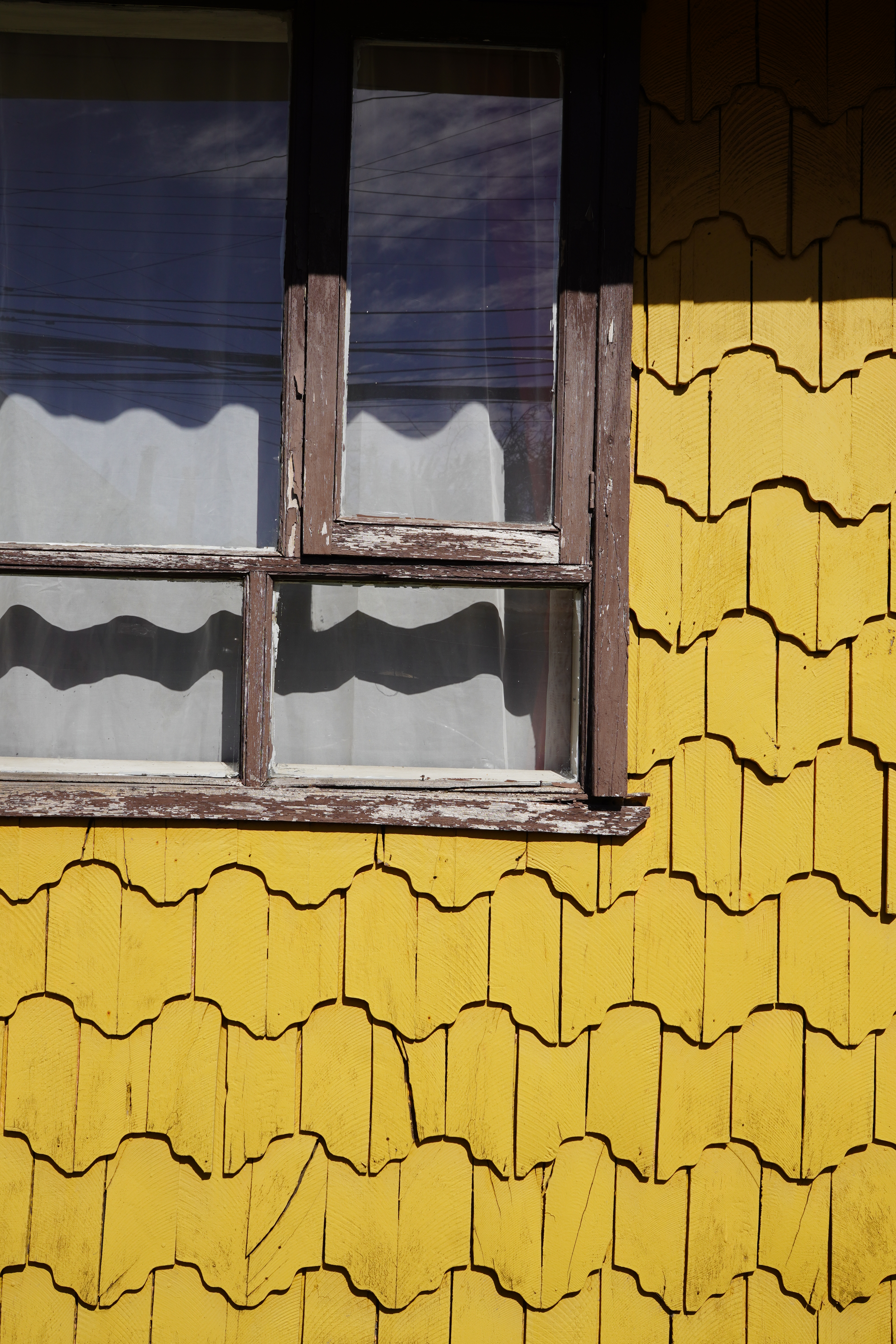
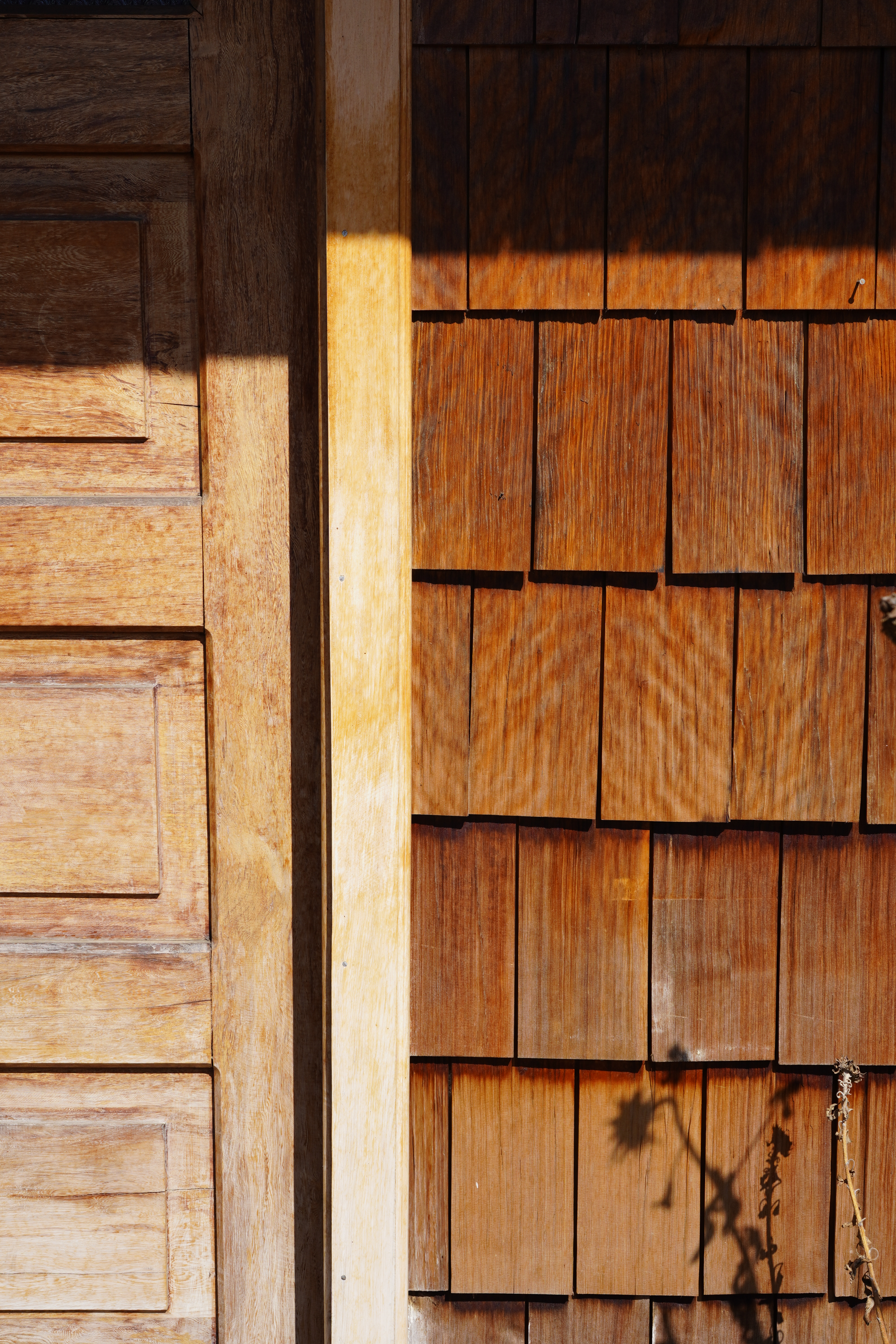
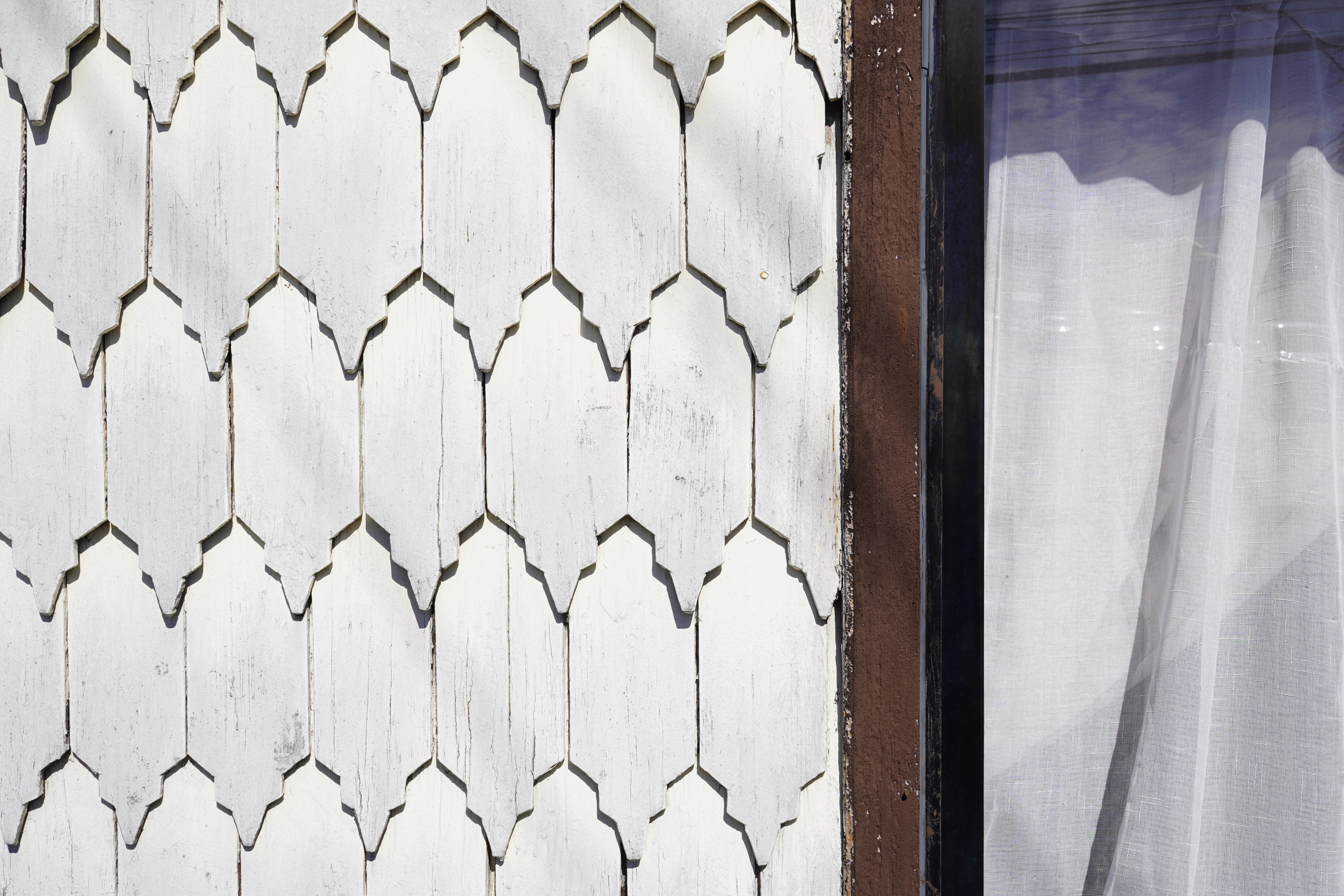
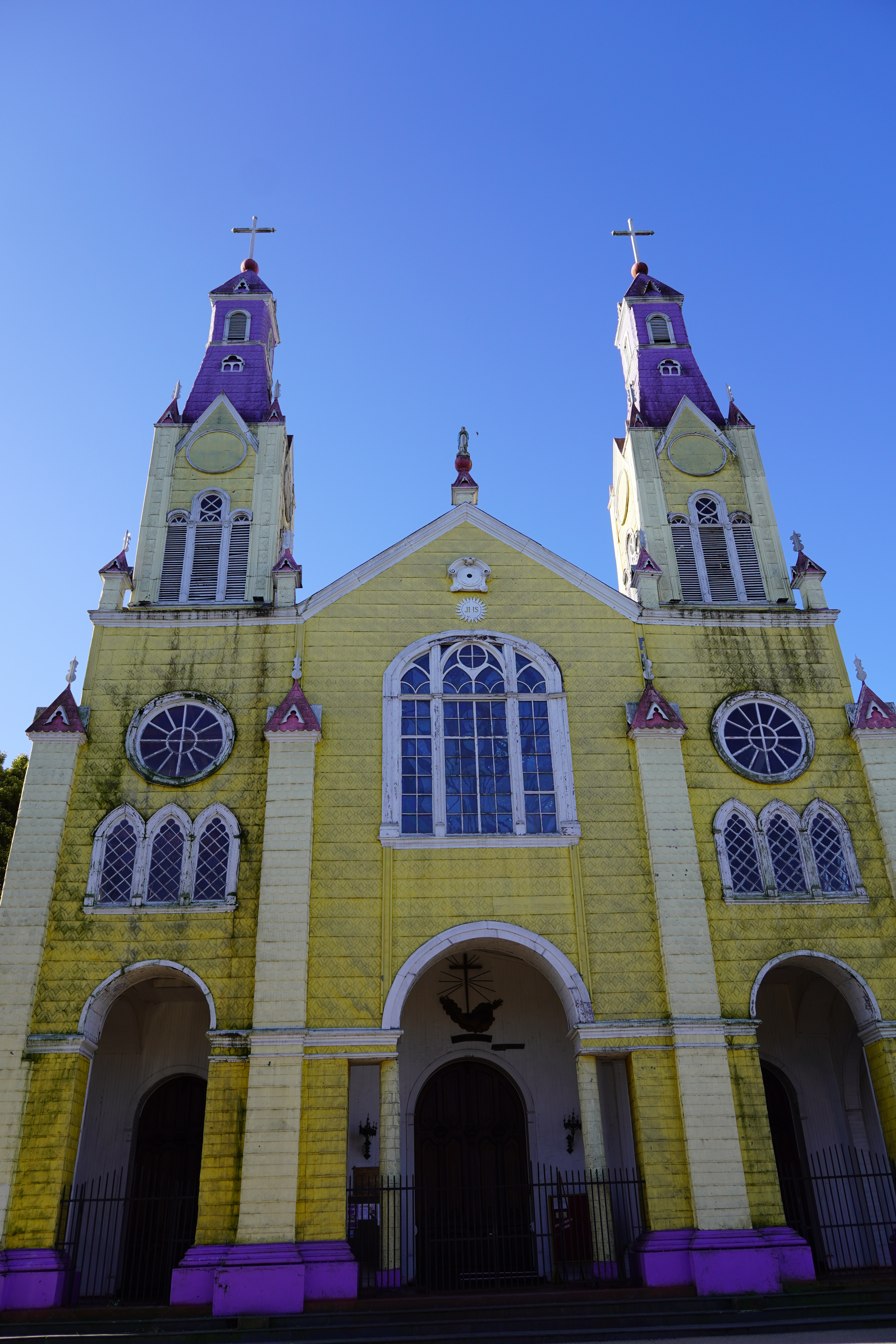
Since the “Museo de Arte Moderno” was unfortunately closed, even though Google said it was open, we explored the town of Cästro as best we could. We parked Rosi in a place we felt was safe (we found the town not quite so safe) and visited the famous traditional palafito houses, marveled at the colourful shingled houses, and the Iglesia de San Francisco (a worn-out yellow wooden church). Almost all churches on the island are UNESCO World Heritage Sites and are made of wood.
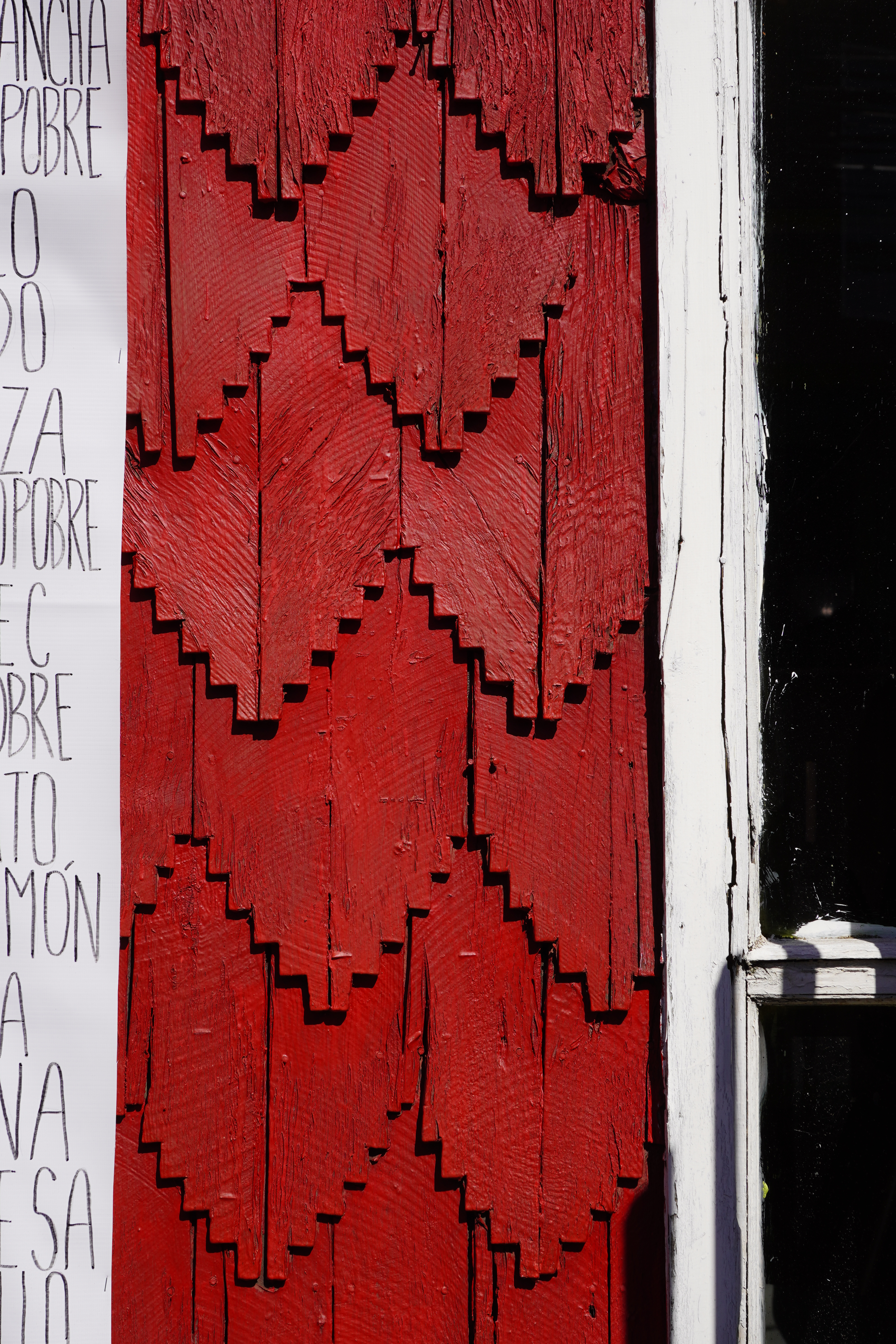
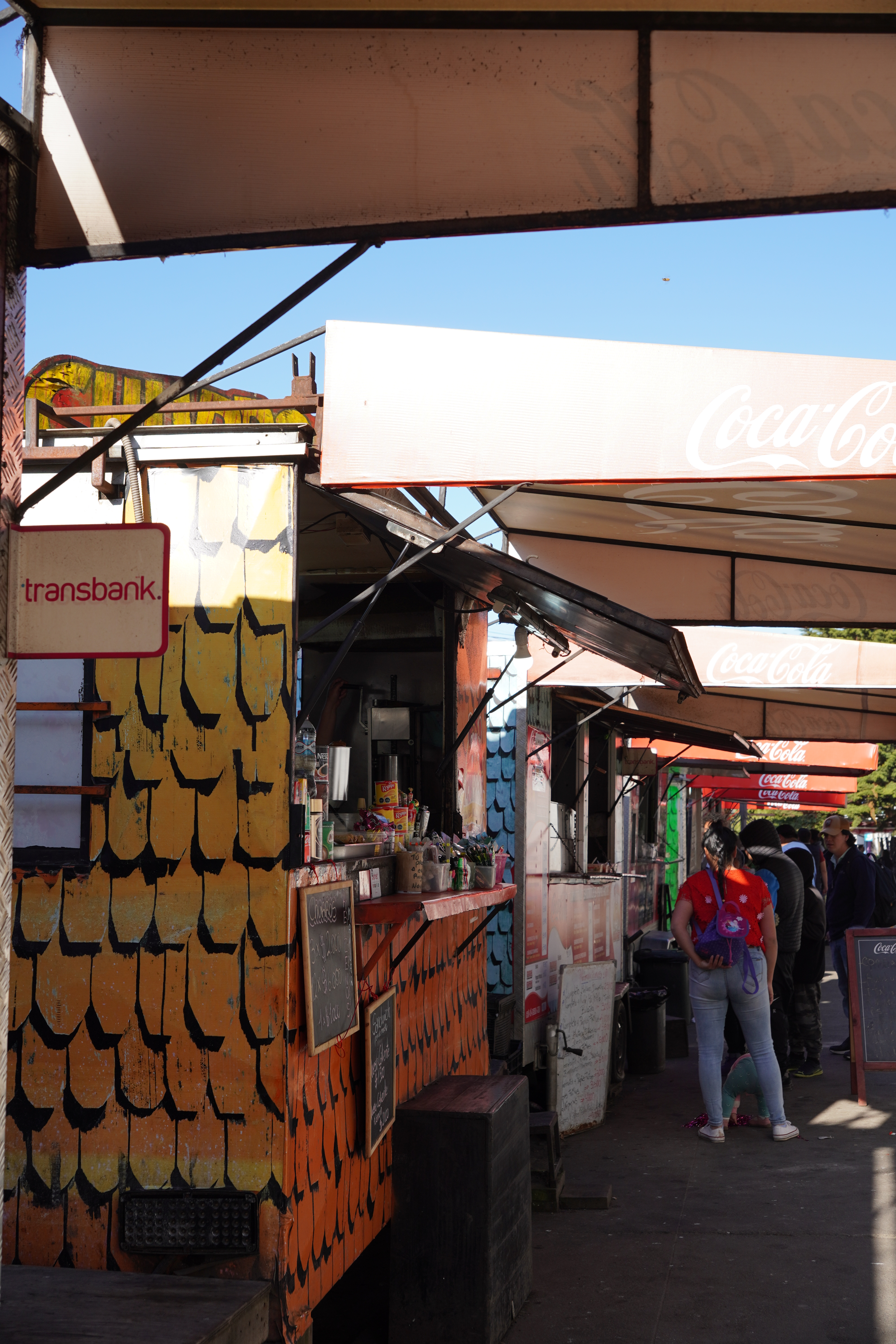
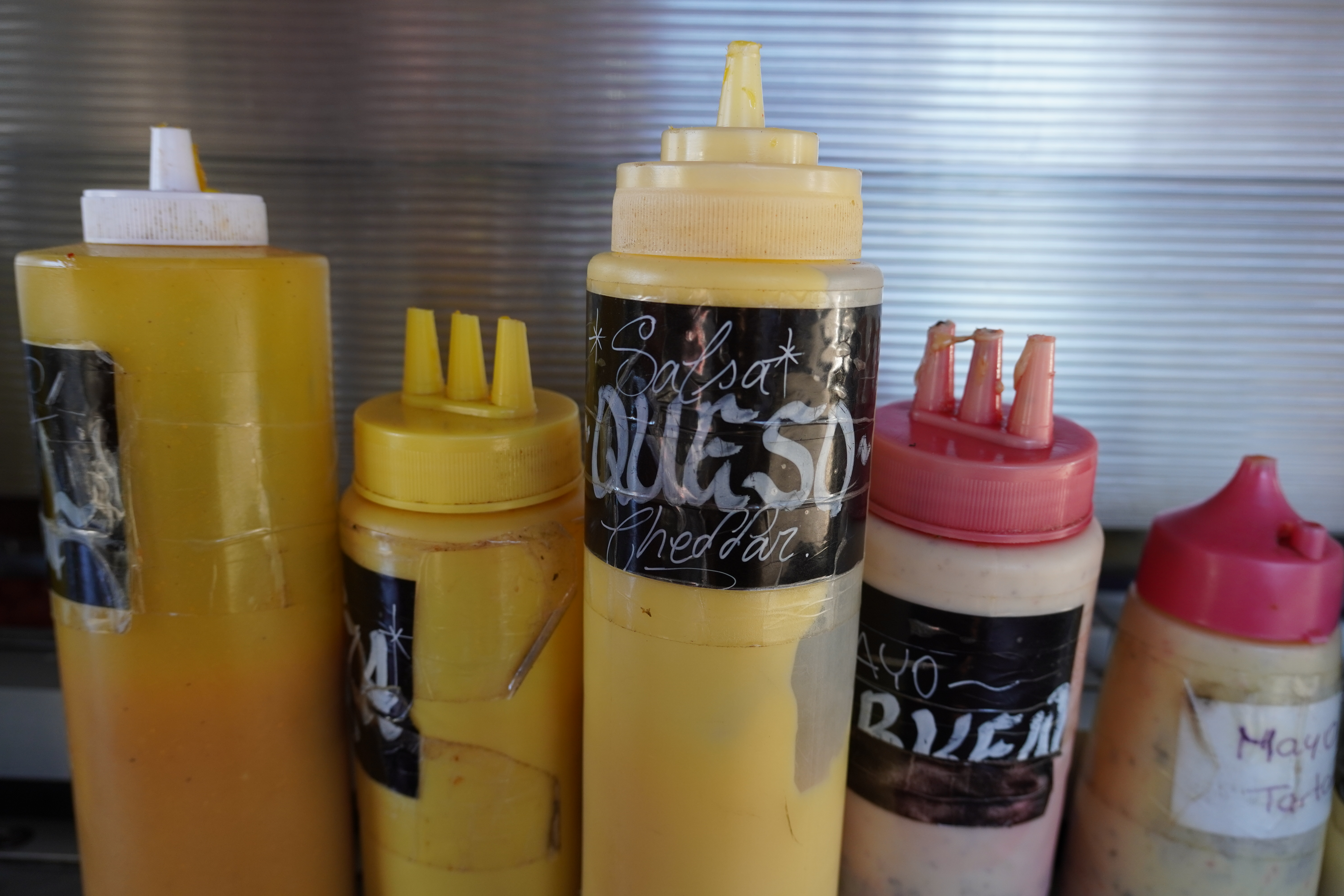
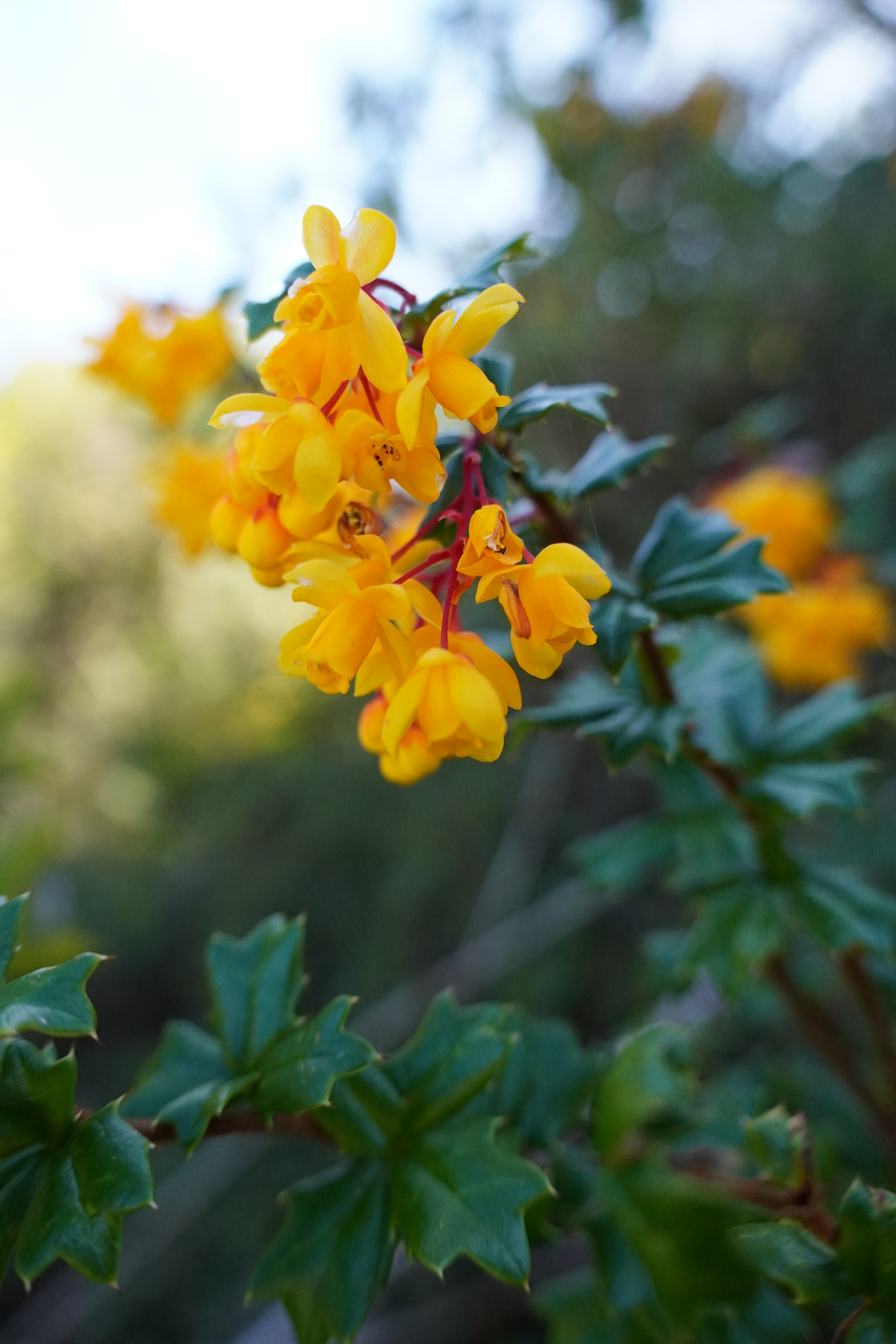
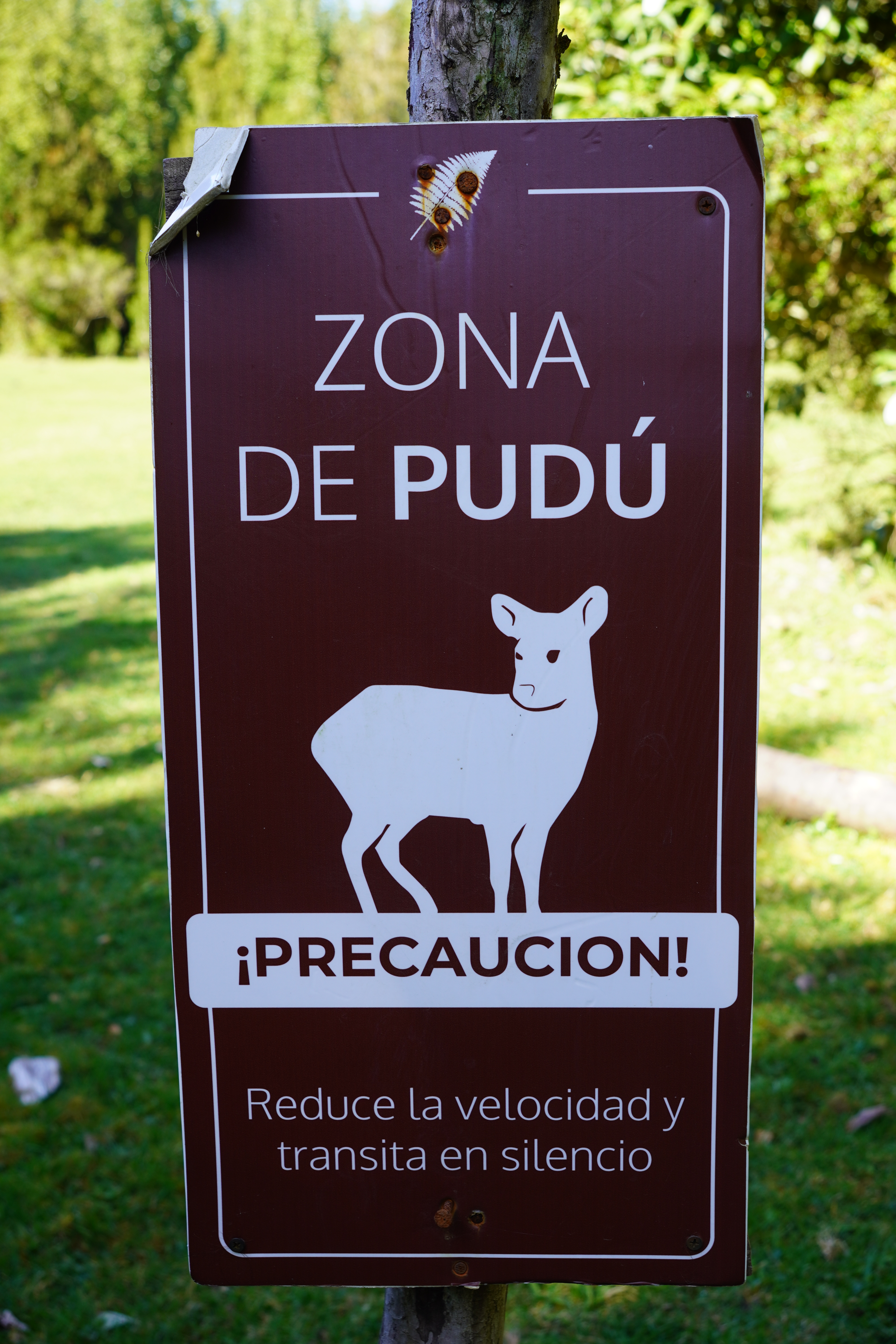
As in Argentina, there are often food trucks in Chileän cities. So we got some local fast food: churros, papa completo (fries with sausage and kebab pieces), and a refreshing strawberry smoothie. It felt truly spring-like. Everything was blooming – tulips, daffodils, and small yellow blossoms everywhere. The temperatures were mild, and the Patagonian wind was gone. We didn’t find a campsite that evening, as it was low season and everything was closed. But at a closed site, the kind owner let us fill up our drinking water and had a tip for a possibly open campsite, and so we had everything we needed. Unfortunately, the local gin distillery was also closed, as was the campsite in the center of the island. That’s how it goes when traveling in the off-season. Now it was just a matter of moving on. Driving in the dark, something we otherwise avoid due to wildlife crossings and other lurking dangers. Also, visibility is poor when you do wild camping. The roads were narrow, with fences lining the path on both sides, and jungle-like green walls behind, making one feel almost trapped. After the vastness of Patagonia and the experiences in southern Chile, it was now really tight. We drove several more kilometers until we found a parking spot on the west side of the island in the sand at the roadside. At the Pacific. We couldn’t see it, as it was pitch dark, but we could hear it. We were just happy to have found a place to stop. Chiloé was different than before. Wild camping with the van wasn’t so easy today. Moreover, we were very glad we didn’t run over a Chilean wildcat in the dark. They live here, as does the smallest deer species in the world: The Pudú. With a shoulder height of about 30 to 40 centimeters and a weight of 6 to 13 kilograms, the Pudu is a rather shy animal that prefers dense forests. It is highly endangered, as its habitat is shrinking due to deforestation, and it is threatened by predators such as foxes and stray dogs. Unfortunately, we didn’t see either animal on the island. But the thought that they were there made me happy.
Parque Tepuhueico, Ecocamping, and Spring Feelings
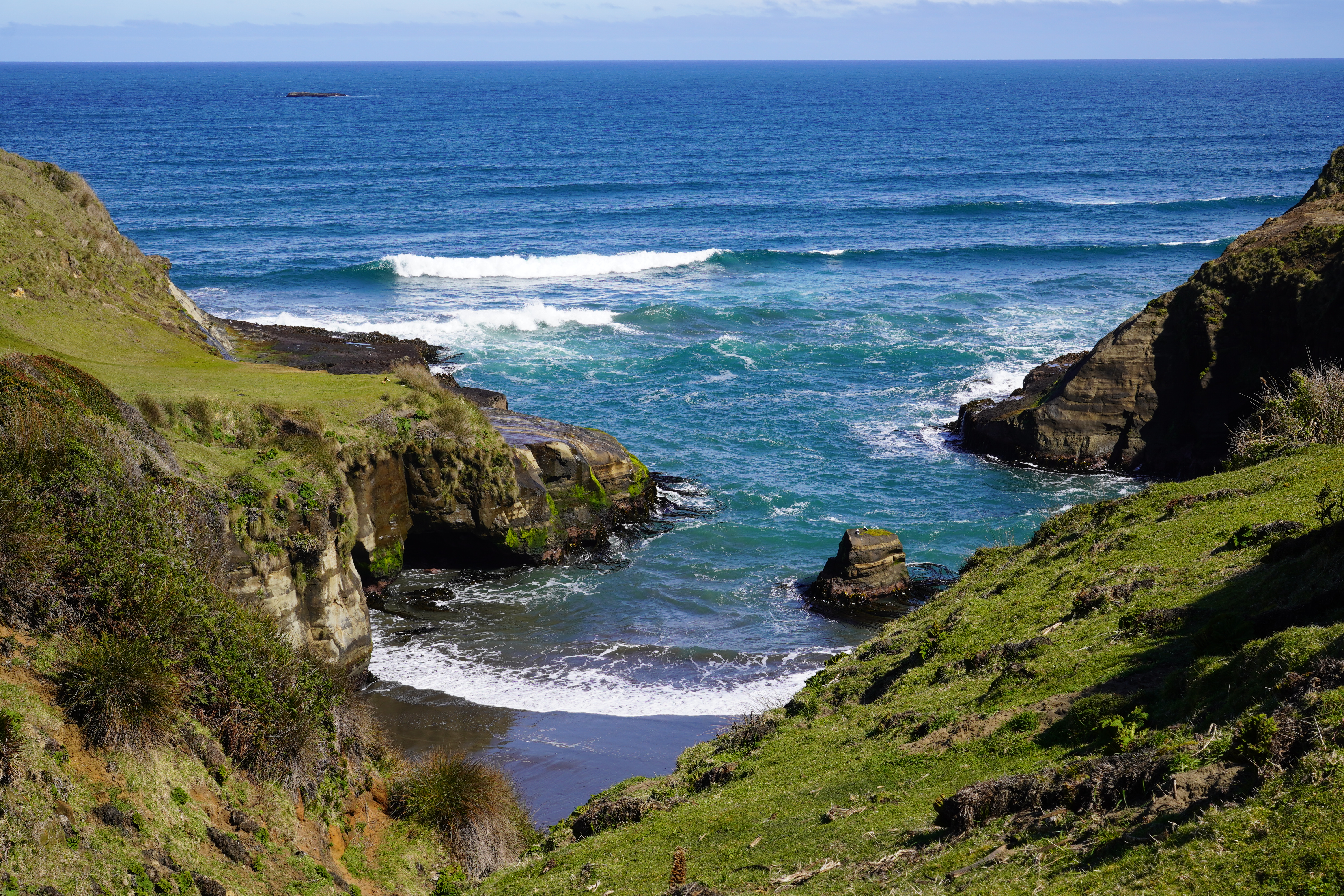
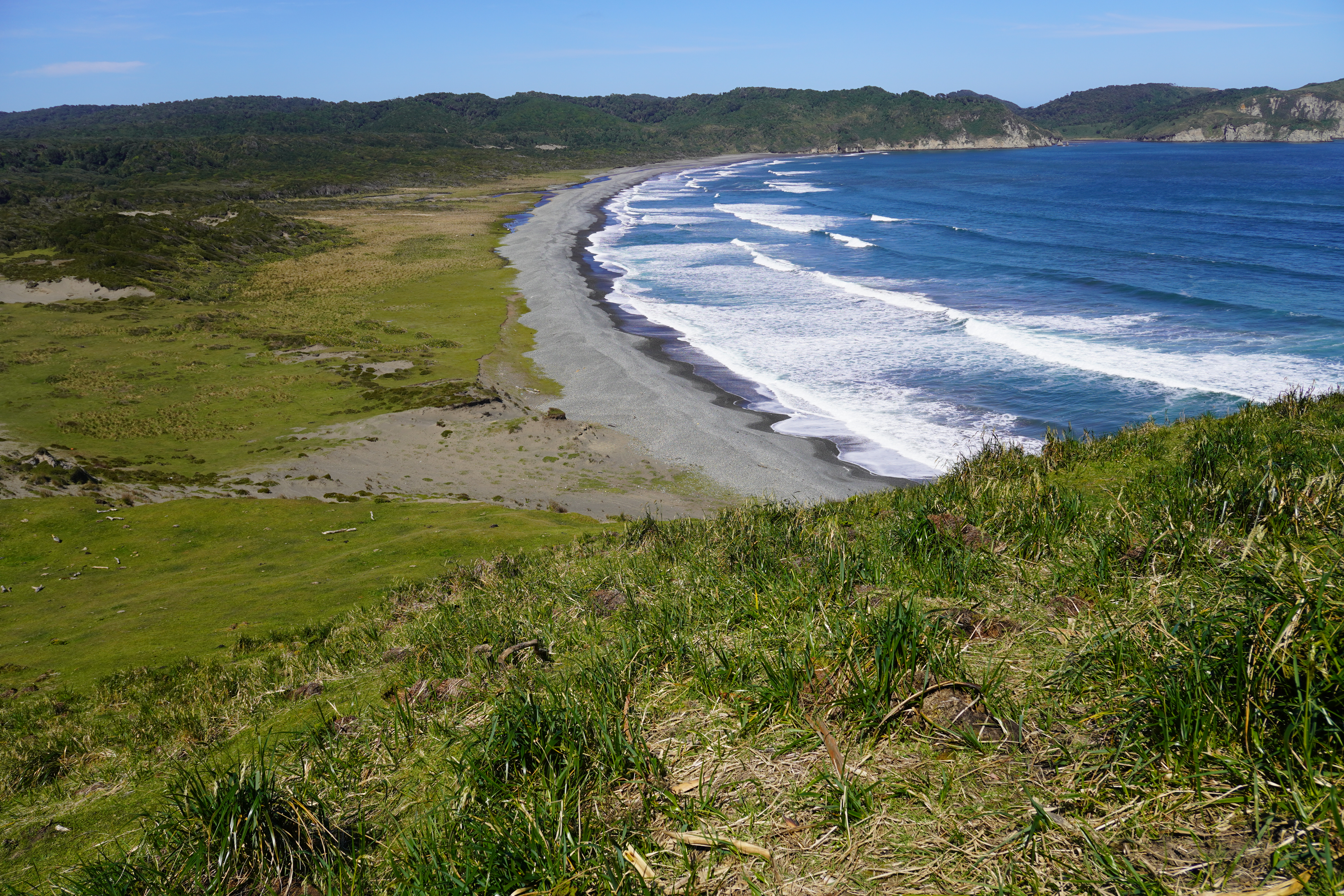
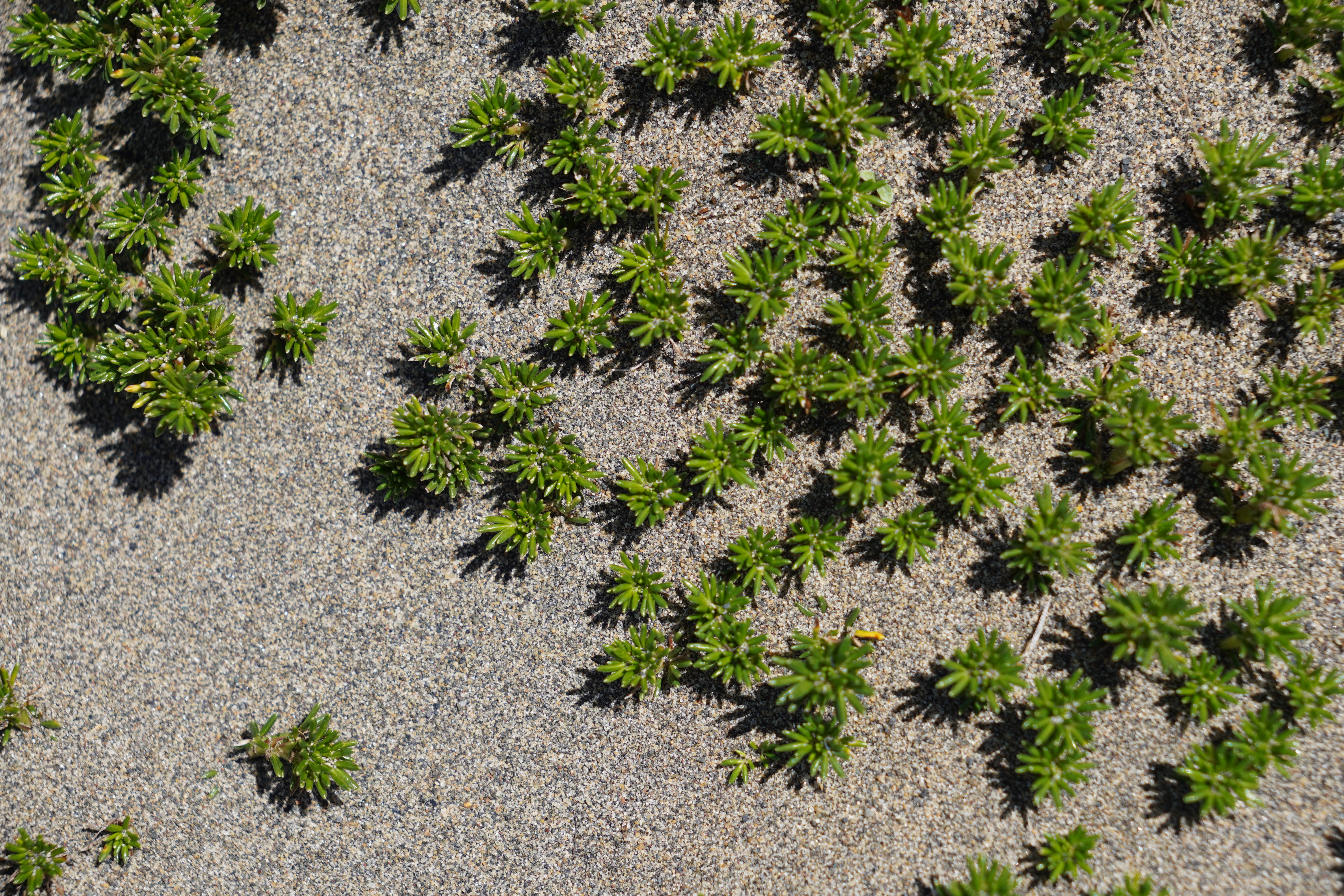
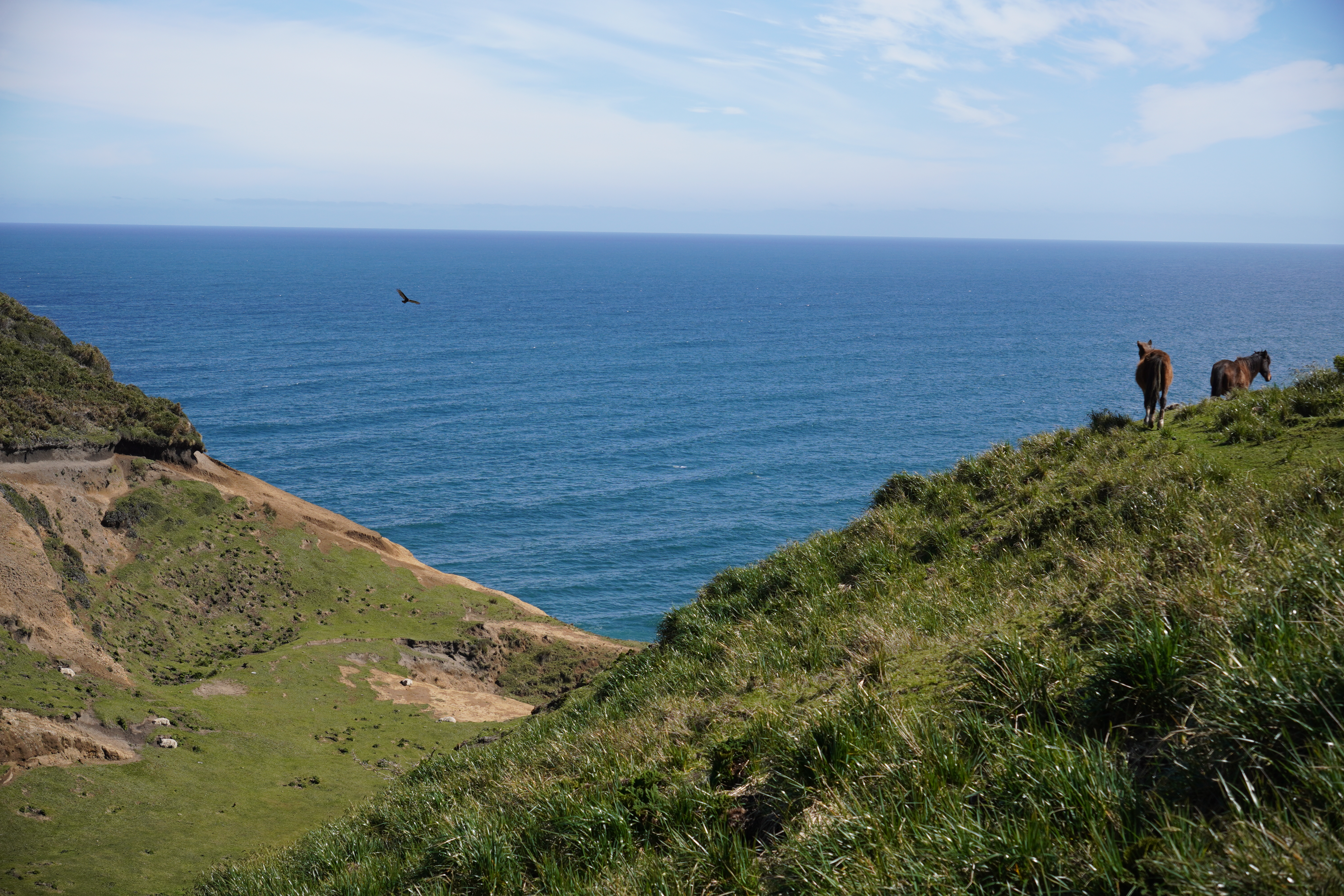
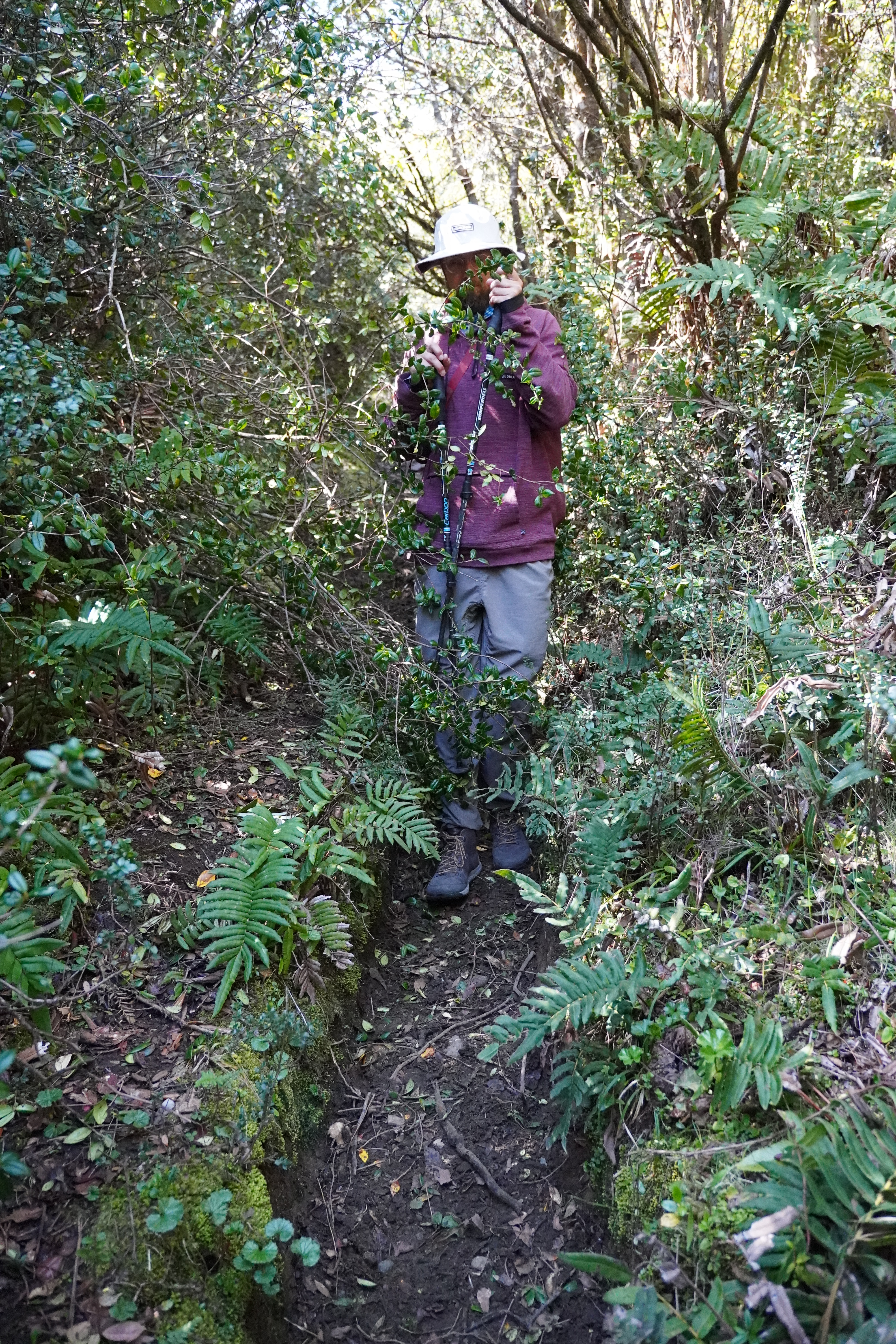
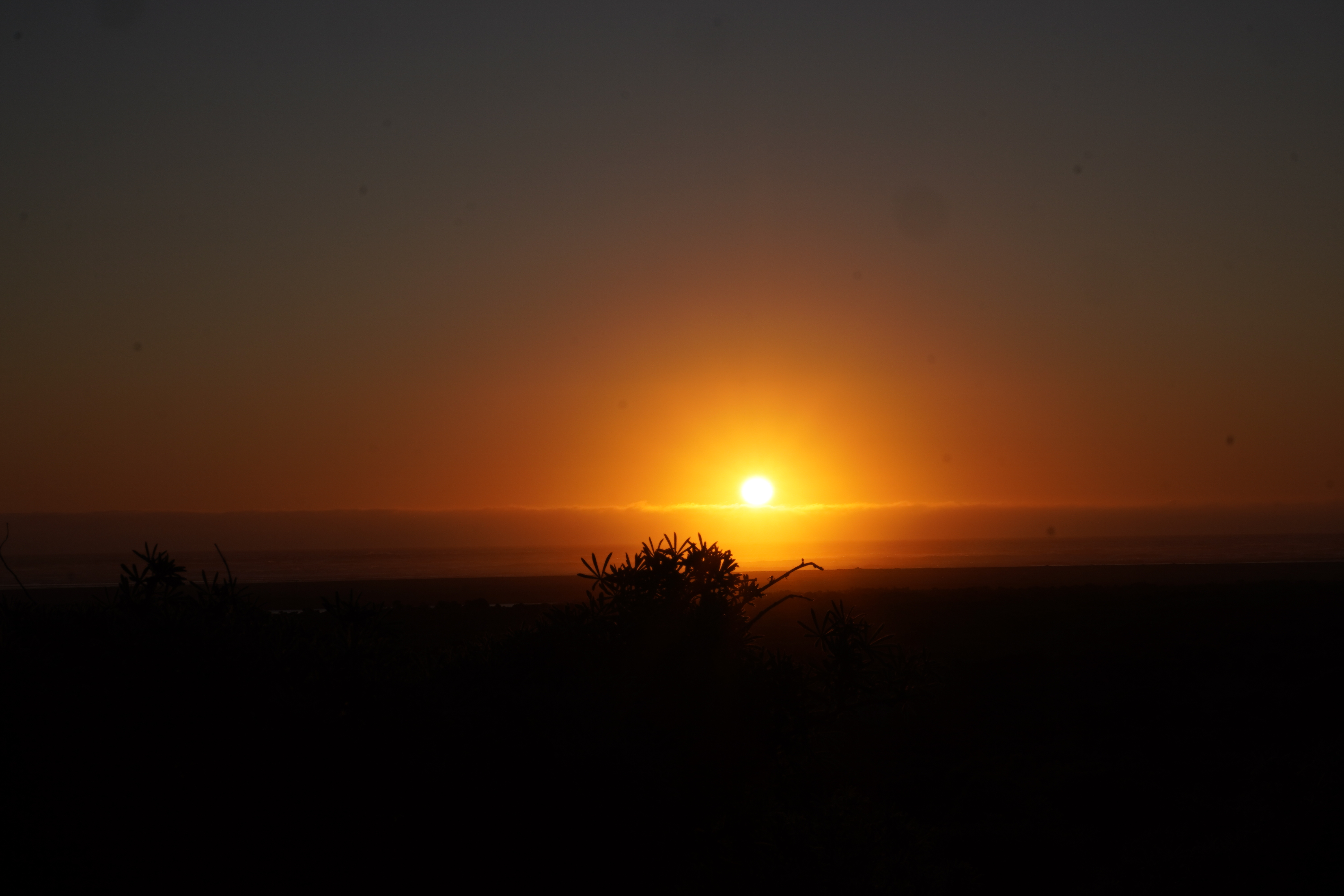
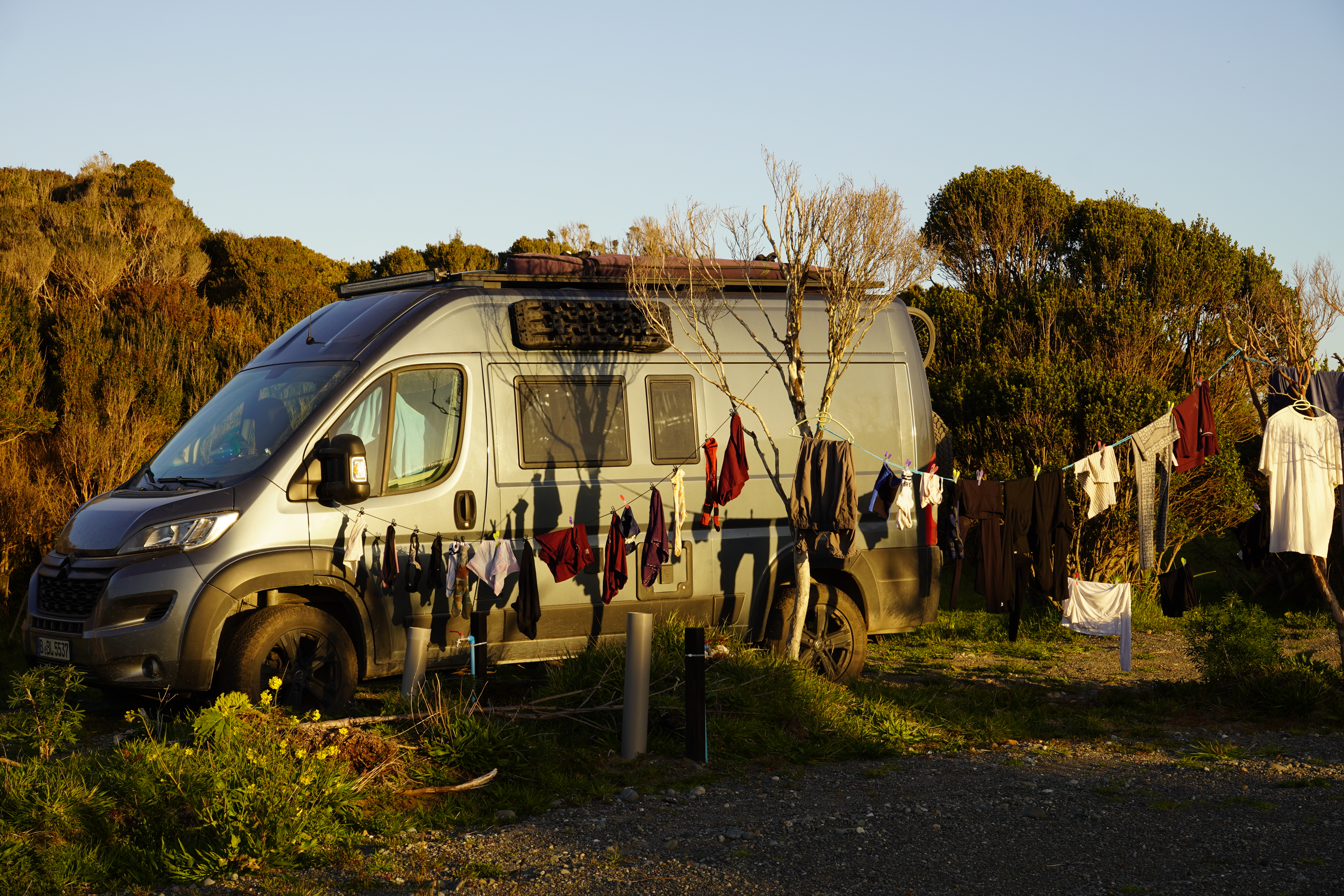
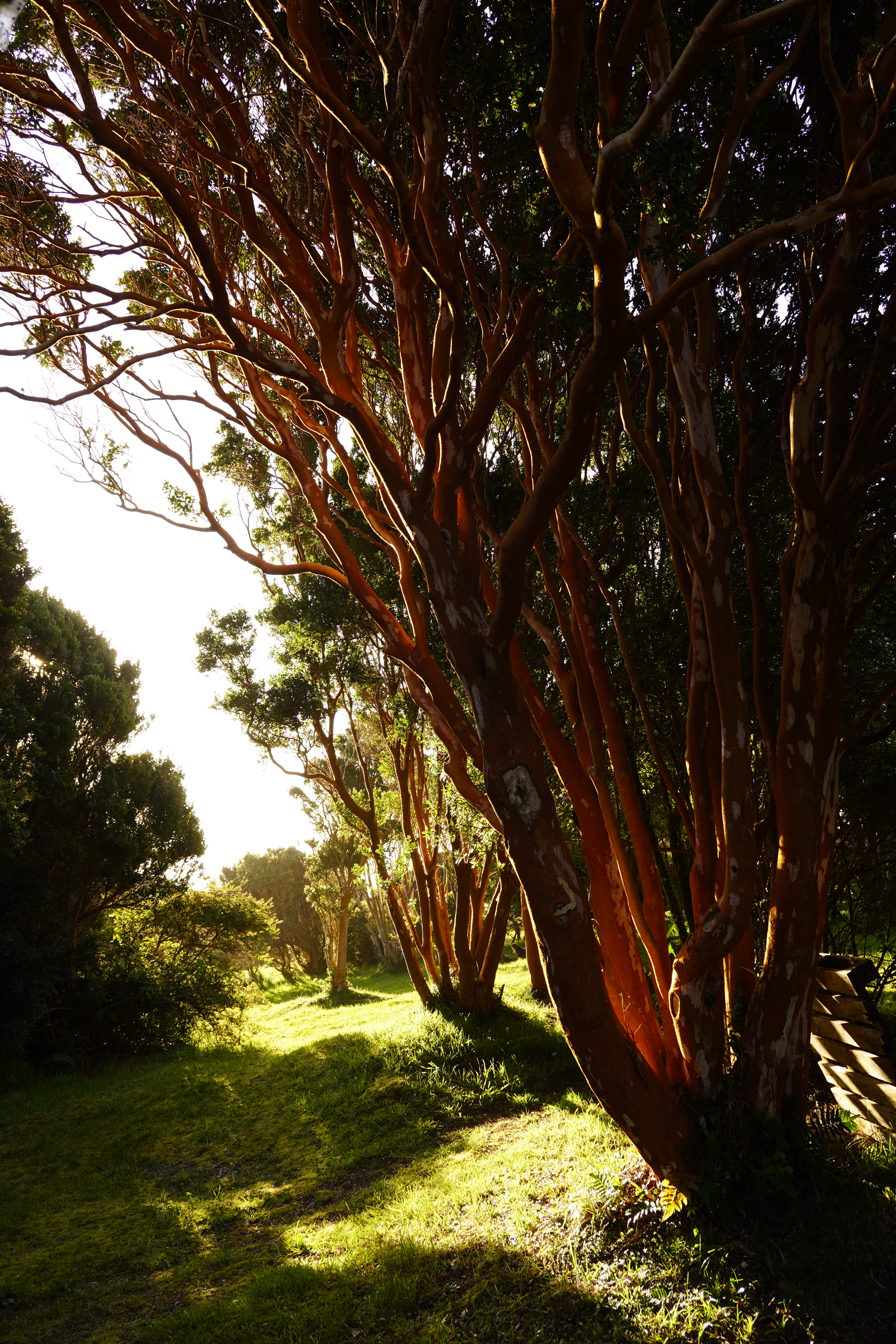
Early in the morning, a car parked right next to us in the middle of nowhere. Right next to us? We were still asleep and felt caught. Were we on private property? Was someone going to knock on our car? Nothing. We got up, drank coffee on the beach, and watched the waves. The sky was gray. The Chilean car parked beside us, and a person strolled along the beach. As we set off towards Parque Tepuhueico Zona Costa, the person walked directly towards us on the gravel road. “Entschuldigung, dass ich euch geweckt habe..” she said in German and explained that she had left Germany and had been living in Chile for 12 years to work as a geologist. She was on the beach searching for fossils and specific rocks for a presentation about geology on Chiloé. We exchanged information and learned that she was camping at a small open campsite to the north. We continued along the winding and steep gravel road to the private Parque Tepuhueico. Here, we had to pay an entrance fee for hiking. However, the young guy arrived on foot an hour after the official opening time. In the meantime, the sun came out and we had breakfast, and it was perfect hiking weather. During the four-hour hike, we walked through meadows, jungle, past steep cliffs, through dunes, herds of horses and sheep, and rocks. It was reminiscent of Ireland but then, with the dense jungle feeling, the bamboo and the vultures, somehow also not. Since it was already late in the afternoon to visit the other part of Parque Tepuhueico Zona Bosque and the road conditions seemed challenging, we decided to head to Costa Pacifico Ecocamping in Cucao and relax a bit. It was beautiful. After two months, we were on a lush green meadow, surrounded by trees, and apart from us and the German emigrant’s tent, no one was there. We did laundry, enjoyed the hot shower, and watched the sunset by the sea. It was perfect. There were also two cats, one looked like Mine – white, with one yellow and one blue eye. Naturally, as we washed laundry too late, it didn’t dry. So, that night, we went to sleep in the van with three clotheslines.
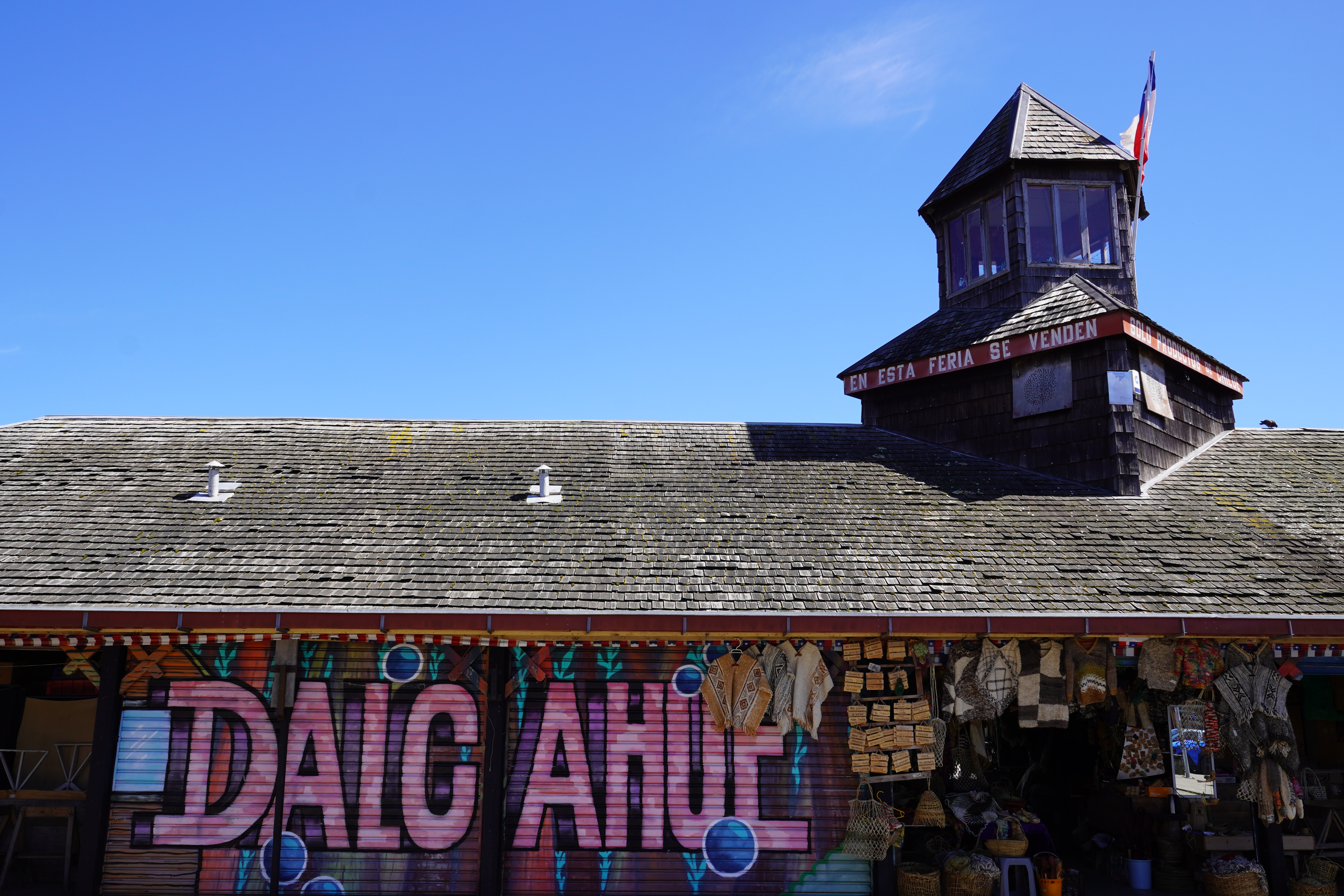
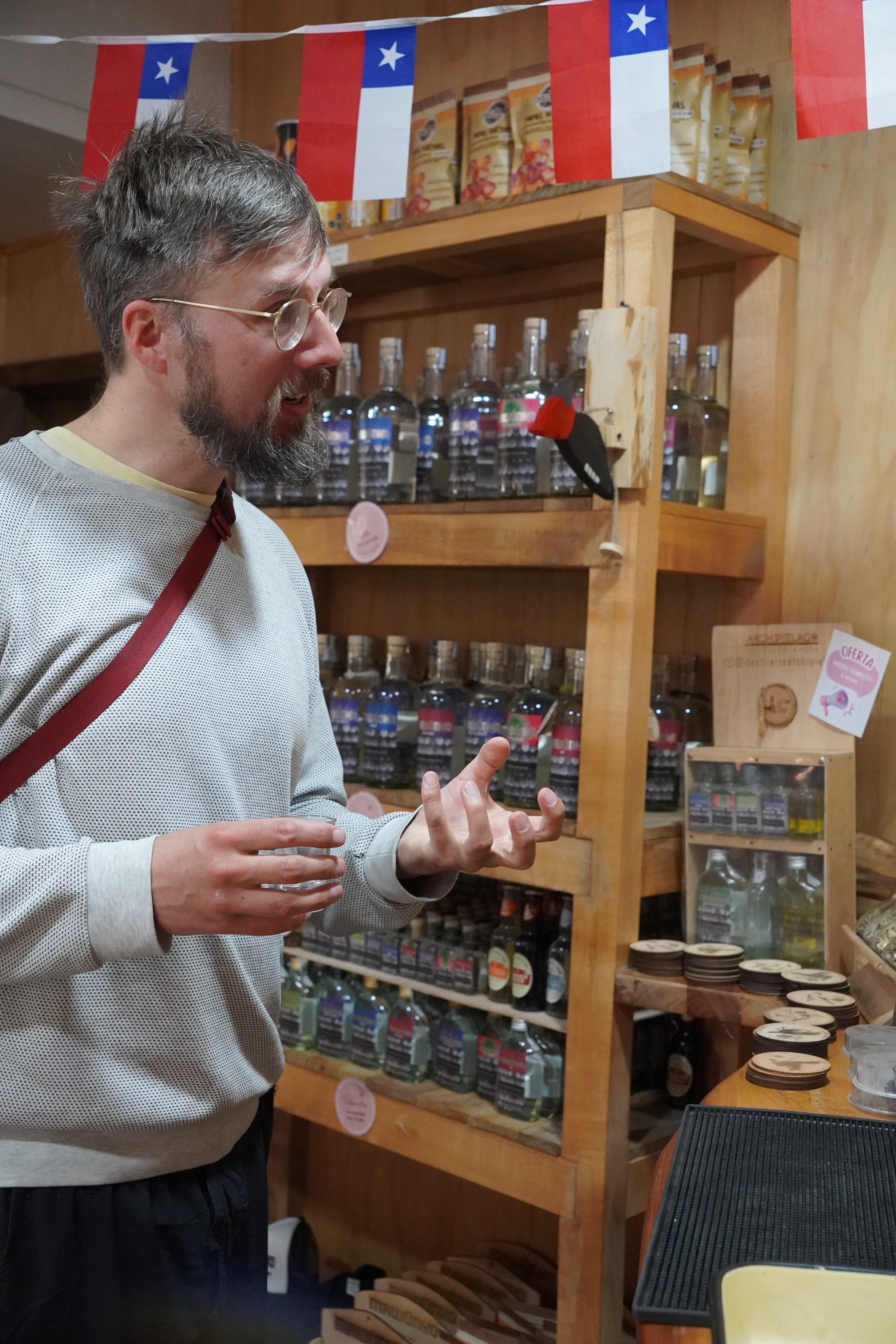
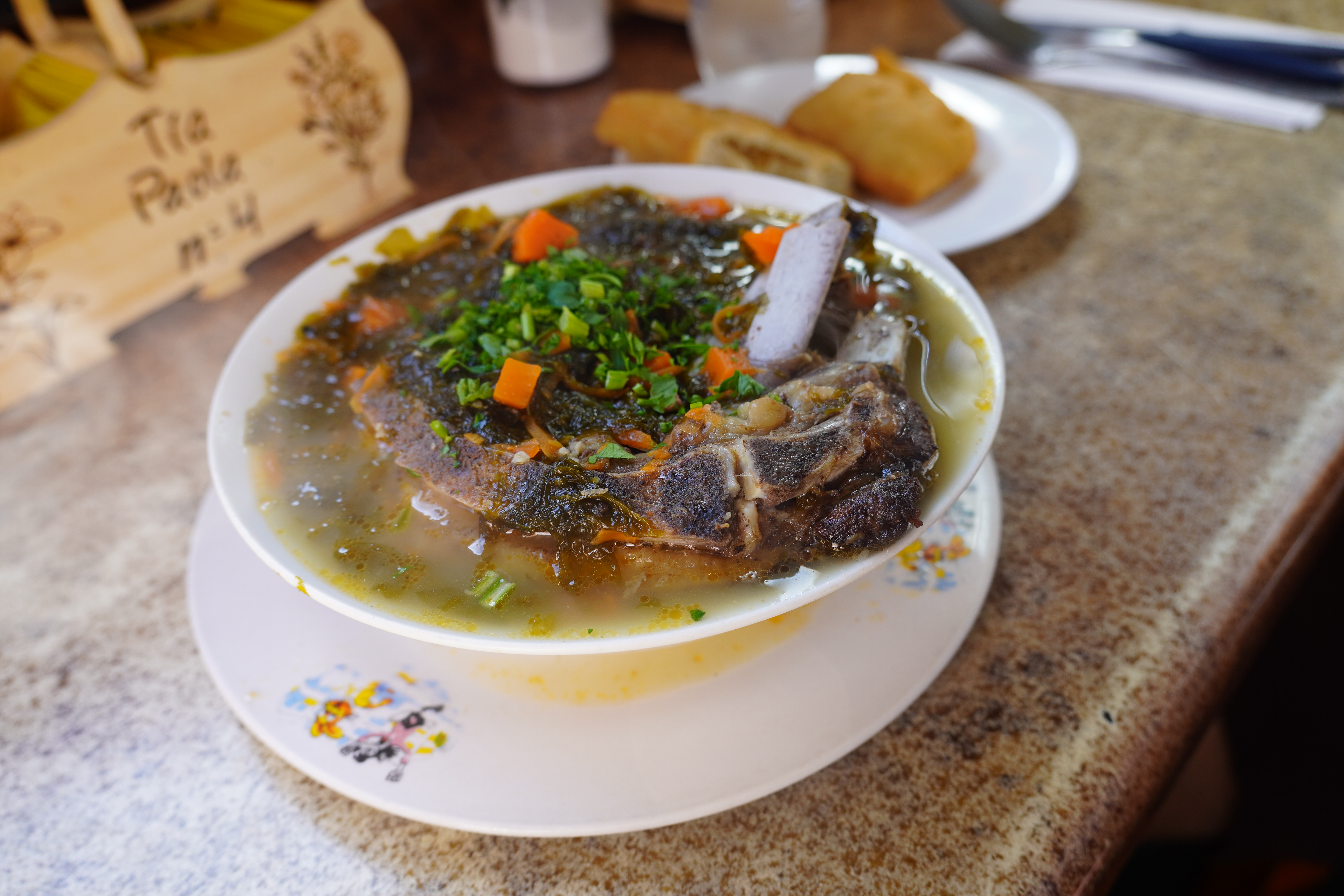
The next day, we also slowed down a bit. We noticed that on the way to the previously closed Destileria Archipiélago, we were finally traveling on the official Panamerican Highway, Ruta 5, which begins in the south of Chiloé. At the distillery, we learned about the local gin and its botanicals, tasted and bought gin and pisco. We found a nice café and strolled through the charming harbor town of Dalcahue. The blue sky and sunshine were inviting, and we immediately put on our summer clothes. Fatally. The wind from the sea was quite cool, but in the sun, it was quite pleasant to sit with short clothes. In an authentic market hall, we enjoyed a true Chiloé specialty, Cacuella. A clear broth with vegetables and lamb. Then we were back on Ruta 5 on our way to the ferry in the north of the island, from Chacao to Pargua on the mainland. The ferries operate every 20 minutes, taking you to the other side within 30 minutes. Soon, this will end, as a long bridge is being built to connect Chile to the mystical island. For us, it wasn’t that mystical. We enjoyed the lush, vibrant colors, the plants, the blooms, and the spring feeling. It was also the first time we were consciously by the Pacific. Now, the journey continues north. Whether we’ll drive up on the Chilean or Argentine side wasn’t yet clear to us. First, we looked for a place to park by the water, with sand under our feet and a beautiful sunset. In the distance, we heard sea lions. It’s not creepy when you know what it is; otherwise, it definitely is.
 höme
höme 
Leave a comment