Back from the End of the World
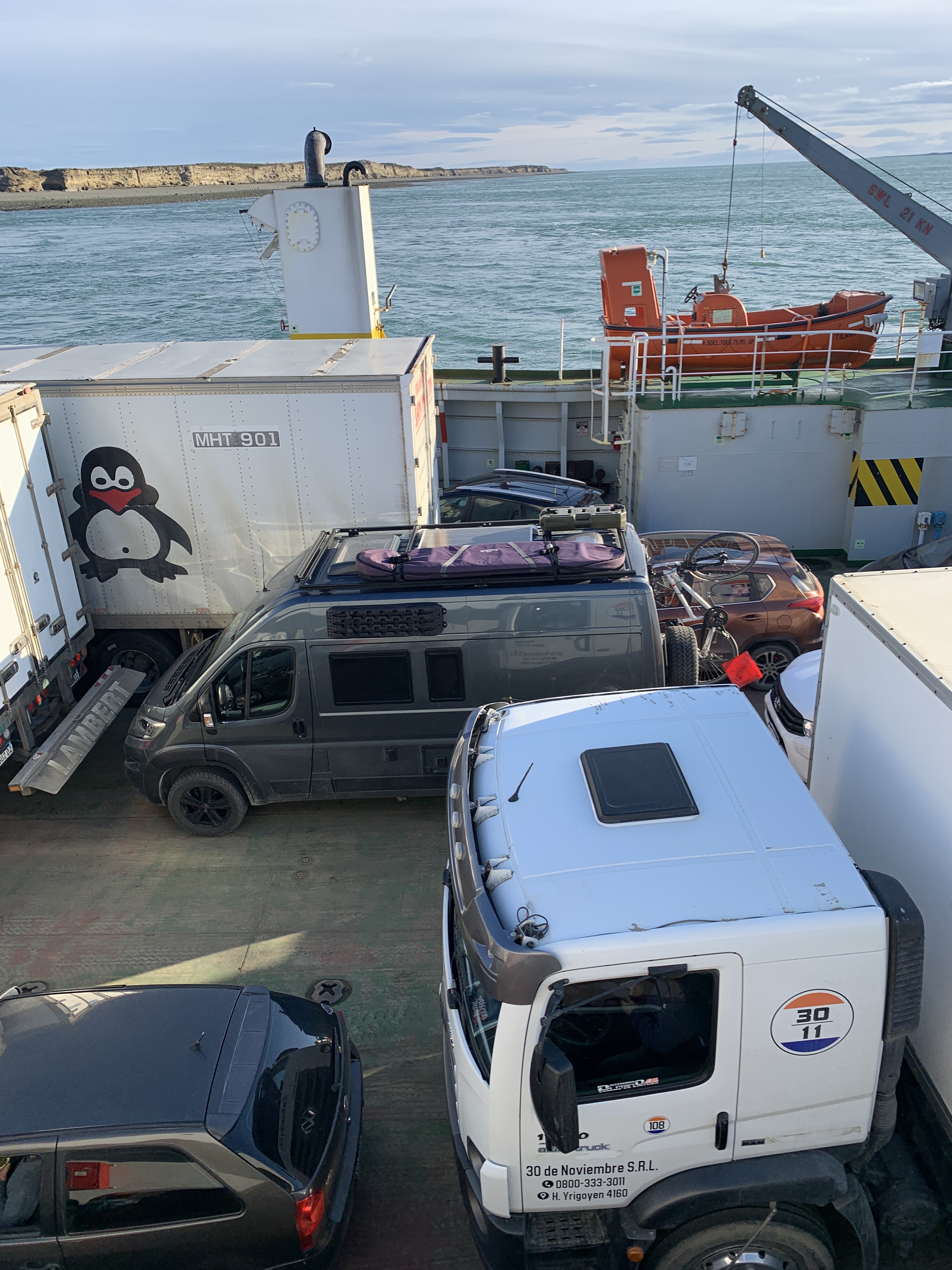
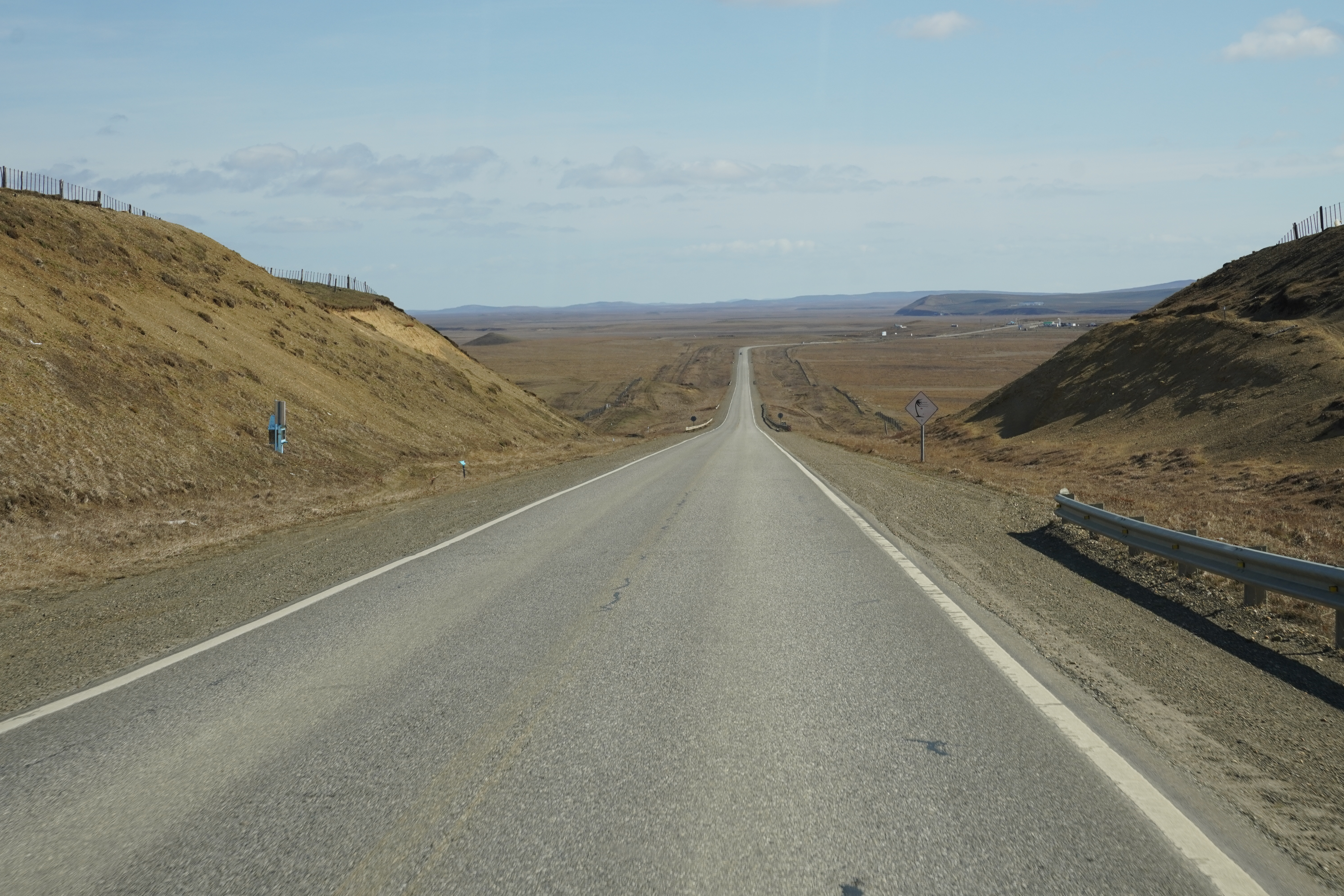
After we left Tolhuin with hot water and the prepared Mate, we reached Rio Grande after about 1.5 hours. We passed through the place and continued driving; nothing spectacular happened – no police control, no refueling – except that we broke the 5000 km mark. Under a bright blue sky and strong wind, we reached the border crossing to Chile. Everything went smoothly and very quickly. Surprisingly, there were many trucks there today. However, today there was only one border crossing, as we would stay in Chile for the next days. We continued driving north. The same windy and curvy roads, the same as on the way to Ushuaia. The trick to avoid getting bored while driving: we switched drivers during the stages so that no one drove the same section twice. Then a small stone chip on the windshield from a truck ahead of us marked the first of the trip. It probably won’t be the last. In the morning, we had set ourselves the goal of driving to the ferry terminal to cross the Magellan Strait and staying there overnight to catch the Wi-Fi, to take the first ferry early the next morning. When we got there, we had PBJ baguette and no Wi-Fi. It was very windy, and we spontaneously decided to take the ferry after all. Since there was space for two more cars and us on the ferry, the decision was made for us. Björn rolled off with Rosi while I held onto the peanut butter and jam jars and buckled up on the backseat. This way, we were able to drive past the several hundred-meter-long line of trucks and high-fived. The ferry ride was completely different from the way there: the sea was very calm, with hardly any waves. We could stand on deck and enjoy the sun. The ride was also twice as fast, probably due to the strong winds.
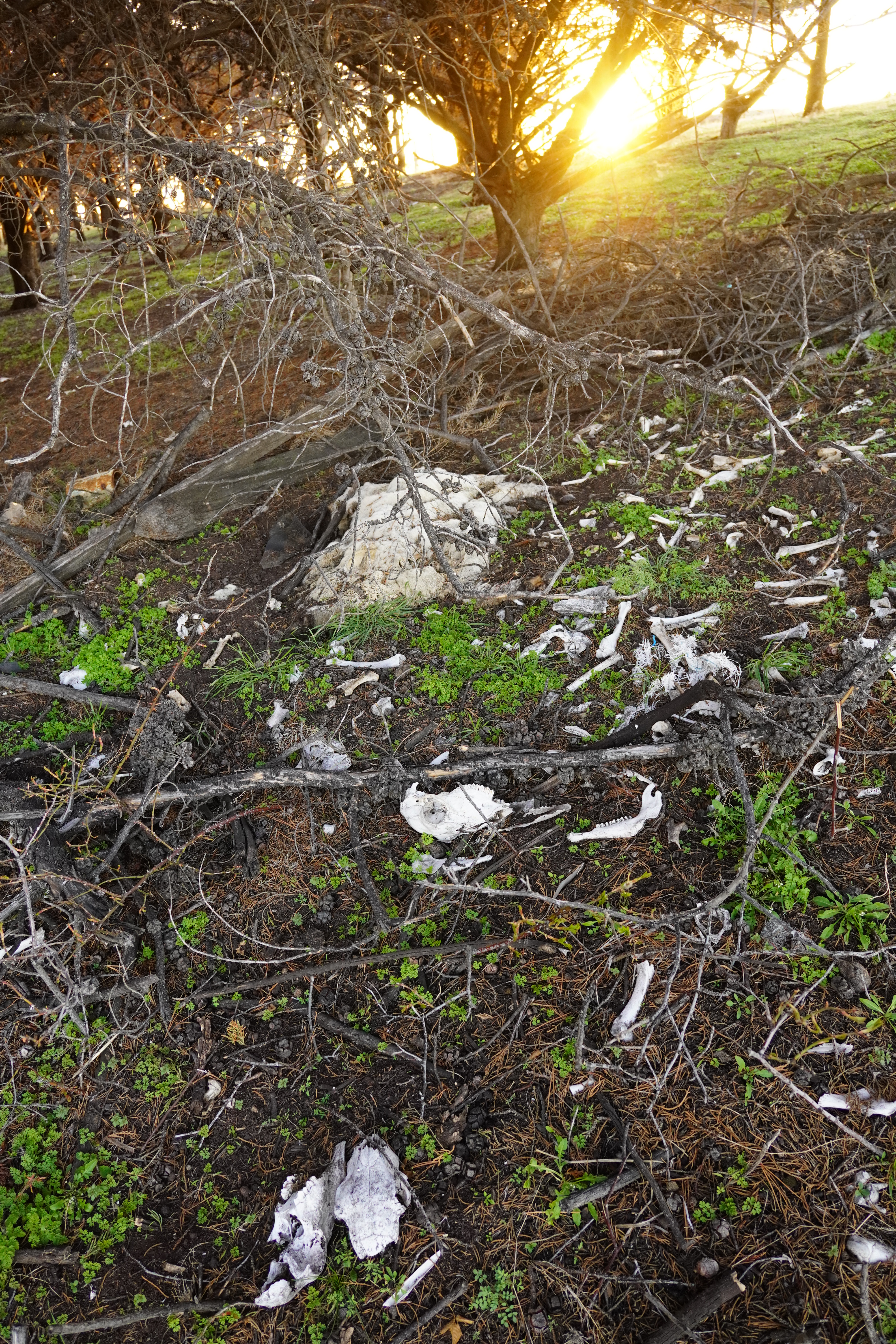
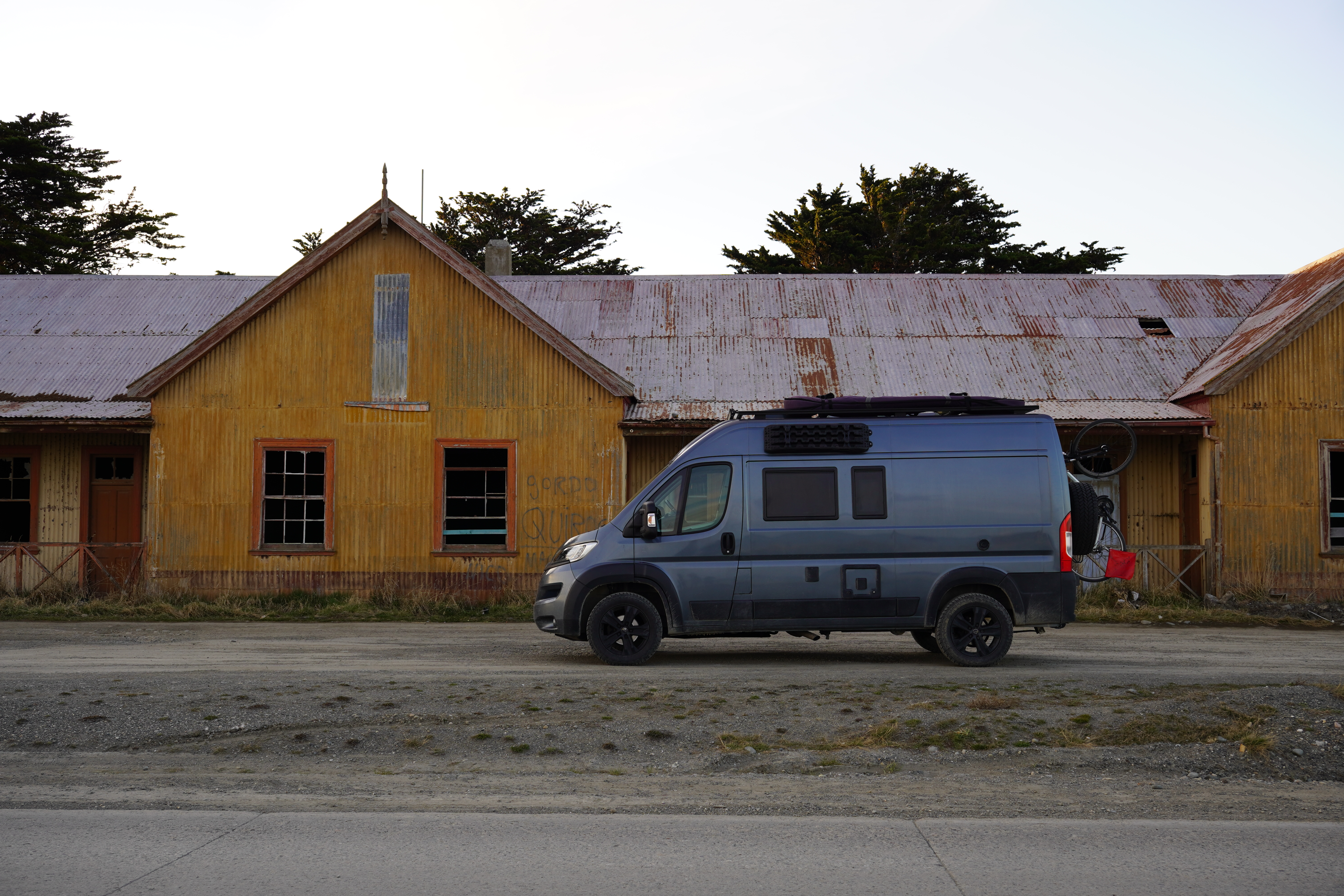
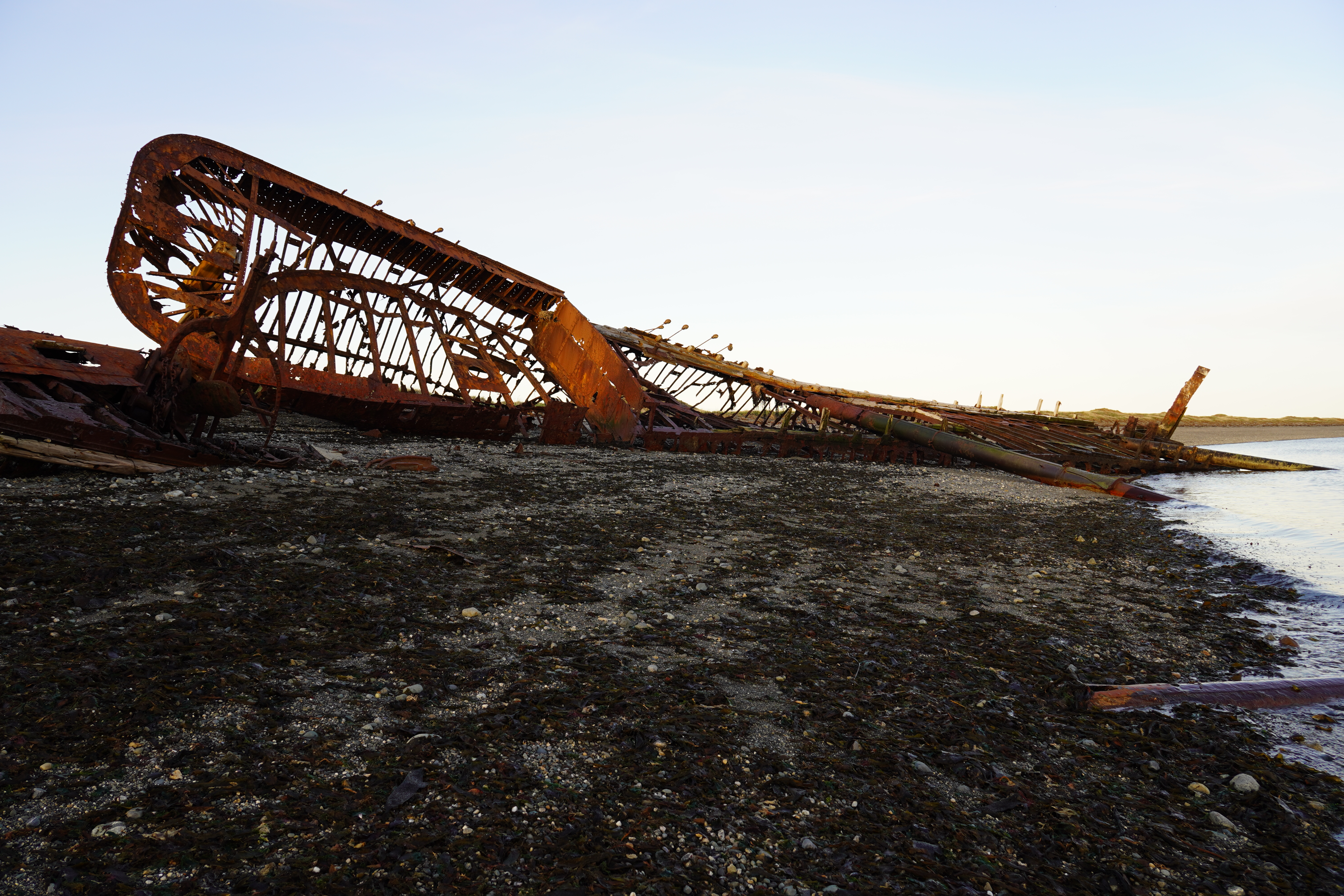
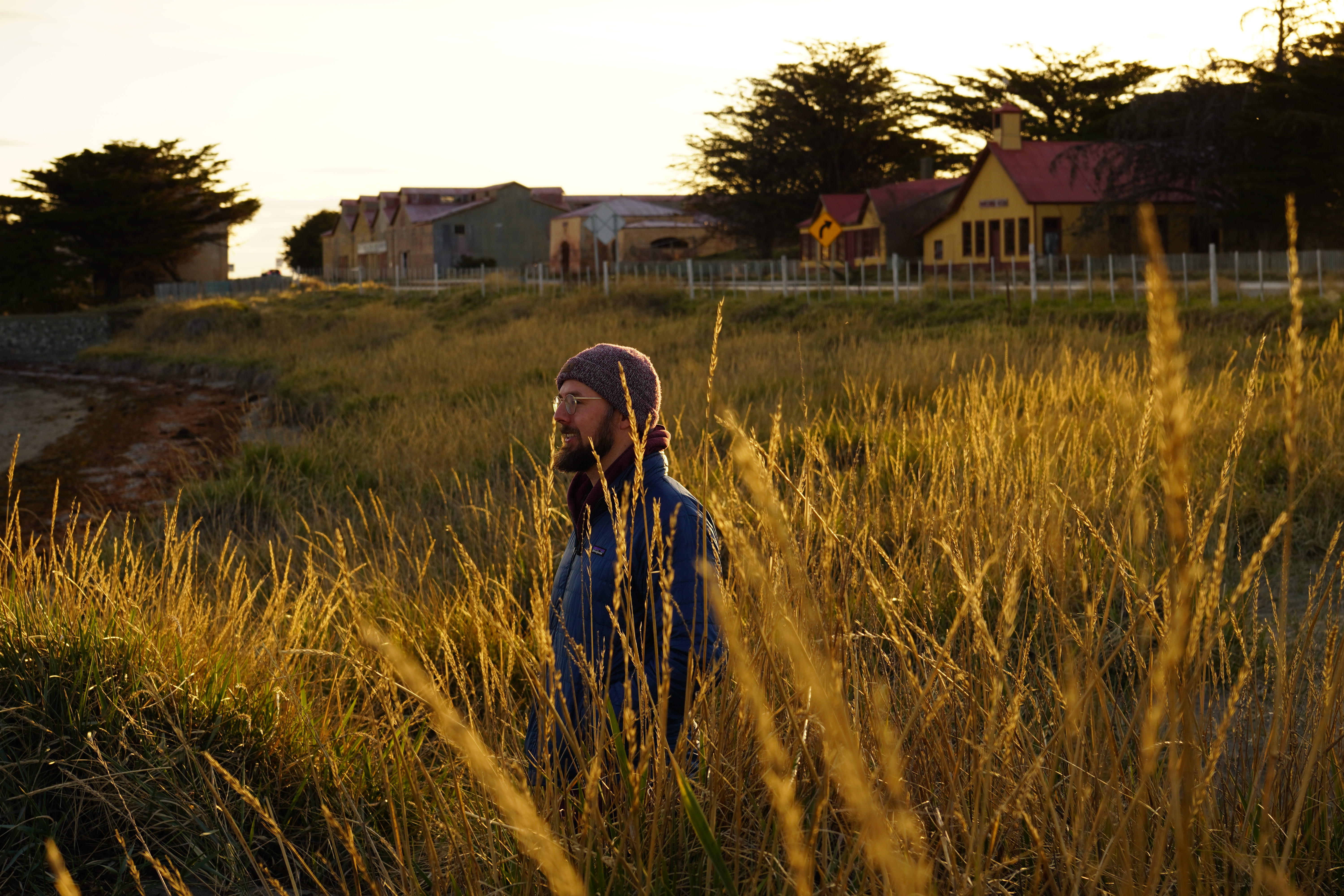
As it was already evening, it was time to find a place to spend the night. We didn’t feel like staying on the other side of the ferry terminal next to the waiting cars and trucks (many of them leave their engines running for heating). So, we continued driving but not north; instead, we turned west onto Ruta 255. We stopped at sunset by two old shipwrecks and a ghost town called Cabo Raso. Cabo Raso was abandoned in the mid-20th century after its fishing industry and port operations declined, leaving behind crumbling buildings and a sense of desolation. The shipwrecks of Steamboat Amadeo and Barge Ambassador, rusting near the shore. The rusty shipwrecks looked fascinating once again. We considered staying here for the night, but after exploring the area a bit, we didn’t want to stay in the ghost town. One house was full of sheep skins, with bones and sheep carcasses lying everywhere. A horse leg was lying in a pasture with a horse. I wanted to leave. So, we continued driving at dusk, spotted a skunk in the distance, and stopped at the next gas station, consisting of a container. The gas station attendant was very friendly and told us where we could park; he himself was spending the night in the container next to the gas station. Since we were in Chile and had no SIM cards, and therefore no internet, we were happy to have found something for the night. It was a long day of driving, and we were tired. Happy first night in Chile.
Fiestras Patrias in Chile
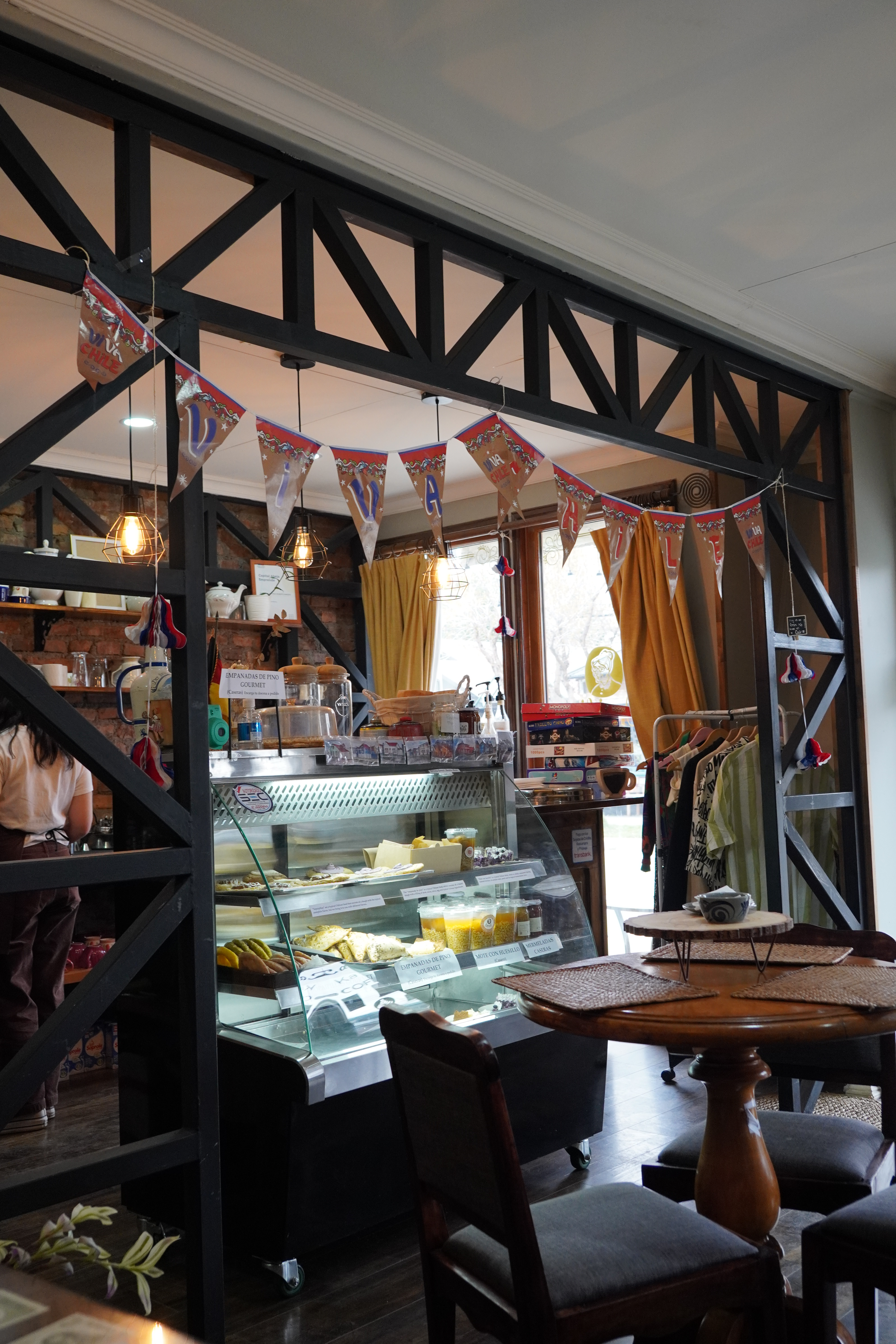
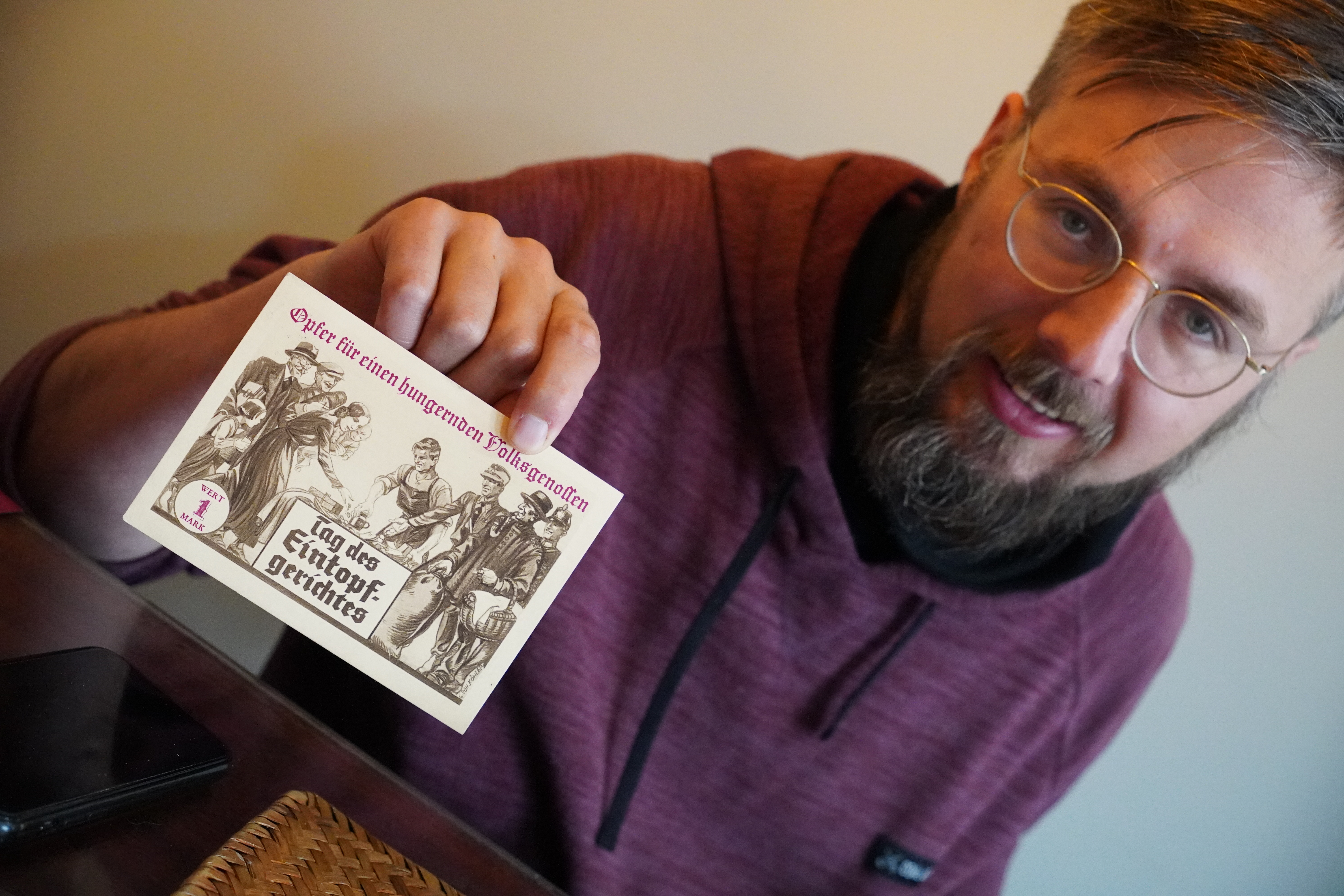
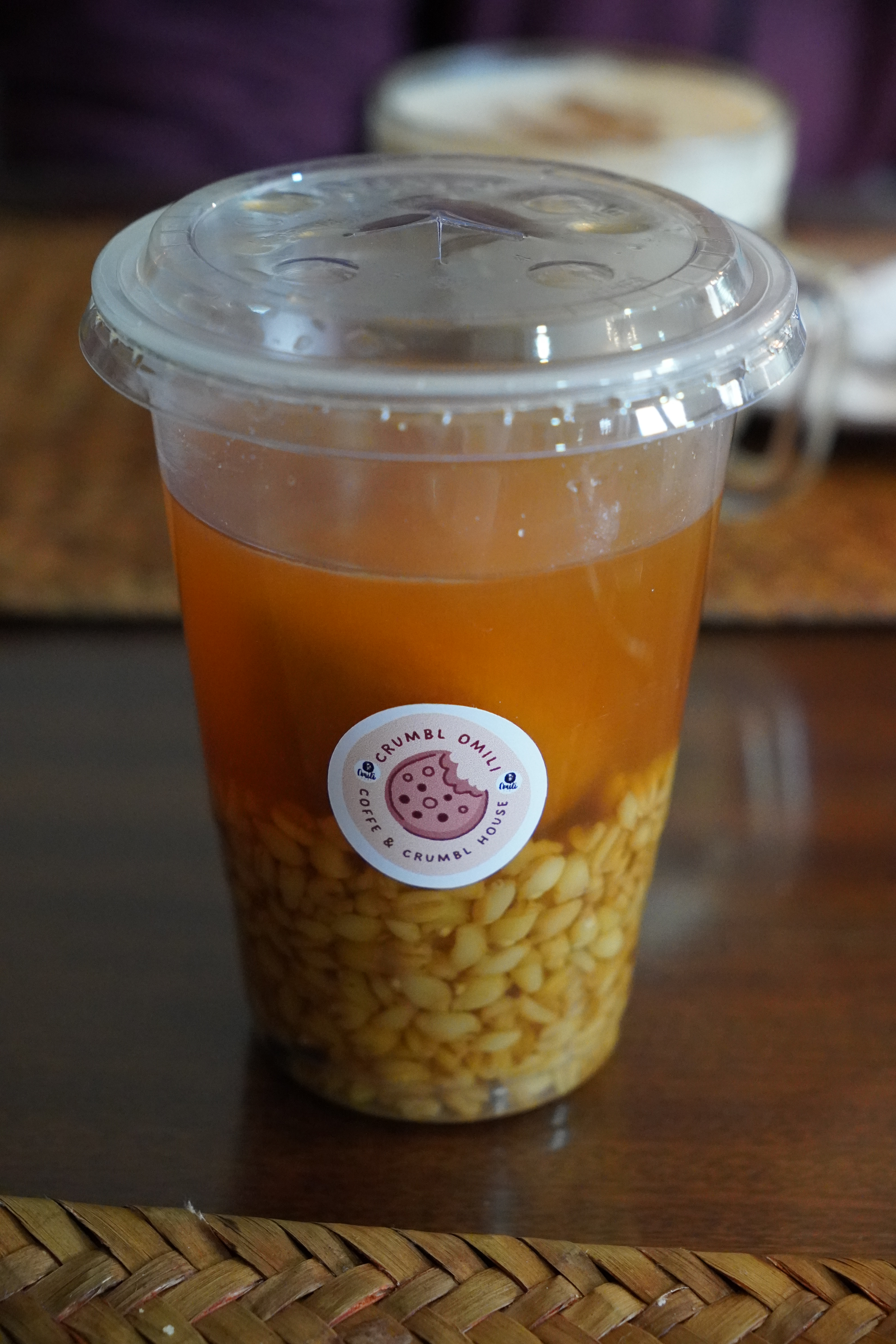
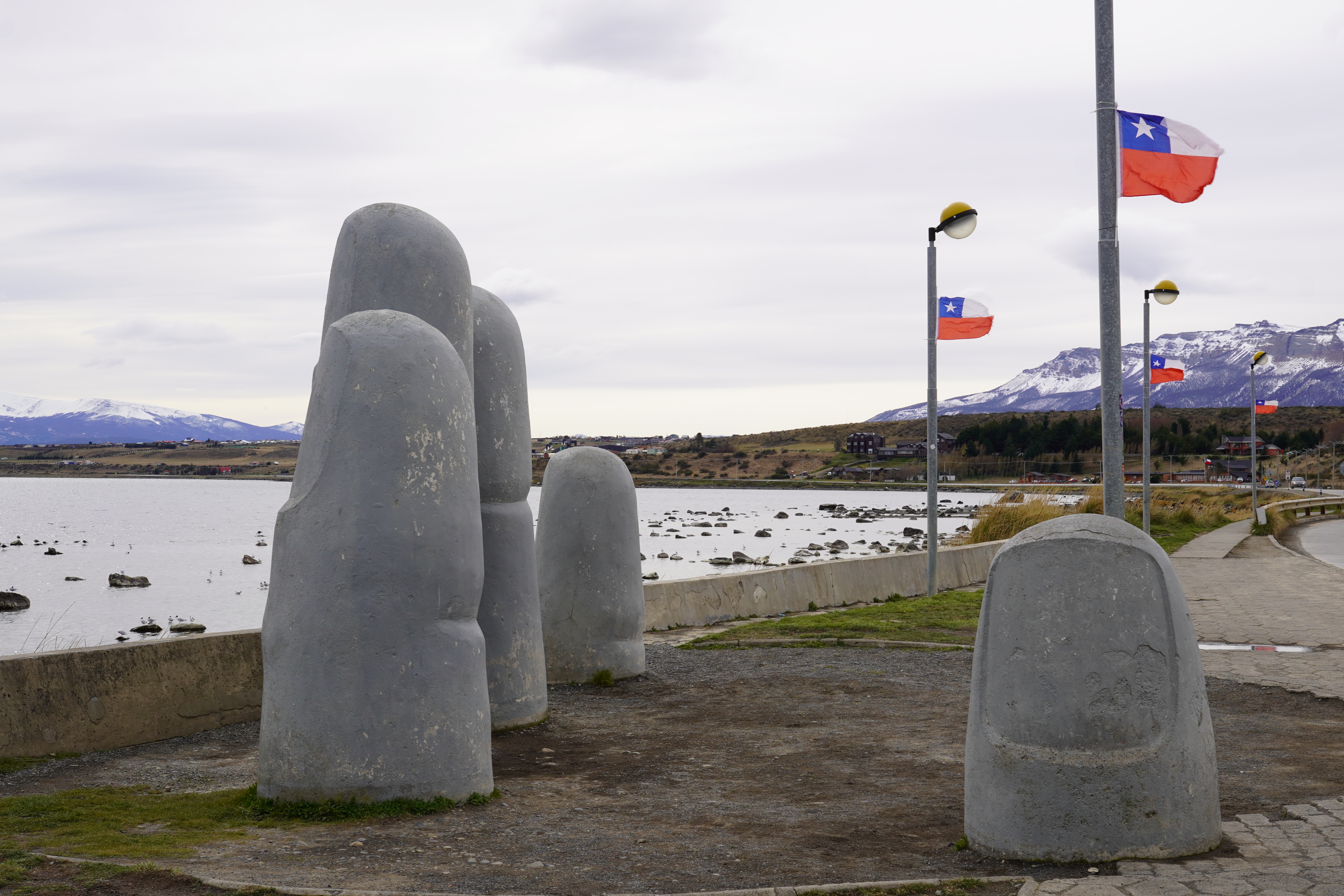
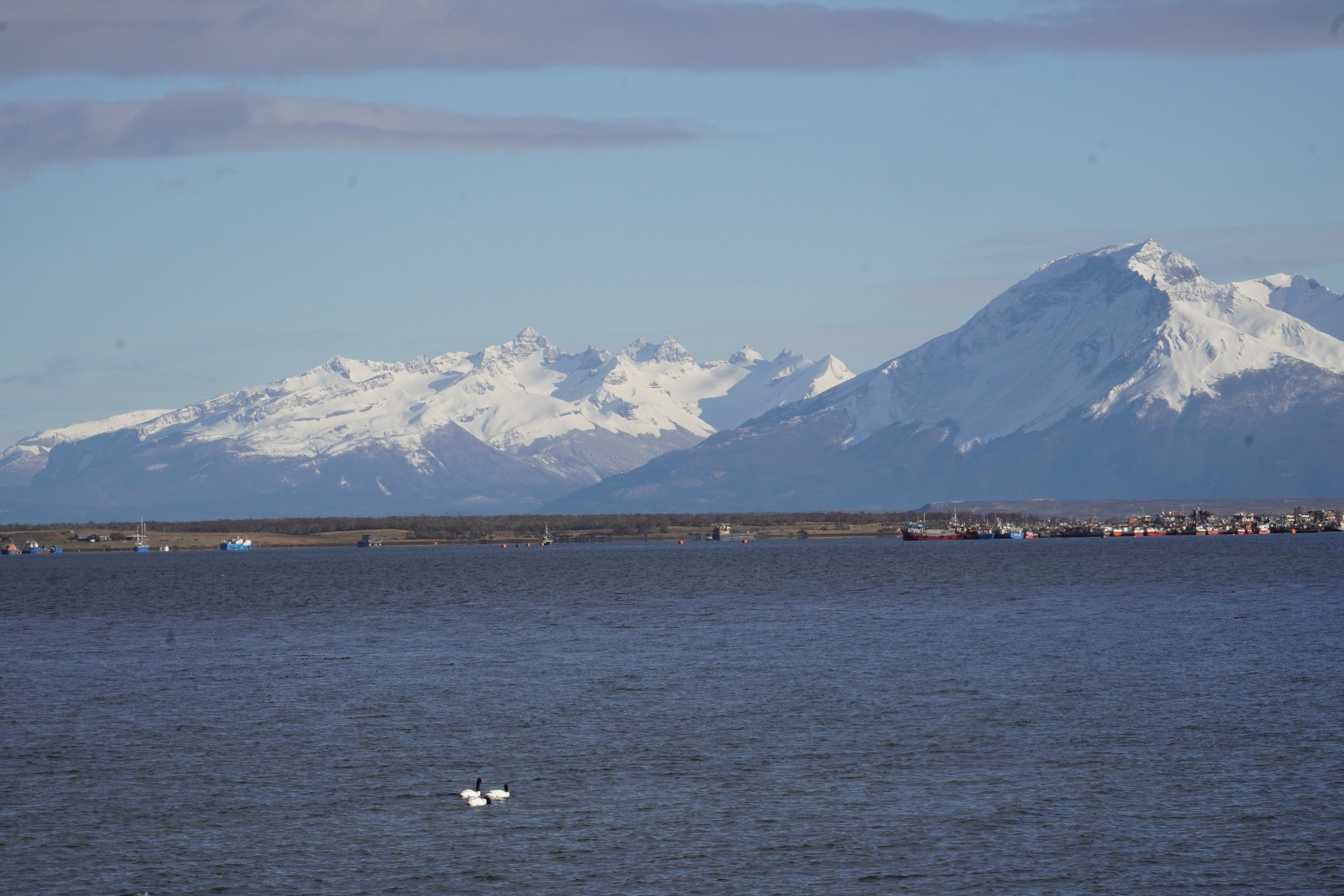
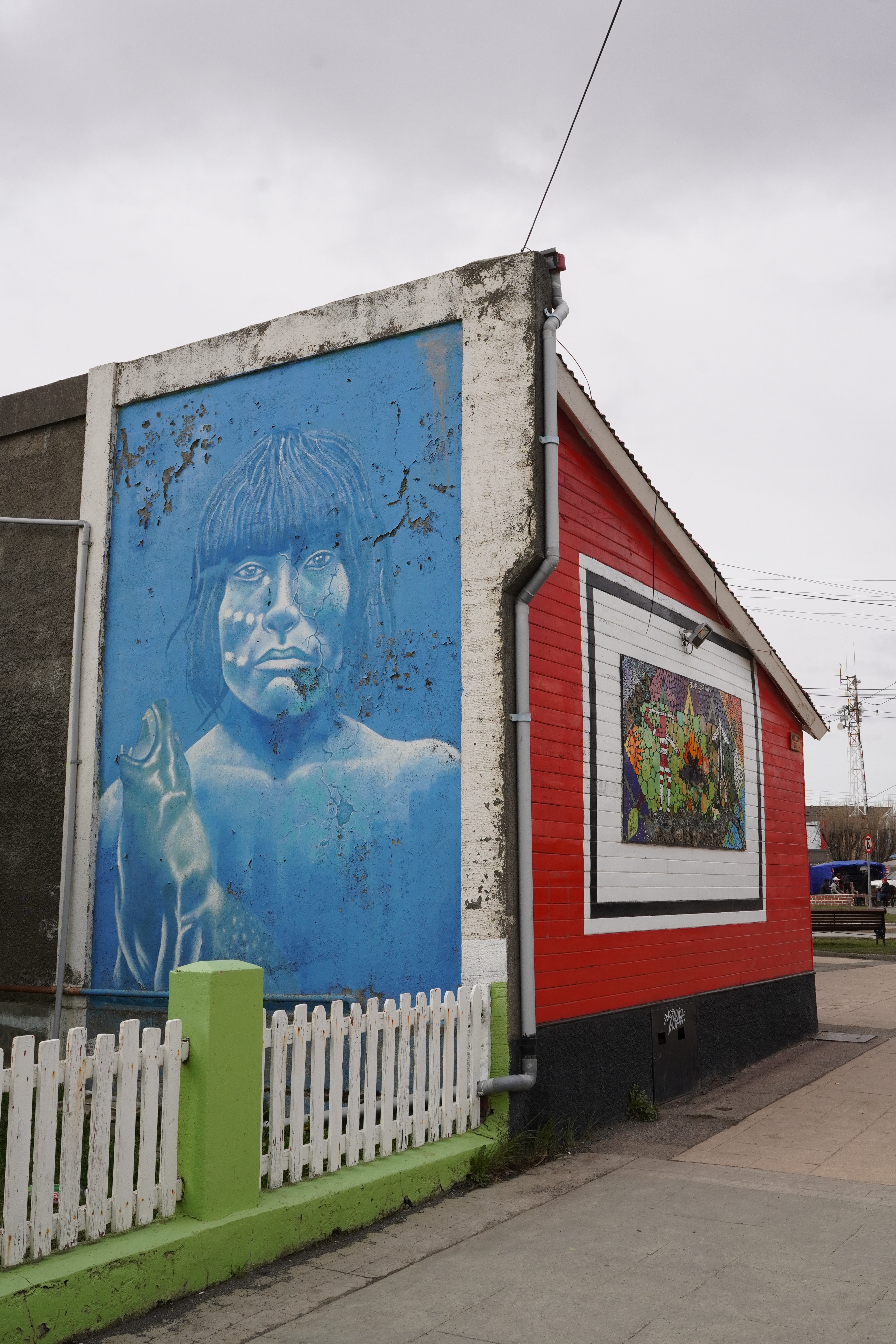
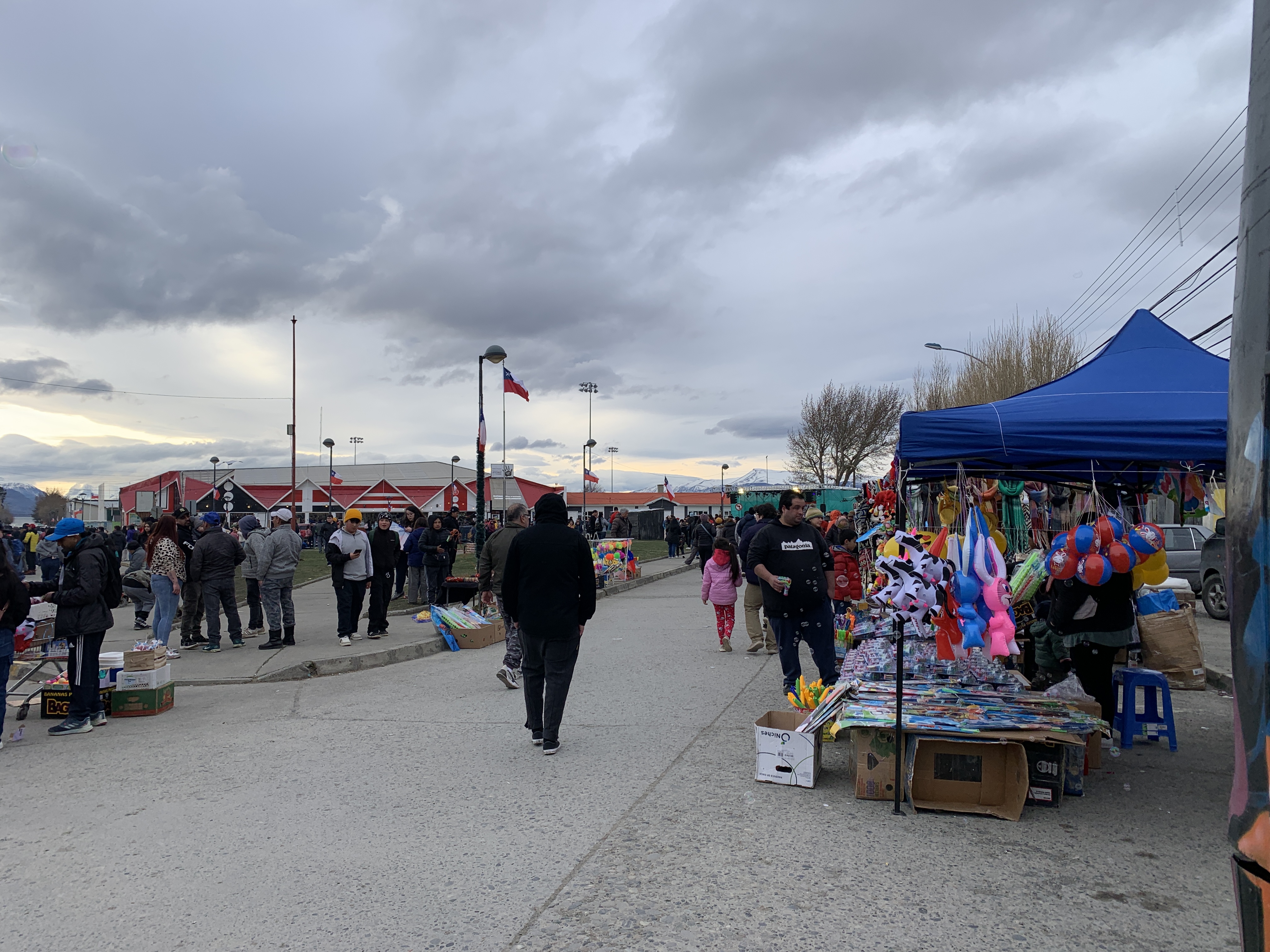
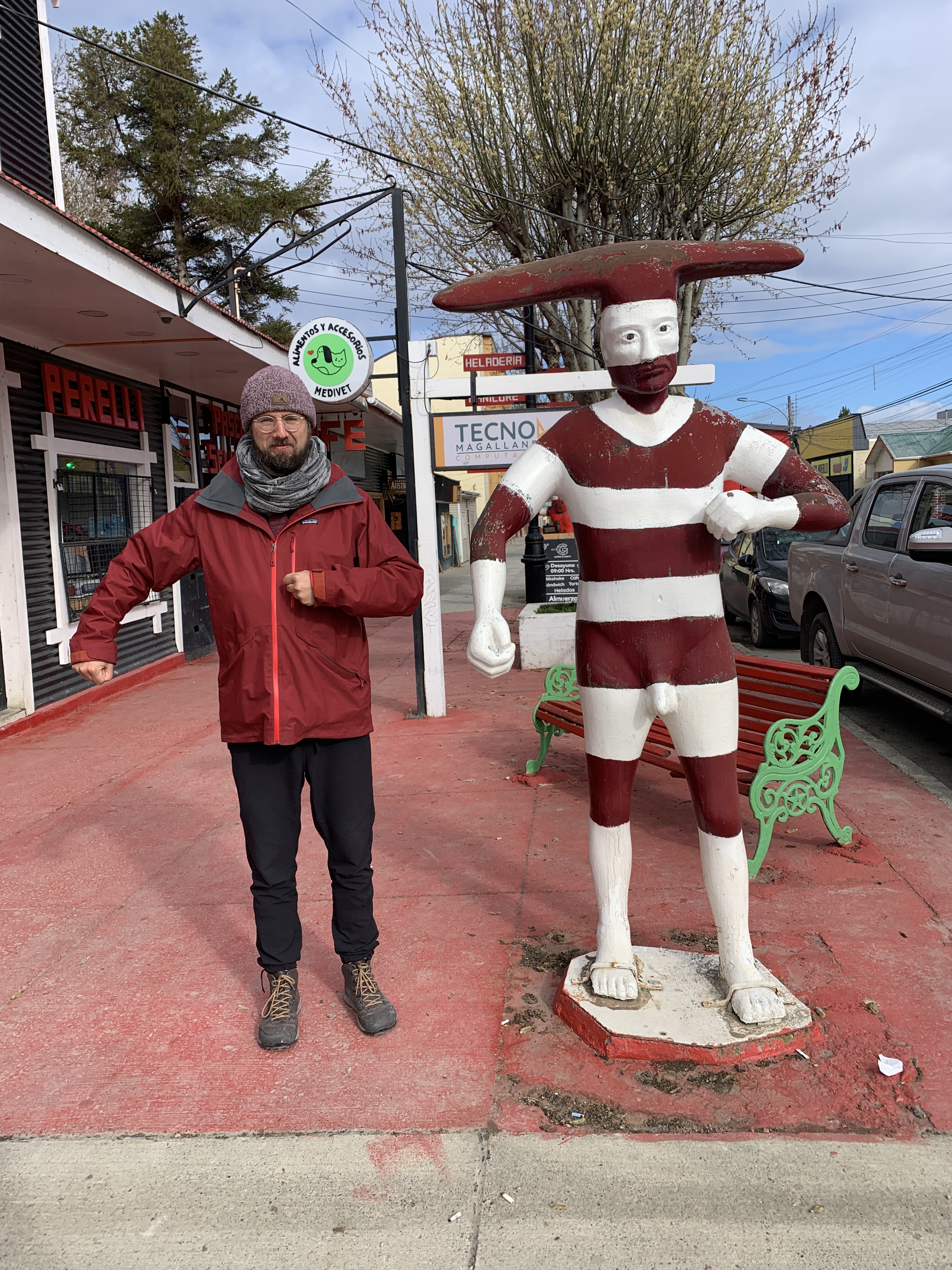
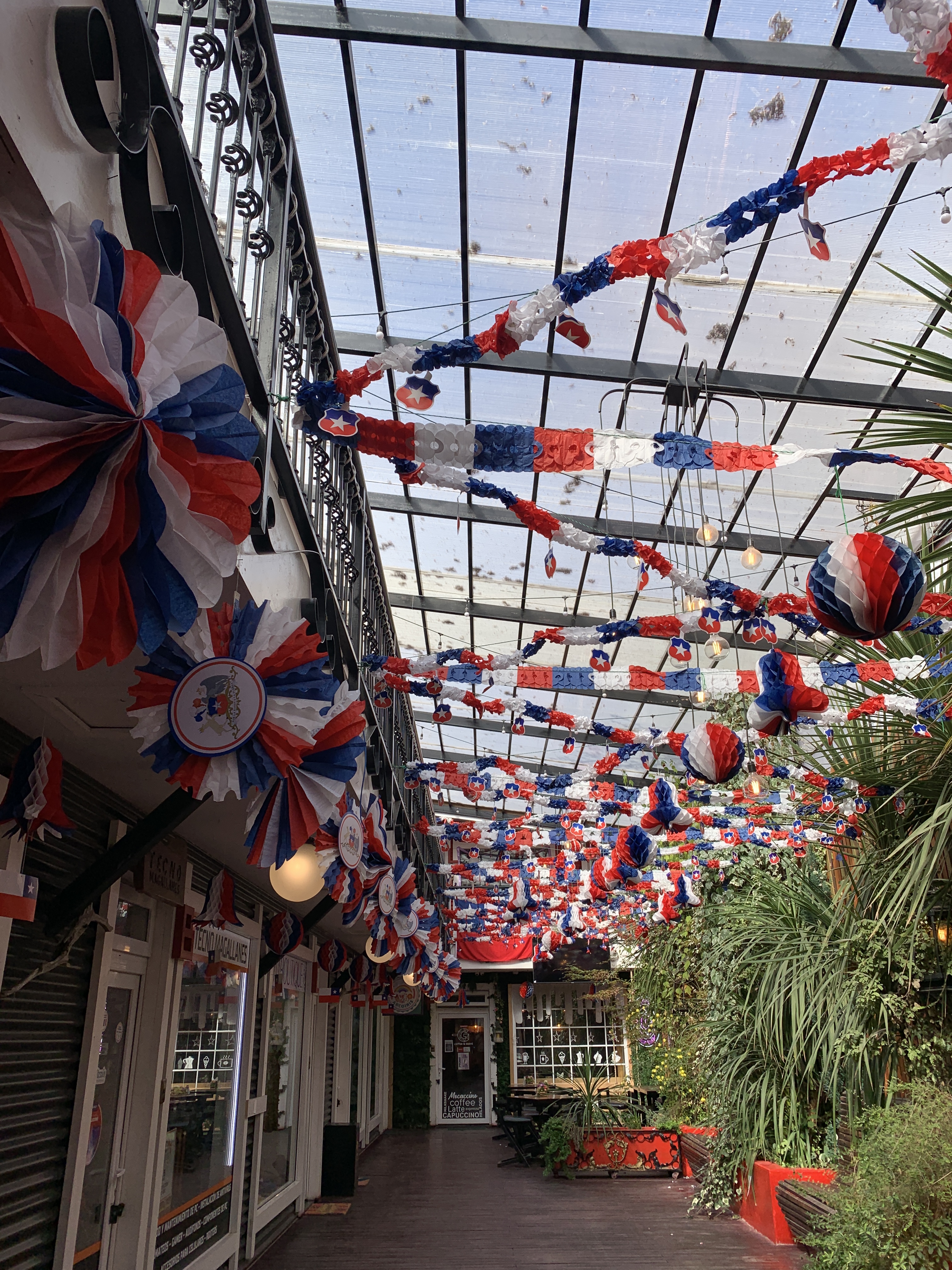
The next morning, our day’s goal was Puerto Natales, to inform and equip ourselves for hikes in Torres del Paine. Our first stop was, however, a Transpetrol gas station on Ruta 9, which made two people very happy. Björn was happy about the diesel in Chile (European standard), and Linda about the really good coffee from the gas station. On the way into town, we passed a giant teapot in the landscape and were able to fill up our water container with drinking water at the entrance to the town. Due to the cool temperatures, our drinking water is still stored in a handy 12-liter tank on board of Rosi. Puerto Natales greeted us with clouds, black-necked swans (Cygnus melancoryphus) in Golfo Almte Montt, an abundance of Chilean flags (which we had already noticed at the border crossings), and a different ghost town atmosphere. Everything was closed, even the shop where we wanted to buy SIM cards for our phones. When we withdrew Chilean cash at the bank counter and had Wi-Fi, we found out that today and tomorrow were holidays. On September 18th, it’s Independence Day, and on September 19th, it’s the Day of the Glorious Army. These two days together form the center of the so-called Fiestas Patrias, one of the most important celebration weeks in Chile. In Puerto Natales, there was a market with stands and festivities in town. We searched for an open café, which wasn’t easy to find. We finally ended up at Omili Haus, a café run by German immigrants after World War II. There was nothing German, except for a stack of photo albums of ancestors. We sat under a German flag with the federal eagle, drank coffee, and enjoyed Chilean specialties: Empanada de Pino (the best I’ve had so far in South America – it also contains olives and boiled eggs) and Mote con Huesillo. A traditional drink made from dried peaches and cooked wheat semolina. Very sweet and tasty. After our visit to the café, we wondered if the ancestors might have been SS refugees. However, one would probably not advertise that and lay out the photo albums with dates and names. Probably.
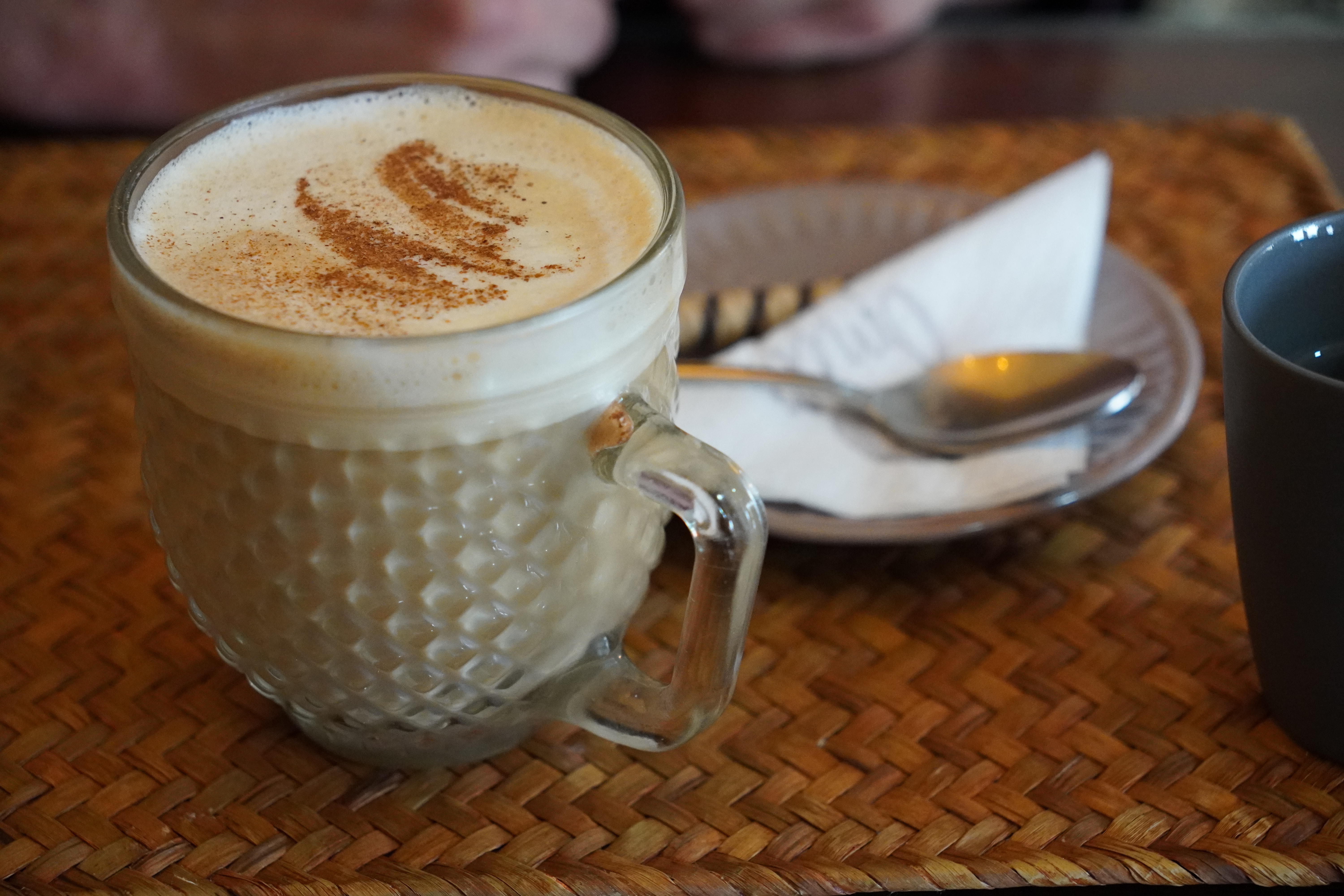
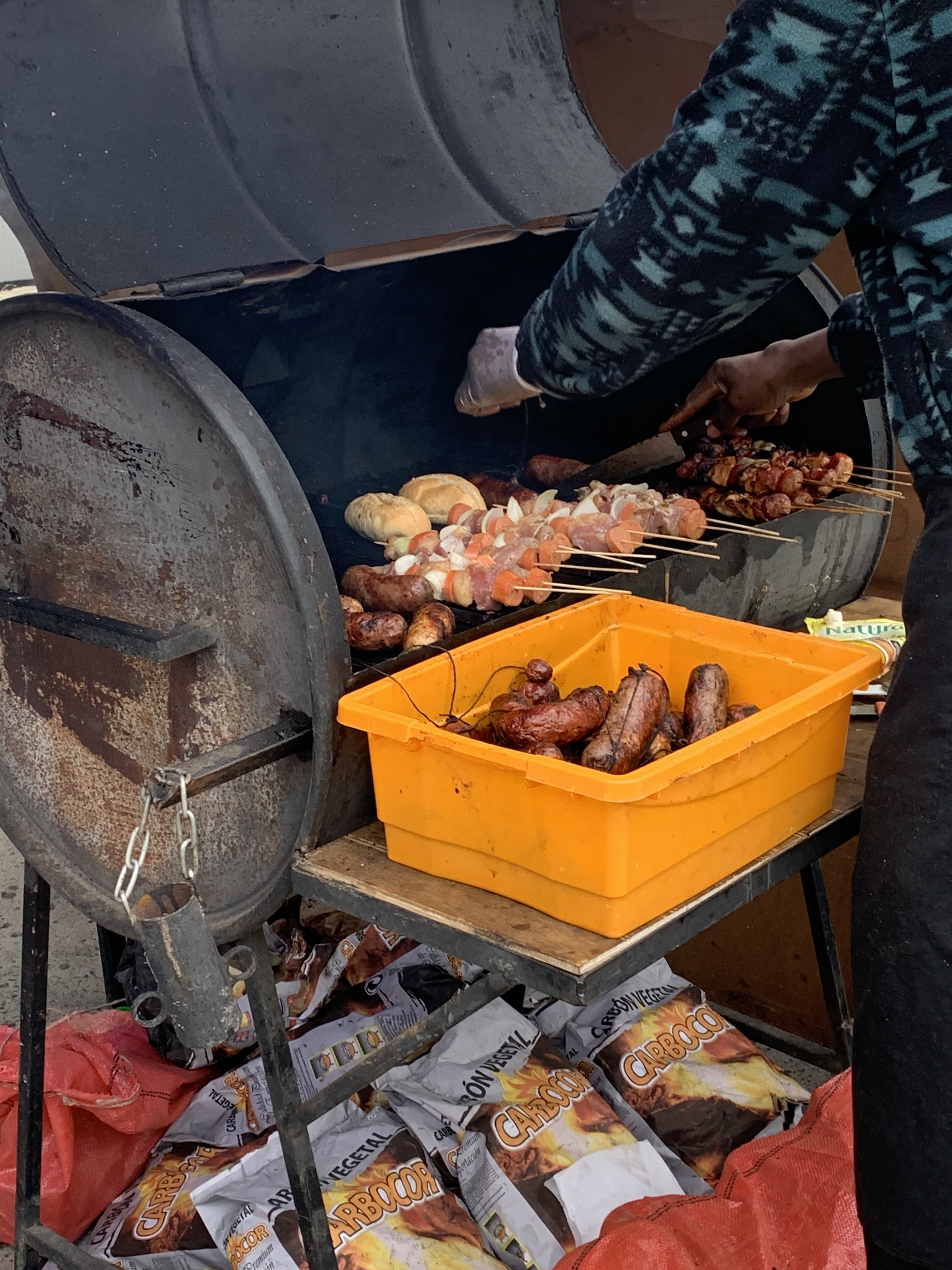
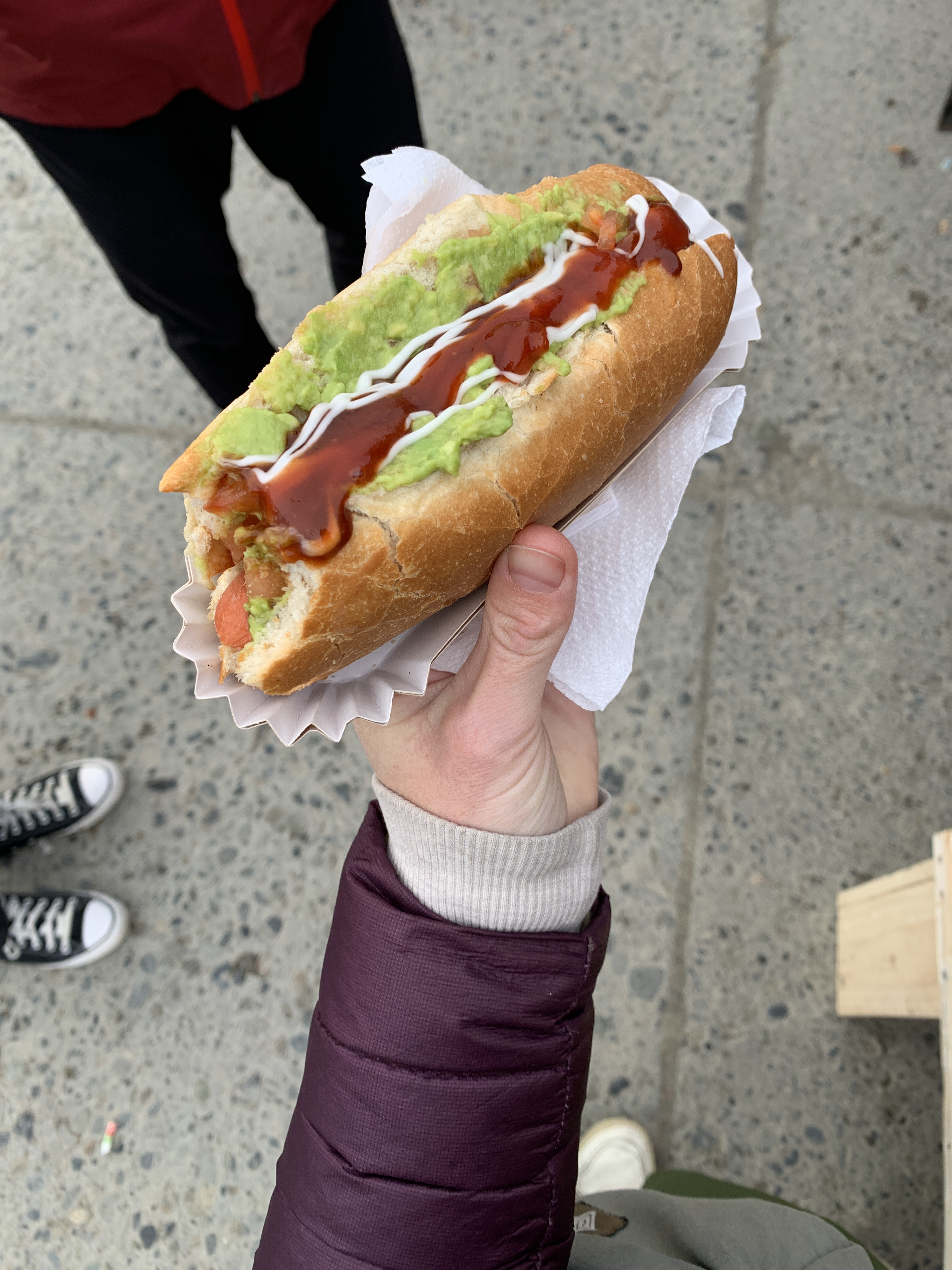
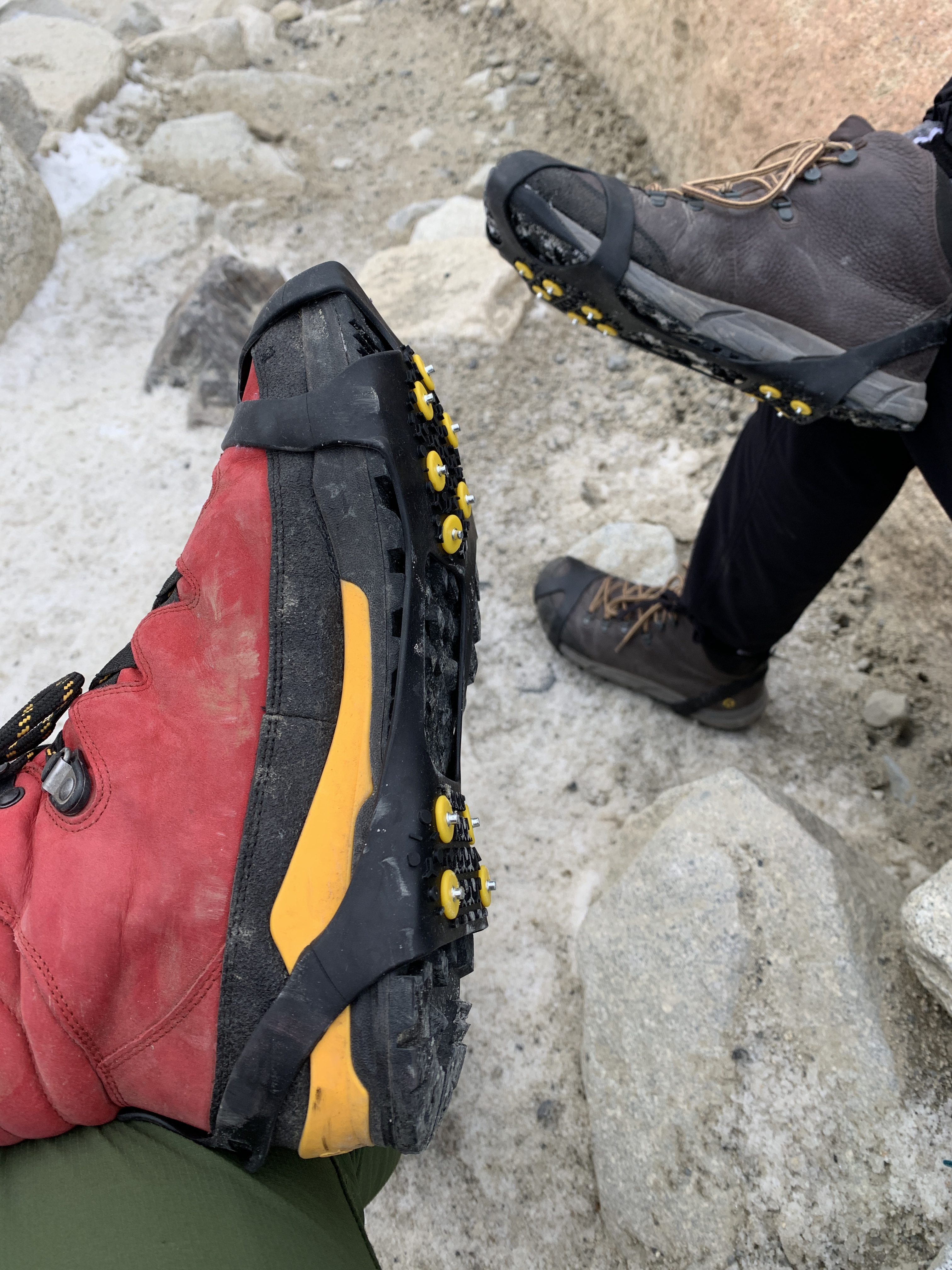
We explored the town a bit more, a pretty harbor town with an outdoor character, which we liked very much. Since not only the tourist information but also all the supermarkets were closed, and we had used up all the fresh food before the border crossing to Chile, we went back to the market and the festivities. The atmosphere was wonderful. We felt very comfortable there and had more Chilean specialties for dinner: veggie Choclo with mushrooms (corn dish), Completo (Chilean hot dog with avocado), and Choripan (Chilean bratwurst in a bun), and had a nice chat with the locals, from whom we received very very important information about Torres del Paine. We definitely needed spikes and hiking poles for the trek. Otherwise, we wouldn’t be able to enter the park. We then looked for a sleeping spot on the shore of Golfo Almte Montt and planned to take care of things the next day, as the two holidays would be over.
National Park Torres del Paine
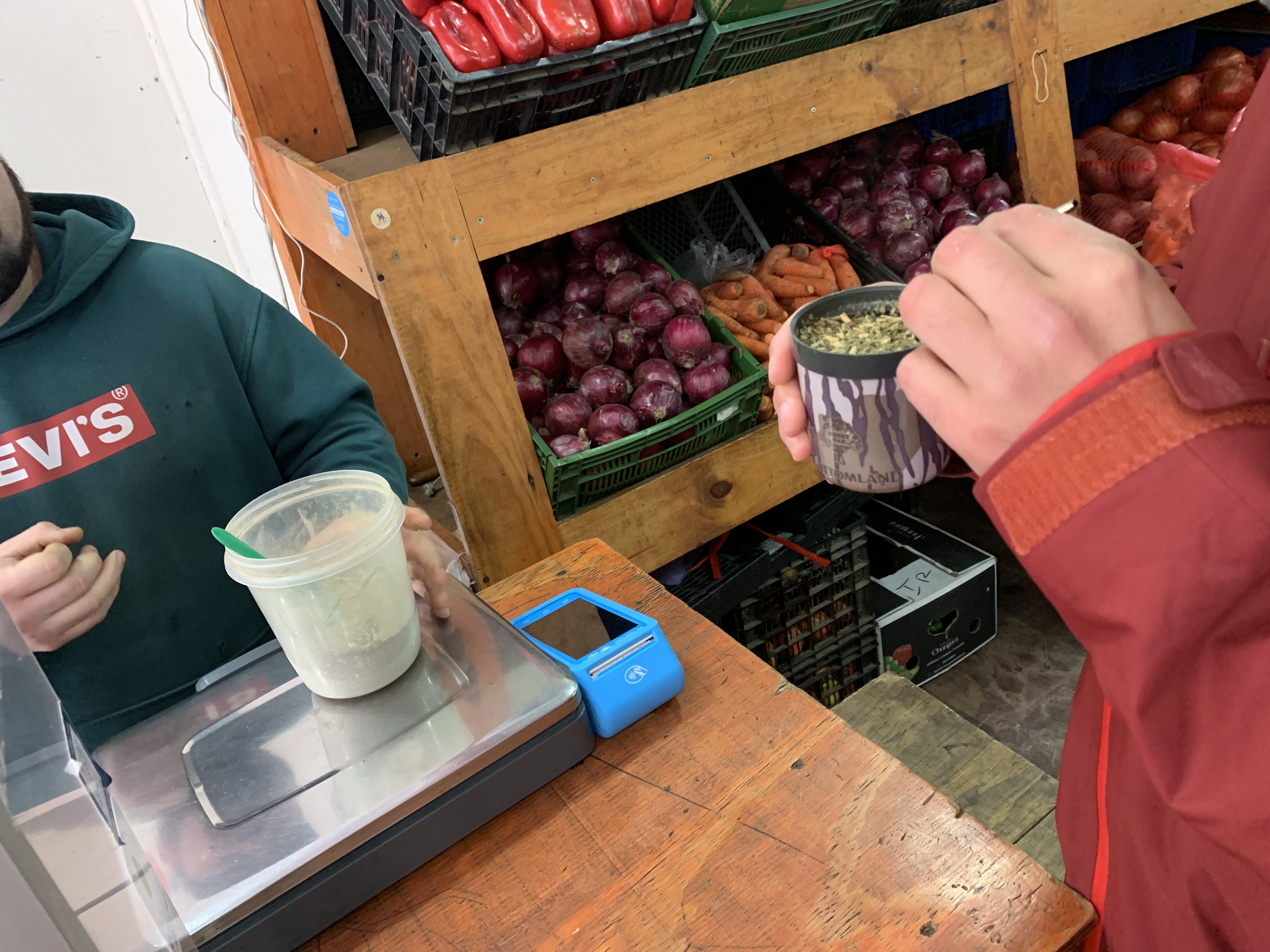
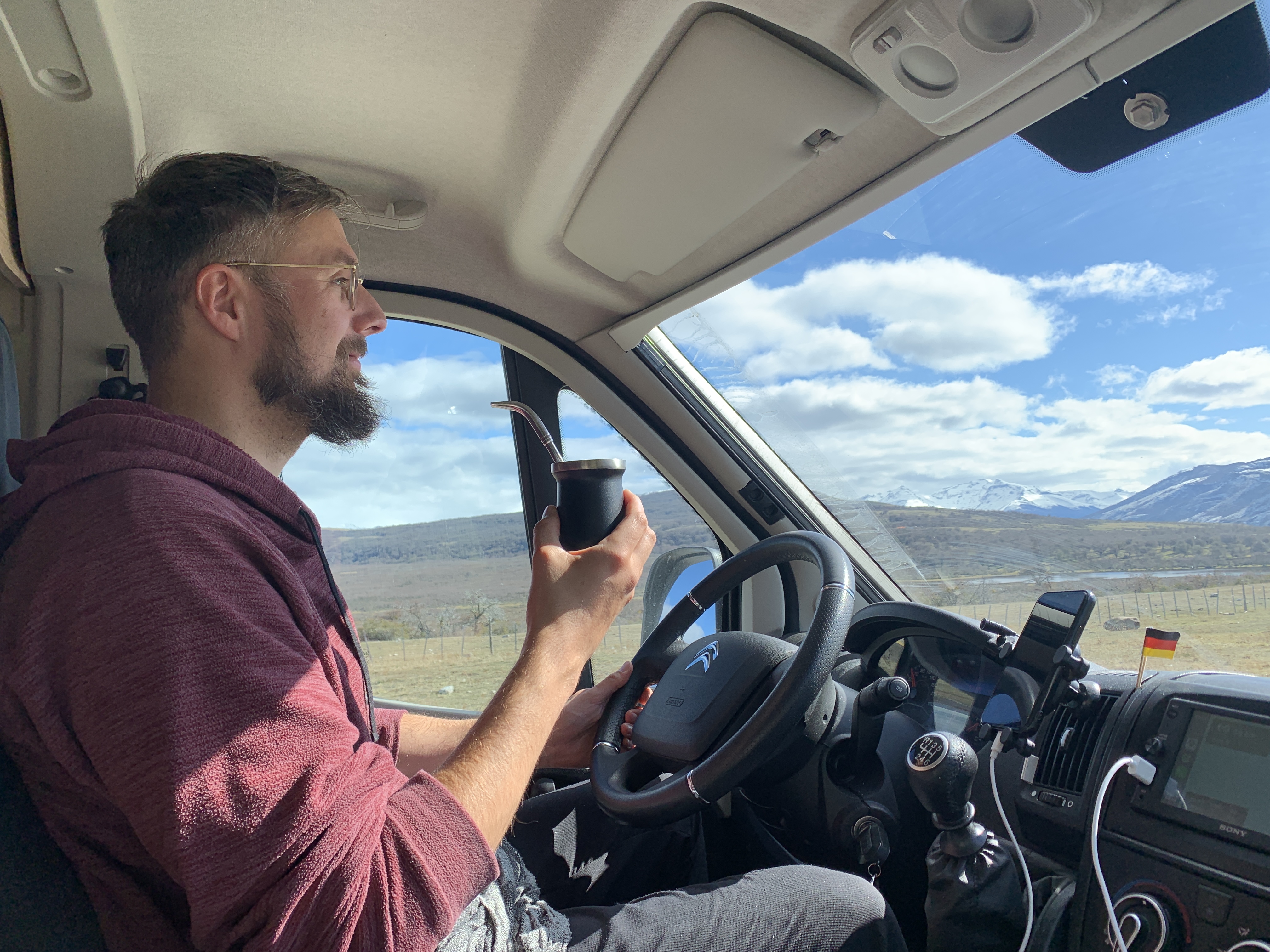
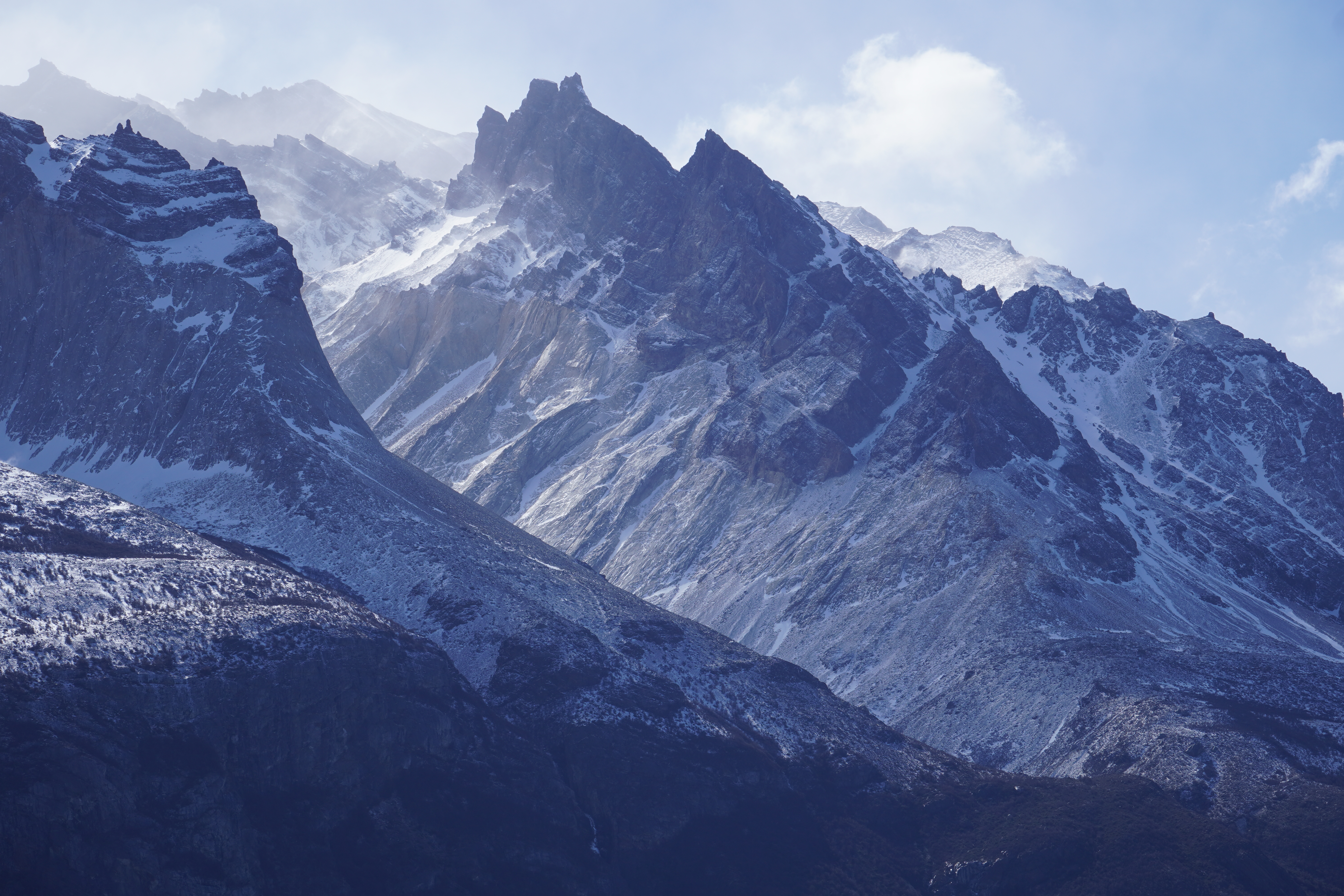
Many of the shops were also closed the next day. Probably because it was the Friday after the holidays. We bought fruits and vegetables, coffee, tried mate, stood in front of the closed tourist information, and finally found stores where we could get 2 pairs of spikes (silicone covers) and an alibi trekking pole for me for about 15€. I wouldn’t use it, but otherwise, I wouldn’t be allowed to go hiking. Björn uses his anyway. With a mate in hand, we drove north on Ruta 9, towards Torres del Paine National Park. The closer we got, the more we could see the snow-capped mountain range Cordillera del Paine rising more prominently in the landscape. We couldn’t get enough of the scenery.
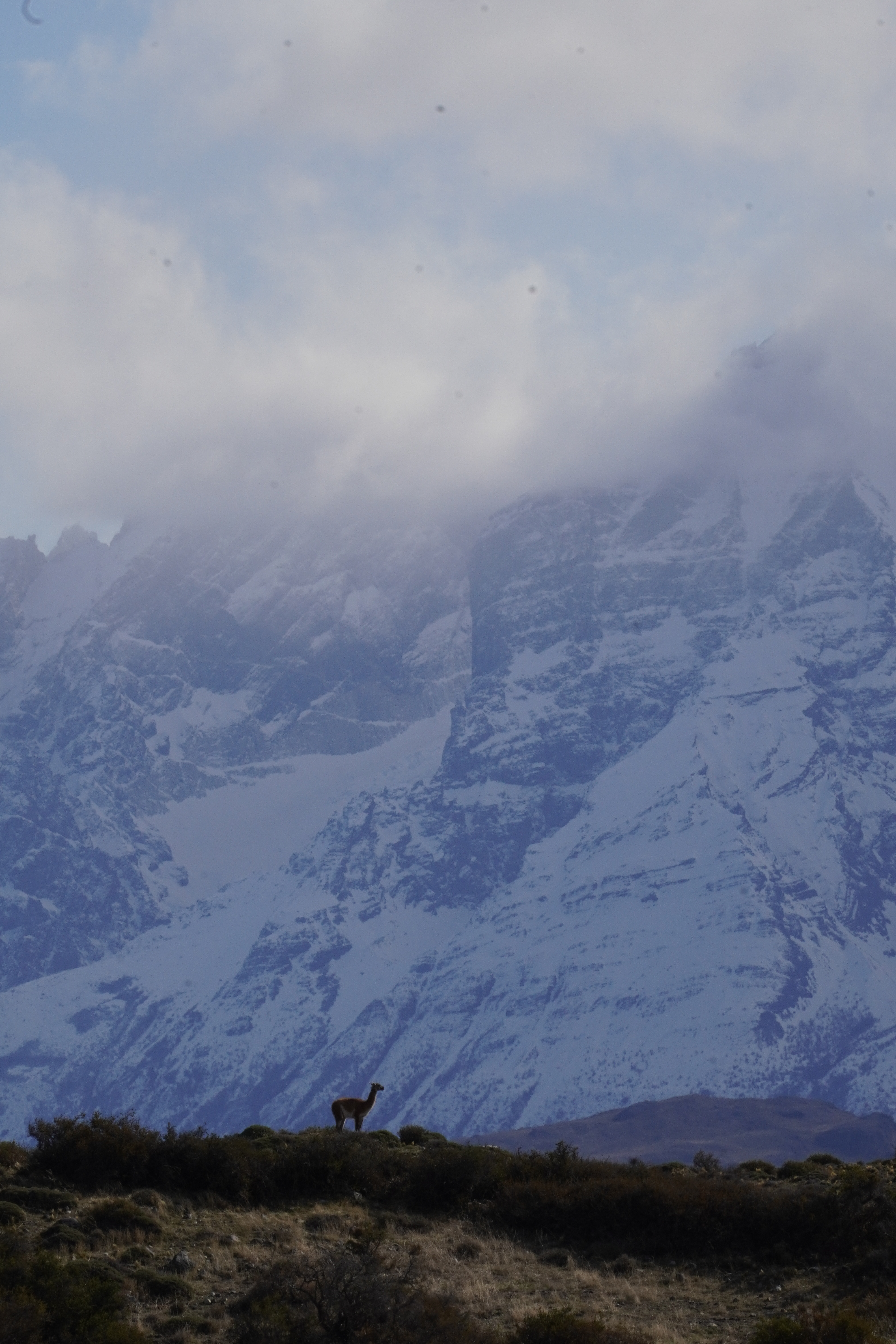
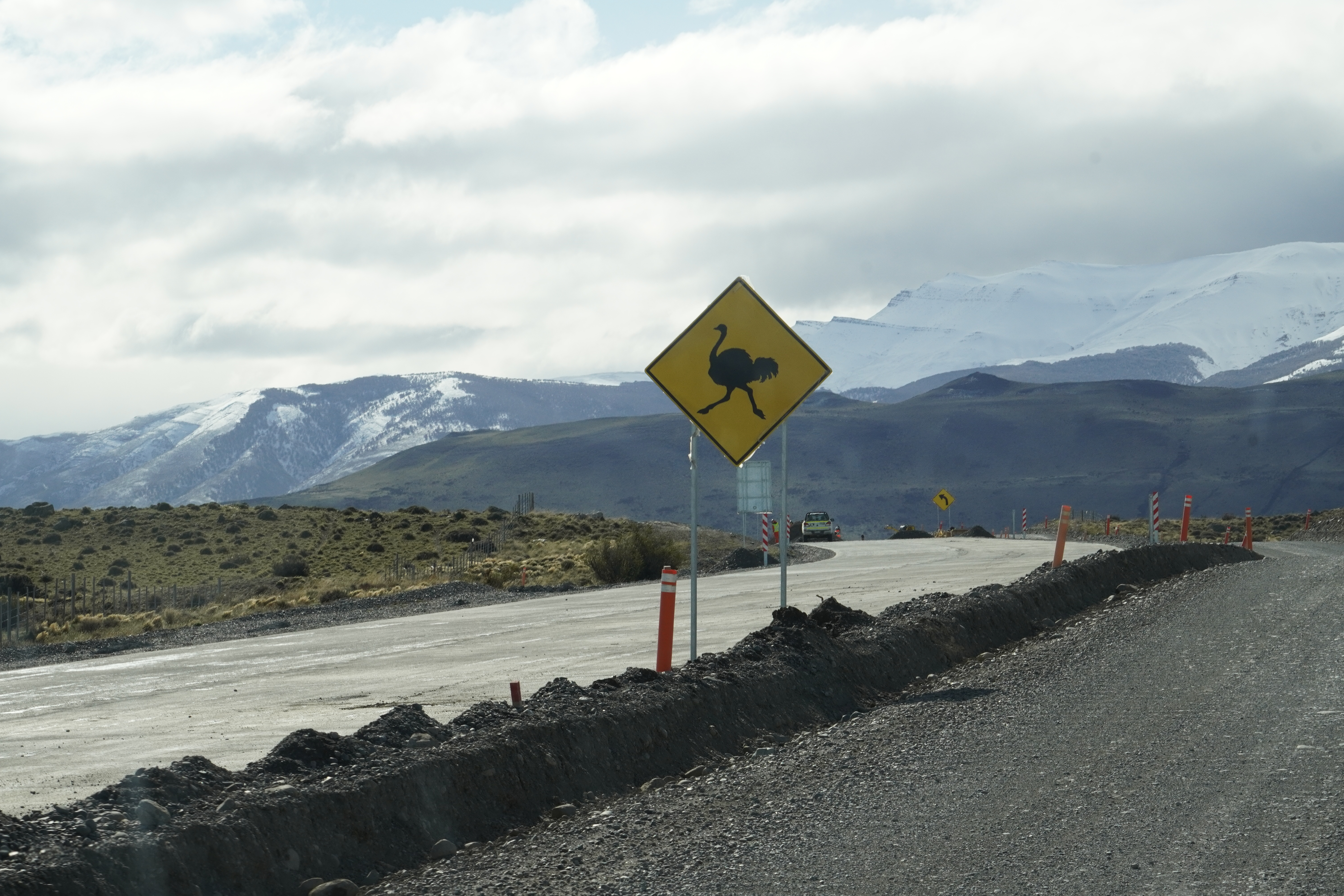
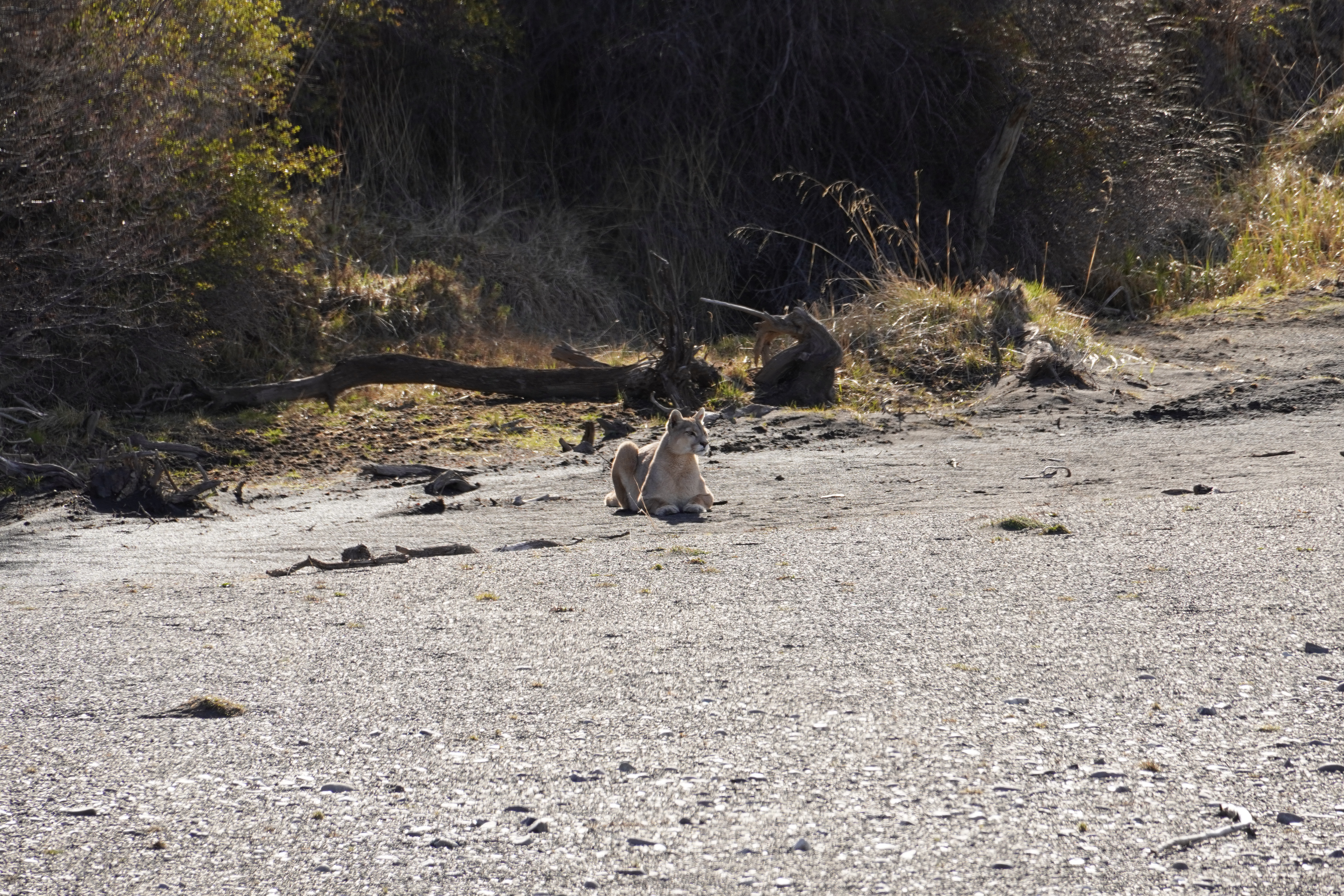
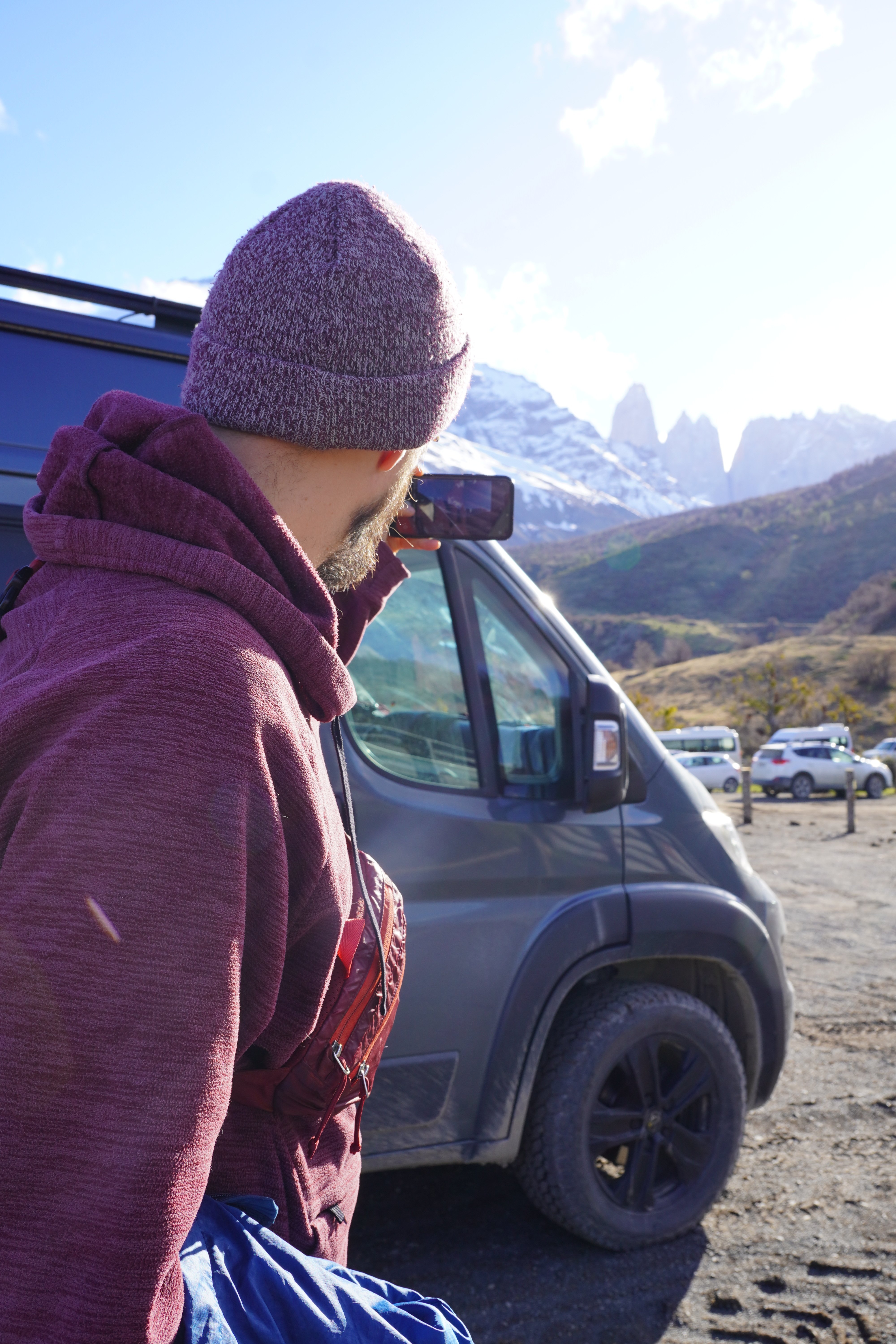
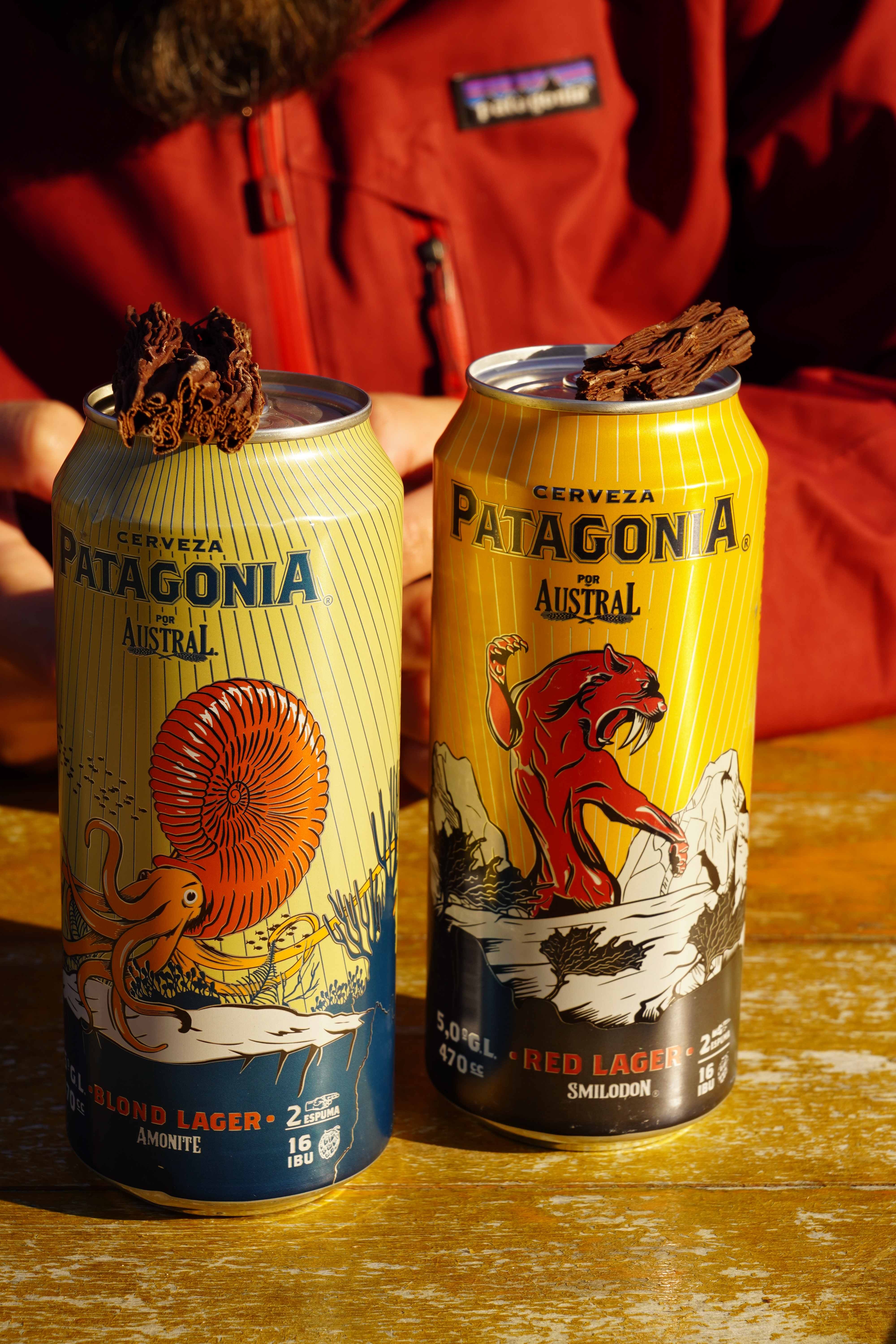
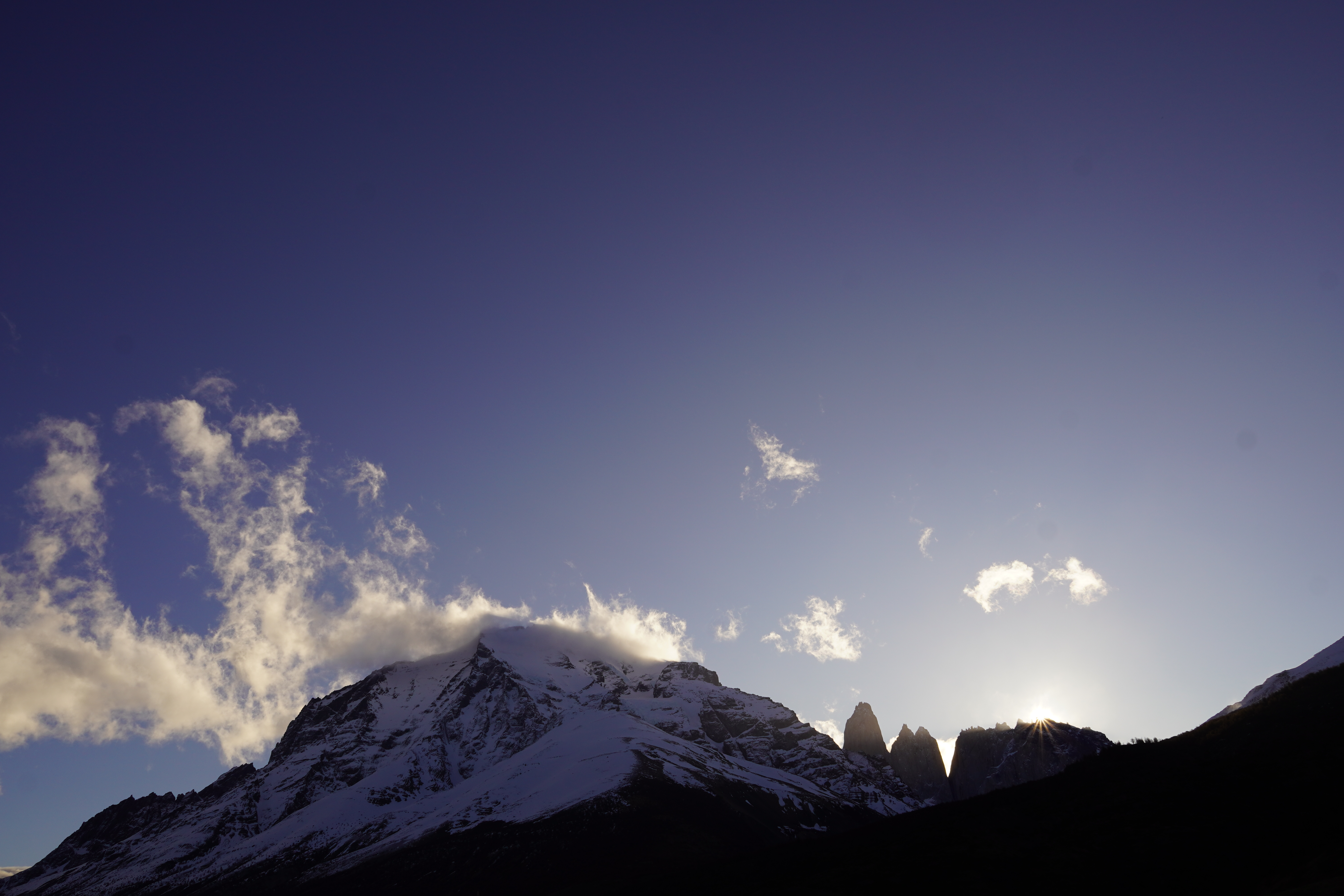
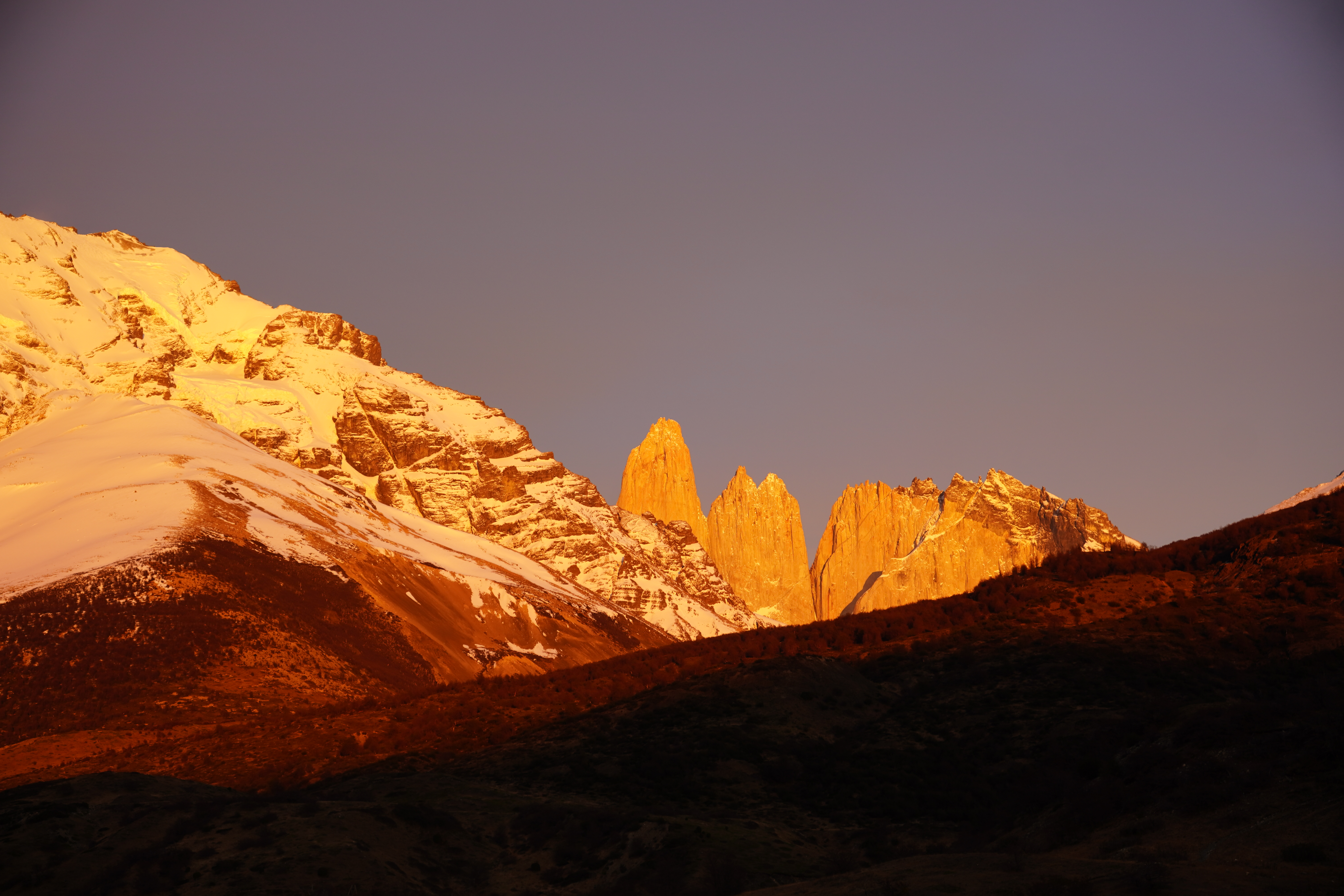
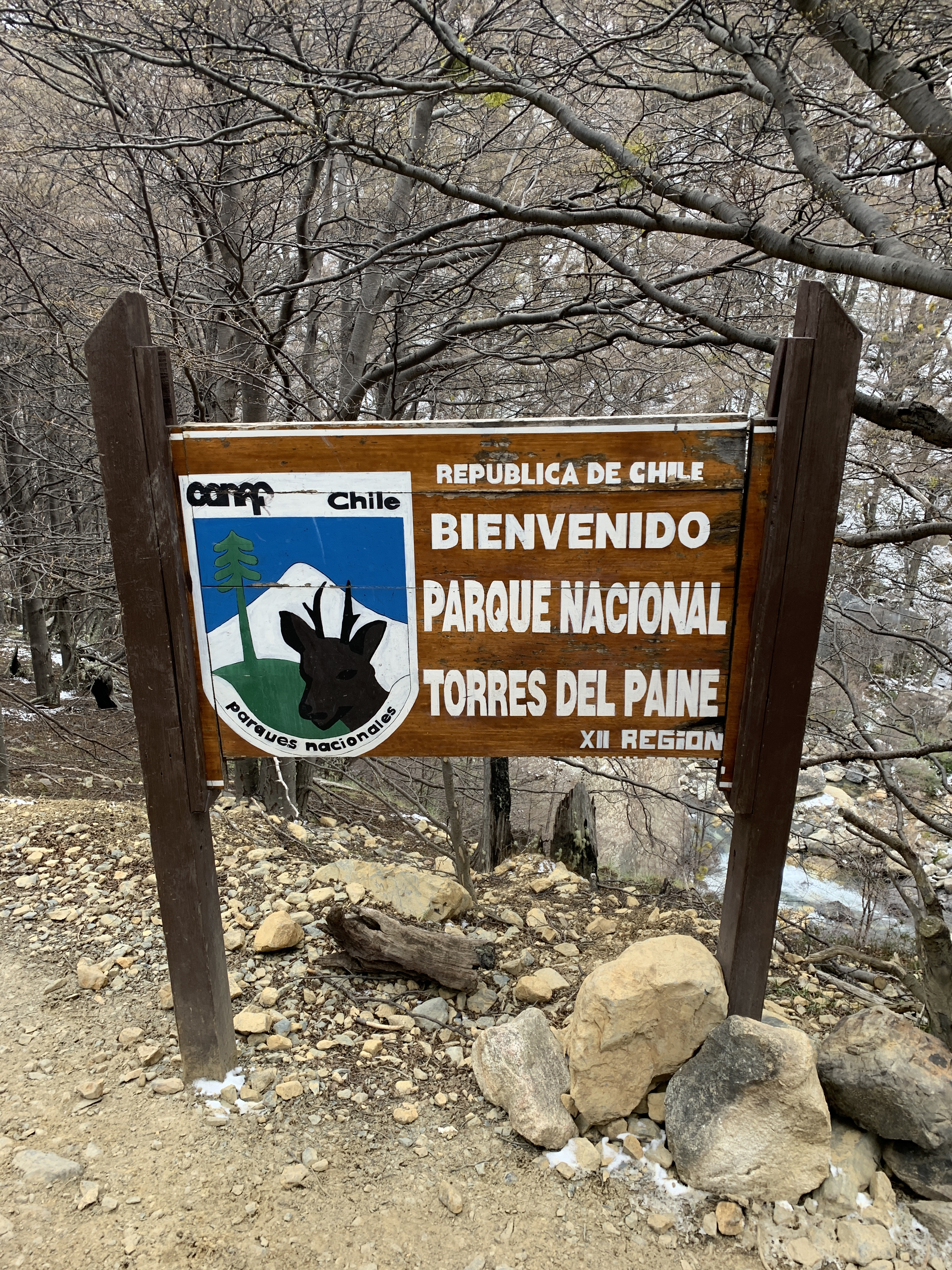
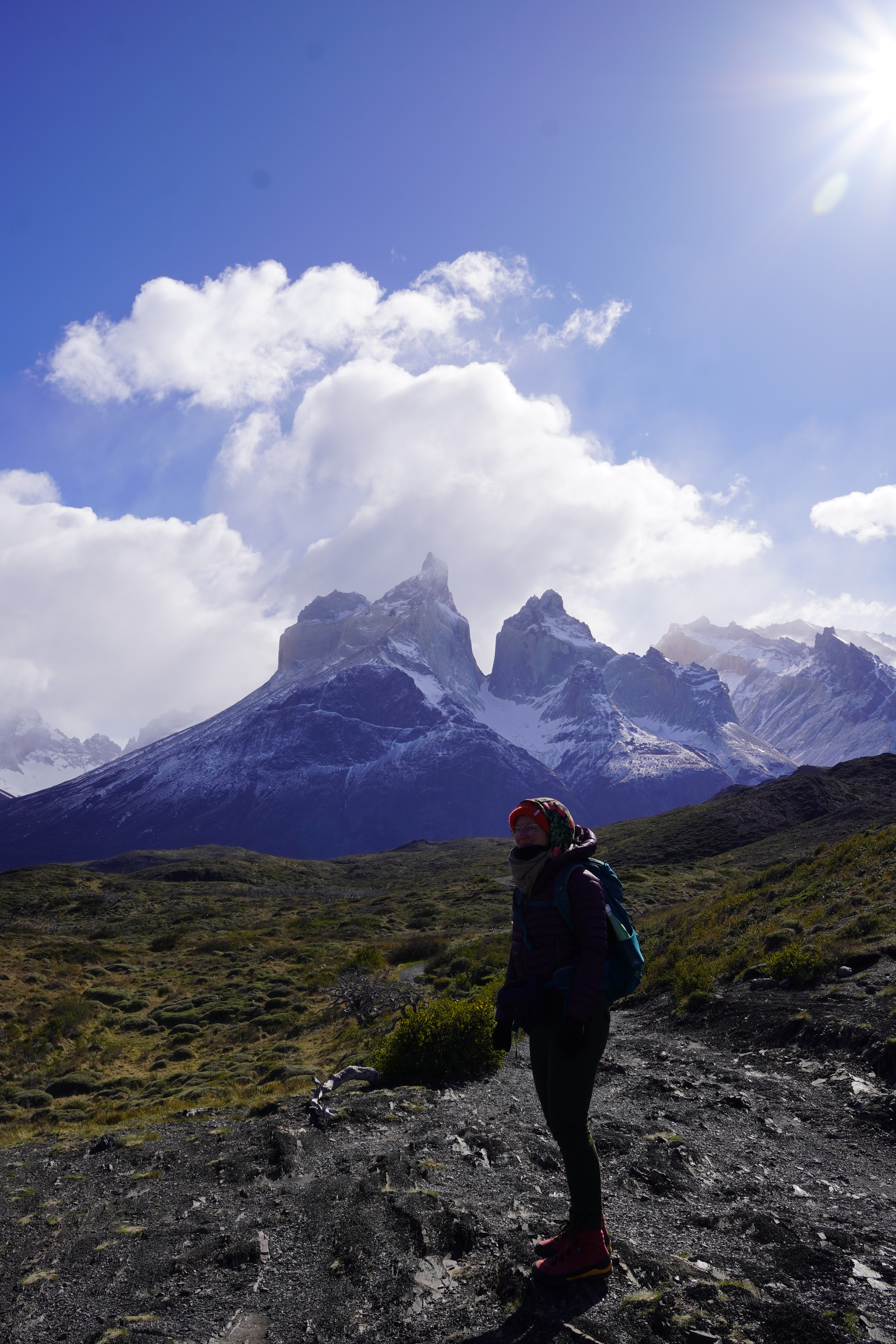
The last kilometers before the national park required us to drive on the gravel road next to the newly paved highway. Unfortunately, the new road was not yet finished. At the entrance of the national park (the only place where we had free Wi-Fi via Star Link in the park), we paid about 80€ admission because we wanted to stay longer than 3 nights and we’re not Chilean. The very young employees could not provide us with any information about hikes, weather conditions, or closed trails. However, we knew that the refugios would not open until October, and we could not do the W-Track. The W-Trek in Torres del Paine is an 80-kilometer multi-day hike which reaches heights of over 2,800 meters, which is shaped like a “W.” In sunny and cool temperatures, we made our way to the Welcome Center, one of the few places where you can camp for free. On the way there, we could hardly believe our eyes. We spotted a puma on the riverbank, lounging in the sun and watching until it slowly disappeared into the bushes. What a great encounter! At the Welcome Center, we enjoyed a beautiful sunset with a view of the Torres, Patagonia beer and chocolate and prepared for the hike (one section of the W-Track) the next morning.
Hiking in the National Park in the Off-Season
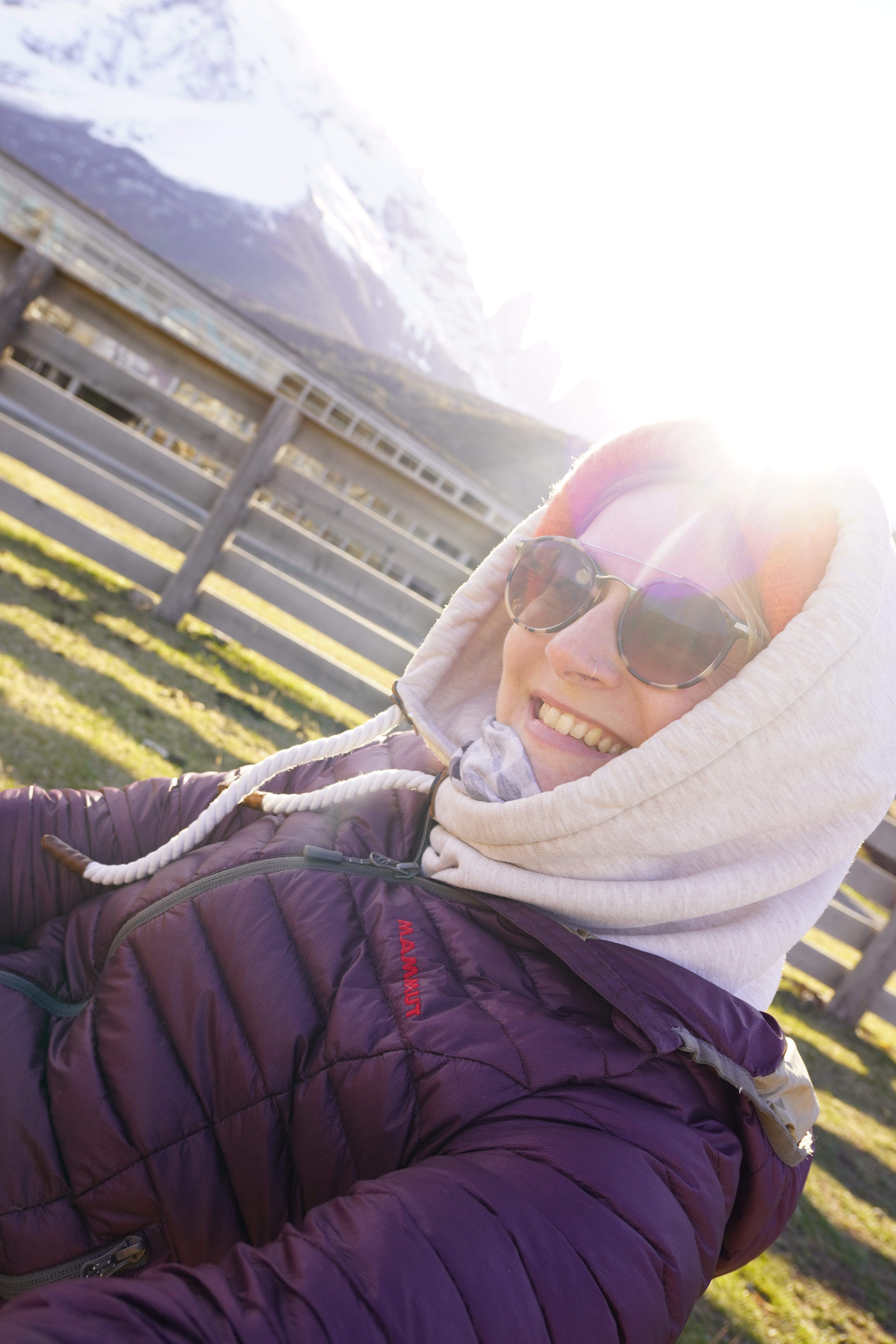
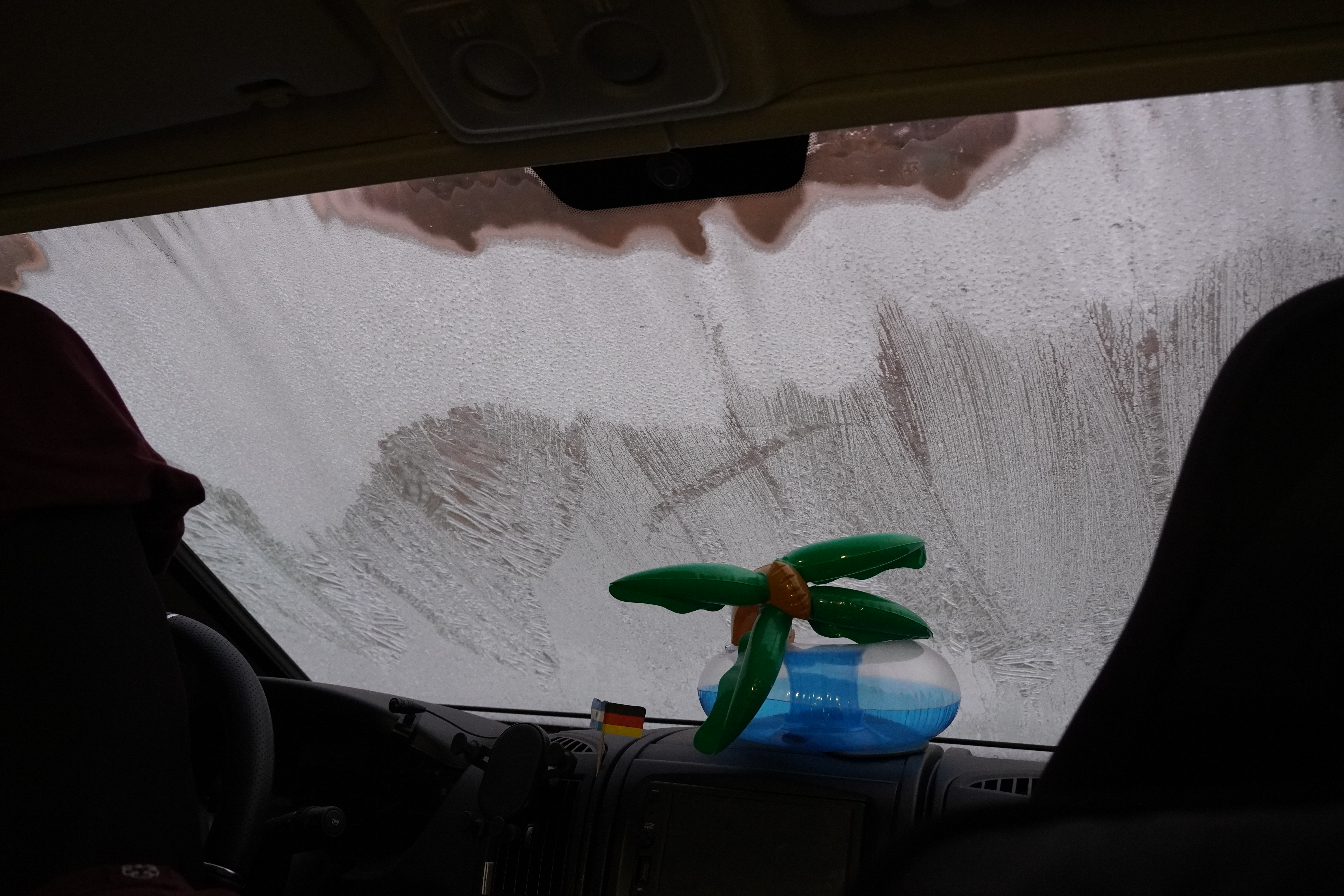
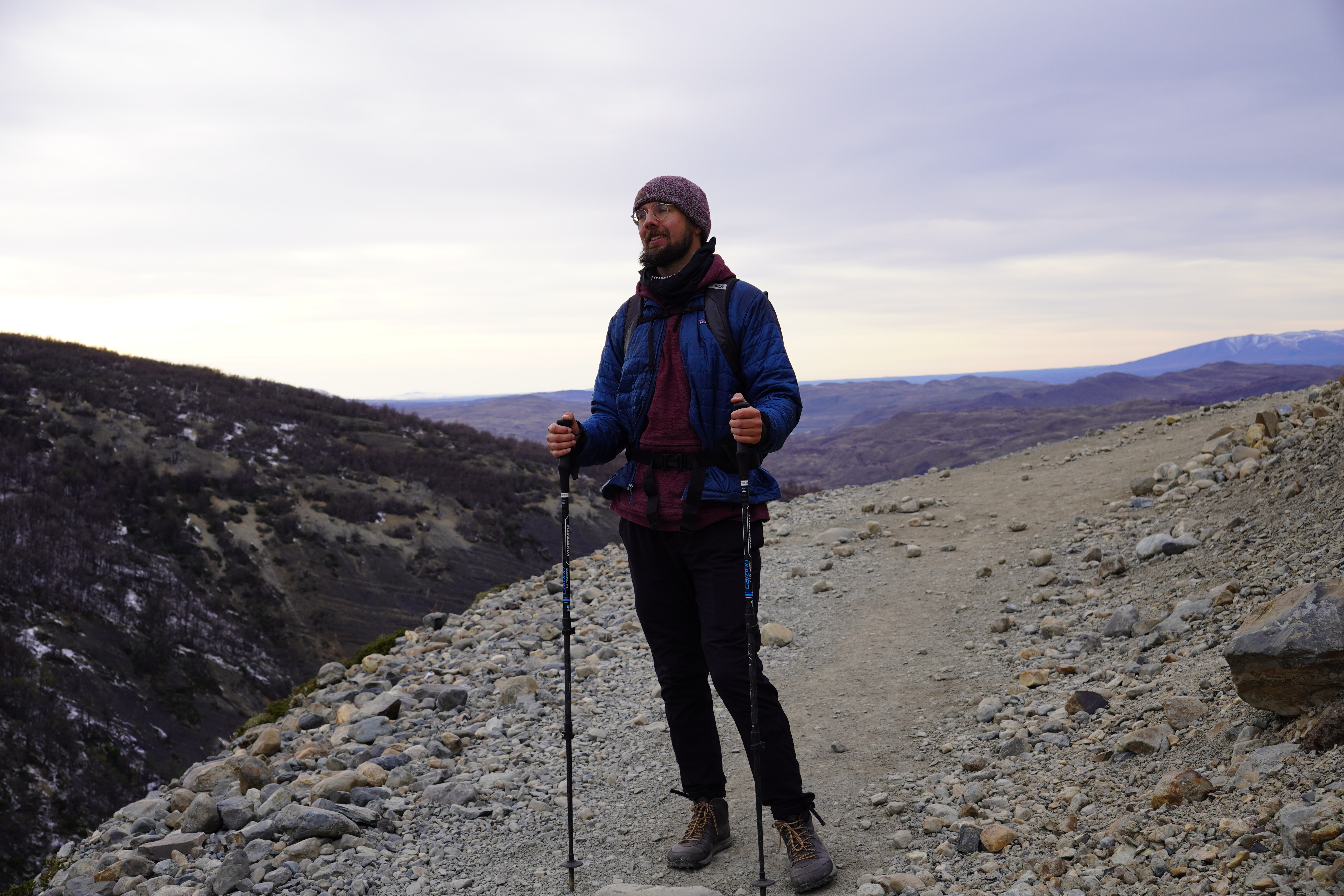
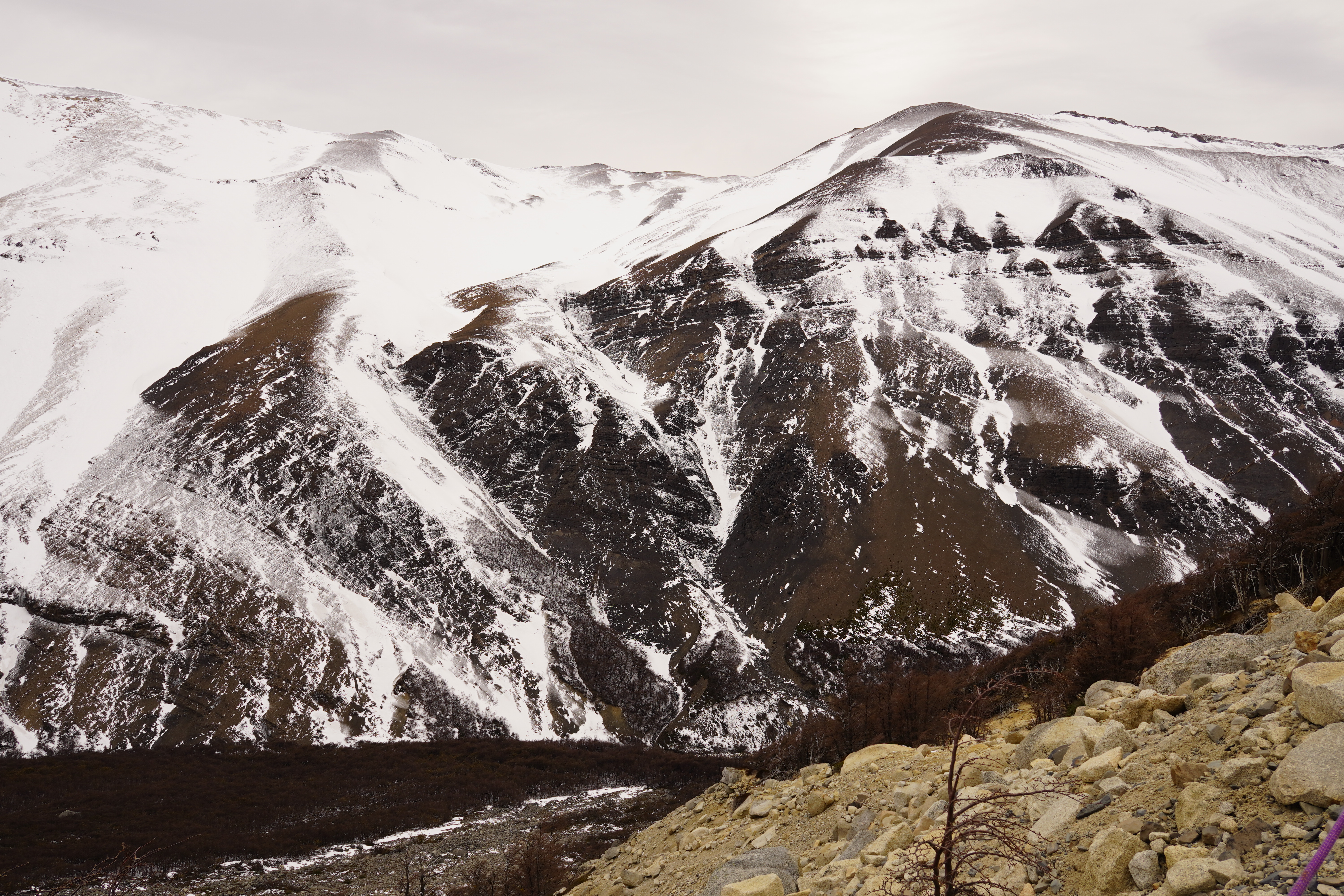
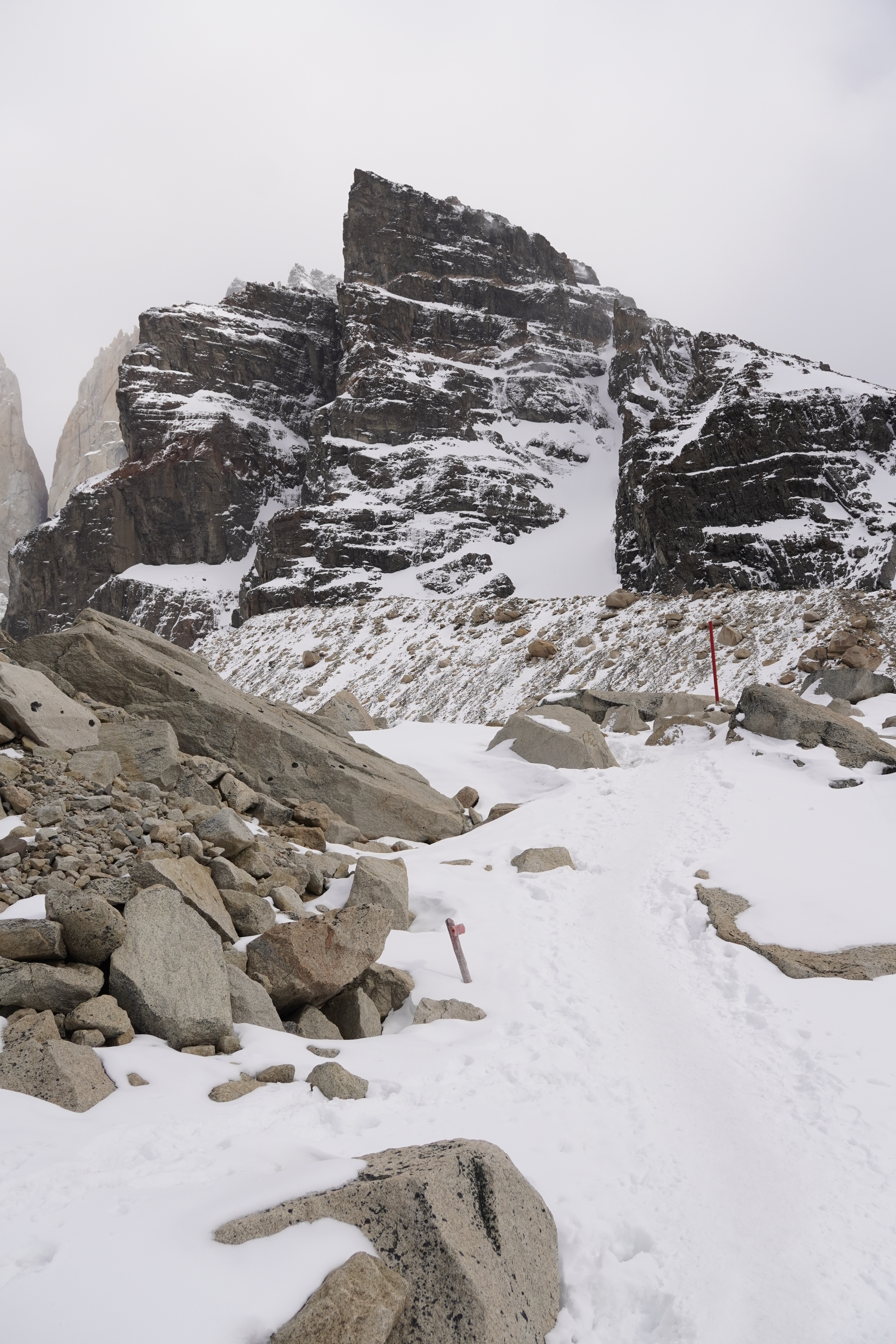
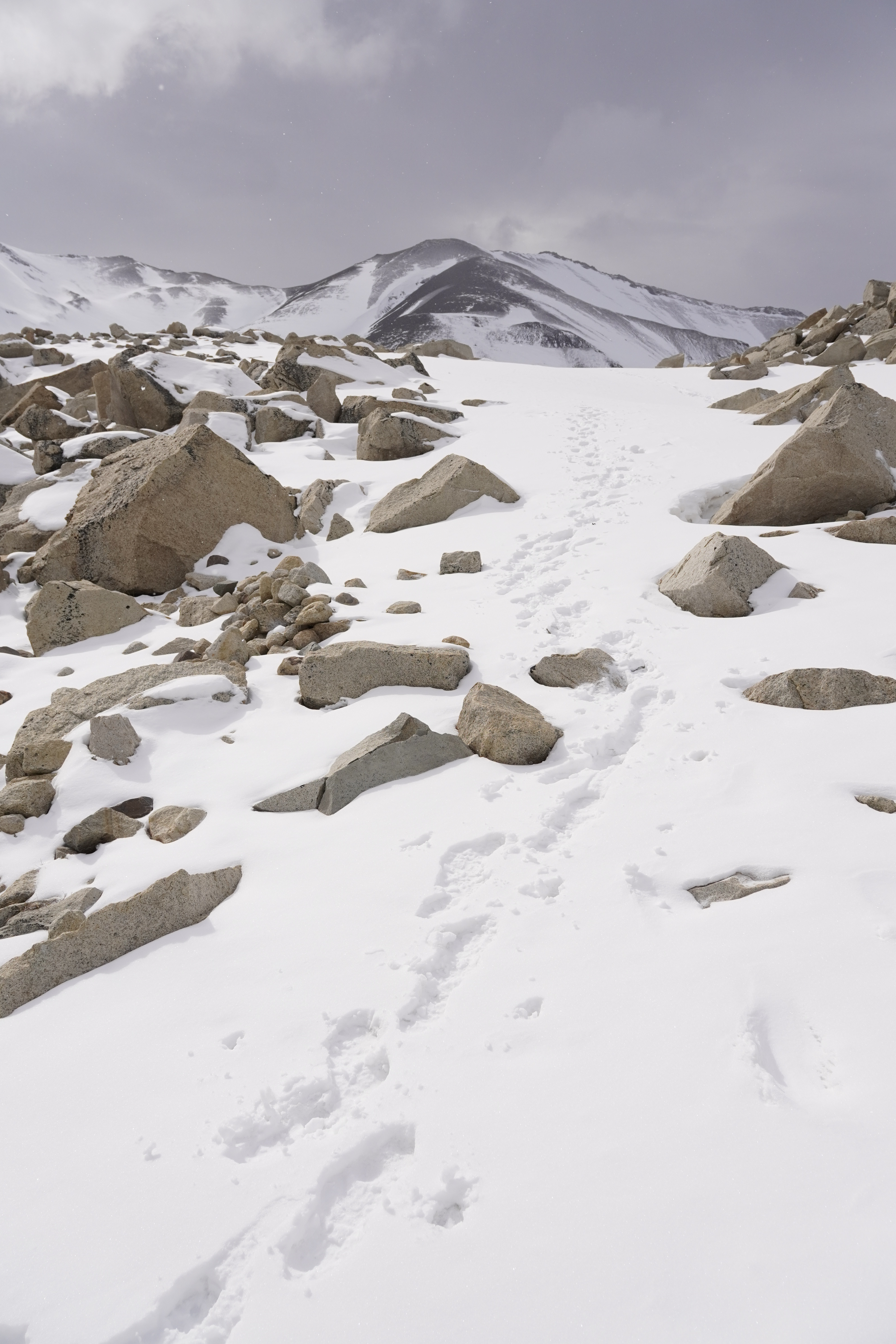
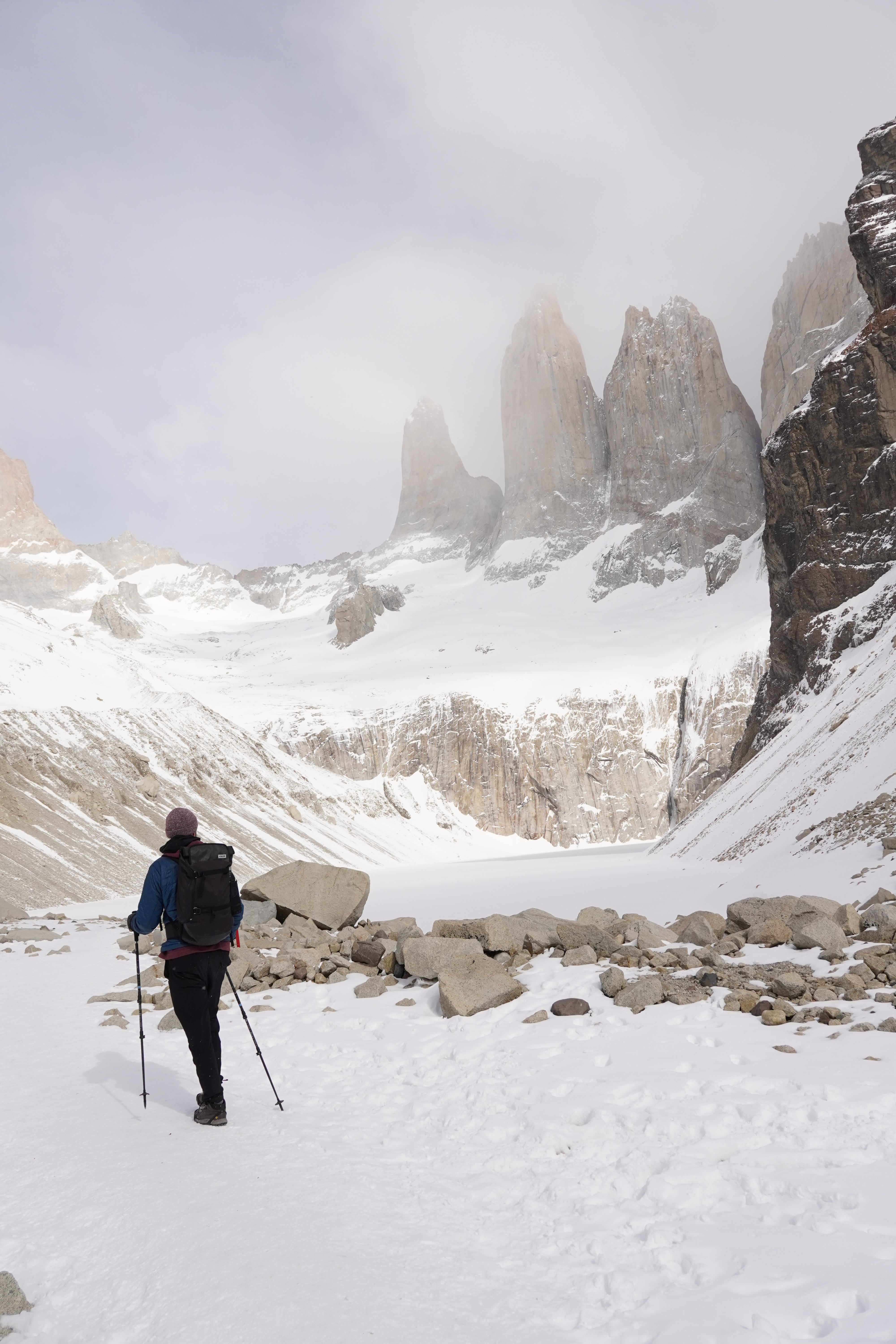
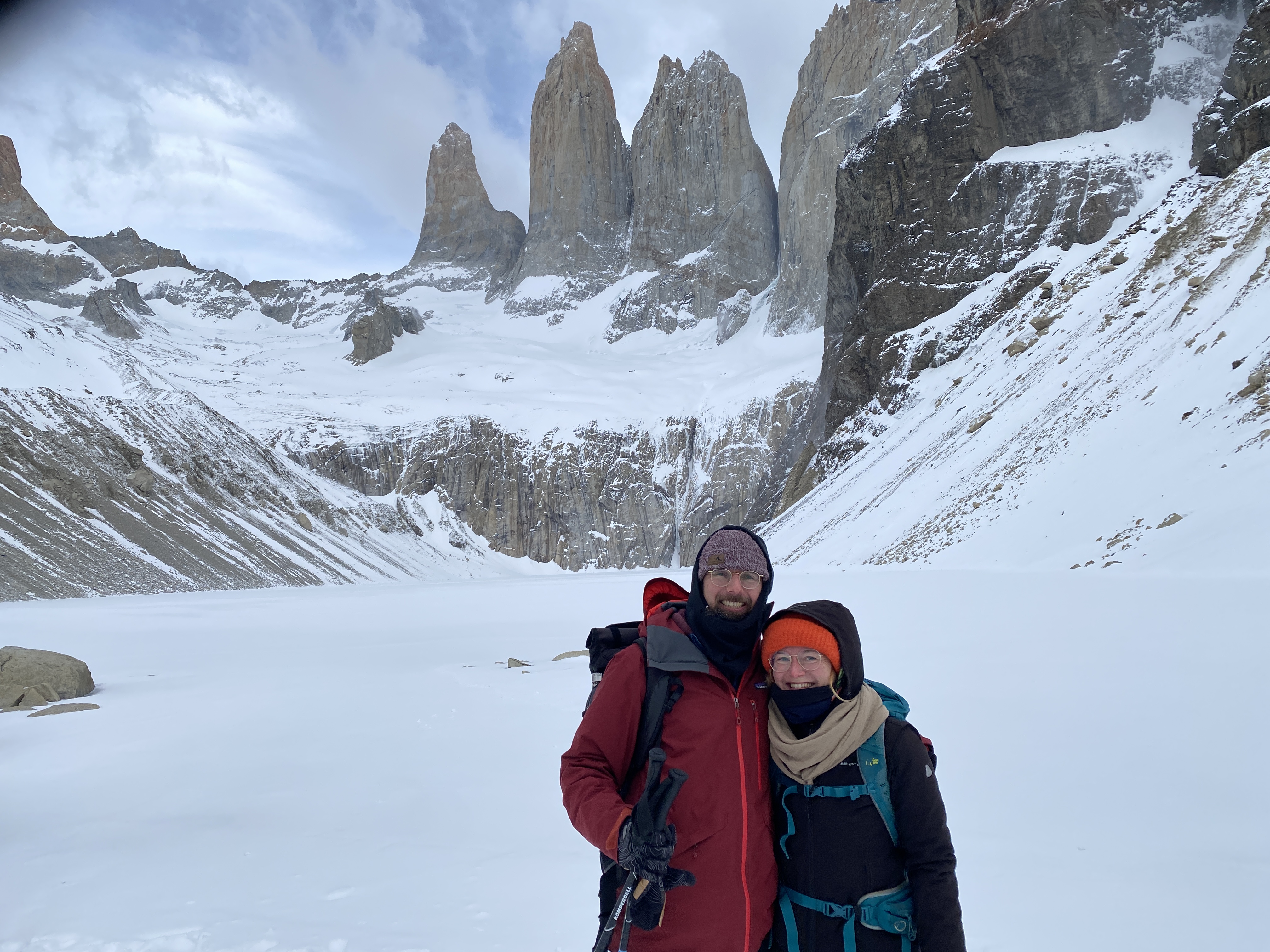
The night was probably the coldest so far, and everything around us was frozen in the morning. Around 8 a.m., we set off, warmly bundled up in sub-zero temperatures. Before us lay a good 8 hours with 20.4 km of distance and 880m of elevation gain and loss. After 20 minutes of warming up, the ascent began. The hiking trail had turned into a riverbed, completely frozen. You had to be very careful not to slip. We warmed up, and the cold temperatures were no problem at all. About 1.5 hours before the endpoint, someone from the national park came towards us and checked our equipment. She wanted to see our crampones (spikes), which we dug out of our backpack and without which we would not have been allowed to proceed. We would need them half an hour later. The last hour before the highest point, it was very steep and icy, and some sections consisted of steep snow-covered paths on the slope. When we finally arrived around noon, we were rewarded with a breathtaking view of the Torres and the frozen lake, as well as an icy strong wind. We drank warm tea, ate some bread, and took a few photos before we set off on the 4-hour descent. You couldn’t stay up there much longer because it was simply too cold. (Thank you Björn, for the USB hand warmers last Christmas that can also serve as a power bank). On the way back, you still had to be careful, as sections of the path were either frozen or muddy. Additionally, we encountered many hikers coming up the same path, which made the descent more difficult. We – and our knees – were very, very glad when we were back at Rosi in the early evening and had warm pumpkin-potato-coconut soup (prepared the day before). Unfortunately, the nice feeling of a warm shower was missing, but we made ourselves cozy and warm in the van, massaged ourselves with the Terragun, and stayed another night there.
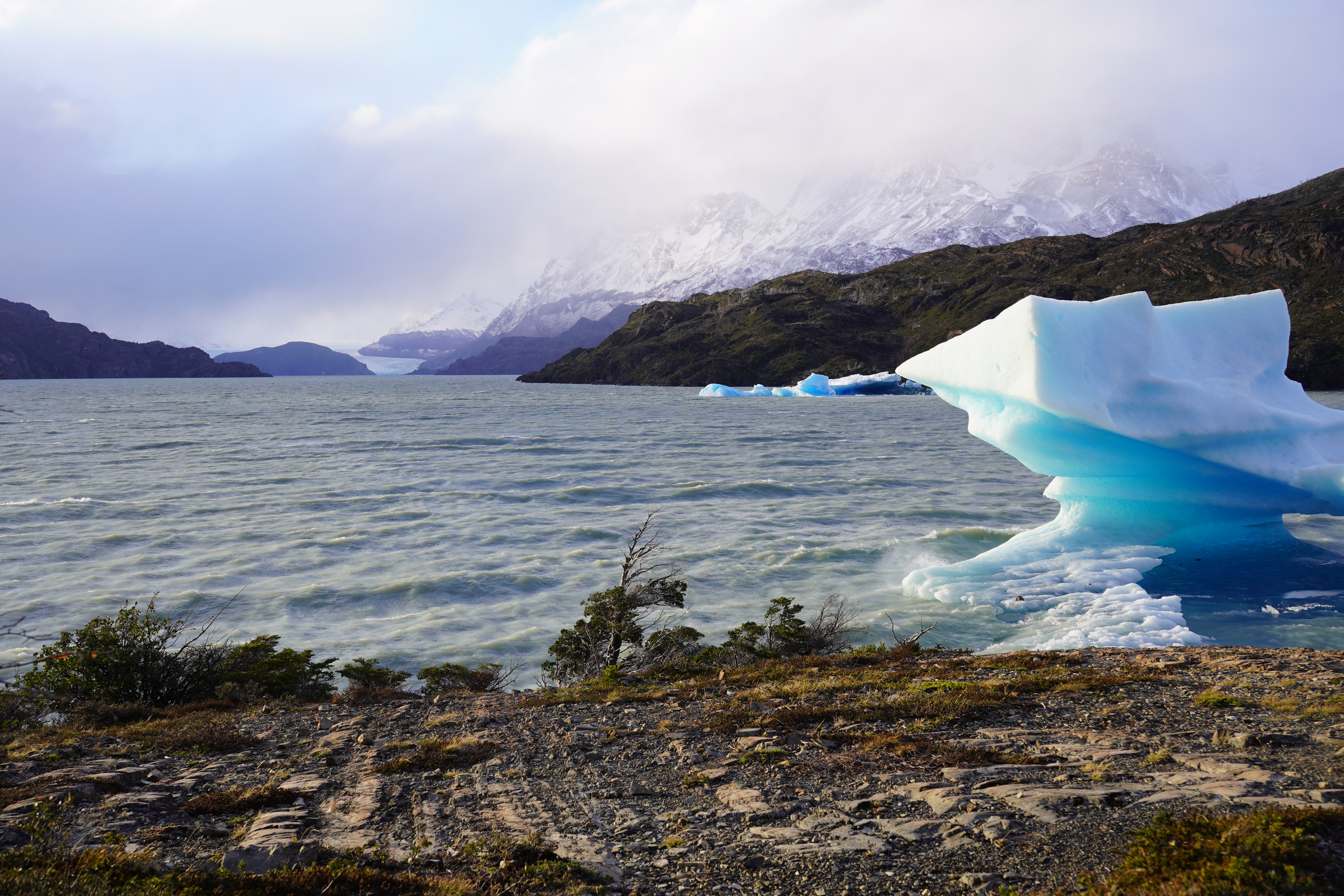
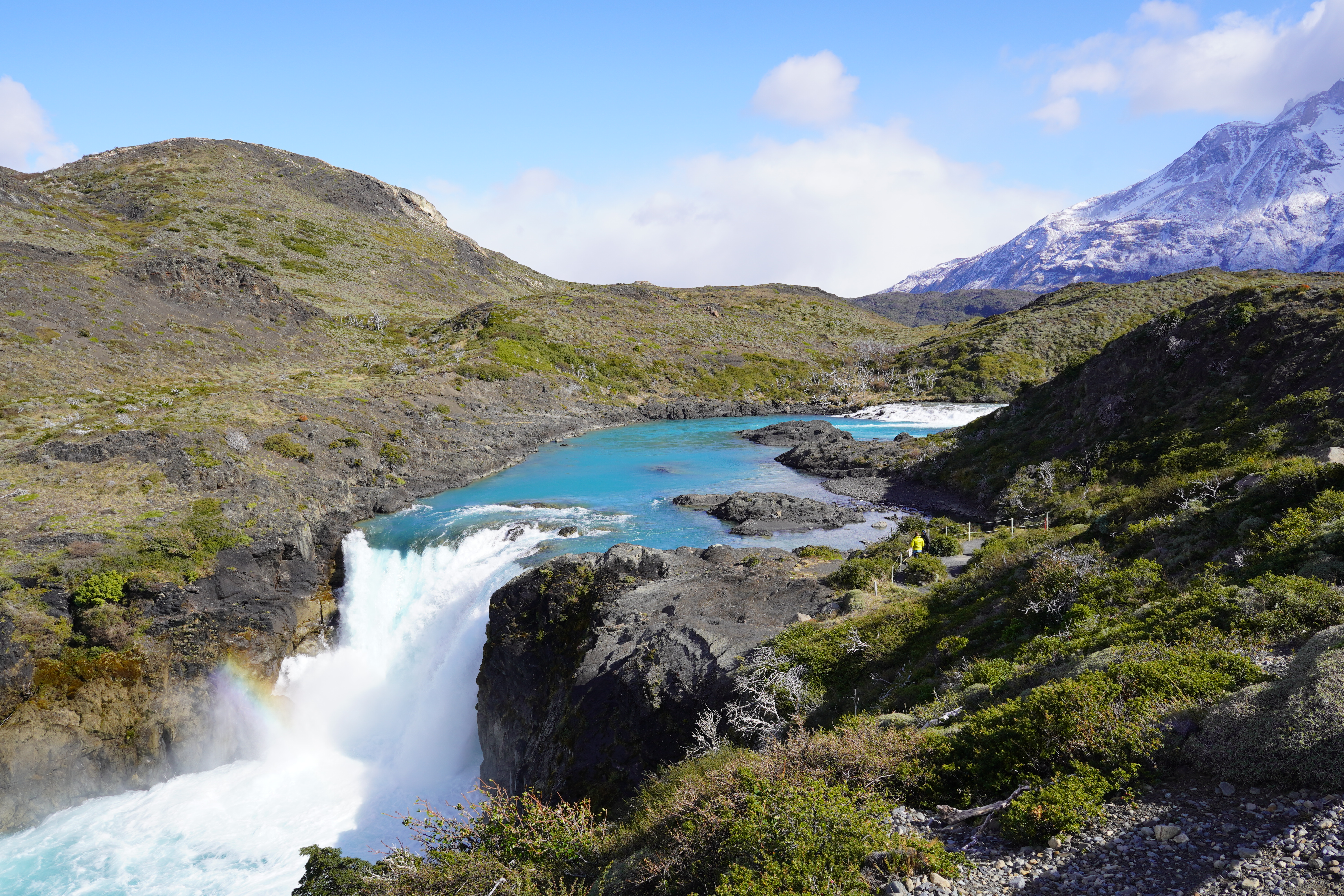
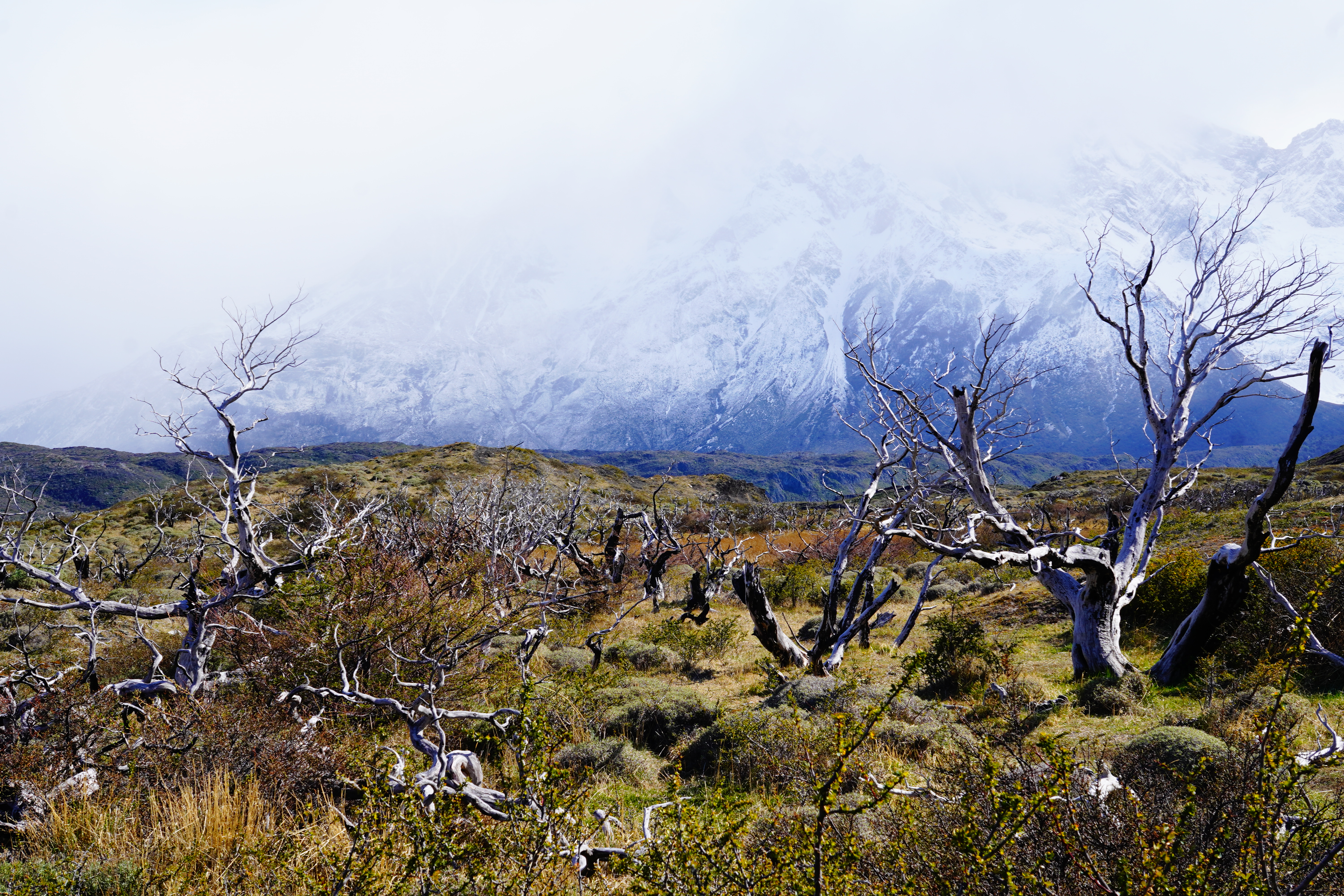
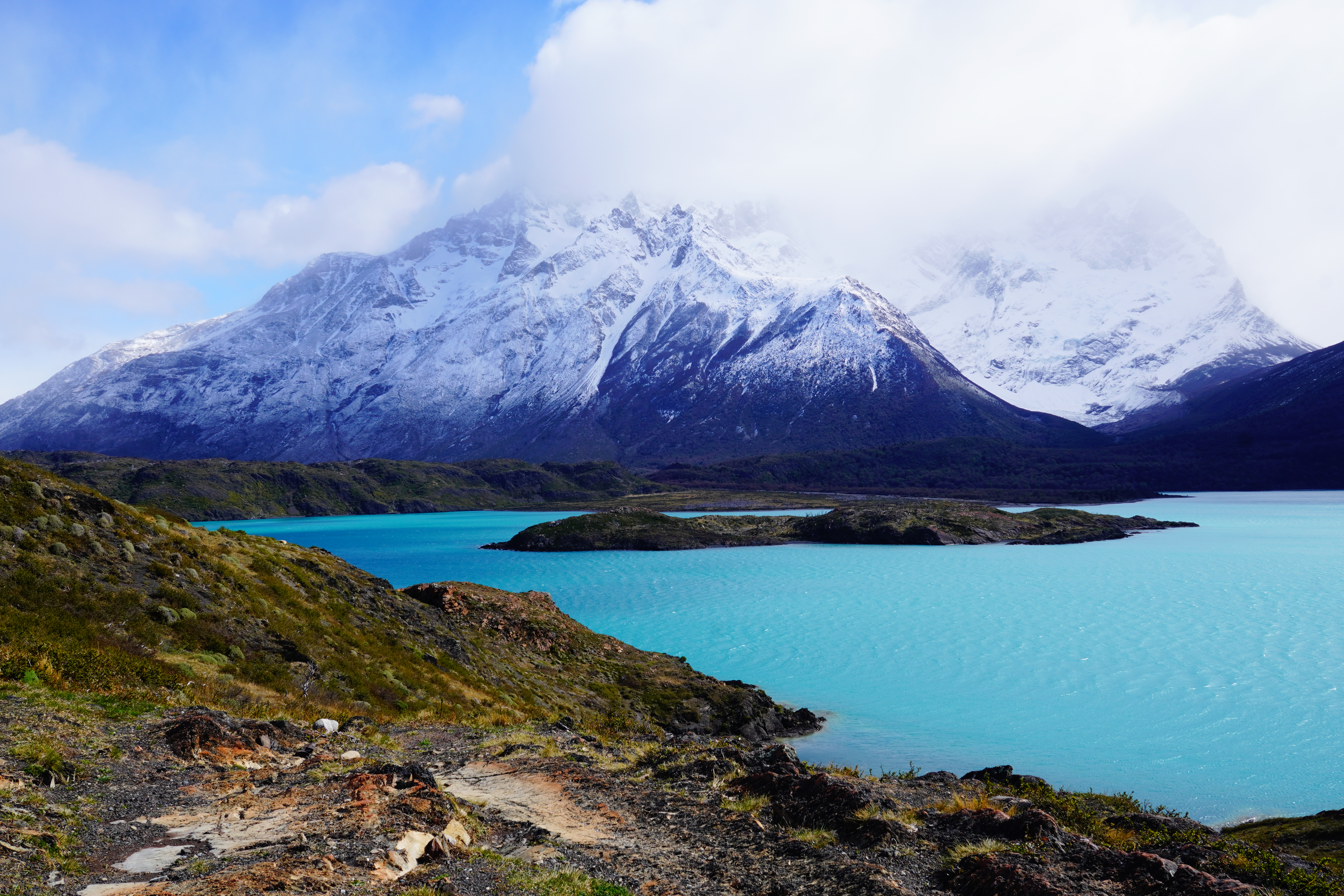
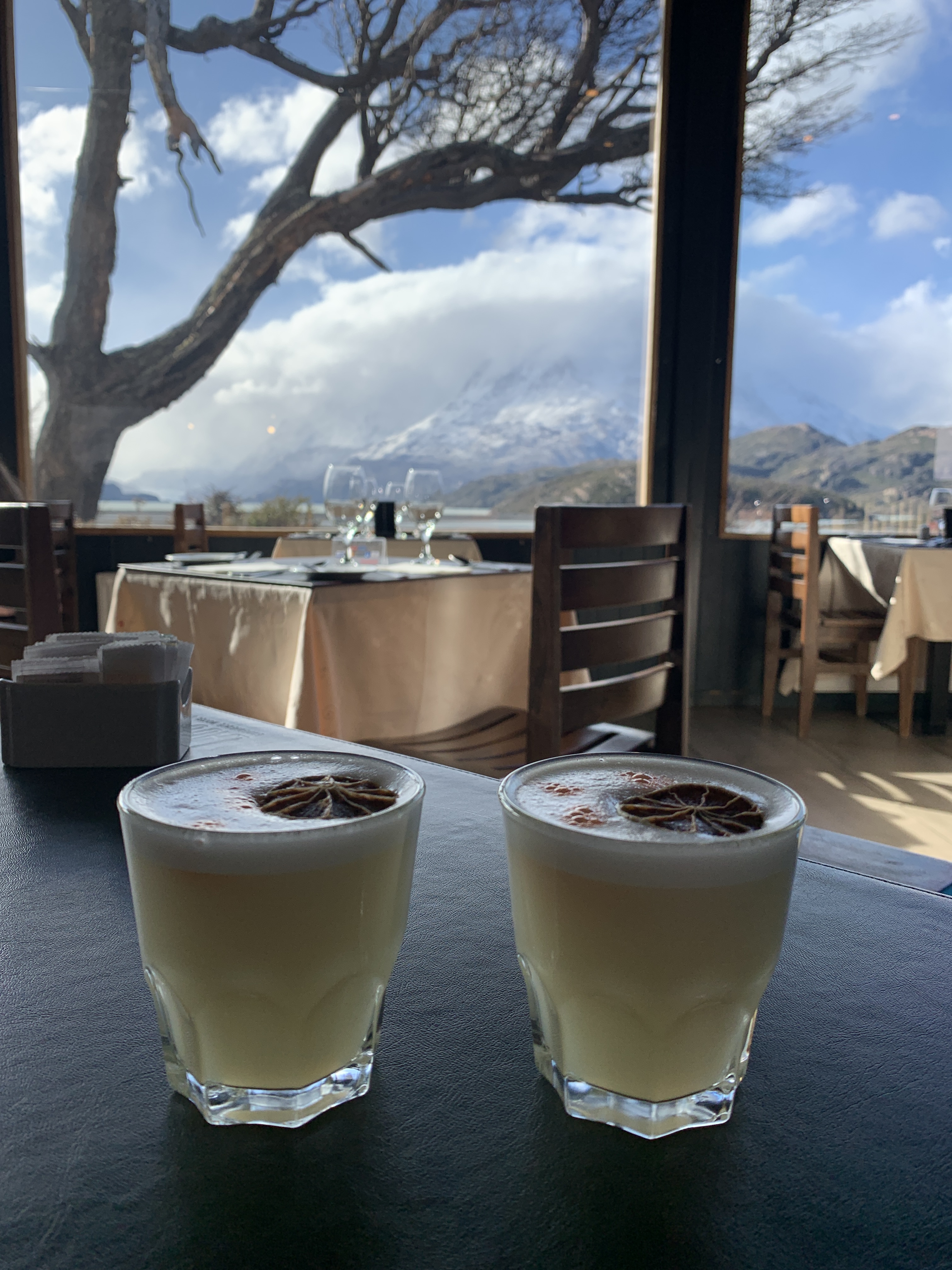
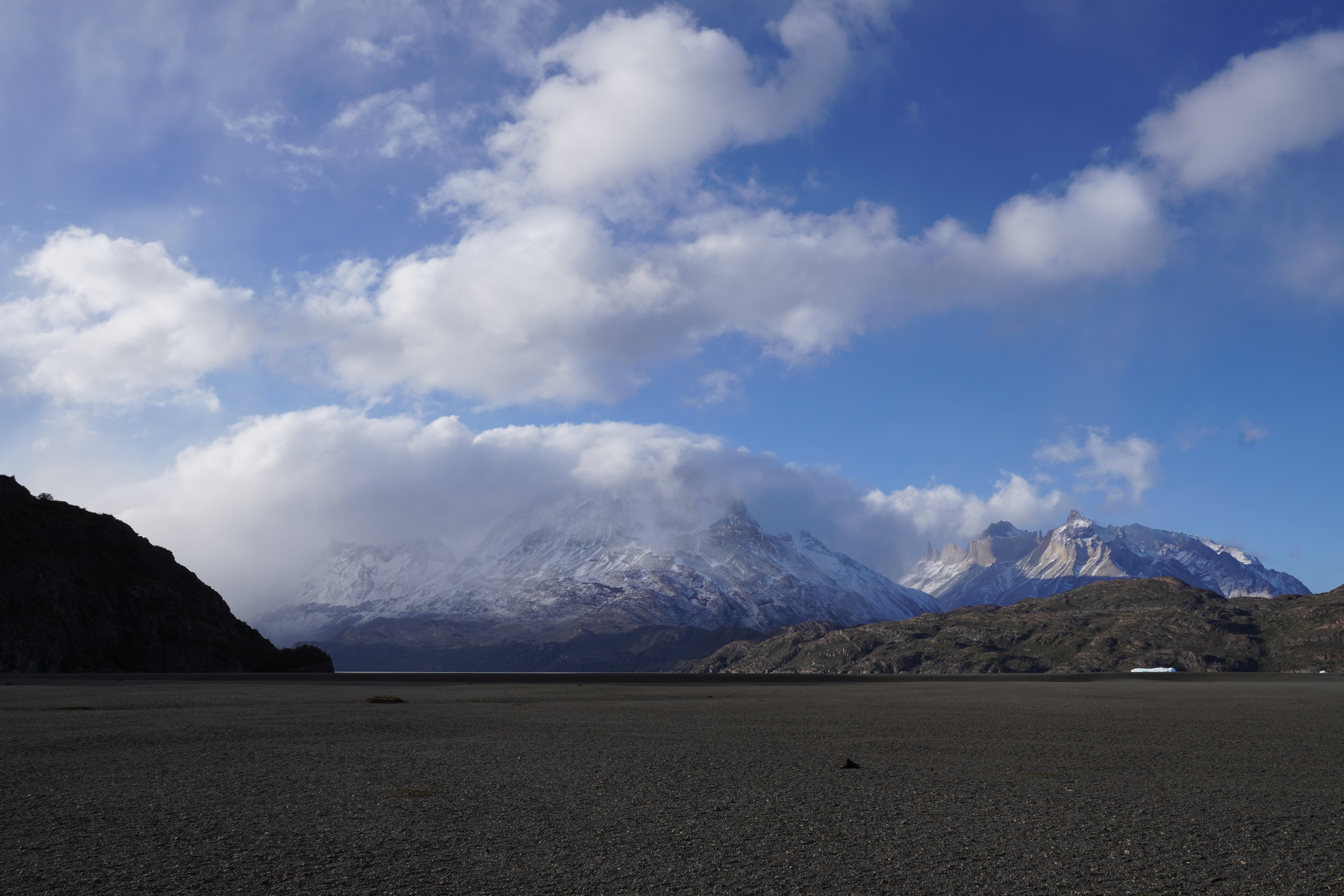
The next day, we actually wanted to hike another part of the W-Track, but it was not possible due to the off-season ferry schedules. The starting point of the hike was only reachable by boat. The first and last ferries ran 6 hours apart, making an 8-hour hike impossible for us. We decided on two short 6 km hikes with wonderful views of the mountains, lakes, a waterfall, and the Grey Glacier – for the first glacier on our journey, we enjoyed a really good Pisco Sour at Hotel Lago Grey, where we briefly stopped by the hotel bar. We were so grateful for all these insights in Torres del Paine National Park, in Chilean Patagonia, which are so different from everything we had seen so far. Everything was just beautiful, like in a picture book. Except for the wind, which we could have done without. Unfortunately, it never left our side. The last night in Torres del Paine we encountered the heaviest wind gusts so far. After having read that camper vans have been flipped over by the wind before, we reparked Rosi twice that night to get some protection from the wind. Thus, we willingly accepted high admission fees and several hundred kilometers of gravel roads (the entire roads in the national park consist of gravel roads in varying conditions). On the last day we left the park, it rained. We hadn’t seen rain in weeks.
 höme
höme 
Leave a comment