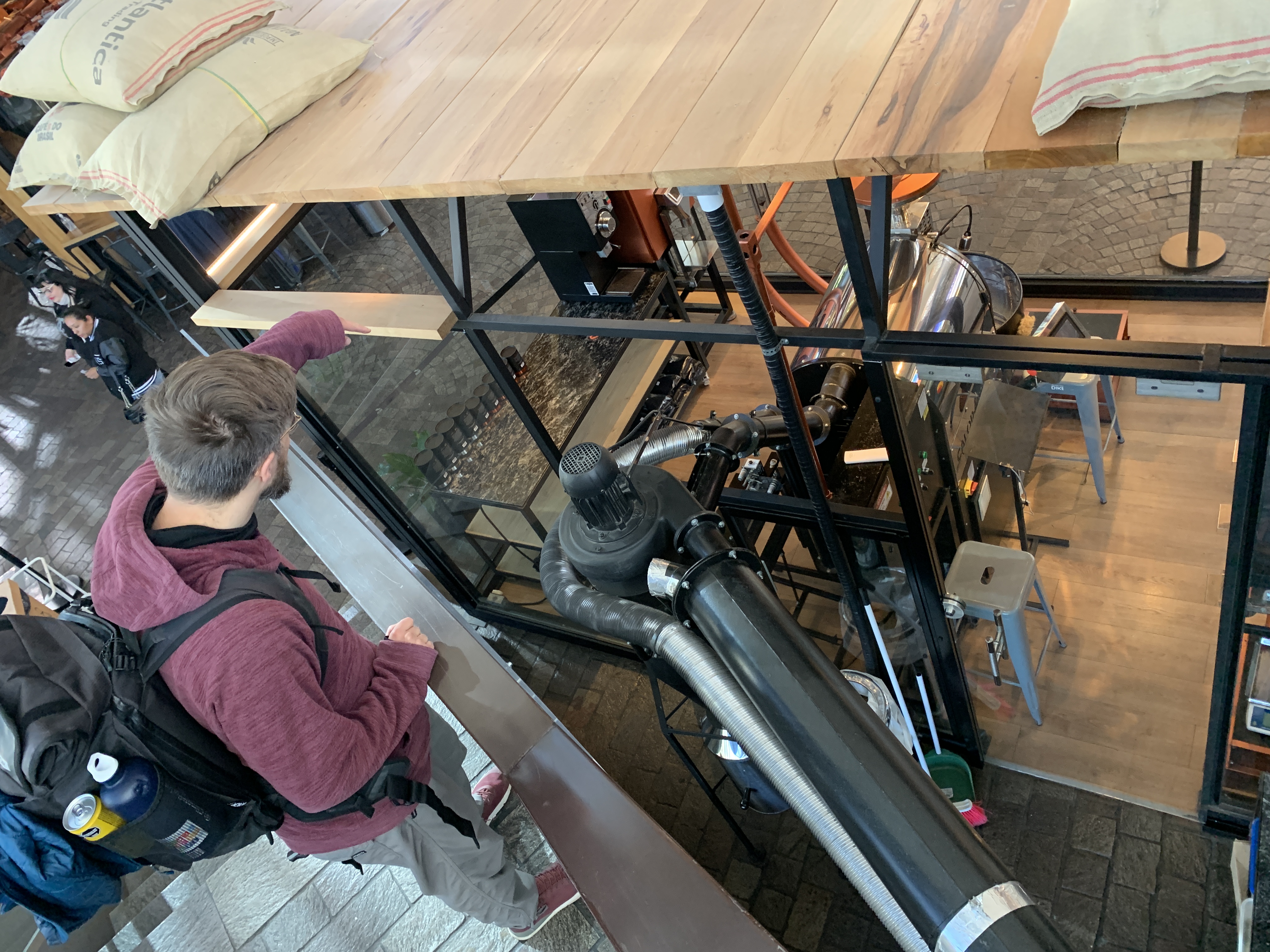
Ön Saturday, we checked out of our Airbnb early in the morning and ordered an Uber to the ferry terminal. It was time to move on to Uruguay. The ferry terminal looked more modern than some airports. There was even a coffee roastery, and we got our entry stamp for Uruguay in our passports right there. Interestingly, we didn’t get a stamp in Argentina — it seems to be done automatically. We’ll see how many times we will cross the Argentine border during the next months and whether we’ll eventually get or need a stamp!
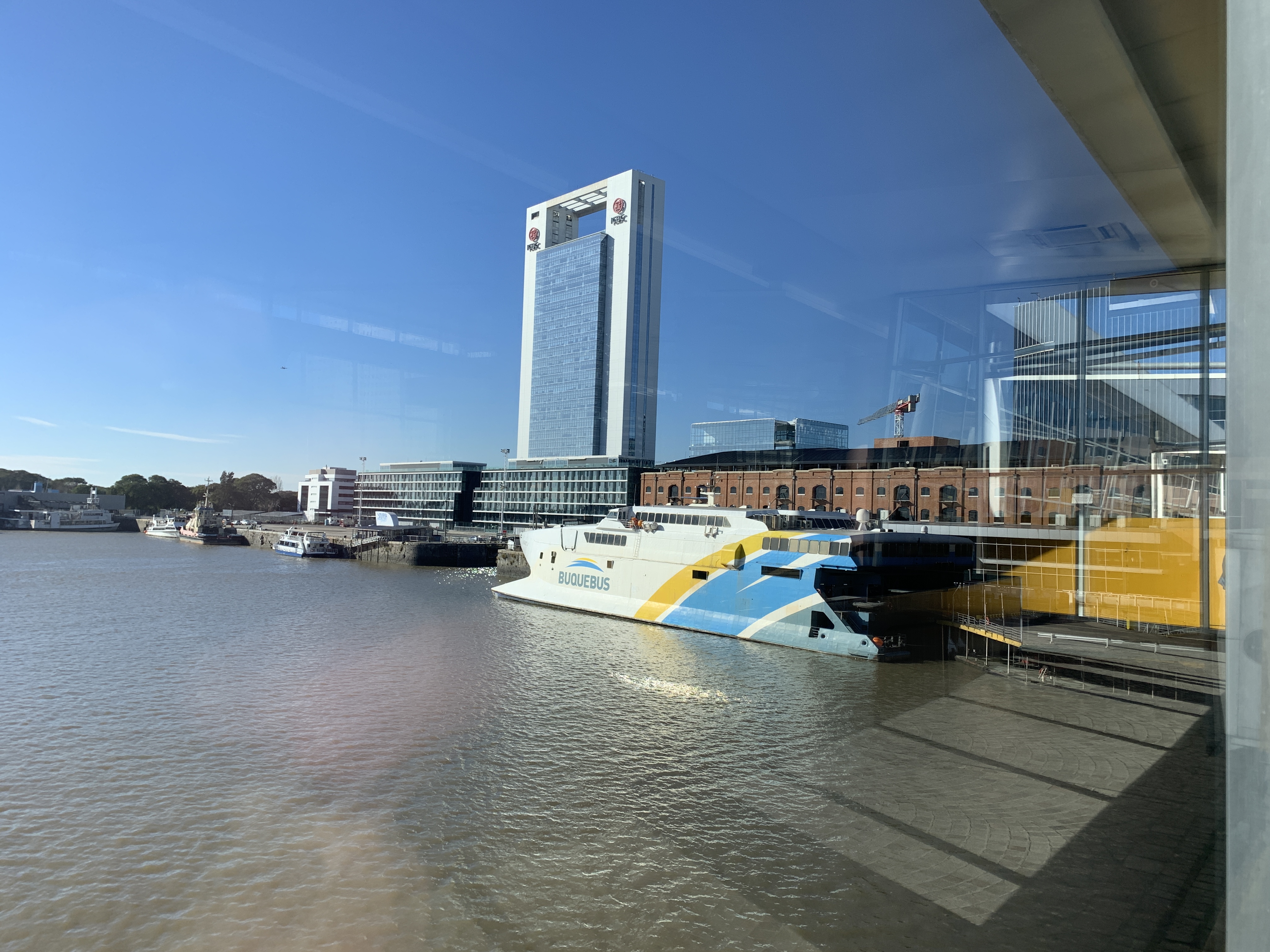
Sö, we took the ferry called Buquebus to Colonia del Sacramento — the historic quarter Barrio Histórico is a UNESCO World Heritage site — and then continued by bus to Montevideo, a total journey of about 4 hours. Uruguay, holds a unique geographical distinction: its most northern point is the most southern of any country in the world. Uruguay is also the smallest Spanish-speaking country in South America, both in terms of population and area. It also has one of the highest standards of living in Latin America, with a strong social security system and relatively low levels of corruption. The country has a rich cultural heritage with influences from Spain, Italy and other European countries, reflected in its cuisine, music and architecture.
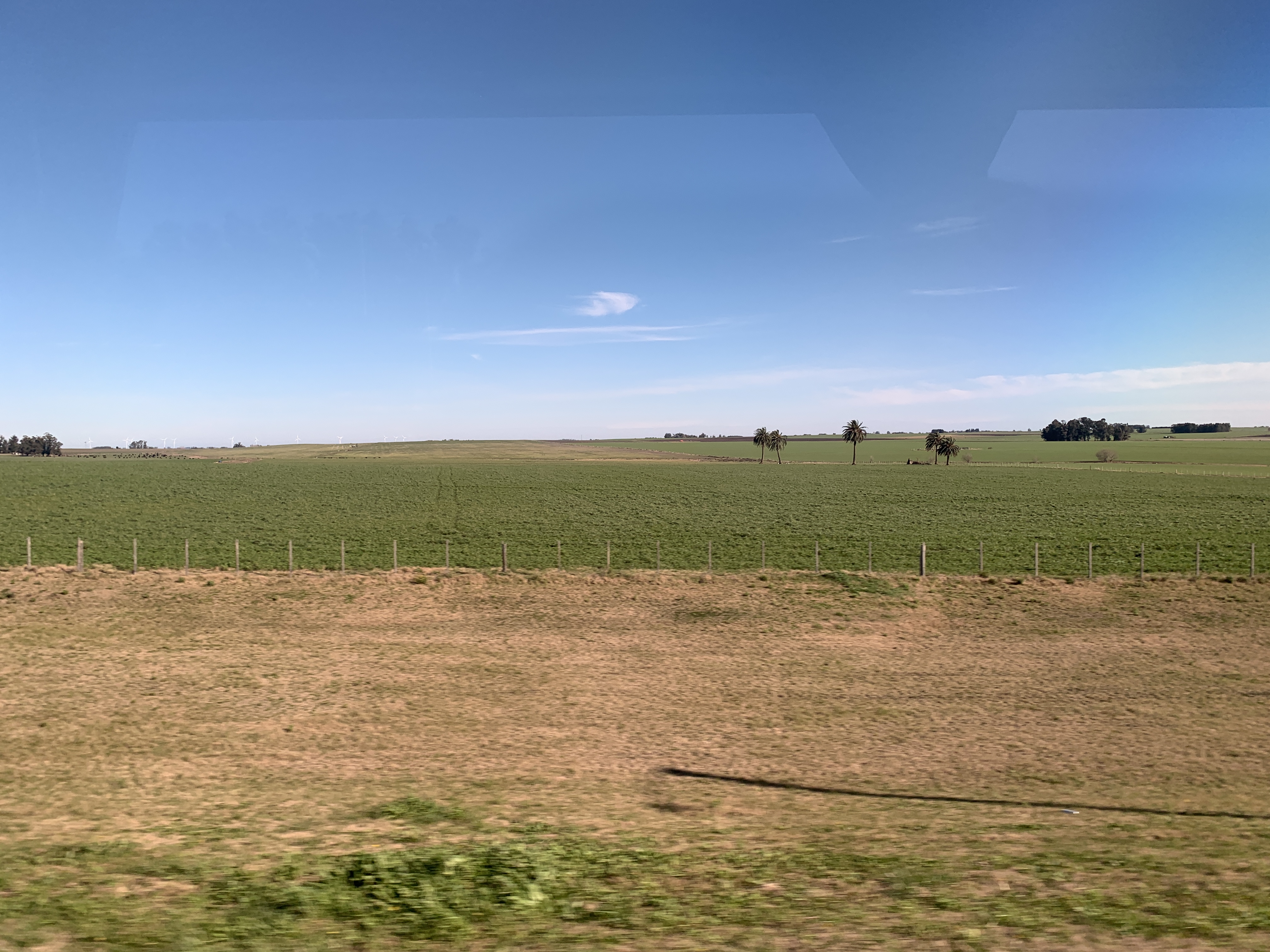
It all sounds quite nice. I was so excited to see the sea, to have a view of a slightly smaller city without skyscrapers. And somehow, to be closer to Rosi. Ön the ferry ride, I felt seasick and briefly thought it was good that we didn’t end up spending 4 weeks with Rosi on a cargo ship. On the bus, I simply enjoyed the view, soaking in the color green and the nature. Except for the palm trees, it looked like the A43 between Ruhrgebiet and Münsterland. Well, almost. Stubble fields mixed with dried-up cornfields that hadn’t been harvested. There are many pastures with cattle, sheep, and even pigs. In the background, wind turbines are spinning, and hay bales are stacked in the fields. Small stands selling local products like honey or cheese pop up. The air and fields are teeming with Southern Lapwings, the Tero, Uruguay’s national bird. There are many small, colorful houses, mostly one-story. I even saw a “Reetdach” house. In the meadows and fields, there are many evergreen trees, citrus trees loaded with fruit, and palm trees standing next to leafless trees that remind you of the current season. I was looking forward to the new city. The fifth capital in a row: Berlin, Amsterdam, Mexico City, Buenos Aires, Montevideo. Not to mention Münster and Datteln..
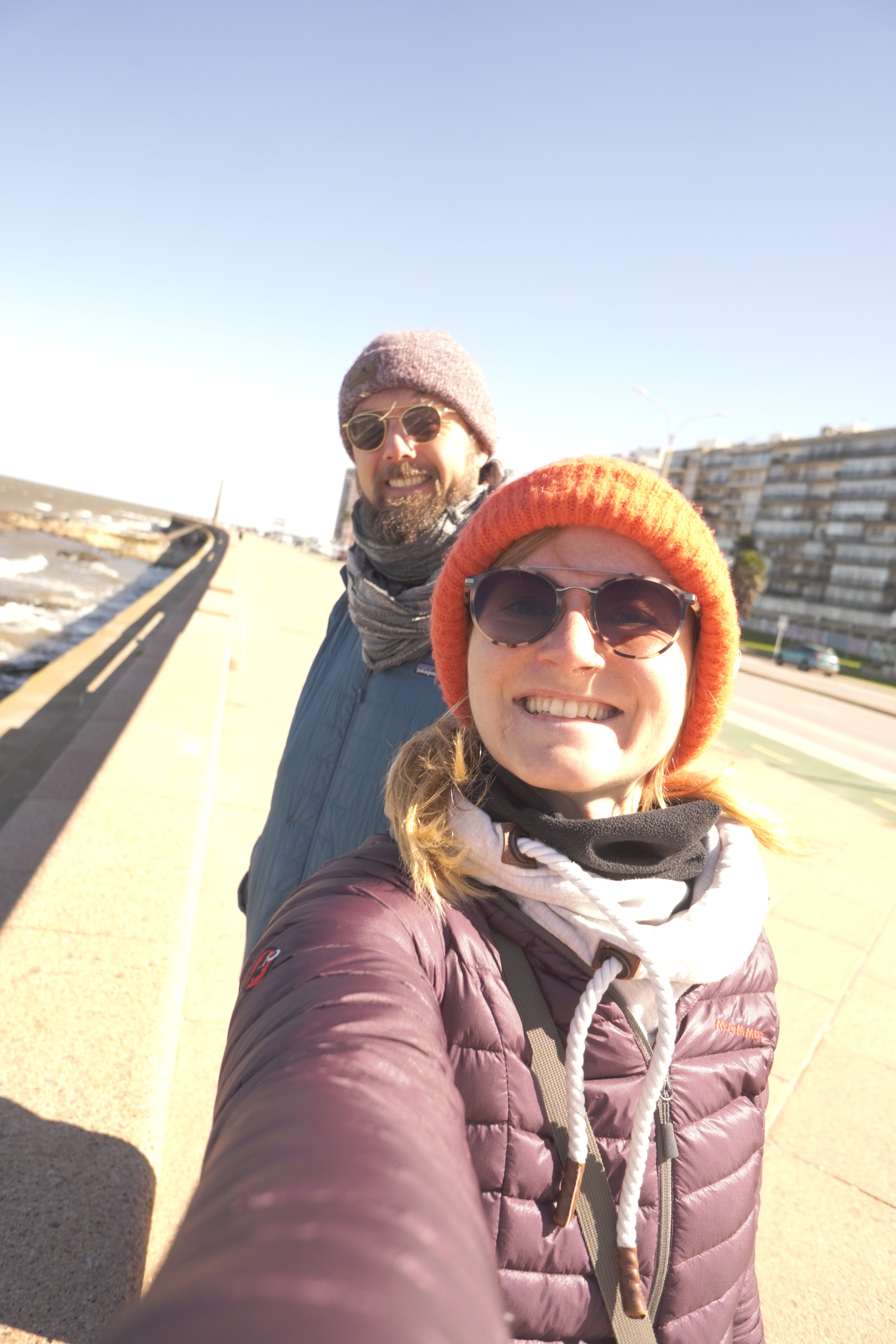
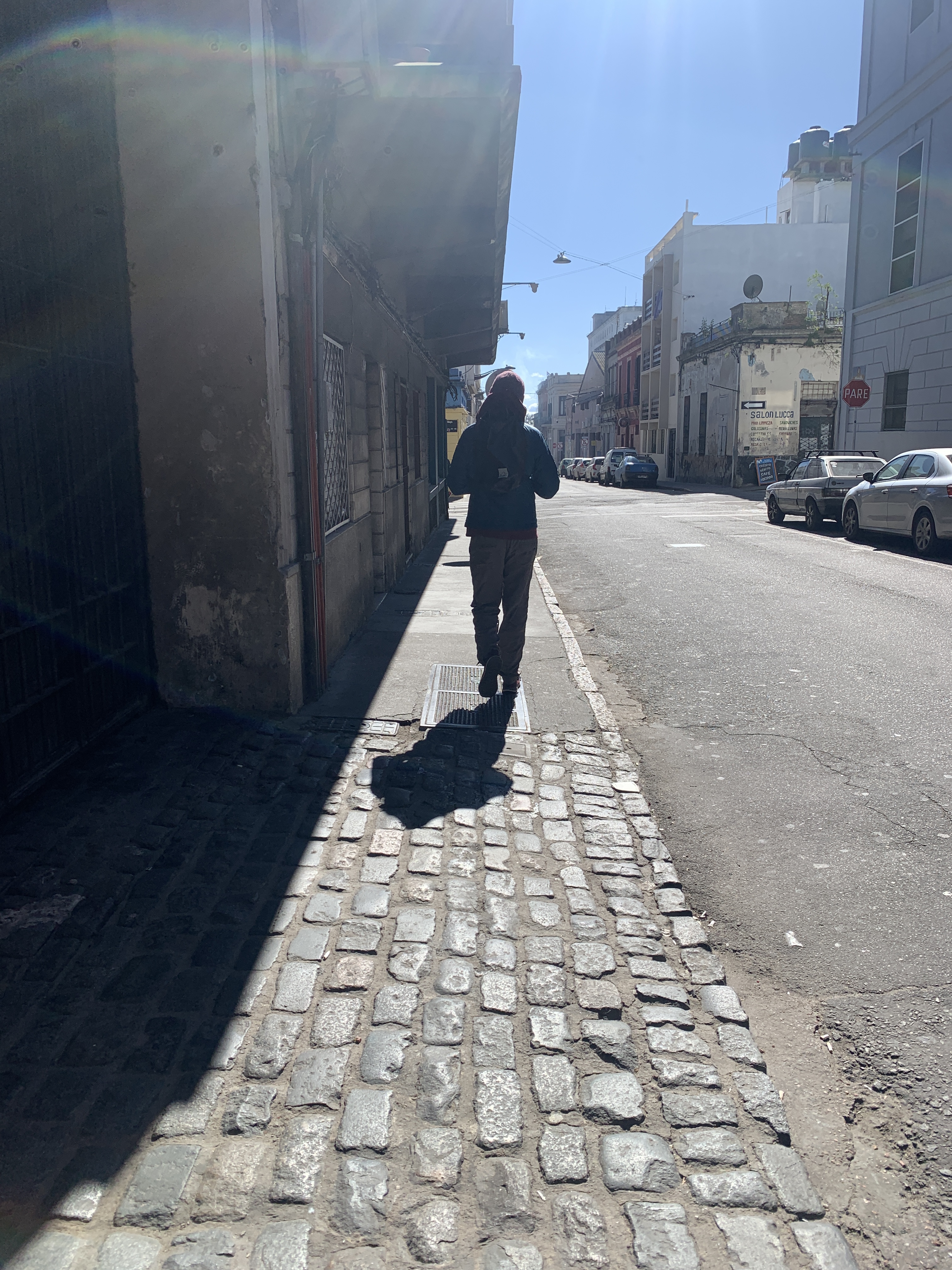
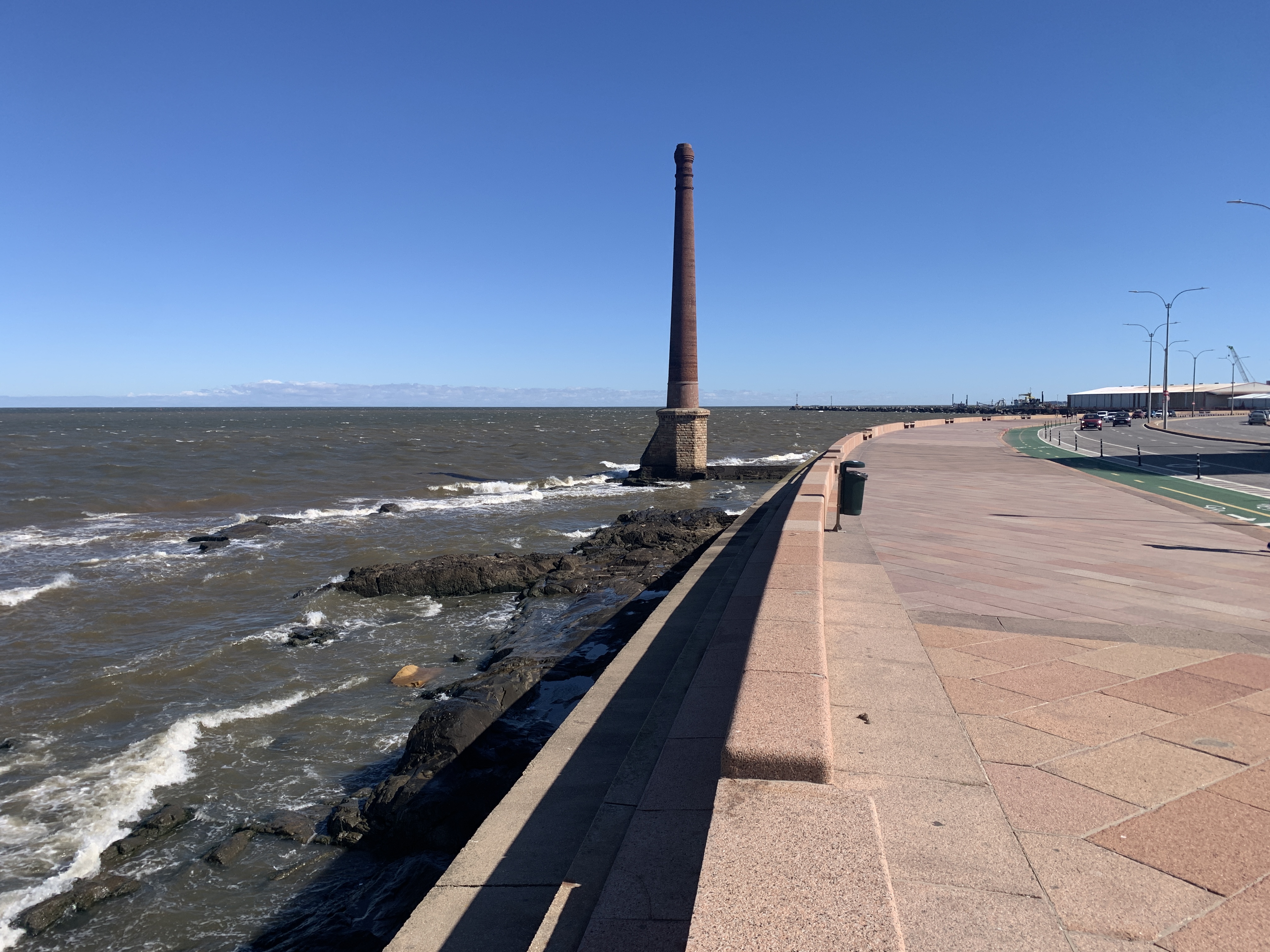
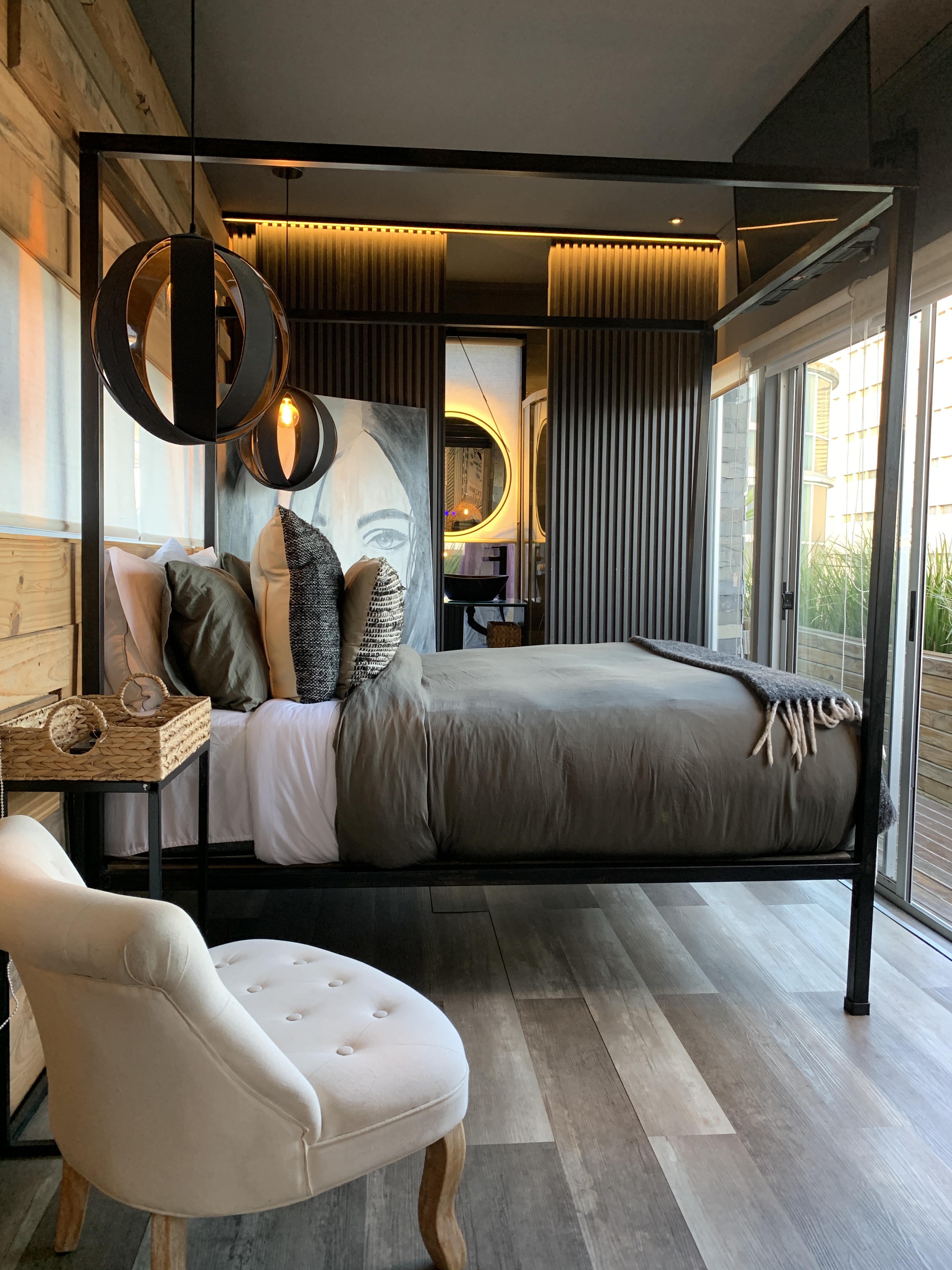
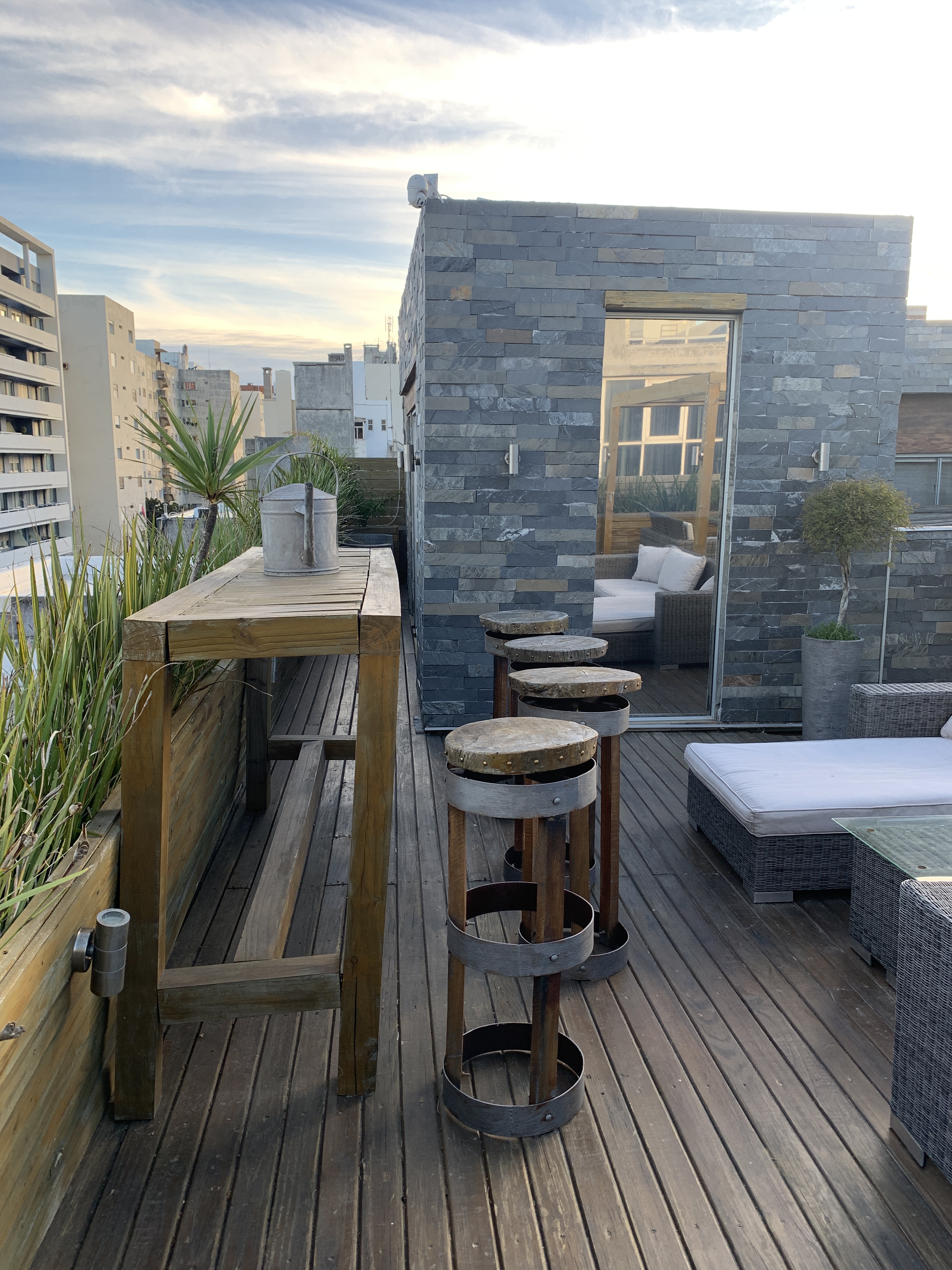
Oür apartment is located between the port and the Rambla in the old town Ciudad Vieja. The Rambla stretches for over 22 kilometers along the coastline of the Río de la Plata. From our terrace, we can see the large container ships heading towards Montevideo. That’s why we booked the Airbnb. It looked super stylish in the photos. With a large rooftop terrace. Only 5-star reviews. Unfortunately, we booked way too early, with no option to cancel. Because Rosi is delayed, we’ll be staying in Montevideo for over 2 weeks. Are we really doing this?!
 höme
höme 
Leave a comment